


Comparison Between Planned And Unplanned Unplanned Change Management




Try Before you Buy Download Free Sample Product
 Impress Your
 Audience
 100%
100% Editable
 Save Hours
 of Time


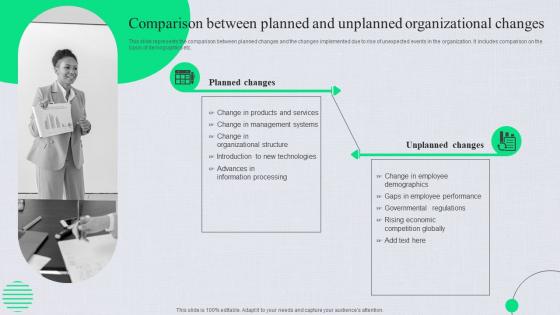
This slide represents the comparison between planned changes and the changes implemented due to rise of unexpected events in the organization. It includes comparison on the basis of demographics etc.
People who downloaded this PowerPoint presentation also viewed the following :
Comparison Between Planned And Unplanned Unplanned Change Management with all 6 slides:
Use our Comparison Between Planned And Unplanned Unplanned Change Management to effectively help you save your valuable time. They are readymade to fit into any presentation structure.





FAQs for Comparison Between Planned And Unplanned
Key principles of effective change management include clear communication, stakeholder engagement, leadership commitment, structured planning, and continuous training throughout the transition process. These principles work together by building organizational buy-in, minimizing resistance, and ensuring systematic implementation, with many companies finding that this comprehensive approach accelerates adoption while reducing costs and operational disruptions.
Organizations assess change readiness through stakeholder surveys, leadership capability evaluations, cultural assessments, resource availability analysis, and communication effectiveness reviews. These comprehensive evaluations enable companies to identify potential resistance points, gauge employee sentiment, and evaluate infrastructure capacity, with many finding that proactive readiness assessments ultimately streamline implementation timelines and enhance adoption rates across departments.
Leadership serves as the primary catalyst for successful change initiatives by setting clear vision, communicating objectives, securing resources, and modeling desired behaviors throughout the transformation process. Effective leaders in organizations like healthcare systems and financial institutions drive adoption by addressing employee concerns, maintaining momentum during challenges, and celebrating milestones, ultimately delivering higher success rates and sustainable organizational transformation.
Resistance to change can be effectively managed through transparent communication, inclusive planning, comprehensive training, and addressing individual concerns directly. By involving team members in decision-making processes, providing clear rationales for changes, and offering ongoing support, organizations create buy-in and reduce anxiety, with many companies finding that early engagement and consistent feedback loops ultimately deliver smoother transitions and stronger team cohesion.
Effective transparency strategies include regular updates through multiple channels, open forums for questions and feedback, clear timeline communications, leadership visibility through town halls, and honest acknowledgment of challenges alongside progress. These approaches enhance trust by providing consistent information flow, addressing concerns proactively, and demonstrating leadership commitment, with many organizations finding that transparent communication significantly reduces resistance and accelerates successful change adoption.
Cultural differences significantly impact change management in global organizations through varying communication styles, decision-making processes, hierarchical expectations, and resistance patterns across regions. Organizations successfully navigate these challenges by adapting implementation strategies to local contexts, incorporating cultural liaisons, and allowing flexible timelines, with many multinational companies finding that culturally-sensitive approaches ultimately deliver higher adoption rates and sustainable transformation outcomes.
**INPUT**: What are the best practices for training employees during a change? **OUTPUT**: Best practices for training employees during change include comprehensive communication strategies, role-specific skill development, hands-on workshops, continuous feedback mechanisms, and phased learning approaches. These methods enhance adoption by addressing individual concerns, building confidence through practice, and providing ongoing support, with many organizations finding that interactive training sessions and peer mentoring ultimately deliver smoother transitions and higher employee engagement. [Word count: 60]
Data analytics supports change management by identifying resistance patterns, measuring adoption rates, tracking performance metrics, and predicting potential roadblocks through employee feedback analysis. Organizations leverage workforce analytics to monitor training effectiveness, communication engagement, and productivity shifts, enabling leaders to make data-driven adjustments that accelerate transformation timelines and ultimately deliver smoother transitions with higher success rates.
Stakeholder engagement ensures change initiatives gain necessary support, reduce resistance, and achieve sustainable implementation through collaborative participation, transparent communication, and shared ownership. Organizations with strong stakeholder involvement experience 70% higher success rates, as engaged employees, customers, and partners become change advocates rather than obstacles, ultimately delivering smoother transitions and lasting transformation.
Change management success is measured through employee adoption rates, performance metrics, timeline adherence, stakeholder satisfaction scores, and financial impact assessments. These indicators work together by tracking behavioral shifts, operational improvements, and business outcomes, with many organizations finding that combining quantitative data with qualitative feedback ultimately delivers comprehensive insights into transformation effectiveness and long-term sustainability.
Change management tools include project management platforms, communication software, training management systems, analytics dashboards, and collaboration technologies. These solutions streamline change initiatives by automating workflows, tracking progress, and enhancing stakeholder engagement, with many organizations finding that integrated platforms significantly reduce implementation timelines while improving employee adoption rates and organizational transparency.
Organizations foster adaptability and innovation through open communication channels, continuous learning programs, cross-functional collaboration, psychological safety initiatives, and reward systems that celebrate experimentation. These approaches enable teams to embrace change, share diverse perspectives, and pursue creative solutions without fear of failure, with many companies finding that empowering employees to drive innovation ultimately delivers competitive advantage and sustainable growth.
Common pitfalls in change management include insufficient communication, lack of leadership buy-in, inadequate training, resistance to cultural shifts, and poor timing of implementation. These challenges can be avoided by establishing clear communication channels, securing executive sponsorship, providing comprehensive staff development, and creating phased rollout strategies, with many organizations finding that proactive stakeholder engagement ultimately delivers smoother transitions and higher adoption rates.
Employee feedback influences change management by identifying resistance points, uncovering implementation challenges, and revealing opportunities for process improvements throughout organizational transitions. Through regular surveys, focus groups, and one-on-one discussions, companies like healthcare systems and financial institutions enhance communication strategies, adjust timelines, and address concerns proactively, ultimately delivering smoother transformations and higher adoption rates.
Change management trends include digital transformation integration, employee-centric approaches, agile methodologies, data-driven insights, and hybrid work adaptations. These evolving strategies streamline organizational transitions by emphasizing continuous learning, real-time feedback systems, and personalized change experiences, with many companies finding that technology-enabled change processes deliver faster adoption rates and significantly improved employee engagement outcomes.
-
I’ve been your client for a few years now. Couldn’t be more than happy after using your templates. Thank you!
-
Based on my personal experience, I would recommend other people to subscribe to SlideTeam. No one can be disappointed here!