


Customer insight powerpoint presentation slides





Try Before you Buy Download Free Sample Product
 Impress Your
 Audience
 100%
100% Editable
 Save Hours
 of Time


Analyse the human behavior trend to increase the effectiveness of products and services for the consumers. Use professionally designed content-ready Customer Insight PowerPoint Presentation Slides for the better understanding of consumer buying behavior to increase sales. Collect the required information about the customers to acquire, develop and retain customers. Incorporate ready-made customer insight PPT presentation slideshow to comprehend the customer’s choice for their favourite brand, their mindsets, motivations, moods, desires, aspirations, etc. This deck comprises of templates such as research methodology, consumer insight assumptions, need for consumer insights, key statistics, data collection and processing, consumer insight capabilities, consumer insight components, consumer insight characteristics, consumer insight key elements, YouTube analytics, google audience retention tool, google trends, google analytics, consumer insight maturity matrix, consumer engagement principles, etc. These templates are editable. Change color, text, icon, and font size as per your need. Add or remove content, if needed. Get access to the ready-made customer insight PowerPoint templates to connect the interests of the consumer with features of the brand. Advise folks on how to decide correctly with our Customer Insight Powerpoint Presentation Slides. Be able to guide the injudicious.
People who downloaded this PowerPoint presentation also viewed the following :
Content of this Powerpoint Presentation
Slide 1: This slide introduces Customer Insight with an imagery. State Your Company Name and begin.
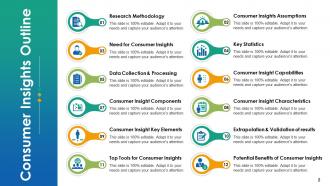
Slide 2: This slide presents Consumer Insights Outline containing- Research Methodology, Need for Consumer Insights, Data Collection & Processing, Consumer Insight Components, Consumer Insight Key Elements, Top Tools for Consumer Insights, Consumer Insights Assumptions, Key Statistics, Consumer Insight Capabilities, Consumer Insight Characteristics, Extrapolation & Validation of results, Potential Benefits of Consumer Insights.
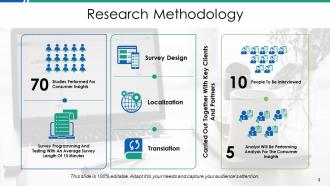
Slide 3: This slide showcases Research Methodology showing- Carried Out Together With Key Clients And Partners, Studies Performed For Consumer Insights, Survey Programming And Testing With An Average Survey, Survey Design, Localization, Translation, Analyst Will Be Performing Analysis For The Consumer Insights, People To Be Interviewed.
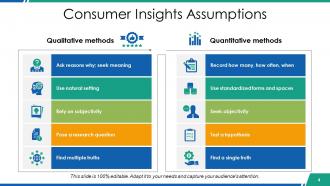
Slide 4: This slide showcases Consumer Insights Assumptions divided into- Quantitative methods: Ask reasons why; seek meaning, Use natural setting, Rely on subjectivity, Pose a research question, Find multiple truths. Qualitative methods Record how many, how often, when, Use standardized forms and spaces, Seek objectivity, Test a hypothesis, Find a single truth.
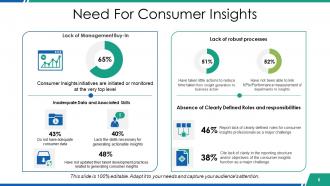
Slide 5: This slide presents Need For Consumer Insights showcasing- Absence of Clearly Defined Roles and responsibilities: Report lack of clearly-defined roles for consumer insights professionals as a major challenge, Cite lack of clarity in the reporting structure and/or objectives of the consumer insights function as a major challenge. Lack of robust processes: Have taken little actions to reduce time taken from insight generation to business action, Have not been able to link KPIs/Performance measurement of departments to insights. Inadequate Data and Associated Skills: Do not have adequate consumer data, Lack the skills necessary for generating actionable insights. Lack of Management Buy-In: Have not updated their talent development practices related to generating consumer insights, Consumer Insights initiatives are initiated or monitored at the very top level.
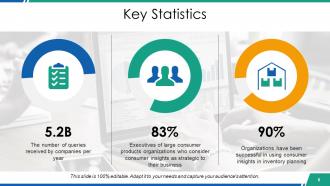
Slide 6: This slide presents Key Statistics showing- Organizations have been successful in using consumer insights in inventory planning, The number of queries received by companies per year, Executives of large consumer products organizations who consider consumer insights as strategic to their business.
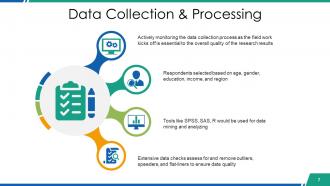
Slide 7: This slide shows Data Collection & Processing aspects such as- Actively monitoring the data collection process as the field work kicks off is essential to the overall quality of the research results, Respondents selected based on age, gender, education, income, and region, Extensive data checks assess for and remove outliers, speeders, and flat-liners to ensure data quality, Tools like SPSS, SAS, R would be used for data mining and analyzing.
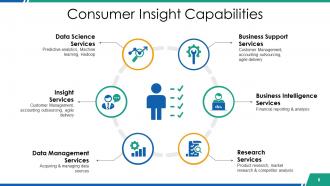
Slide 8: This slide presents Consumer Insight Capabilities with the follolwing subheadings- Business Support Services: Customer Management, accounting outsourcing, agile delivery. Business Intelligence Services: Financial reporting & analysis. Research Services: Product research, market research & competitor analysis. Data Management Services: Acquiring & managing data sources. Insight Services: Customer Management, accounting outsourcing, agile delivery. Data Science Services: Predictive analytics, Machine learning, Hadoop.
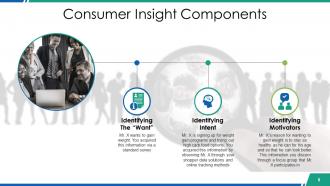
Slide 9: This slide showcases Consumer Insight Components showing- Identifying The “Want” Identifying Intent, Identifying Motivators.
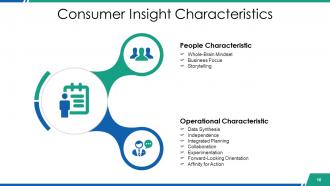
Slide 10: This slide presents Consumer Insight Characteristics showing- People Characteristic: Whole-Brain Mindset, Business Focus, Storytelling. Operational Characteristic: Data Synthesis, Independence, Integrated Planning, Collaboration, Experimentation, Forward-Looking Orientation, Affinity for Action.
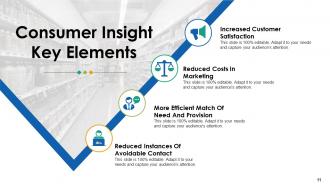
Slide 11: This slide shows Consumer Insight Key Elements such as- Reduced Instances Of Avoidable Contact, More Efficient Match Of Need And Provision, Reduced Costs In Marketing, Increased Customer Satisfaction.
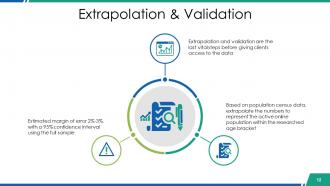
Slide 12: This slide showcases Extrapolation & Validation describing- Extrapolation and validation are the last vital steps before giving clients access to the data, Based on population census data, extrapolate the numbers to represent the active online population within the researched age bracket, Estimated margin of error 2%-3%, with a 95% confidence interval using the full sample.
Slide 13: This slide is titled Top Tools For Consumer Insights. You may alter the content as per need.
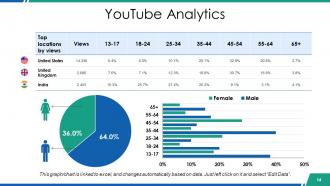
Slide 14: This slide presents YouTube Analytics table and chart.
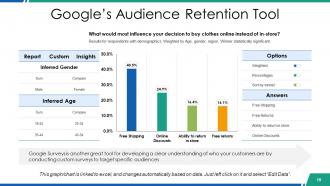
Slide 15: This slide presents Google’s Audience Retention Too table and chart.
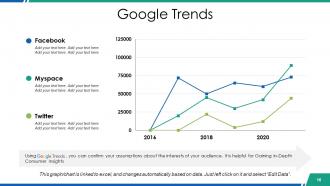
Slide 16: This slide showcases Google Trends graph for social media platforms.
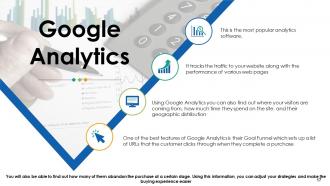
Slide 17: This slide shows Google Analytics with the following content- Using Google Analytics you can also find out where your visitors are coming from, how much time they spend on the site, and their geographic distribution. This is the most popular analytics software. It tracks the traffic to your website along with the performance of various web pages. One of the best features of Google Analytics is their Goal Funnel which sets up a list of URLs that the customer clicks through when they complete a purchase. You will also be able to find out how many of them abandon the purchase at a certain stage. Using this information, you can adjust your strategies and make the buying experience easier.
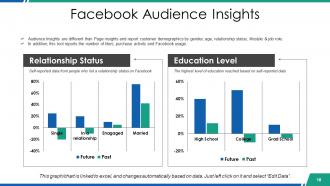
Slide 18: This slide presents Facebook Audience Insights showing- Relationship Status, Education Level.
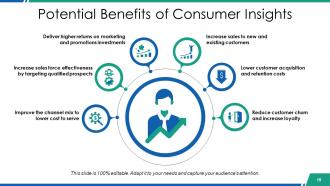
Slide 19: This slide shows Potential Benefits of Consumer Insights such as- Reduce customer churn and increase loyalty, Improve the channel mix to lower cost to serve, Lower customer acquisition and retention costs, Increase sales force effectiveness by targeting qualified prospects, Increase sales to new and existing customers, Deliver higher returns on marketing and promotions investments.
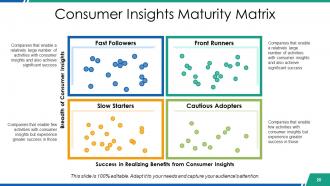
Slide 20: This slide displays a Consumer Insights Maturity Matrix with the following points- Fast Followers, Front Runners, Cautious Adopters, Slow Starters.
Slide 21: This slide shows Journey Of An Insight Driven Business showcasing- Ignite- The Journey Grow- Insight-Driven Business Scale- The Capability Demonstrate - Business Value
Slide 22: This slide shows Consumer Engagement Principles such as- Transparency, Ongoing Dialogue, Protection Of Personal Information, Value Exchange, Simple Communications, Integrity In Social Media.
Slide 23: This slide showcases Consumer Insights Incorporates Benefits Across Marketing, Sales And Supply Chain In Consumer Products matrix showing- Marketing Activities, Sales Activities, Supply Chain Activities, Success Realized From Consumer Insights, Level of Enablement of Activities by Consumer Insights, New Product Development, Channel Management, Cross-Selling and Up-Selling, Customer Engagement, Customer Retention, Brand Pricing, Category Strategy, Brand Strategy, Customer Experience, Campaign Design & Execution, Trade spend optimization, Content creation, Forecasting, Demand sensing, Smarter product distribution & supplier performance management, Inventory Planning & Replenishment, Assortment Breadth, Network Optimization, Category Management, Fleet Optimization, Salesforce Management, Customer acquisition.
Slide 24: This slide presents Customer Insight Icons. Use them as per need.
Slide 25: This is a Coffee Break slide to halt. You may change the slide content as per need.
Slide 26: This slide is titled Additional slides to proceed forward. You may change the slide content as per need.
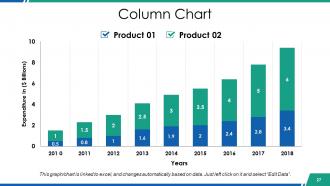
Slide 27: This slide presents a Column Chart for two product/entity comparison, information, specifications etc.
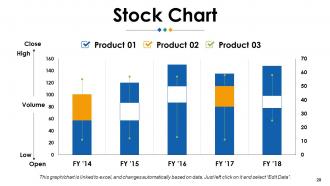
Slide 28: This slide presents a Stock Chart for two product/entity comparison, information, specifications etc.
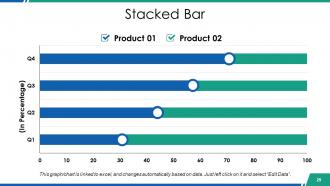
Slide 29: This slide presents a Stacked Bar graph for two product/entity comparison, information, specifications etc.
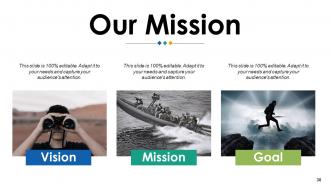
Slide 30: This slide contains Our Mission with Vision and Goal. State them here.
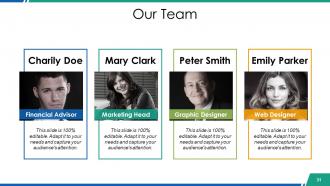
Slide 31: This slide presents Our Team with designation, image text holder and text boxes to fill information.
Slide 32: This is an About Us slide. State your position, facts, team/company specifications or anything business here.
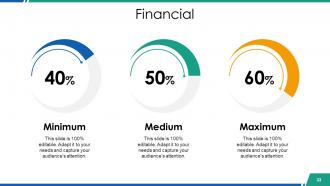
Slide 33: This slide is titled as Financials. Display finance related stuff here.
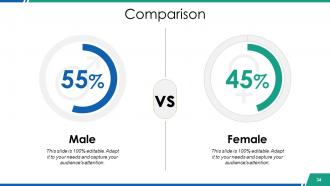
Slide 34: This slide shows Comparison in a creative manner displaying male and female imagery. State comparing aspects here.
Slide 35: This slide showcases Our Main Goal for you to state
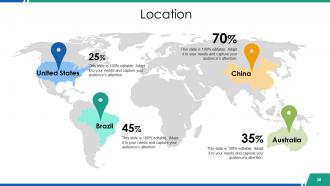
Slide 36: This is a Location slide of a world map image to show global growth, presence etc.
Slide 37: This is a Dashboard slide to display metrics, kpis, etc.
Slide 38: This is a Puzzle image slide with text boxes to state information, specifications etc.
Slide 39: This slide presents a Mind Map slide to show segmentation, specifications etc.
Slide 40: This is Our Target slide. State them here.
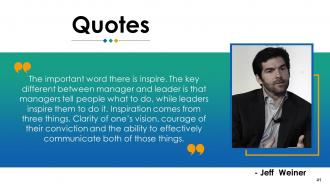
Slide 41: This is a Quotes slide. State a quotation etc. here to display your values etc. You may change the slide content as per need.
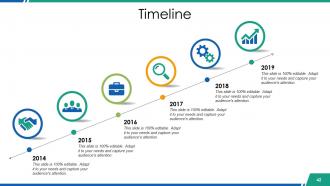
Slide 42: This slide presents a Timeline to show growth, milestones etc.
Slide 43: This is a Post It slide to flash company event, news or anything to highlight.
Slide 44: This is a Lego image slide to show information, specifications etc.
Slide 45: This is a Hierarchy Diagram slide to show information, specifications, organization structure etc.
Slide 46: This is a Silhouettes slide to show people oriented information, specifications, etc.
Slide 47: This is a Venn diagram slide to show information, specifications, etc.
Slide 48: This is a Magnifying Glass image slide with text boxes to state information, specifications etc.
Slide 49: This is a Bulb Or Idea slide. Present any new information, data here.
Slide 50: This is a Thank You slide with Address # street number, city, state, Contact Numbers and email address.
Customer insight powerpoint presentation slides with all 50 slides:
Decipher the implications with our Customer Insight Powerpoint Presentation Slides. Assess the fallout of emerging circumstances.
-

Customer Insight
-
Consumer Insights Outline
-
Research Methodology
-
Consumer Insights Assumptions
-
Need for Consumer Insights
-
Key Statistics
-
Data Collection Processing
-
Consumer Insight Capabilities
-
Consumer Insight Components
-
Consumer Insight Characteristics
-
Consumer Insight Key Elements
-
Extrapolation Validation
-
Top Tools For Consumer Insights
-
YouTube Analytics
-
Google s Audience Retention Tool
-
Google Trends
-
Google Analytics
-
Facebook Audience Insights
-
Potential Benefits of Consumer Insights
-
Consumer Insights Maturity Matrix
-
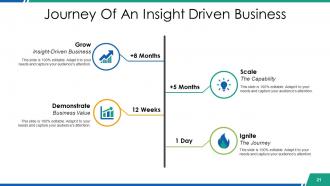
Journey Of An Insight Driven Business
-
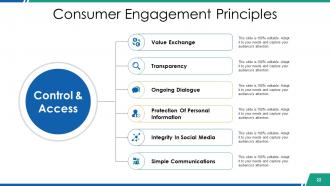
Consumer Engagement Principles
-
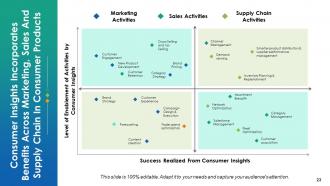
Consumer Insights Incorporates Benefits Across Marketing Sales And Supply Chain In Consumer Products
-
Customer Insight for Icon Slide
-
Coffee Break
-
Additional Slides
-
Column Chart
-
Stock Chart
-
Stacked Bar
-
Our Mission
-
Our Team
-
About Us
-
Financial
-
Comparison
-
Our Main Goal
-
Location
-
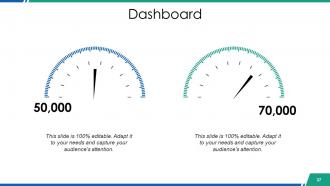
Dashboard
-
Puzzle
-
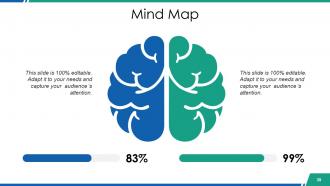
Mind Map
-
Our Target
-
Quotes
-
Timeline
-
Post It
-
Lego
-
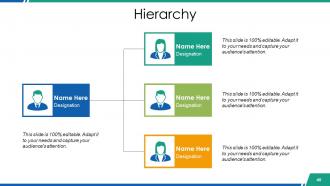
Hierarchy
-
Silhouettes
-
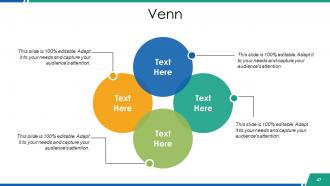
Venn
-
Magnifying Glass
-
Bulb Or Idea
-
Thank You
FAQs for Customer insight
Honestly, surveys and interviews are where I'd start - you get feedback straight from customers' mouths. Social media monitoring is clutch too since people post their real thoughts there (sometimes way too real, but whatever). Your customer service logs are goldmines that most people ignore. Website analytics show what people actually do vs what they say they do. Focus groups work great if you've got the cash for it. I always mix the hard numbers with actual stories people tell you - gives you the complete picture instead of just half of it. Pick one method first, then add more as you go.
So customer insights are basically the difference between what people actually want and what you assume they want. I'd set up regular interviews or surveys throughout your whole development process - not just at the beginning. Their feedback and behavior patterns will show you which features to prioritize and what problems are worth solving. Sometimes you'll even stumble onto product ideas you never considered. Way better than building something awesome that nobody needs (ugh, we've all done that). It's like having GPS instead of driving around lost, you know?
Dude, customer feedback is like your marketing GPS. Without it you're just guessing if your campaigns actually work or if they're total flops. Honestly, I've seen so many marketers (myself included) get way too attached to their "brilliant" creative ideas. But when customers tell you what they really think? That's gold. You'll catch stuff like messaging that misses the mark or targeting that's completely wrong. Quick surveys after campaigns work great - doesn't have to be fancy. Just ask what hit and what didn't. Trust me, it beats throwing money at strategies that aren't working.
So personas are basically turning your vague "target audience" into actual people you can picture. Like instead of "millennials 25-35," you create Sarah - she's got two kids, works part-time, always rushing around. Honestly, it sounds cheesy but it works. When you're designing stuff, you think "would Sarah actually click this button while juggling groceries?" rather than just guessing what people want. Way more helpful than demographic charts. Start with real customer interviews - maybe 2-3 personas max or you'll overcomplicate things. Trust me on this one.
Honestly, start with Google Analytics if you haven't - it's free and shows you the basics of what people do on your site. Hotjar's pretty cool too, gives you heatmaps so you can see exactly where users click. Adobe Analytics is more robust but pricier. For surveys, Typeform looks way nicer than SurveyMonkey, though good luck getting anyone to actually complete them these days! Social listening tools like Hootsuite track what people say about you online. Oh, and Segment's great for pulling all your customer data into one place - saves you from jumping between a million different dashboards. Start simple though, don't overwhelm yourself.
Connect every insight to something your team can actually do about it. Ask "so what?" after each finding - if you're stumped, keep digging. Honestly, I've seen way too many teams drown in data without ever taking action. You want insights that scream "fix this feature" or "change our messaging for Gen Z users." Each one needs an owner and deadline, otherwise you'll just have another pretty report nobody reads. Quick test: can you draw a straight line from your insight to revenue/retention/growth? If not, back to the drawing board.
Honestly, just be straight with people about what you're collecting and why. Get real consent - not that sneaky fine print nonsense. Only grab data you actually need instead of hoovarding everything "just in case." That approach is sketchy and legally risky anyway. Give customers control over their info and tell them if you're sharing with other companies. I'd start by looking at what you're doing now and flip the script - would you be cool with this if roles were reversed? Protect the sensitive stuff obviously, but transparency is your best friend here.
Honestly, social media analytics are way better than surveys because people share their real thoughts without filters. You'll see actual sentiment about your brand and catch what topics get people talking. The breakdown of demographics is super helpful, plus you can figure out when your audience is most active. I love that you can basically keep tabs on competitors too (totally legal snooping!). But here's the real win - you spot problems before they become disasters since everything happens in real-time. Just start monitoring your brand mentions and industry hashtags. You'd be surprised what people are actually saying out there.
Oh man, this is huge. Japanese customers will never straight-up tell you something sucks - they're way too polite. Meanwhile Germans? They'll roast your product without hesitation lol. Colors mean different things, buying patterns are totally different, even how people fill out surveys varies by region. We completely misread our data when expanding to Southeast Asia because I assumed feedback worked the same everywhere. Spoiler: it doesn't. Always run your insights by someone local before you make any major moves. Trust me on this one.
Don't let your assumptions hijack the analysis - you'll just find what you expect to see. Cherry-picking data that fits your story? Recipe for disaster. I see people do this constantly and wonder why their insights fall apart later. Watch out for mixing up correlation with causation too. Looking at metrics in isolation misses the bigger picture of how customers actually behave. Always cross-check with other data sources, and honestly? Talk to real customers when you can. The questions you ask matter way more than fancy dashboards.
Honestly, customer insights are like having a crystal ball for your business. They show you exactly why people bail - maybe it's your onboarding process that sucks, or your pricing is off. Way better than just guessing, right? You can get super specific too, like seeing which customer types need more hand-holding. Then you build campaigns that actually work, fix your product based on real feedback, and spot the customers who might leave before they ghost you. I'd start by mapping out where people drop off most in your customer journey - that's your low-hanging fruit.
Honestly, just focus on the main three: NPS, CSAT, and CES. NPS shows who's actually telling friends about your product. CSAT measures how happy people are after specific interactions. Then there's CES - basically how hard you make customers work to buy from you or get help. That one's huge because frustrated customers bail fast. Oh, and throw in retention rate plus support ticket volume if you want the full picture. Those five will tell you everything you need to know about whether people actually like dealing with you or just tolerate it.
Give them a real reason to care - discounts, early product access, whatever makes sense for your business. But here's the thing: incentives are useless if people think you'll just ignore their feedback or blow up their inbox afterward. Be upfront about what you'll do with their input and actually show them when you make changes based on what they said. Mix up how they can reach you too - surveys work for some people, quick calls for others. I'd probably lean toward making it as easy as possible since everyone's swamped these days. The follow-through is what really matters though.
Honestly, AI is going to change everything about understanding your customers. You know how you spend weeks digging through surveys and spreadsheets? AI does that with millions of interactions instantly. It'll catch patterns you'd never see - sentiment shifts, who's about to quit (usually not the obvious ones), behavioral stuff that's actually useful. The personalization you can do at scale is pretty wild. Plus testing ideas happens way faster than the old methods. Only catch is you need decent data from the start - crappy data still gives you crappy results, even with the best AI tools.
Think of qualitative research as the story behind your numbers. Your data might show 60% customer satisfaction, but interviews will tell you *why* the other 40% aren't happy. Numbers show what's happening - qualitative reveals the emotions and frustrations driving those behaviors. Honestly, most companies skip this step and wonder why their strategies fall flat. Try using your survey data to spot weird patterns first. Then dig into focus groups or one-on-one chats to figure out what's really going on in people's heads. That's where you'll find the good stuff.
-
Great product with effective design. Helped a lot in our corporate presentations. Easy to edit and stunning visuals.
-
Really like the color and design of the presentation.