


Construction Playbook Powerpoint Presentation Slides




Try Before you Buy Download Free Sample Product
 Impress Your
 Audience
 100%
100% Editable
 Save Hours
 of Time


Construction playbook is considered a guideline to deliver construction projects faster. The objective of the playbook is to develop facilities within a predefined schedule and timeframe and enable workforce wellbeing through improved safety initiatives. Construction Playbook covers construction projects portfolio to manage construction projects pipeline and project schedule. The bidding and contracts management is captured along the playbook. The playbook covers a project overview, including project charter, supply chain management through procurement process checklist, procurement plan, and supplier rating assessment scorecard. The project schedule management includes work breakdown structure and weekly construction schedule tracking. Risk management consists of a risk mitigation plan and project risk management reporting. Moreover, the playbook covers information regarding workforce safety, including construction material safety data sheets, workplace injury or incident summary reports, accident reporting summaries, and workforce assistance programs. It caters to details about critical people involved in the construction project management team, RACI matrix, and weekly construction employee work timesheet. The cost of the construction project is managed through budget tracking and suitable construction management software solution usage. The dashboards are catered to track essential construction activities, project portfolio, and ongoing progress. Download it now.
People who downloaded this PowerPoint presentation also viewed the following :
Content of this Powerpoint Presentation
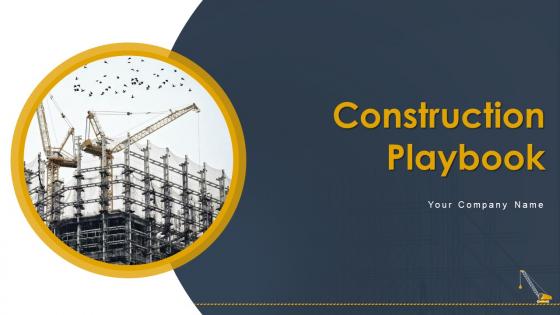
Slide 1: This slide introduces Construction Playbook. State Your Company Name and begin.
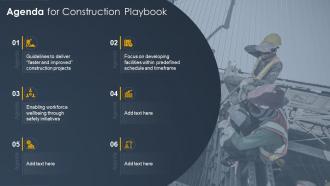
Slide 2: This is an Agenda slide. State your agendas here.
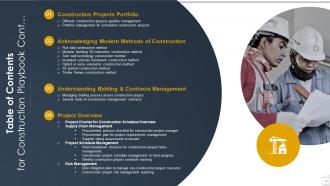
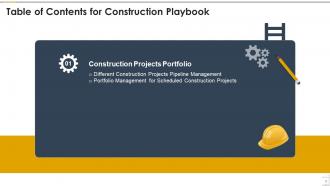
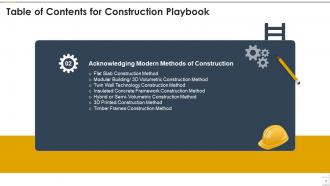
Slide 3: This slide presents Table of Content for the presentation.
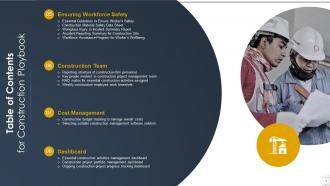
Slide 4: This is another slide continuing Table of Content for the presentation.
Slide 5: This slide highlights title for topics that are to be covered next in the template.
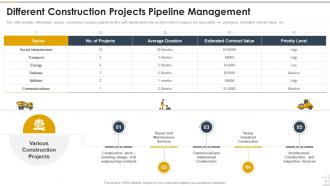
Slide 6: This slide shows Different Construction Projects Pipeline Management.
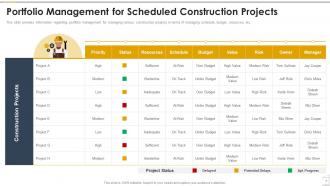
Slide 7: This slide presents Portfolio Management for Scheduled Construction Projects.
Slide 8: This slide highlights title for topics that are to be covered next in the template.
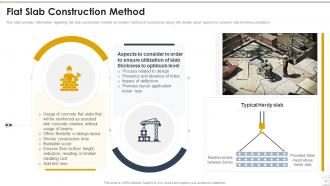
Slide 9: This slide provides information regarding flat slab construction method as modern method of construction.
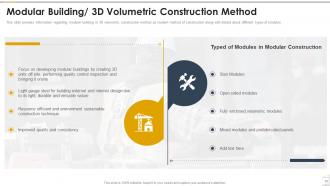
Slide 10: This slide showcases Modular Building/ 3D Volumetric Construction Method.
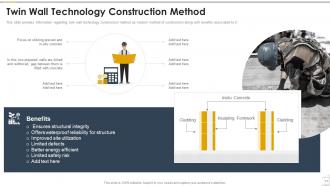
Slide 11: This slide shows Twin Wall Technology Construction Method.
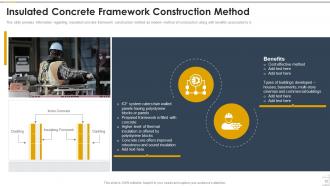
Slide 12: This slide presents Insulated Concrete Framework Construction Method.
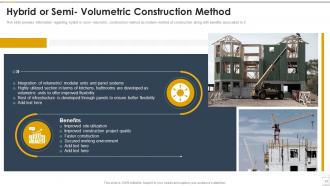
Slide 13: This slide displays Hybrid or Semi- Volumetric Construction Method.
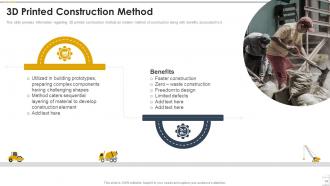
Slide 14: This slide represents 3D printed construction method as modern method of construction.
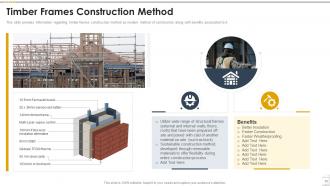
Slide 15: This slide showcases timber frames construction method as modern method of construction.
Slide 16: This slide highlights title for topics that are to be covered next in the template.
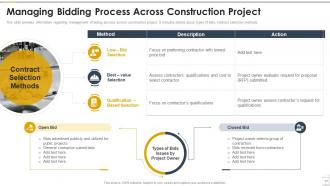
Slide 17: This slide shows Managing Bidding Process Across Construction Project.
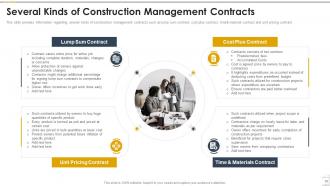
Slide 18: This slide presents Several Kinds of Construction Management Contracts.
Slide 19: This slide highlights title for topics that are to be covered next in the template.
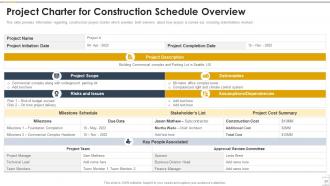
Slide 20: This slide displays Project Charter for Construction Schedule Overview.
Slide 21: This slide highlights title for topics that are to be covered next in the template.
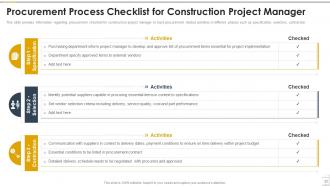
Slide 22: This slide represents Procurement Process Checklist for Construction Project Manager.
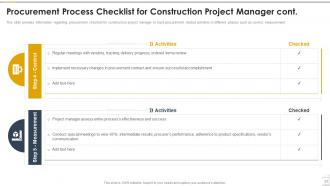
Slide 23: This is another slide continuing Procurement Process Checklist for Construction Project Manager.
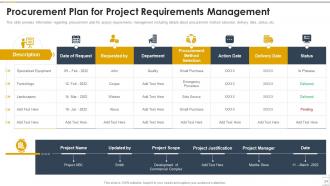
Slide 24: This slide showcases Procurement Plan for Project Requirements Management.
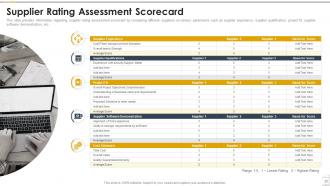
Slide 25: This slide shows Supplier Rating Assessment Scorecard.
Slide 26: This slide highlights title for topics that are to be covered next in the template.
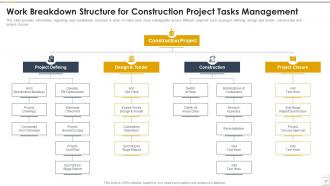
Slide 27: This slide presents Work Breakdown Structure for Construction Project Tasks Management.
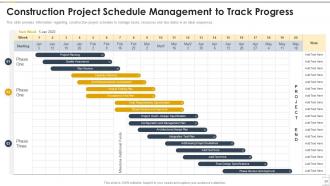
Slide 28: This slide displays Construction Project Schedule Management to Track Progress.
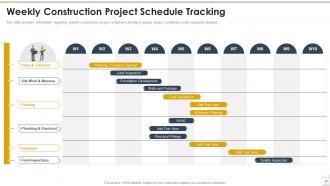
Slide 29: This slide represents Weekly Construction Project Schedule Tracking.
Slide 30: This slide highlights title for topics that are to be covered next in the template.
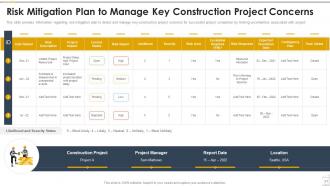
Slide 31: This slide showcases Risk Mitigation Plan to Manage Key Construction Project Concerns.
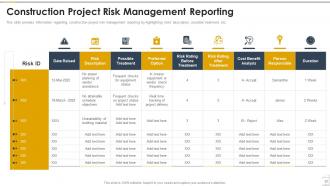
Slide 32: This slide shows Construction Project Risk Management Reporting.
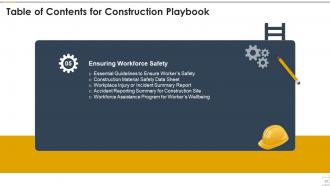
Slide 33: This slide highlights title for topics that are to be covered next in the template.
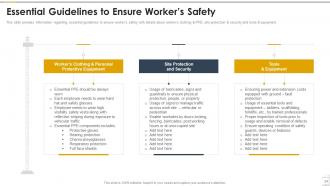
Slide 34: This slide presents Essential Guidelines to Ensure Worker’s Safety.
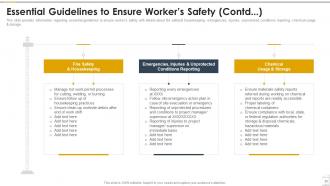
Slide 35: This is another slide continuing Essential Guidelines to Ensure Worker’s Safety.
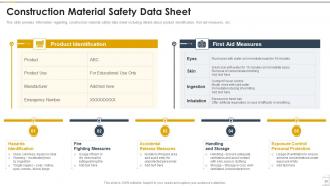
Slide 36: This slide provides information regarding construction material safety data sheet.
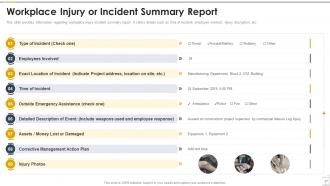
Slide 37: This slide displays Workplace Injury or Incident Summary Report.
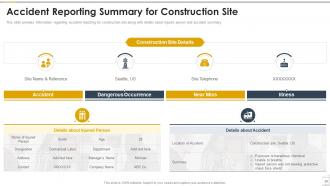
Slide 38: This slide represents Accident Reporting Summary for Construction Site.
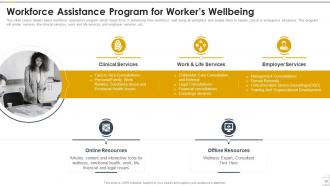
Slide 39: This slide showcases Workforce Assistance Program for Worker’s Wellbeing.
Slide 40: This slide highlights title for topics that are to be covered next in the template.
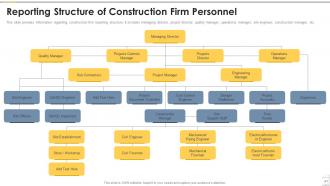
Slide 41: This slide shows Reporting Structure of Construction Firm Personnel.
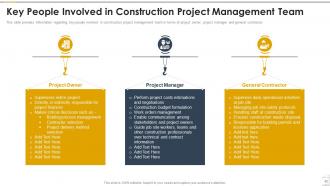
Slide 42: This slide presents Key People Involved in Construction Project Management Team.
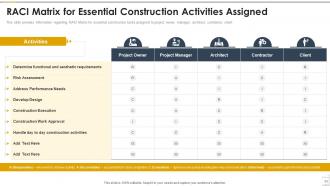
Slide 43: This slide displays RACI Matrix for Essential Construction Activities Assigned.
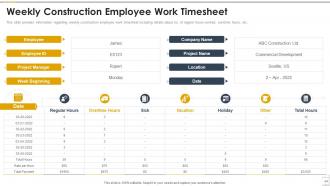
Slide 44: This slide represents Weekly Construction Employee Work Timesheet.
Slide 45: This slide highlights title for topics that are to be covered next in the template.
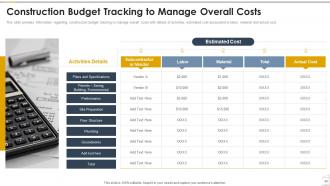
Slide 46: This slide showcases Construction Budget Tracking to Manage Overall Costs.
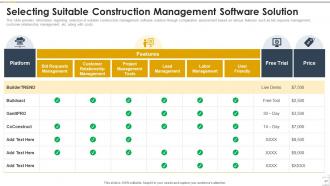
Slide 47: This slide shows Selecting Suitable Construction Management Software Solution.
Slide 48: This slide highlights title for topics that are to be covered next in the template.
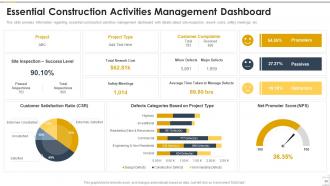
Slide 49: This slide presents Essential Construction Activities Management Dashboard.
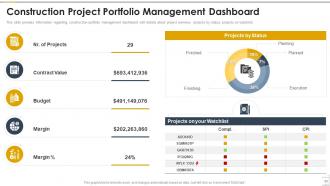
Slide 50: This slide displays Construction Project Portfolio Management Dashboard.
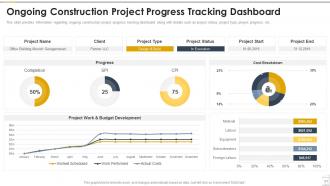
Slide 51: This slide represents Ongoing Construction Project Progress Tracking Dashboard.
Slide 52: This slide showcases Icons for Construction Playbook.
Slide 53: This slide is titled as Additional Slides for moving forward.
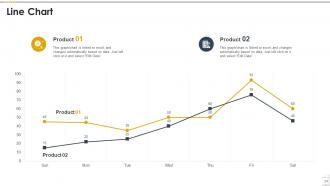
Slide 54: This slide describes Line chart with two products comparison.
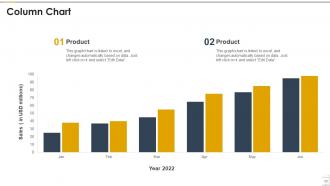
Slide 55: This slide displays Column chart with two products comparison.
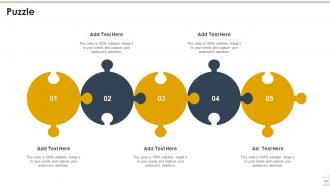
Slide 56: This slide contains Puzzle with related icons and text.
Slide 57: This slide shows Post It Notes. Post your important notes here.
Slide 58: This slide provides 30 60 90 Days Plan with text boxes.
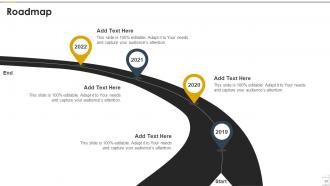
Slide 59: This slide presents Roadmap with additional textboxes.
Slide 60: This is a Timeline slide. Show data related to time intervals here.
Slide 61: This is a Thank You slide with address, contact numbers and email address.
Construction Playbook Powerpoint Presentation Slides with all 66 slides:
Use our Construction Playbook Powerpoint Presentation Slides to effectively help you save your valuable time. They are readymade to fit into any presentation structure.





FAQs for Construction Playbook
So you need five main things for your playbook: step-by-step processes for each project phase, who does what (with accountability stuff), quality checklists, risk protocols, and communication templates. Most teams totally bomb the communication piece - I've seen it happen way too many times. Budget tracking and safety procedures should be built right in too. The whole point? Stop reinventing everything each project. Document what you're already doing first, spot the holes, then create templates to fill those gaps. Makes life so much easier.
So basically you get this standardized roadmap that covers every project phase. No more "wait, what's next?" moments. Your team can just grab the templates and checklists instead of starting from scratch each time. Way better than winging it, honestly. Think GPS vs that crumpled map in your glove compartment. The big win? Less delays and miscommunication because everyone knows their role and timeline. Oh, and way less rework - which is where projects usually go off the rails. I'd start by writing down whatever worked best on your last successful job.
Honestly, you absolutely need everyone's input or your playbook will just sit there collecting dust. Start with interviews - get project managers, site supervisors, subcontractors, safety teams, even client reps involved. Each person sees different problems you'd never think of. I've watched so many companies create these things in isolation and wonder why nobody uses them later. The real workflow insights come from people actually doing the work day-to-day. Keep them involved while you're writing it too - their feedback during the process means they'll actually adopt it when it's done. Workshop sessions work great for this.
During your planning phase, map out the obvious stuff first - weather delays, supply chain headaches, safety issues, budget problems. Build your response plans right into the workflow instead of treating them like an afterthought. Most teams I've seen totally skip this step and kick themselves later. Weekly risk register updates are clutch, and someone needs to own each category or it'll just sit there collecting dust. Yeah, it's extra work upfront but way better than scrambling when things go sideways. The trick is baking it into your regular process from day one.
Clean layouts are everything - headers, bullets, white space so people can actually scan for what they need. I've watched crews struggle with these messy text-wall templates (total nightmare on site). Include sections for scope, timeline, who does what, plus safety stuff. Skip the fancy construction speak when you can help it. Checklists work great for the critical steps. Oh and definitely test these with your actual crews first - they'll spot the weird stuff you totally missed. Nothing worse than rolling out something that looks good on paper but sucks in real life.
So basically, a Construction Playbook gives you all the compliance stuff pre-built into one framework. You're not scrambling around trying to figure out OSHA requirements or building codes for every single project - which honestly saves so much headache. It comes with standardized processes, checklists, documentation templates, all that. Your whole crew follows the same procedures automatically, so you don't have to stress about missing something important or failing inspections. Think of it like having safety rails already built into how you work. Way better than winging it every time.
Honestly, going digital with your Construction Playbook is a total game-changer. Turn it into searchable PDFs or apps so your crew isn't flipping through endless pages trying to find stuff. QR codes that link to video demos? Chef's kiss - way better than reading instructions. Your team can pull everything up on their phones right on-site. Plus you can update things instantly instead of reprinting manuals every time something changes (which is constantly, let's be real). I'd start with whatever sections get used most and see how it goes.
Quarterly updates work best, or whenever new codes drop. I'd set up alerts from OSHA and your local building department - trust me, outdated specs will bite you in the ass eventually. My buddy's crew got slammed last year because they missed a materials change. Make a simple tracking sheet with revision dates. Split up the monitoring between team members - one handles safety stuff, another watches environmental regs, whatever works. Don't let updates pile up though. Handle them as they come instead of doing massive overhauls every few months. That's when important changes slip through and cause headaches later.
Honestly, the two biggest mistakes are making it way too generic or turning it into some massive, complicated mess. Nobody wants to read through a legal document when they're trying to get work done. Focus on YOUR actual processes instead - throw in flowcharts, checklists, maybe some examples from projects you've done before. Oh, and don't go crazy trying to plan for every weird scenario that might happen. Start with the stuff you do most often. You can always add more later. The key is keeping it updated based on what actually works, not what looks impressive in a presentation.
So basically, your Construction Playbook can bake sustainability right into every workflow from the start. Way smarter than trying to add green stuff later - trust me on that one. Build in requirements for eco-friendly materials, waste targets, energy-efficient processes. Your team follows the same environmental protocols, tracks carbon metrics, hits those LEED certifications. Here's what I'd do: pick your top 3 sustainability goals for the next project first. Then create playbook sections that make those mandatory. It's honestly pretty straightforward once you get the framework down.
Track your basics first - timeline vs actual progress, budget variance, and how often you're hitting change orders. Safety stuff can't be ignored either (incident rates, near misses). Quality metrics like rework percentages will save your ass later. Don't go overboard though - I've watched teams get buried under spreadsheets they never actually use. Stakeholder satisfaction and permit timelines matter too since those can totally derail things. Stick to maybe 6-8 metrics you'll actually check weekly. More than that? Nobody cares anymore.
Honestly, start with the communication stuff first - you'll see results right away. A good playbook basically gets everyone on the same page with workflows and standards. No more of that "not my department" BS we all hate dealing with. It puts all your project docs in one spot and creates clear handoff procedures. Regular check-ins between teams become automatic, and suddenly your field crews aren't completely disconnected from the office people. Everyone can actually see what's happening instead of working in their own little bubbles. The accountability thing sorts itself out once people know who's supposed to do what and when.
Think of case studies as your receipts - they prove the Construction Playbook actually works instead of just sounding good on paper. You get real examples of teams who used these methods and hit their targets: stayed under budget, finished early, dodged safety disasters. Honestly, everyone says their system is amazing, but case studies give you the actual numbers and stories. They're perfect for convincing skeptical stakeholders (we all have those) and figuring out which strategies work best for your type of project. Way more convincing than just theory.
Honestly, get one when your project feels like it could go sideways fast. Complex stuff where your team hasn't done this exact type of work before? Definitely. Multiple people involved who might not be on the same page? Yeah, that's a recipe for disaster without clear docs. I've seen too many projects crash because everyone had different ideas about what they were supposed to be doing. Big projects, tight timelines, or anything with regulatory hoops to jump through - those are no-brainers. Trust your gut though. If you're already thinking "this might get complicated," you probably need one.
Dude, visual stuff is a game changer for construction docs. Flowcharts work great for processes, timelines for project phases, and checklists for safety stuff. Nobody's reading walls of text when they're actually working - that's just reality. Infographics help people get the important bits fast, especially with complicated workflows or compliance nonsense. New guys love diagrams way more than dense paragraphs too. I'd start with whatever sections your crew uses most and make simple visual versions of those. Maybe throw in some icons or whatever. Trust me, it'll save everyone time.
-
Best way of representation of the topic.
-
Perfect template with attractive color combination.