


Cyber Security Incident Response Powerpoint Ppt Template Bundles




Try Before you Buy Download Free Sample Product
 Impress Your
 Audience
 100%
100% Editable
 Save Hours
 of Time


Our Cyber Security Incident Response Powerpoint Ppt Template Bundles are topically designed to provide an attractive backdrop to any subject. Use them to look like a presentation pro.
People who downloaded this PowerPoint presentation also viewed the following :
Cyber Security Incident Response Powerpoint Ppt Template Bundles with all 21 slides:
Use our Cyber Security Incident Response Powerpoint Ppt Template Bundles to effectively help you save your valuable time. They are readymade to fit into any presentation structure.










FAQs for Cyber Security Incident Response Powerpoint
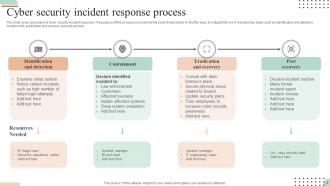
Key components include incident identification and classification, containment and eradication procedures, communication protocols, forensic analysis capabilities, and recovery strategies. These elements work together by enabling rapid threat detection, minimizing damage through swift containment, and ensuring business continuity, with many organizations finding that well-structured plans reduce incident resolution time significantly.
Organizations identify and prioritize cyber security threats through continuous monitoring, threat intelligence feeds, vulnerability assessments, security analytics platforms, and risk scoring frameworks. These technologies streamline threat detection by analyzing network traffic patterns, monitoring user behaviors, and correlating threat data, with many financial institutions and healthcare organizations finding that automated prioritization systems ultimately deliver faster response times and enhanced security postures.
Threat intelligence enhances incident response by providing contextual information about attackers, attack methods, indicators of compromise, attribution details, and emerging vulnerabilities. Through real-time intelligence feeds, security teams can proactively identify threats, accelerate incident classification, and implement targeted containment strategies, while reducing investigation time and ultimately strengthening organizational defenses against sophisticated cyber attacks.
Organizations ensure timely detection through comprehensive monitoring systems, automated threat detection tools, behavioral analytics, network traffic analysis, and endpoint detection technologies. These security measures streamline incident identification by continuously scanning for anomalies, flagging suspicious activities, and providing real-time alerts, with many financial services and healthcare institutions finding that proactive monitoring significantly reduces response times and minimizes potential damage.
Immediate steps include isolating affected systems, preserving evidence, activating the incident response team, assessing breach scope, and notifying stakeholders according to legal requirements. Organizations should simultaneously contain the threat, document all actions, communicate with relevant authorities, and begin recovery planning, with many finding that swift, coordinated responses significantly minimize operational disruption and regulatory penalties.
Companies can effectively communicate during security incidents by establishing pre-defined communication protocols, designating trained spokespersons, providing timely transparent updates, and tailoring messages for different audiences including customers, employees, and regulators. Through strategic communication frameworks, organizations streamline crisis management, maintain stakeholder trust, and demonstrate accountability, while minimizing reputational damage and ensuring regulatory compliance throughout the incident response process.
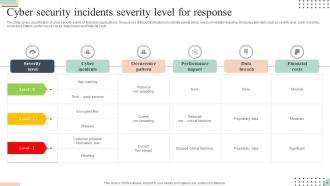
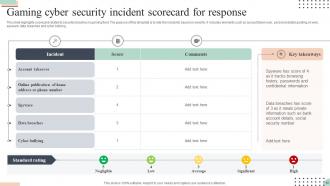
The most common cyber security incidents include ransomware attacks, phishing schemes, data breaches, insider threats, and distributed denial-of-service attacks. These incidents increasingly target businesses across sectors, with financial institutions facing payment fraud, healthcare organizations experiencing patient data theft, and retail companies encountering customer information breaches, ultimately requiring comprehensive response strategies to minimize operational disruption and maintain competitive advantage.
Organizations measure incident response effectiveness through key metrics including mean time to detection (MTTD), mean time to response (MTR), containment speed, recovery duration, and post-incident analysis outcomes. These measurements enable financial services firms, healthcare institutions, and retail companies to streamline their response protocols, minimize breach costs, and enhance overall security posture, ultimately delivering faster threat mitigation and stronger organizational resilience.
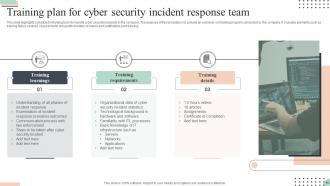
Essential training includes digital forensics, malware analysis, threat hunting, communication protocols, and legal compliance procedures. Incident response teams also require access to specialized tools like SIEM platforms, forensic software, and threat intelligence feeds, with many organizations finding that regular tabletop exercises and cross-functional collaboration significantly enhance their response capabilities and minimize breach impact.
Incident response varies significantly based on organizational size, with small businesses typically relying on streamlined protocols and external partnerships, while large enterprises deploy dedicated security teams, comprehensive playbooks, and advanced automation tools. Small organizations often benefit from managed security services and simplified response procedures, whereas corporations require complex coordination across multiple departments, regulatory compliance frameworks, and sophisticated threat intelligence capabilities, ultimately enabling faster containment and recovery regardless of scale.
Organizations must navigate data breach notification laws, regulatory compliance requirements like GDPR or HIPAA, evidence preservation protocols, and potential litigation risks during incident response. These legal frameworks vary significantly across jurisdictions and industries, with financial services, healthcare, and retail sectors facing particularly stringent requirements, ultimately making proactive legal consultation essential for minimizing regulatory penalties and maintaining stakeholder trust.
Businesses can perform post-incident analysis through comprehensive documentation review, stakeholder interviews, timeline reconstruction, response effectiveness evaluation, and gap identification processes. This systematic approach enables organizations to refine their incident response procedures, enhance team coordination, and strengthen security protocols, with many companies finding that structured post-incident reviews significantly reduce response times and minimize future breach impacts.
SIEM platforms, SOAR solutions, endpoint detection systems, threat intelligence feeds, and automated playbook engines are most effective for automating incident response workflows. These technologies streamline security operations by accelerating threat detection, orchestrating response actions, and minimizing manual intervention, with many organizations finding that strategic automation ultimately delivers faster containment and significantly reduced operational overhead.
Organizations balance incident response readiness with overall security efforts by integrating prevention, detection, and response capabilities into a unified security framework, establishing cross-functional teams, and implementing continuous monitoring systems. This strategic combination enables proactive threat hunting while maintaining rapid response capabilities, with many enterprises finding that coordinated security operations ultimately deliver both reduced incident impact and enhanced overall security posture.
Employee training plays a crucial role in minimizing security incident fallout by teaching staff to recognize threats early, respond appropriately during breaches, and follow established protocols that prevent escalation. Well-trained employees enable faster incident containment, reduce human error that amplifies damage, and enhance overall organizational resilience, with many companies finding that comprehensive training programs significantly decrease both incident frequency and recovery time.
-
Crisp and neat slides. Makes it fun and easier to curate presentations.
-
SlideTeam’s readymade presentations have landed my unique images with my bosses in the past and it continues to reward me.