


Cybersecurity Maturity Powerpoint Ppt Template Bundles





Try Before you Buy Download Free Sample Product
 Impress Your
 Audience
 100%
100% Editable
 Save Hours
 of Time


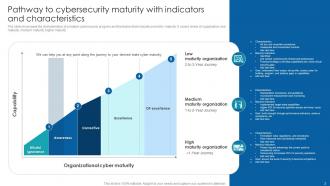
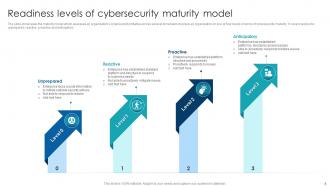
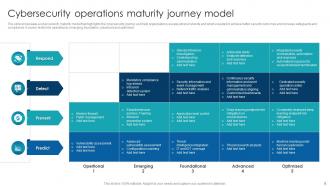
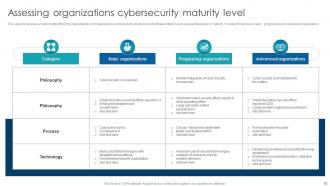
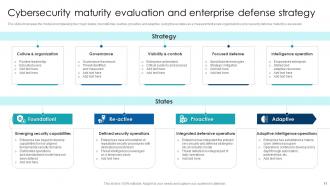
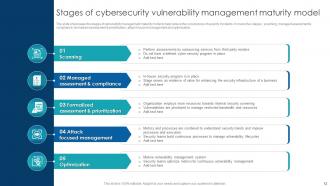
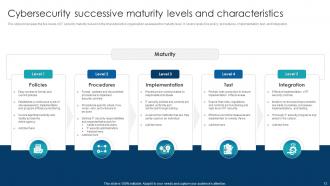
Introducing our comprehensive and cutting edge PPT on Cybersecurity Maturity Cybersecurity Framework, Threat Intelligence, Organizational Online Security, Maturity Map, Cyber Security Organizational Excellence. This powerful presentation is designed to equip organizations with the knowledge and tools necessary to fortify their online security defenses. The Cybersecurity Maturity module covers various aspects, including implementing a robust Cybersecurity Framework that aligns with industry standards and best practices. It emphasizes the importance of Threat Intelligence, enabling organizations to proactively identify and respond to potential cyber threats. With a focus on Organizational Online Security, this PPT highlights key strategies for safeguarding sensitive data, securing networks, and establishing effective incident response protocols. The Maturity Map section guides organizations in assessing their current cybersecurity posture and provides actionable steps to enhance their security maturity level. Furthermore, the presentation delves into Cyber Security Organizational Excellence, emphasizing the significance of a strong security culture, continuous monitoring, and ongoing training and awareness programs. Our comprehensive Cybersecurity PPT is a valuable resource for organizations seeking to strengthen their cybersecurity defenses, mitigate risks, and achieve a state of cyber resilience.
People who downloaded this PowerPoint presentation also viewed the following :
Cybersecurity Maturity Powerpoint Ppt Template Bundles with all 22 slides:
Use our Cybersecurity Maturity Powerpoint Ppt Template Bundles to effectively help you save your valuable time. They are readymade to fit into any presentation structure.












FAQs for Cybersecurity Maturity Powerpoint
Key components of a cybersecurity maturity model include governance and risk management, asset management, threat detection and response, security awareness training, and continuous monitoring capabilities. These frameworks enable organizations to systematically enhance their security posture by establishing clear benchmarks, identifying vulnerabilities across networks and systems, and implementing progressive improvements, ultimately delivering stronger resilience against evolving cyber threats.
Organizations can assess their cybersecurity maturity through comprehensive frameworks like NIST, ISO 27001, and CMMC, alongside security audits, vulnerability assessments, and gap analyses. These evaluations examine incident response capabilities, employee training programs, and threat detection systems, with many financial institutions and healthcare providers finding that regular maturity assessments ultimately deliver enhanced risk management and regulatory compliance.
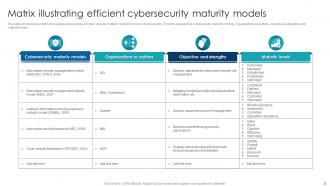
Common cybersecurity maturity frameworks include NIST Cybersecurity Framework, CMMI-DEV, ISO/IEC 27001, CIS Controls, and COBIT 2019. These frameworks enable organizations to assess current security posture, identify gaps, and prioritize improvements through structured evaluation processes, with many financial services and healthcare institutions finding that systematic maturity assessments significantly enhance their risk management capabilities.
Cybersecurity maturity significantly enhances an organization's risk management strategy by enabling proactive threat identification, streamlined incident response protocols, and comprehensive vulnerability assessments across all business operations. Organizations with higher maturity levels can anticipate emerging threats more effectively, allocate security resources strategically, and integrate cybersecurity considerations seamlessly into broader business decisions, ultimately delivering reduced operational risks and stronger competitive positioning.
Employee training serves as a foundational pillar in cybersecurity maturity, addressing human vulnerabilities through security awareness programs, phishing simulation exercises, incident response protocols, and regular policy updates. These educational initiatives significantly reduce security breaches by empowering staff to identify threats, follow proper procedures, and maintain vigilant security practices, with many organizations finding that well-trained employees become their strongest defense against evolving cyber threats.
Organizations should reevaluate their cybersecurity maturity quarterly for tactical assessments and annually for comprehensive strategic reviews, with additional evaluations triggered by major incidents, regulatory changes, or technology implementations. This approach enables continuous improvement while adapting to evolving threats, with many enterprises finding that regular assessments enhance their security posture and operational resilience.
Common cybersecurity maturity pitfalls include inadequate risk assessments, siloed security approaches, insufficient staff training, poor vendor management, and reactive rather than proactive strategies. These challenges often stem from budget constraints and fragmented implementation, with many organizations finding that lack of executive alignment and outdated technology integration ultimately hinder their security advancement efforts.
New technology adoption significantly influences cybersecurity maturity by introducing advanced threat detection, automated response capabilities, and enhanced monitoring systems, while also creating new vulnerabilities and attack surfaces. Organizations implementing AI-driven security tools, zero-trust architectures, and cloud-native protections often find that strategic technology integration accelerates maturity progression, ultimately delivering stronger resilience and competitive advantage in an increasingly complex threat landscape.
Regulatory requirements significantly accelerate cybersecurity maturity by mandating comprehensive risk assessments, incident response protocols, data protection measures, and regular compliance audits. These frameworks, such as GDPR for financial services or HIPAA for healthcare organizations, drive systematic security improvements while establishing baseline standards, ultimately delivering enhanced threat resilience and competitive advantage in increasingly regulated markets.
Organizations can track cybersecurity maturity through metrics like incident response times, vulnerability remediation rates, security awareness training completion, compliance audit scores, and mean time to detection of threats. These measurements enable businesses across sectors like banking, healthcare, and retail to quantify their security posture improvements, ultimately delivering enhanced risk management and regulatory compliance while demonstrating tangible security investment returns.
Organizations create a cybersecurity culture through comprehensive employee training, clear security policies, regular awareness campaigns, leadership commitment, and incident response protocols. These initiatives enhance security by promoting accountability, encouraging proactive threat identification, and integrating security considerations into daily operations, with many companies finding that engaged employees become their strongest defense against evolving cyber threats.
Organizations should implement multi-layered security frameworks, conduct regular vulnerability assessments, establish incident response protocols, provide comprehensive employee training, and maintain updated security policies. These practices enhance cybersecurity maturity by reducing attack surfaces, improving threat detection, and ensuring rapid recovery, with many financial institutions and healthcare organizations finding that strategic security investments ultimately deliver operational resilience and competitive advantage.
Incident response capability serves as a critical pillar of cybersecurity maturity, demonstrating an organization's ability to detect, contain, and recover from security breaches through structured processes, trained teams, and automated tools. Organizations with mature incident response capabilities experience significantly faster containment times, reduced business disruption, and improved stakeholder confidence, while also enabling continuous learning that strengthens their overall security posture and competitive resilience.
Cybersecurity maturity directly strengthens organizational resilience by establishing robust defense mechanisms, comprehensive incident response protocols, and proactive threat detection capabilities that minimize business disruptions. Organizations with higher cybersecurity maturity recover faster from attacks, maintain operational continuity, and adapt more effectively to emerging threats, ultimately delivering sustained competitive advantage and stakeholder confidence in an increasingly complex digital landscape.
Third-party vendors significantly impact organizational cybersecurity maturity by introducing external vulnerabilities, expanding attack surfaces, and creating dependency risks that require enhanced monitoring, assessment, and governance frameworks. Organizations with mature cybersecurity programs implement comprehensive vendor risk management, continuous security assessments, and contractual security requirements, while less mature entities often struggle with vendor oversight, ultimately finding that strategic third-party security integration strengthens overall defensive capabilities.
-
Love the template collection they have! I have prepared for my meetings much faster without worrying about designing a whole presentation from scratch.
-
The website is jam-packed with fantastic and creative templates for a variety of business concepts. They are easy to use and customize.