


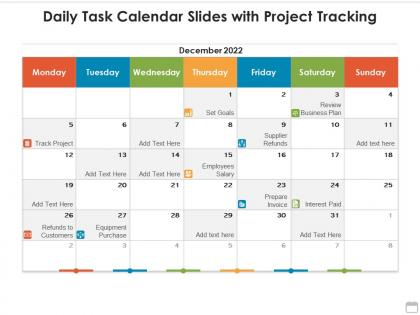
Daily task calendar slides with project tracking




Try Before you Buy Download Free Sample Product
 Impress Your
 Audience
 100%
100% Editable
 Save Hours
 of Time


Our Daily Task Calendar Slides With Project Tracking are topically designed to provide an attractive backdrop to any subject. Use them to look like a presentation pro.
People who downloaded this PowerPoint presentation also viewed the following :
Daily task calendar slides with project tracking with all 2 slides:
Use our Daily Task Calendar Slides With Project Tracking to effectively help you save your valuable time. They are readymade to fit into any presentation structure.
FAQs for Daily task calendar slides
Okay so first thing - get your objectives crystal clear and figure out who all your stakeholders are. Seriously, people mess up the stakeholder part constantly and it bites them later. Set your scope boundaries early too, otherwise you're screwed. Executive sponsorship is huge - without it you're basically fighting uphill the whole time. Oh and definitely create a project charter everyone can look back at. Budget and timeline stuff needs to be realistic from day one. Here's the thing though - get everything approved in writing before you start. Scope creep is coming whether you like it or not.
Figure out what problem you're actually trying to solve first. Talk to everyone who cares about this project - customers, your team, the bosses. What does winning look like for them? Make a one-pager with your deliverables and timeline, but here's the thing - be super clear about what you're NOT doing. That's honestly the most important part. Scope creep will destroy you if you're not careful about boundaries upfront. Run it by your key people to make sure you're on the same page. Get their sign-off in writing before you start anything.
Honestly, it depends what you're working on. Software teams love Agile and Scrum because things change constantly. Construction and pharma? They stick with Waterfall since you can't really tear down a building halfway through, you know? Marketing teams I've worked with swear by Kanban - it's perfect for all those random requests that pop up. Lean's solid for healthcare too, cuts out the nonsense. My old boss always said match your method to how much chaos you expect. Can you pivot easily or do you need everything locked down from day one?
Honestly, you've gotta start thinking about what could go wrong before it actually does. Budget issues, timeline delays, tech problems - all that fun stuff. I always make a basic risk spreadsheet (I know, sounds boring but trust me). Score each risk by how likely it is and how bad the damage would be. For the scary high-priority ones, have backup plans ready. Extra time built in, alternative resources, whatever. Don't just set it and forget it though - check in weekly with your team because new problems always surface. Way better to catch stuff early than scramble later when everything's on fire.
Dude, communication with stakeholders literally makes or breaks everything. I've seen so many projects crash because people didn't talk to each other properly. You'll avoid all that nightmare scope creep and those awful "wait, this isn't what we asked for" surprises at the end. Map out who needs updates and how often right from the start - trust me on this one. Regular check-ins are your friend. Listen to what they're actually saying too, not just what you think they want. It sounds obvious but you'd be surprised how many people skip this step and then wonder why everything went sideways.
Honestly, it's a game changer. Having everything in one spot where the whole team can see who's doing what and when it's due? No more "wait, what am I supposed to be working on" moments. Files get shared instantly, deadlines are crystal clear, and you're not buried under a million emails anymore. Real-time updates mean nobody's left guessing about progress. I was skeptical at first but the transparency alone makes it worth it - though it does mean you can't really hide when you're behind on something lol. Try Asana or Monday.com to start.
Honestly, I messed this up big time once - gave the same person three huge deliverables and nearly broke them. Here's what I learned: map out who's got what skills first, then figure out your priorities. Your star players should tackle the make-or-break stuff, but don't pile everything on them. Buffer time is non-negotiable because stuff always takes longer than you think. Those resource management tools actually help spot problems before they blow up. But real talk? Just ask your team how they're doing regularly. They'll warn you when something's about to go sideways way before deadlines start slipping.
Honestly, you've got to look at both the numbers and the feel of things. Sure, track your budget, timeline, and scope against what you originally planned - that's project management 101. But here's the thing: I've seen projects go over budget that still knocked it out of the park for the client. Quality matters obviously, but don't forget about team morale and whether you actually fixed what was broken. Client happiness is huge too. The real trick? Nail down what "success" means with everyone upfront, then keep checking those boxes as you go.
Break it down into smaller chunks first - way easier to manage. Set mini-deadlines for each piece so you can catch problems before they snowball. Gantt charts are nice but honestly? Even a basic kanban board works. Hell, I still use sticky notes sometimes lol. Always pad your timeline because something will go wrong - trust me on this one. Daily check-ins with your team are clutch for spotting issues early. The real trick is being honest about how long stuff actually takes upfront. Don't be afraid to speak up when things start shifting either.
Document everything first - seriously, get written approval before you touch that scope. I made this mistake once where a "tiny tweak" completely wrecked our timeline. Figure out how it hits your budget and resources, then be super upfront about those trade-offs with everyone involved. Update your project docs and make sure the whole team knows what's shifting and why. Honestly, being transparent about costs from the start beats dealing with angry stakeholders later. Oh, and set up some kind of change process so you're not always putting out fires.
Look, it's basically your roadmap so everyone knows what they're supposed to be doing and when. Keeps the scope, timeline, and budget from going completely off the rails. You'll definitely need it when stakeholders start changing their minds halfway through (and trust me, they always do). Honestly, I've seen too many projects crash because people thought they could just figure it out as they went. Even a super basic template works - just track your progress and risks. Way better than crossing your fingers and hoping everything works out.
Dude, lessons learned are like project insurance for next time. Document what bombed, what killed it, and why you made certain calls - you're basically building a cheat sheet so your team doesn't mess up the same way twice. Also helps you copy what actually worked on future stuff. Why start from scratch every damn time? The trick is actually looking at these notes when you kick off new projects (we're terrible at this honestly). Just keep a shared doc somewhere and dump 3-5 big takeaways after each project. Nothing fancy needed.
Honestly, celebrating small wins is huge - people always underestimate how much that matters. Make sure everyone knows how their piece fits the bigger picture too. I'd do weekly check-ins to catch any motivation issues early, and maybe rotate who gets the interesting tasks so nobody gets stuck with boring stuff all the time. Quick responses when people have concerns goes a long way. Give them some freedom to make decisions where you can. Oh, and public recognition is gold - way better than private praise sometimes. Even tiny celebrations work. Trust me, the team bonding stuff actually helps more than you'd think it would.
Oh man, cultural stuff can totally mess with global projects if you're not ready for it. Some teams are crazy direct while others hint around everything - I've seen so many misunderstandings from that alone. Time zones are annoying but honestly the easy part. Different cultures handle deadlines, hierarchy, and conflict resolution completely differently. Like, what feels respectful to one person might seem rude to another. Definitely spend time learning about your team's backgrounds upfront. Set clear communication rules early and build in extra time for those "wait, what did you actually mean?" conversations. Trust me on the buffer time thing.
Honestly, communication is probably the biggest one - you're constantly playing translator between different teams. Problem-solving is clutch too since nothing ever goes according to plan (learned that the hard way lol). Time management and staying organized are pretty obvious. But don't sleep on emotional intelligence - dealing with stakeholder drama and team personalities can make or break a project. Leadership helps even when you can't actually boss people around. I'd say pick your weakest area and focus there first instead of trying to improve everything at once.
-
Professional and unique presentations.