Project Task Tracker List With Progress And Completion
Try Before you Buy Download Free Sample Product
Audience
Editable
of Time
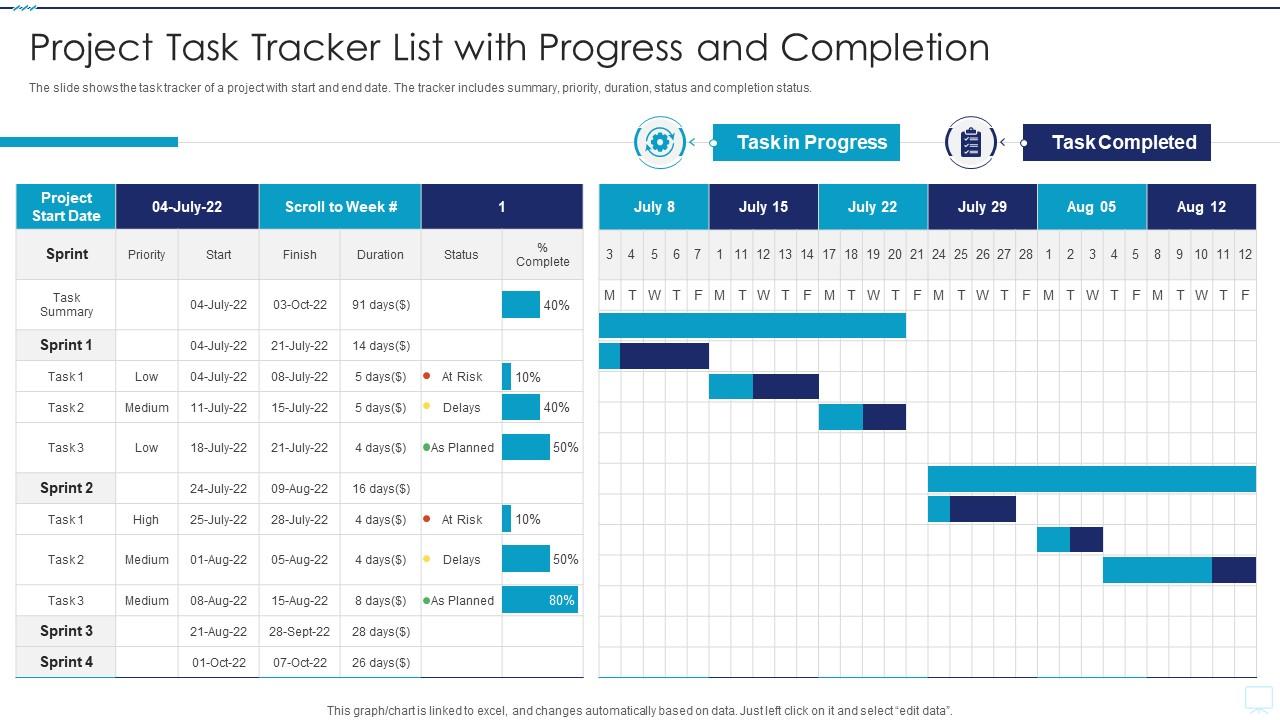
The slide shows the task tracker of a project with start and end date. The tracker includes summary, priority, duration, status and completion status.
People who downloaded this PowerPoint presentation also viewed the following :
Project Task Tracker List With Progress And Completion with all 7 slides:
Use our Project Task Tracker List With Progress And Completion to effectively help you save your valuable time. They are readymade to fit into any presentation structure.
FAQs for Project Task Tracker List With
Look, most projects follow the same basic pattern: you start it, plan it out, do the work, check how it's going, then wrap up. Waterfall makes you finish each step before moving on - kinda rigid if you ask me. Agile smooshes everything into those 2-4 week sprints on repeat. Lean's obsessed with cutting out waste, Prince2 loves its checkpoints. Honestly? Don't stress too much about which framework you pick. Just find one that clicks with how your team actually works and stick with it. Maybe try mapping your current project against those phases - you'll probably spot some gaps pretty quick.
Good communication stops that constant "wait, what am I supposed to be doing?" chaos that kills productivity. Your team can focus on actual work when they know their deadlines and who depends on what. It prevents duplicate efforts too - you know those cringe moments when someone realizes they've spent three days on the wrong thing? Yeah, avoid that. Regular check-ins help, and honestly, shared docs are a lifesaver so stuff doesn't slip through cracks. People will flag problems earlier when there's trust. Clear priorities keep everyone rowing in the same direction instead of spinning wheels.
Scope creep will absolutely wreck your project - it's the worst. Like when you plan a quick coffee and suddenly you're helping someone move apartments. Start with crystal clear boundaries and make stakeholders actually sign off on everything. Document changes through a formal process, no exceptions. I learned this the hard way on my last project tbh. Regular check-ins help catch problems early. Also unclear requirements and stakeholder misalignment are huge pain points. Spend extra time upfront defining what's included and what isn't. Sounds boring but it'll save you so much headache later.
Okay so first thing - map out your critical path. Those are the tasks that'll screw you if they get delayed. Write everything down and figure out what depends on what. I'm obsessed with color-coding this stuff but do whatever clicks for you. Talk to your stakeholders NOW about what might get cut or simplified. Honestly, being upfront about trade-offs beats overpromising every time. Build in tiny buffers if you can. Oh, and check your progress daily instead of weekly - way easier to course-correct that way.
Honestly, stakeholder engagement can make or break your whole project. Get them involved early and you'll actually get buy-in instead of constant pushback. They become problem-solvers rather than roadblocks - trust me on this one. You'll also get clearer requirements upfront, which saves tons of headaches later. Map out who your key players are first. Then figure out how much each person needs to be in the loop. Oh, and set up regular check-ins with your most important ones right away. Engaged stakeholders will literally fight for your project when you need budget or leadership support.
Don't wait until you're already screwed - build risk management into your kickoff meeting. List out what could go wrong, then score each risk by how likely it is and how bad it'd be. I always used to skip this part and kick myself later! For the scary high-impact stuff, have backup plans ready. Buffer time is your friend here. Weekly check-ins during team meetings work great - just make it a regular agenda item instead of this big separate thing. Oh and update your risk list at every milestone or you'll forget half the stuff that matters.
Look, just pick Asana, Monday, or Jira - whatever clicks with your team. I've watched groups spend forever debating which platform is "best" when they're all solid options. What matters is everyone actually uses it consistently. Set up clear milestones and deadlines from day one. Toggl or Harvest are good for time tracking, then create dashboards to see burn-down charts and how resources are spread. My advice? Start basic with whichever tool you choose. You can get fancy with features later once people aren't confused by the interface anymore.
Honestly, the relationship stuff is what makes or breaks it - I know it sounds cheesy but it's true. Create that safe space where people aren't scared to speak up or mess up. When someone wins, shout it out. When they fail? Turn it into a lesson, not a blame game. Regular one-on-ones are clutch. Be real about what's going wrong with projects instead of pretending everything's fine. Trust me, transparency beats fake positivity every time. People will actually care when they feel like you've got their back. Oh and try this - at your next meeting, have everyone share something they're proud of from the week. Works surprisingly well.
So basically waterfall is super linear - you finish planning, then design, then dev, then testing. No going back. Agile breaks everything into short sprints where you're constantly tweaking stuff based on feedback. Waterfall's great when you know exactly what you want upfront and need predictable timelines. But if your stakeholders are gonna change their minds every week (and let's be real, they probably will), agile handles that way better. Most teams I've worked with just mix both approaches now depending on the project. Fixed deadline? Maybe lean waterfall. Lots of unknowns? Definitely go agile.
Honestly, you gotta look beyond just hitting deadlines and budget. Survey your actual team and clients - are they happy? Did you give them what they needed or just what was in the original scope? I've watched so many "successful" projects that checked all the boxes but left everyone miserable afterward. Track stuff like team morale and whether people actually use what you built. Knowledge transfer matters too - did anyone learn anything useful? Maybe throw together a simple scorecard. Mix these softer metrics with your usual time/money ones. Trust me, it'll tell you way more about real success.
Honestly, the key is jumping on conflicts before they blow up - waiting just makes everything messier. I always try to set up those communication channels early so people aren't bottling stuff up. Face-to-face conversations work way better than email chains (learned that the hard way). Focus on the actual problem instead of getting personal about it. Active listening is clutch here. People lose their minds when they feel ignored. Oh, and make sure roles are crystal clear from day one - half the drama comes from people stepping on each other's toes without realizing it.
Honestly, just figure out what's actually breaking first. Look at your team's real problems - maybe you need extra approval steps because you're in finance or healthcare, or maybe you can ditch half the status meetings because everyone's already moving fast. Keep the bones of whatever framework you're using but tweak the ceremonies and timelines. I'd definitely test changes with just one team though, because rolling out stuff company-wide without knowing if it works is... well, you know how that usually goes. The whole point is making it fit how your people actually work, not forcing them into some textbook process.
Do it within 2-3 weeks while everyone still remembers what actually happened. The biggest mistake? Making people feel like they'll get thrown under the bus for being honest - I've seen so many of these turn into useless fluff sessions because of that. Ask three things: what worked, what sucked, and what you'd change. Write down real actionable stuff, not vague garbage like "we need better communication." Oh, and this part's crucial - actually use those lessons on your next project. Otherwise you're basically just paying people to complain for an hour.
Honestly, I'd start by figuring out who's actually good at what and when they're free. Then put your A-players on the stuff that really matters - like whatever's on your critical path. Don't make the mistake of spreading everyone across every little thing because you'll just end up with half-decent work everywhere. The whole "right person, right job, right time" thing sounds cliche but it's true. Oh, and definitely keep some people in your back pocket for when things inevitably go sideways. Check in weekly on who's swamped vs. who's got bandwidth, then move people around as needed.
Start with your communication rhythm - daily standups and weekly check-ins are clutch. Slack works great for quick stuff, Zoom for actual face time. Project management tools like Asana keep everyone on track (though honestly there's like a million options now). With remote work, I'd way rather overcommunicate than leave people guessing. Set clear response time expectations since everyone's in different time zones. Document everything in shared spaces - can't tell you how much stuff gets buried in email threads. Quick tip: audit how your team talks now and fix the biggest pain points first. That'll give you the most bang for your buck.
-
Slideteam offers pocket-friendly products. As a college student this is a really necessary thing to look at while paying for something.
-
Superb! The innovative and inspiring template designs provide an edge to the presentation.