


Deployment Of Digital Transformation In Insurance Sector Powerpoint Presentation Slides




Try Before you Buy Download Free Sample Product
 Impress Your
 Audience
 100%
100% Editable
 Save Hours
 of Time


Explore the revolution of insurance with our comprehensive Deployment of Digital Transformation in the Insurance Sector PowerPoint presentation. This dynamic guide unveils the power of digital insurance, where cutting-edge technologies redefine insurance processes and provide innovative solutions. Witness the shift from traditional to digital insurance, emphasizing benefits, trends, and impactful reports. Delve into the implementation steps of digital transformation, discovering key technologies like AI, ML, IoT, insurtech, and more. The Insurance Company PPT addresses optimizing customer journeys, navigating challenges, and unlocking success factors in digital transformation. Learn how insurers integrate core systems and discover real-world success stories, including a compelling case study on Achmeas journey. With this transformative digitalization deck, insurers can harness the potential of digitalization, enhancing customer experiences, reducing costs, and propelling the insurance industry into the future. Embrace the digital revolution download the presentation and embark on a journey of innovation and growth in the insurance sector.
People who downloaded this PowerPoint presentation also viewed the following :
Content of this Powerpoint Presentation
Slide 1: This slide introduces Deployment of Digital Transformation in Insurance Sector. State your company name and begin.
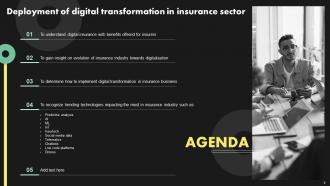
Slide 2: This slide states Agenda of the presentation.
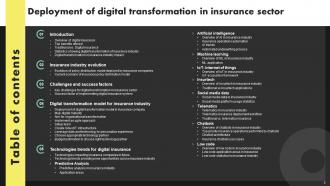
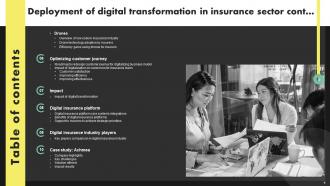
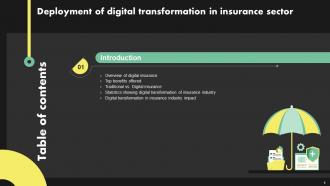
Slide 3: This slide shows Table of Content for the presentation.
Slide 4: This is another slide continuing Table of Content for the presentation.
Slide 5: This slide highlights title for topics that are to be covered next in the template.
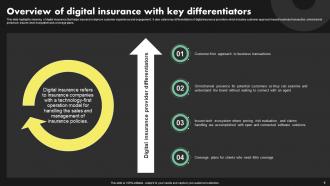
Slide 6: This slide presents Overview of digital insurance with key differentiators.
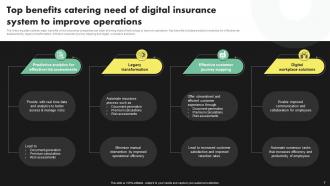
Slide 7: This slide displays Top benefits catering need of digital insurance system to improve operations.
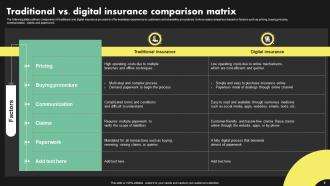
Slide 8: This slide represents Traditional vs. digital insurance comparison matrix.
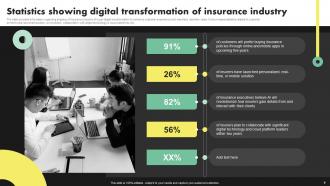
Slide 9: This slide showcases Statistics showing digital transformation of insurance industry.
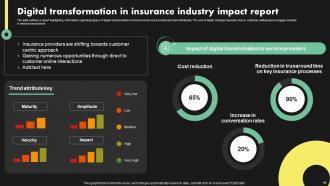
Slide 10: This slide shows Digital transformation in insurance industry impact report.
Slide 11: This slide highlights title for topics that are to be covered next in the template.
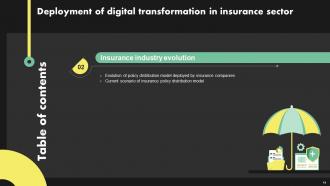
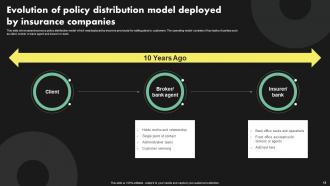
Slide 12: This slide presents Evolution of policy distribution model deployed by insurance companies.
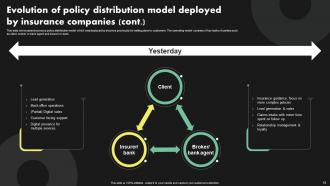
Slide 13: This slide displays Evolution of policy distribution model deployed by insurance companies.
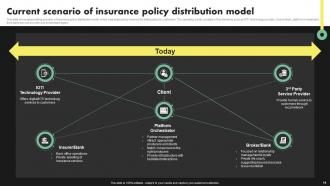
Slide 14: This slide represents Current scenario of insurance policy distribution model.
Slide 15: This slide highlights title for topics that are to be covered next in the template.
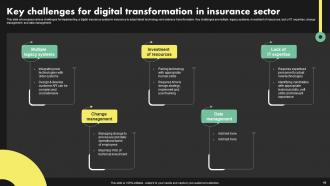
Slide 16: This slide showcases Key challenges for digital transformation in insurance sector.
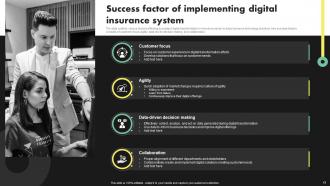
Slide 17: This slide shows Success factor of implementing digital insurance system.
Slide 18: This slide highlights title for topics that are to be covered next in the template.
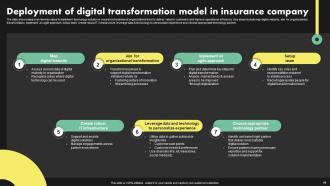
Slide 19: This slide presents Deployment of digital transformation model in insurance company.
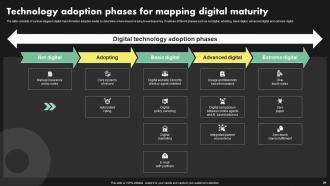
Slide 20: This slide displays Technology adoption phases for mapping digital maturity.
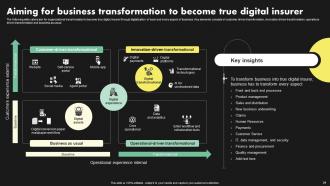
Slide 21: This slide represents Aiming for business transformation to become true digital insurer.
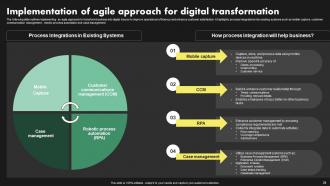
Slide 22: This slide showcases Implementation of agile approach for digital transformation.
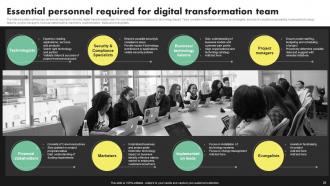
Slide 23: This slide shows Essential personnel required for digital transformation team.
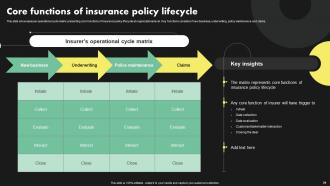
Slide 24: This slide presents Insurer's operational cycle matrix.
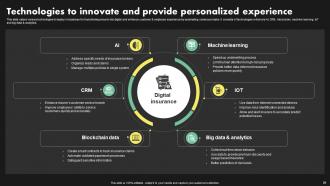
Slide 25: This slide displays Technologies to innovate and provide personalized experience.
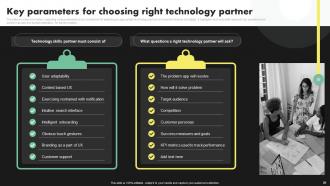
Slide 26: This slide represents Key parameters for choosing right technology partner.
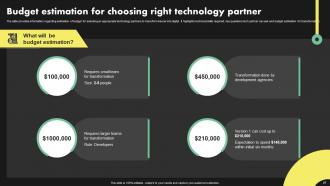
Slide 27: This slide showcases Budget estimation for choosing right technology partner.
Slide 28: This slide highlights title for topics that are to be covered next in the template.
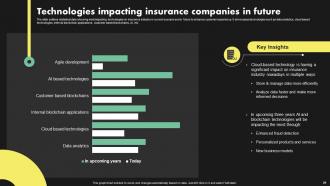
Slide 29: This slide shows Technologies impacting insurance companies in future.
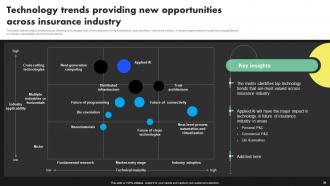
Slide 30: This slide presents Technology trends providing new opportunities across insurance industry.
Slide 31: This slide highlights title for topics that are to be covered next in the template.
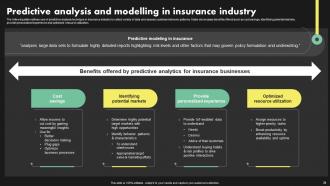
Slide 32: This slide displays Predictive analysis and modelling in insurance industry.
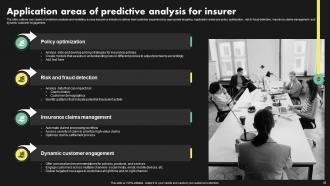
Slide 33: This slide represents Application areas of predictive analysis for insurer.
Slide 34: This slide highlights title for topics that are to be covered next in the template.
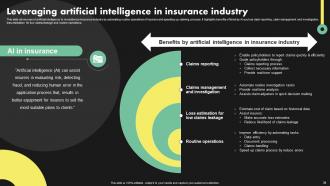
Slide 35: This slide showcases Leveraging artificial intelligence in insurance industry.
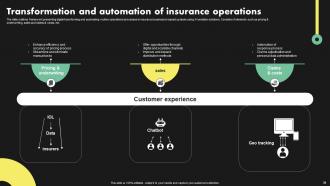
Slide 36: This slide shows Transformation and automation of insurance operations.
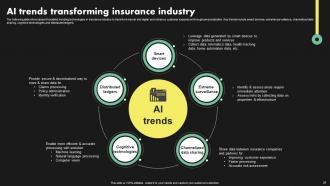
Slide 37: This slide presents AI trends transforming insurance industry.
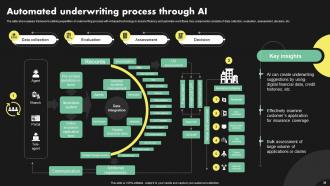
Slide 38: This slide displays Automated underwriting process through AI.
Slide 39: This slide highlights title for topics that are to be covered next in the template.
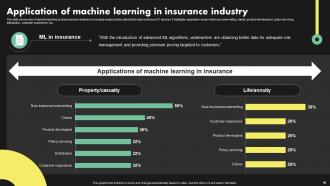
Slide 40: This slide represents Application of machine learning in insurance industry.
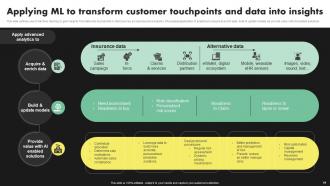
Slide 41: This slide showcases Applying ML to transform customer touchpoints and data into insights.
Slide 42: This slide highlights title for topics that are to be covered next in the template.
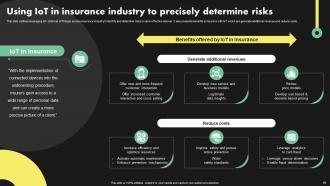
Slide 43: This slide shows Using IoT in insurance industry to precisely determine risks.
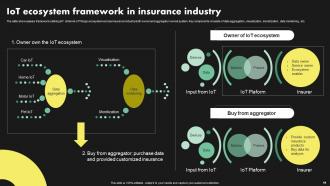
Slide 44: This slide presents IoT ecosystem framework in insurance industry.
Slide 45: This slide highlights title for topics that are to be covered next in the template.
Slide 46: The slide outlines aligning and implementing insurance and technology to make insurance more assessible.
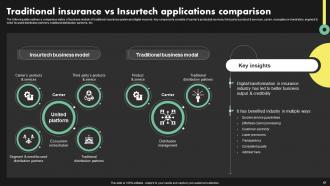
Slide 47: This slide displays Traditional insurance vs Insurtech applications comparison.
Slide 48: This slide highlights title for topics that are to be covered next in the template.
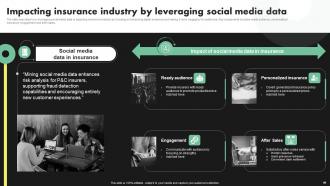
Slide 49: The slide describes how leveraging social media data is impacting insurance industry by focusing on enhancing digital presence.
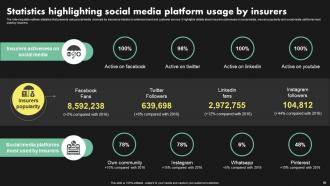
Slide 50: This slide represents Statistics highlighting social media platform usage by insurers.
Slide 51: This slide highlights title for topics that are to be covered next in the template.
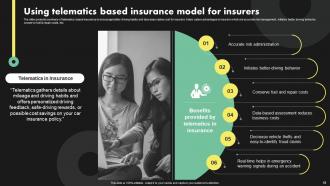
Slide 52: This slide showcases Using telematics based insurance model for insurers.
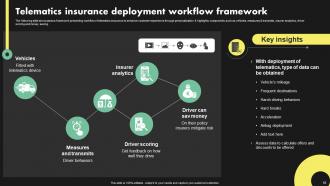
Slide 53: This slide showcases Telematics insurance deployment workflow framework.
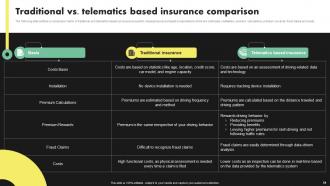
Slide 54: This slide shows Traditional vs. telematics based insurance comparison.
Slide 55: This slide highlights title for topics that are to be covered next in the template.
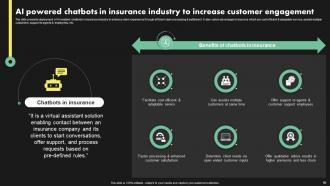
Slide 56: This slide presents AI powered chatbots in insurance industry to increase customer engagement.
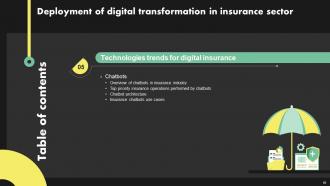
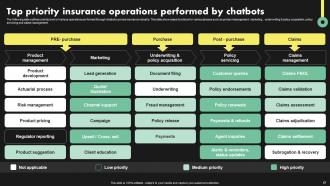
Slide 57: This slide displays Top priority insurance operations performed by chatbots.
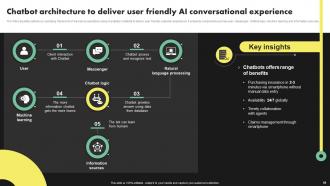
Slide 58: This slide represents Chatbot architecture to deliver user friendly AI conversational experience.
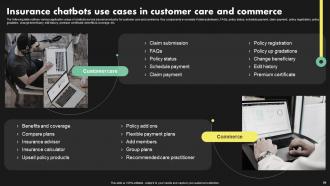
Slide 59: This slide showcases Insurance chatbots use cases in customer care and commerce.
Slide 60: This slide highlights title for topics that are to be covered next in the template.
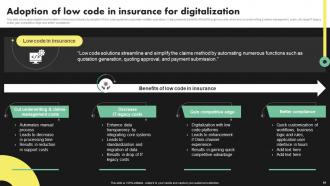
Slide 61: This slide shows Adoption of low code in insurance for digitalization.
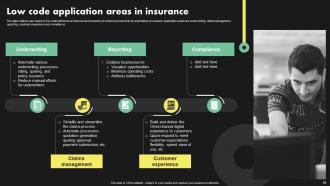
Slide 62: This slide presents Low code application areas in insurance.
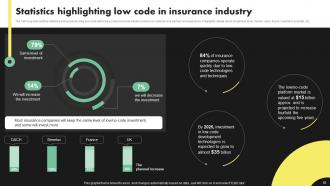
Slide 63: This slide displays Statistics highlighting low code in insurance industry.
Slide 64: This slide highlights title for topics that are to be covered next in the template.
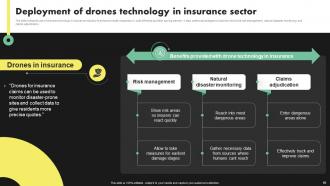
Slide 65: This slide represents Deployment of drones technology in insurance sector.
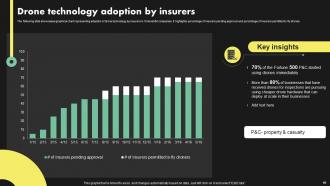
Slide 66: This slide showcases Drone technology adoption by insurers.
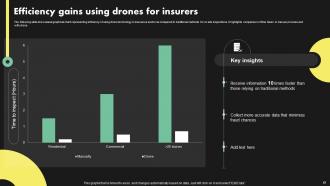
Slide 67: The following slide showcases graphical chart representing efficiency of using drone technology in insurance sector.
Slide 68: This slide highlights title for topics that are to be covered next in the template.
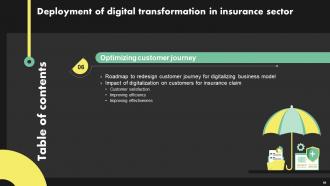
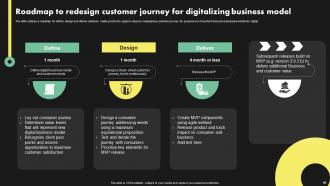
Slide 69: This slide shows Roadmap to redesign customer journey for digitalizing business model.
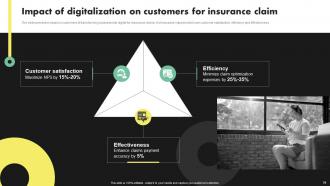
Slide 70: This slide presents Impact of digitalization on customers for insurance claim.
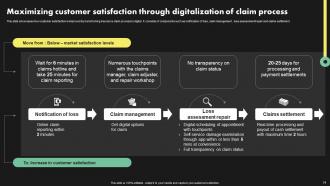
Slide 71: This slide displays Maximizing customer satisfaction through digitalization of claim process.
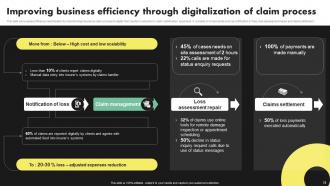
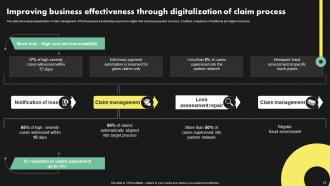
Slide 72: This slide represents Improving business efficiency through digitalization of claim process.
Slide 73: This slide showcases maximization of claim management effectiveness by transforming insurance to digital that enhances payment accuracy.
Slide 74: This slide highlights title for topics that are to be covered next in the template.
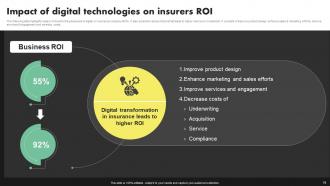
Slide 75: This slide shows Impact of digital technologies on insurers ROI.
Slide 76: This slide highlights title for topics that are to be covered next in the template.
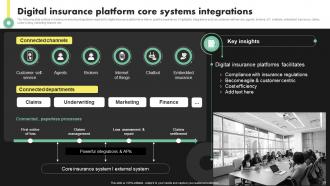
Slide 77: This slide presents Digital insurance platform core systems integrations.
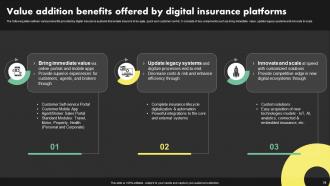
Slide 78: The following slide outlines various benefits provided by digital insurance systems.
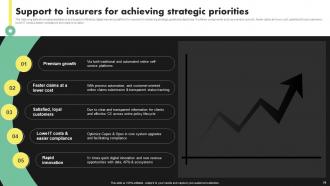
Slide 79: This slide displays Support to insurers for achieving strategic priorities.
Slide 80: This slide highlights title for topics that are to be covered next in the template.
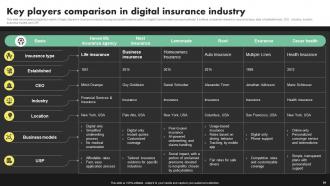
Slide 81: This slide represents Key players comparison in digital insurance industry.
Slide 82: This slide highlights title for topics that are to be covered next in the template.
Slide 83: This slide showcases Key highlights of Achmea insurance company.
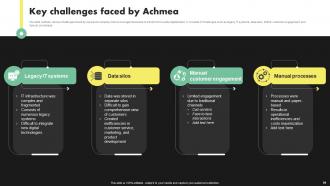
Slide 84: This slide shows Key challenges faced by Achmea.
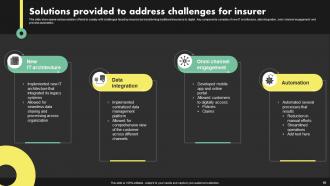
Slide 85: This slide presents Solutions provided to address challenges for insurer.
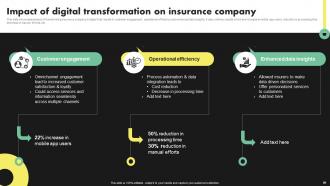
Slide 86: This slide displays Impact of digital transformation on insurance company.
Slide 87: This slide contains all the icons used in this presentation.
Slide 88: This slide is titled as Additional Slides for moving forward.
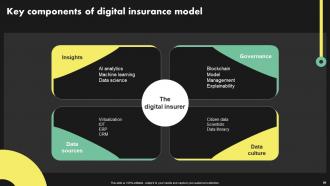
Slide 89: This slide represents Key components of digital insurance model.
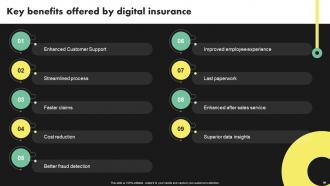
Slide 90: This slide showcases Key benefits offered by digital insurance.
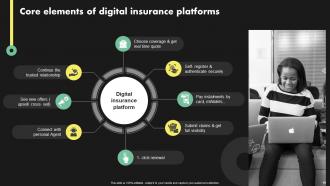
Slide 91: This slide shows Core elements of digital insurance platforms.
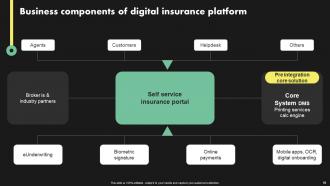
Slide 92: This slide presents Business components of digital insurance platform.
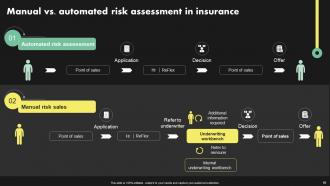
Slide 93: This slide displays Manual vs. automated risk assessment in insurance.
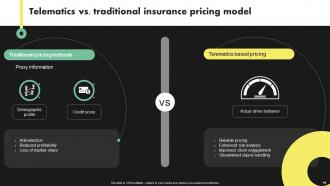
Slide 94: This slide represents Telematics vs. traditional insurance pricing model.
Slide 95: This is a Thank You slide with address, contact numbers and email address.
Deployment Of Digital Transformation In Insurance Sector Powerpoint Presentation Slides with all 100 slides:
Use our Deployment Of Digital Transformation In Insurance Sector Powerpoint Presentation Slides to effectively help you save your valuable time. They are readymade to fit into any presentation structure.









FAQs for Deployment Of Digital Transformation In Insurance Sector
So basically it comes down to four big things. Customer expectations are huge - people want that Amazon-level experience, you know? Nobody's filling out paper forms in 2024. AI is completely changing how underwriting and claims work, making everything way faster. Cloud tech lets different departments actually talk to each other in real time, which is honestly about time. Plus automation handles all the boring stuff so your people can work on the tricky cases. I'd start by looking at what customers complain about most and work backwards from there.
Dude, your customers basically want the Amazon experience now - instant quotes, everything on mobile, self-service whenever they want it. The whole "call us between 9-5 and wait forever" thing? Yeah, that's toast. People will actually share their data too if it means better pricing and quicker claims. Real-time processing is where everyone's headed now. Honestly, I'd start by just mapping out where your customer journey gets annoying and fix those spots first. Netflix has ruined everyone's patience for slow, clunky processes - insurance included.
Honestly, you can't go wrong focusing on AI and automation first - RPA for claims and underwriting will blow your mind with how much tedious stuff it handles. Cloud platforms are a no-brainer too since everyone can work from anywhere now. I'd also look into predictive analytics for better risk assessment, though that might be phase two depending on your budget. API integrations help connect everything smoothly between systems. But here's what I'd actually do - find your most repetitive, annoying processes first. That's where you'll see quick wins and can show the bosses it's worth investing more.
So basically, you can crunch way more data than old-school underwriting ever could. We're talking social media, IoT sensors, credit scores - honestly the amount of info available now is kinda crazy. The cool part? You'll catch risk patterns that would fly right over human heads. Fraud gets spotted faster, policy pricing becomes way more accurate. Plus you can predict which customers will probably file claims (which is pretty neat if you ask me). Most routine decisions get automated, so your team can actually focus on the tricky cases that need real human brains.
Dude, insurance companies are going crazy with AI right now. Machine learning can look at damage photos and spit out cost estimates in hours instead of weeks - it's honestly kind of scary how good it's gotten. The fraud stuff is where it gets really interesting though. These algorithms spot weird patterns in claims that humans would totally miss, plus they can even analyze if someone's lying based on how they write their claim (which feels a bit Big Brother-ish but whatever). Your company should probably test something simple first, like having AI sort through documents. Start small and see what happens.
So blockchain's mainly hitting insurance through smart contracts - basically policies that execute themselves automatically. AXA's already doing this with flight delays where you get paid out instantly when the system confirms your flight was late. No paperwork BS. The big win is having tamper-proof records that everyone can access, which makes claims way faster since there's one trusted data source. Fraud detection improves too because you can track everything across the network. Oh, and if you're thinking about trying this - definitely start with something simple like weather insurance first. Way less headache than jumping into complex stuff.
Honestly? Legacy systems are the worst - these ancient setups just don't mesh with anything modern. Getting them to work with new APIs is a nightmare. Then you've got people who hate change, which I totally get but makes rolling out new processes super painful. Oh and compliance stuff makes everything ten times harder because you can't just implement whatever you want. My advice is don't go big right away. Start with small test runs first, see what actually works. Way less stressful that way and you won't break everything at once.
Dude, just make your digital stuff actually work for once. Most insurance apps are trash, so you've got room to shine here. Build self-service portals where people can handle policies and file claims without calling anyone. Mobile apps with real-time updates are clutch. Push notifications for renewals help too - nobody remembers that stuff. Oh, and personalized recommendations when customers hit life changes? That's money. Map out what people bug you about most, then figure out how to digitize those things first. The whole point is cutting out friction so they don't have to wait around.
Honestly, digital transformation makes compliance super weird - it's easier AND harder at the same time. You get all this cool automated reporting and real-time monitoring stuff that makes regulators happy. No more digging through random paper files when someone asks for something. But then you're hit with totally new regulations around data privacy and AI that nobody really figured out yet. I swear the rules change faster than anyone can keep up. The trick is baking compliance right into your systems from the start. Don't try to add it later - trust me on that one.
Apps are honestly a game-changer for insurance. Your customers can upload photos for claims right from their phone, check policies, pay bills - all that stuff they used to have to call for. Best part? They don't get stuck waiting till you're open. Push notifications work really well for reminders too. I'd probably start simple with payments and policy lookups first. Then maybe add a chatbot later (though some of those are still pretty clunky). But yeah, once people get used to doing everything on their phone, they won't want to go back to calling.
Honestly, you've gotta make it safe to fail first - give people time to experiment and celebrate the smart risks, not just the wins. Cross-functional teams are huge because silos absolutely murder creativity. That "we've always done it this way" BS? Kill it immediately. Get your people trained up so new tech doesn't scare them, and bring in outside voices through partnerships or maybe hackathons. Leadership has to actually show up and participate, not just talk about it. Oh, and start with small pilots - you can always scale up the stuff that works. The key is making innovation feel normal, not like some scary side project.
Yeah, the whole industry's changing pretty fast. You're not just taking orders anymore - clients actually want real advice now. The boring stuff like quotes and basic policy changes? That's all automated, which is honestly great because it frees you up for actual conversations. Now you get to be more like a consultant, helping people figure out what coverage makes sense for them. I mean, someone still needs to explain all this confusing insurance stuff, right? The tech handles the routine work, but you're the one building real relationships. Just don't fight the digital tools - work with them.
Honestly, start by mapping out what your customers actually go through and where they're getting frustrated. Pick one area - claims is usually a good bet - and test something small there first. Don't try to transform everything overnight, that's a recipe for disaster. Your biggest headache will be getting all your systems to talk to each other, so tackle data integration early. And seriously, spend time getting your team comfortable with new tools because they'll torpedo the whole thing if they hate it. Oh, and make sure whatever tech vendor you choose actually gets insurance compliance - you don't want regulatory nightmares later.
So partnerships basically save you from spending millions and years building tech from scratch. You get their APIs and AI stuff without reinventing everything. Most legacy carriers should probably jump on this tbh. The trick is finding partners whose systems actually play nice with what you already have - not just some startup with a flashy pitch deck that looks cool but crashes when you try to integrate it. I'd start by figuring out where your digital stuff sucks the most. Then hunt for insurtechs that fix exactly those problems.
Focus on three main things: customer stuff like NPS scores and how many people actually use your digital tools, operational metrics (claims processing speed, cost per transaction), and revenue from your digital channels. Most companies go crazy with dashboards - don't do that. Start simple. Track customer satisfaction, savings from cutting manual work, and whether digital is actually growing your business. I'd stick to maybe 5-7 metrics tops at first. You can always add more once your team's actually looking at the data regularly. Way too easy to get overwhelmed otherwise.
-
SlideTeam is very efficient when it comes to saving time. I am happy that I chose them for my presentation.
-
Like always a great experience with you guys. Always there on the drop of hat to help.