


Key Steps Of Implementing Digitalization In Insurance Company Powerpoint Presentation Slides
Embark on a journey of innovation and growth in the insurance sector by exploring our comprehensive PowerPoint presentation titled Key Steps of Implementing Digitalization in Insurance Company. This dynamic guide sheds light on the revolutionary changes taking place in the insurance landscape as cutting-edge technologies redefine traditional processes, offering innovative solutions. Uncover the power of digital insurance as we navigate the transition from conventional to digital, highlighting the numerous benefits, current trends, and impactful reports in the field. Delve into the practical steps of implementing digital transformation, exploring key technologies such as AI, ML, IoT, insurtech, and more. Our presentation specifically addresses the optimization of customer journeys, providing insights into overcoming challenges and unlocking success factors in the realm of digital transformation. Learn about how insurers are integrating core systems and gain valuable insights from realworld success stories, including a compelling case study on Achmeas transformative journey. With this transformative digitalization deck, insurers can seize the potential of digitalization, elevating customer experiences, cutting costs, and propelling the insurance industry into the future. Download it now.







































































You must be logged in to download this presentation.


Do you want to remove this product from your favourites?
 Impress your
 audience
 100%
100% Editable
 Save Hours
 of Time
PowerPoint presentation slides
Deliver this complete deck to your team members and other collaborators. Encompassed with stylized slides presenting various concepts, this Key Steps Of Implementing Digitalization In Insurance Company Powerpoint Presentation Slides is the best tool you can utilize. Personalize its content and graphics to make it unique and thought-provoking. All the ninety four slides are editable and modifiable, so feel free to adjust them to your business setting. The font, color, and other components also come in an editable format making this PPT design the best choice for your next presentation. So, download now.

People who downloaded this PowerPoint presentation also viewed the following :
Content of this Powerpoint Presentation
Slide 1: This slide introduces Key Steps of Implementing Digitalization in Insurance Company. State your company name and begin.
Slide 2: This slide states Agenda of the presentation.
Slide 3: This slide shows Table of Content for the presentation.
Slide 4: This is another slide continuing Table of Content for the presentation.
Slide 5: This slide highlights title for topics that are to be covered next in the template.
Slide 6: This slide presents Overview of digital insurance with key differentiators.
Slide 7: This slide displays Top benefits catering need of digital insurance system to improve operations.
Slide 8: This slide represents Traditional vs. digital insurance comparison matrix.
Slide 9: This slide showcases Statistics showing digital transformation of insurance industry.
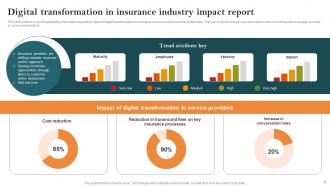
Slide 10: This slide shows Digital transformation in insurance industry impact report.
Slide 11: This slide highlights title for topics that are to be covered next in the template.
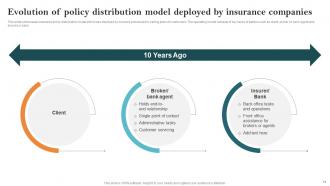
Slide 12: This slide presents Evolution of policy distribution model deployed by insurance companies.
Slide 13: This slide displays Evolution of policy distribution model deployed by insurance companies.
Slide 14: This slide represents Current scenario of insurance policy distribution model.
Slide 15: This slide highlights title for topics that are to be covered next in the template.
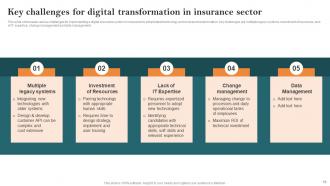
Slide 16: This slide showcases Key challenges for digital transformation in insurance sector.
Slide 17: This slide shows Success factor of implementing digital insurance system.
Slide 18: This slide highlights title for topics that are to be covered next in the template.
Slide 19: This slide presents Deployment of digital transformation model in insurance company.
Slide 20: This slide displays Technology adoption phases for mapping digital maturity.
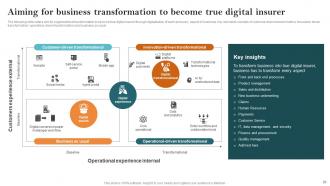
Slide 21: This slide represents Aiming for business transformation to become true digital insurer.
Slide 22: This slide showcases Implementation of agile approach for digital transformation.
Slide 23: This slide shows Essential personnel required for digital transformation team.
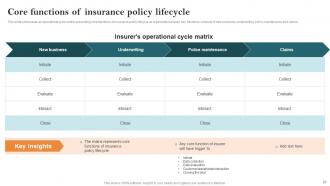
Slide 24: This slide presents Insurer's operational cycle matrix.
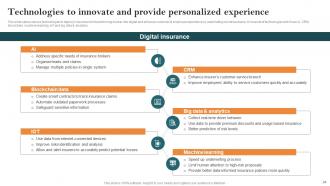
Slide 25: This slide displays Technologies to innovate and provide personalized experience.
Slide 26: This slide represents Key parameters for choosing right technology partner.
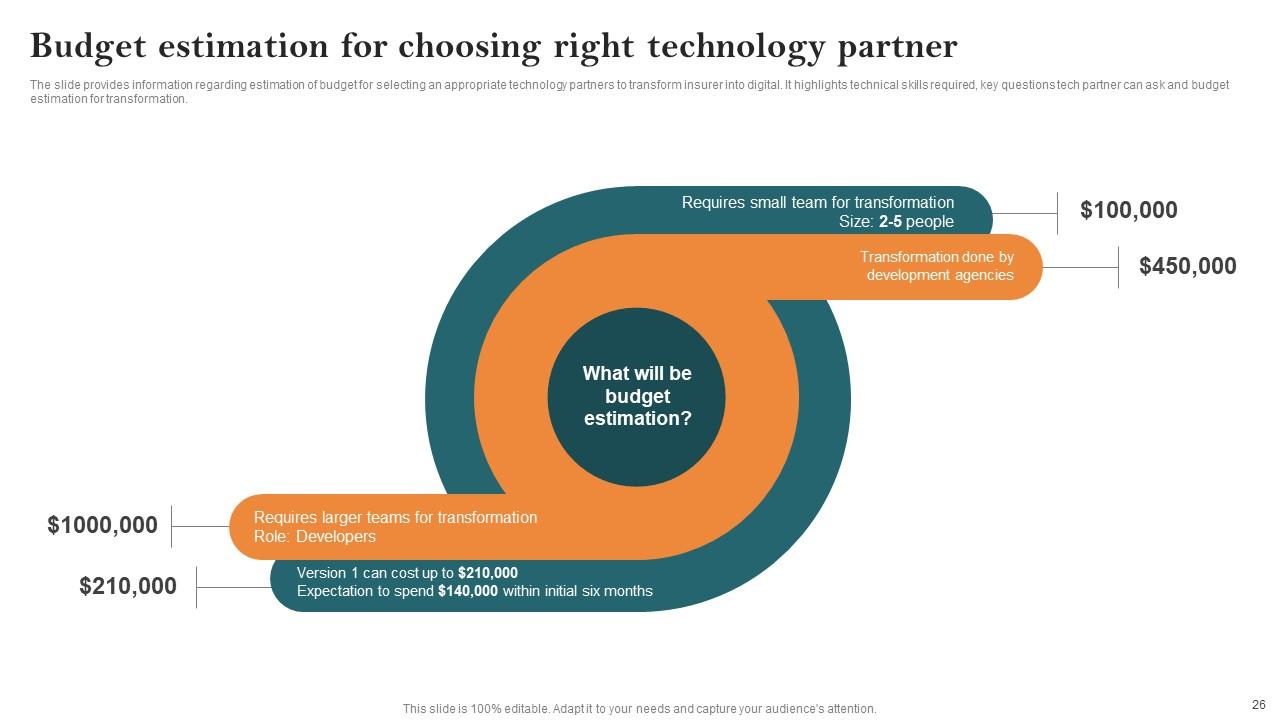
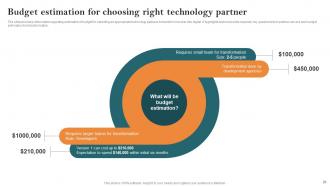
Slide 27: This slide showcases Budget estimation for choosing right technology partner.
Slide 28: This slide highlights title for topics that are to be covered next in the template.
Slide 29: This slide shows Technologies impacting insurance companies in future.
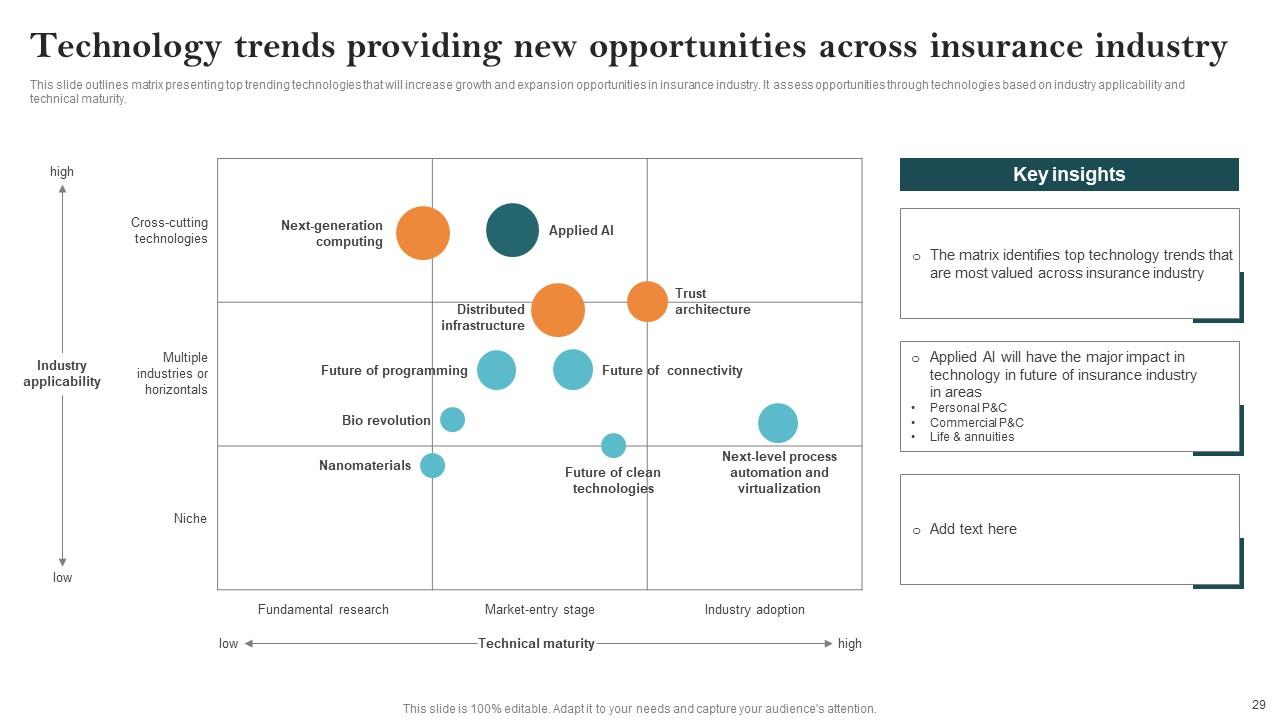
Slide 30: This slide presents Technology trends providing new opportunities across insurance industry.
Slide 31: This slide highlights title for topics that are to be covered next in the template.
Slide 32: This slide displays Predictive analysis and modelling in insurance industry.
Slide 33: This slide represents Application areas of predictive analysis for insurer.
Slide 34: This slide highlights title for topics that are to be covered next in the template.
Slide 35: This slide showcases Leveraging artificial intelligence in insurance industry.
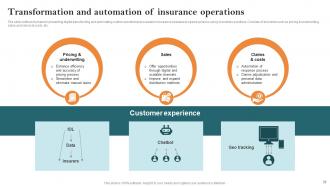
Slide 36: This slide shows Transformation and automation of insurance operations.
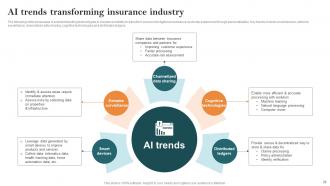
Slide 37: This slide presents AI trends transforming insurance industry.
Slide 38: This slide displays Automated underwriting process through AI.
Slide 39: This slide highlights title for topics that are to be covered next in the template.
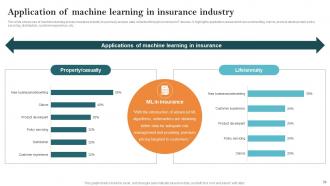
Slide 40: This slide represents Application of machine learning in insurance industry.
Slide 41: This slide showcases Applying ML to transform customer touchpoints and data into insights.
Slide 42: This slide highlights title for topics that are to be covered next in the template.
Slide 43: This slide shows Using IoT in insurance industry to precisely determine risks.
Slide 44: This slide presents IoT ecosystem framework in insurance industry.
Slide 45: This slide highlights title for topics that are to be covered next in the template.
Slide 46: The slide outlines aligning and implementing insurance and technology to make insurance more assessible.
Slide 47: This slide displays Traditional insurance vs Insurtech applications comparison.
Slide 48: This slide highlights title for topics that are to be covered next in the template.
Slide 49: The slide describes how leveraging social media data is impacting insurance industry by focusing on enhancing digital presence.
Slide 50: This slide represents Statistics highlighting social media platform usage by insurers.
Slide 51: This slide highlights title for topics that are to be covered next in the template.
Slide 52: This slide showcases Using telematics based insurance model for insurers.
Slide 53: This slide showcases Telematics insurance deployment workflow framework.
Slide 54: This slide shows Traditional vs. telematics based insurance comparison.
Slide 55: This slide highlights title for topics that are to be covered next in the template.
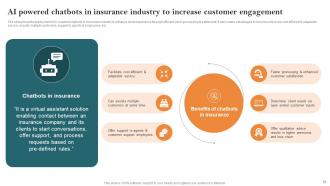
Slide 56: This slide presents AI powered chatbots in insurance industry to increase customer engagement.
Slide 57: This slide displays Top priority insurance operations performed by chatbots.
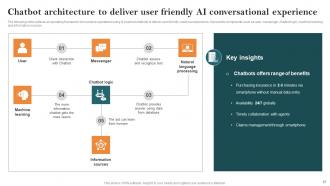
Slide 58: This slide represents Chatbot architecture to deliver user friendly AI conversational experience.
Slide 59: This slide showcases Insurance chatbots use cases in customer care and commerce.
Slide 60: This slide highlights title for topics that are to be covered next in the template.
Slide 61: This slide shows Adoption of low code in insurance for digitalization.
Slide 62: This slide presents Low code application areas in insurance.
Slide 63: This slide displays Statistics highlighting low code in insurance industry.
Slide 64: This slide highlights title for topics that are to be covered next in the template.
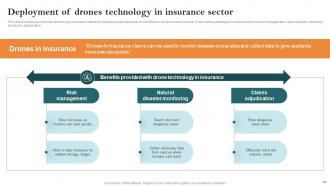
Slide 65: This slide represents Deployment of drones technology in insurance sector.
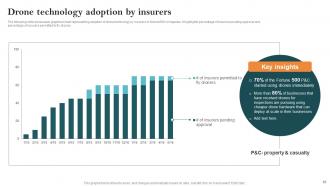
Slide 66: This slide showcases Drone technology adoption by insurers.
Slide 67: The following slide showcases graphical chart representing efficiency of using drone technology in insurance sector.
Slide 68: This slide highlights title for topics that are to be covered next in the template.
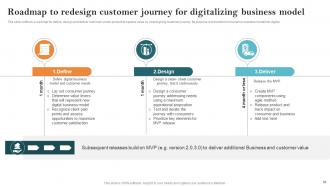
Slide 69: This slide shows Roadmap to redesign customer journey for digitalizing business model.
Slide 70: This slide presents Impact of digitalization on customers for insurance claim.
Slide 71: This slide displays Maximizing customer satisfaction through digitalization of claim process.
Slide 72: This slide represents Improving business efficiency through digitalization of claim process.
Slide 73: This slide showcases maximization of claim management effectiveness by transforming insurance to digital that enhances payment accuracy.
Slide 74: This slide highlights title for topics that are to be covered next in the template.
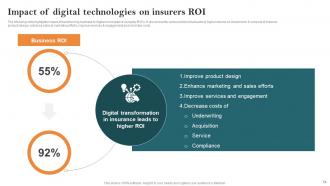
Slide 75: This slide shows Impact of digital technologies on insurers ROI.
Slide 76: This slide highlights title for topics that are to be covered next in the template.
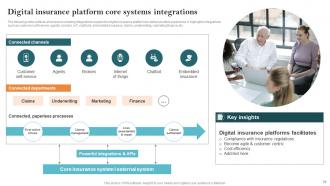
Slide 77: This slide presents Digital insurance platform core systems integrations.
Slide 78: The following slide outlines various benefits provided by digital insurance systems.
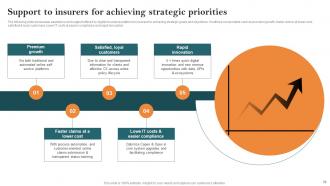
Slide 79: This slide displays Support to insurers for achieving strategic priorities.
Slide 80: This slide highlights title for topics that are to be covered next in the template.
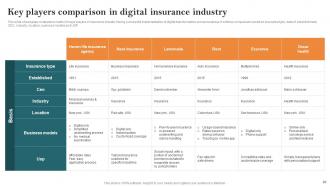
Slide 81: This slide represents Key players comparison in digital insurance industry.
Slide 82: This slide highlights title for topics that are to be covered next in the template.
Slide 83: This slide showcases Key highlights of Achmea insurance company.
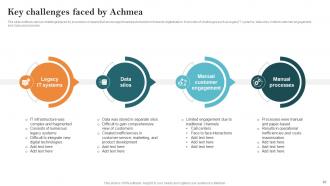
Slide 84: This slide shows Key challenges faced by Achmea.
Slide 85: This slide presents Solutions provided to address challenges for insurer.
Slide 86: This slide displays Impact of digital transformation on insurance company.
Slide 87: This slide contains all the icons used in this presentation.
Slide 88: This slide is titled as Additional Slides for moving forward.
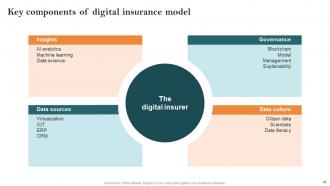
Slide 89: This slide represents Key components of digital insurance model.
Slide 90: This slide showcases Key benefits offered by digital insurance.
Slide 91: This slide shows Core elements of digital insurance platforms.
Slide 92: This slide presents Business components of digital insurance platform.
Slide 93: This slide displays Manual vs. automated risk assessment in insurance.
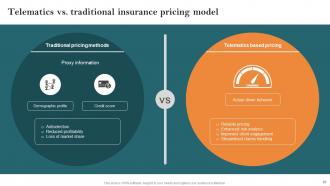
Slide 94: This slide represents Telematics vs. traditional insurance pricing model.
Slide 95: This is a Thank You slide with address, contact numbers and email address.
Key Steps Of Implementing Digitalization In Insurance Company Powerpoint Presentation Slides with all 103 slides:
Use our Key Steps Of Implementing Digitalization In Insurance Company Powerpoint Presentation Slides to effectively help you save your valuable time. They are readymade to fit into any presentation structure.
-
“Thanks to SlideTeam. Now I can make smart presentations in a fraction of time without any hassle.”
-
The best collection of PPT templates!! Totally worth the money.
