


Desarrollo y gestión de diapositivas de presentación de Powerpoint del plan de marketing comercial




Try Before you Buy Download Free Sample Product
 Impress Your
 Audience
 100%
100% Editable
 Save Hours
 of Time


Nuestras diapositivas de presentación de Powerpoint de desarrollo y gestión del plan de marketing comercial están diseñadas por temas para proporcionar un fondo atractivo para cualquier tema. Úselos para parecer un profesional de la presentación.
People who downloaded this PowerPoint presentation also viewed the following :
Contenido de esta presentación de Powerpoint
Diapositiva 1 : Esta diapositiva presenta el desarrollo y la gestión del plan de marketing comercial. Indique el nombre de su empresa y comience.
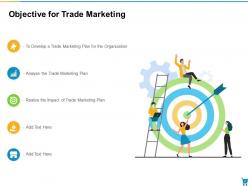
Diapositiva 2 : Esta diapositiva muestra el objetivo del Trade Marketing.
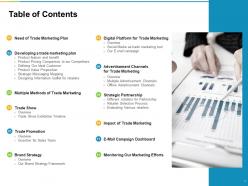
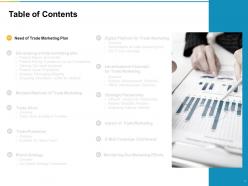
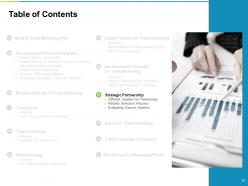
Diapositiva 3 : Esta diapositiva presenta la tabla de contenido de la presentación.
Diapositiva 4 : esta diapositiva muestra la tabla de contenido de la presentación.
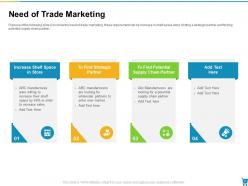
Diapositiva 5 : Esta diapositiva muestra la necesidad de mercadeo comercial, estos requisitos se pueden aumentar en el espacio de anaquel de la tienda.
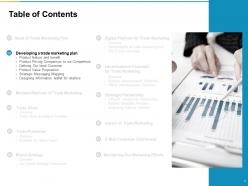
Diapositiva 6 : esta diapositiva representa la tabla de contenido de la presentación.
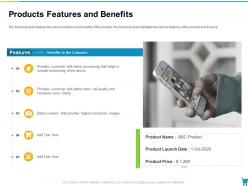
Diapositiva 7 : Esta diapositiva destaca las diversas características del producto y su precio.
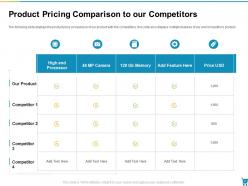
Diapositiva 8 : Esta diapositiva presenta la comparación de precios de nuestro producto con los de la competencia.
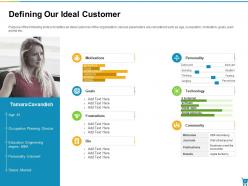
Diapositiva 9 : Esta diapositiva muestra un cliente ideal de la organización, se consideran varios parámetros como edad, ocupación, motivación, objetivos, puntos débiles, etc.
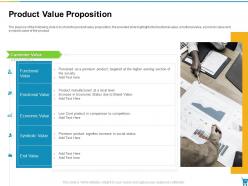
Diapositiva 10 : esta diapositiva muestra el valor funcional, el valor emocional, el valor económico y el valor simbólico del producto.
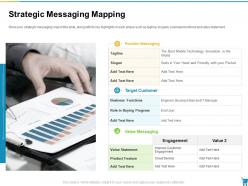
Diapositiva 11 : Esta diapositiva representa el mapa de mensajes estratégicos junto con sus aspectos más destacados en cada fase, como el eslogan, los eslóganes, las funciones comerciales y la declaración de valores.
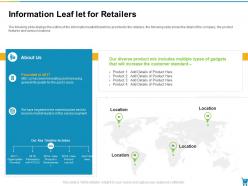
Diapositiva 12 : Esta diapositiva muestra el esquema del folleto informativo que se entregará a los minoristas.
Diapositiva 13 : Esta diapositiva presenta la tabla de contenido de la presentación.
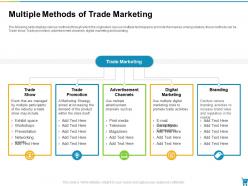
Diapositiva 14 : Esta diapositiva muestra varios métodos a través de los cuales la originación puede usar múltiples técnicas para promocionarse entre los minoristas.
Diapositiva 15 : esta diapositiva muestra la tabla de contenido de la presentación.
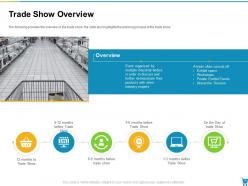
Diapositiva 16 : Esta diapositiva representa la descripción general de la feria comercial y destaca el proceso de planificación de la feria comercial.
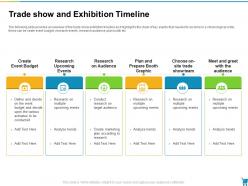
Diapositiva 17 : Esta diapositiva muestra la cronología de la feria comercial y la exhibición.
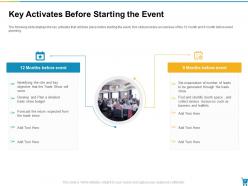
Diapositiva 18 : esta diapositiva presenta las claves que se activan antes de iniciar el evento.
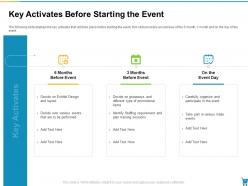
Diapositiva 19 : esta diapositiva muestra las activaciones clave que se llevarán a cabo antes de comenzar el evento.
Diapositiva 20 : esta diapositiva muestra la tabla de contenido de la presentación.
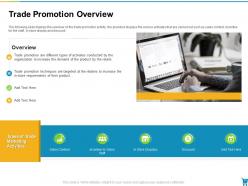
Diapositiva 21 : Esta diapositiva representa una descripción general de la actividad de promoción del comercio.
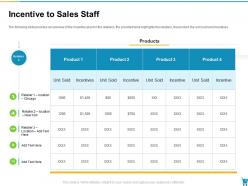
Diapositiva 22 : Esta diapositiva muestra una descripción general del plan de incentivos para los minoristas, destacando a los minoristas, el producto, la unidad vendida y los incentivos.
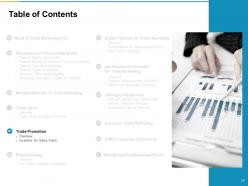
Diapositiva 23 : Esta diapositiva presenta la tabla de contenido de la presentación.
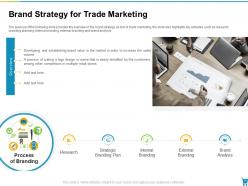
Diapositiva 24 : esta diapositiva muestra la estrategia de marca como herramienta de marketing comercial y destaca actividades clave como la investigación, la planificación de la marca, la marca interna, la marca externa y el análisis de la marca.
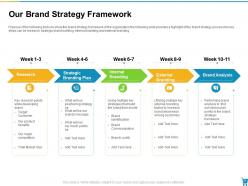
Diapositiva 25 : Esta diapositiva muestra nuestro marco de estrategia de marca.
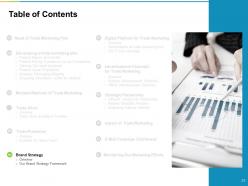
Diapositiva 26 : esta diapositiva representa la tabla de contenido de la presentación.
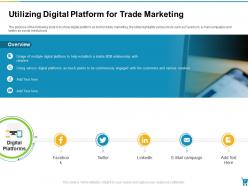
Diapositiva 27 : esta diapositiva muestra el uso de una plataforma digital para el marketing comercial.
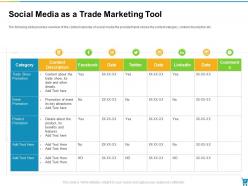
Diapositiva 28 : Esta diapositiva presenta las redes sociales como una herramienta de marketing comercial.
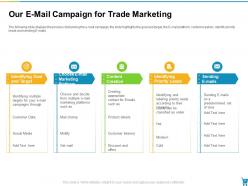
Diapositiva 29 : Esta diapositiva muestra nuestra campaña por correo electrónico para Trade Marketing.
Diapositiva 30 : esta diapositiva muestra la tabla de contenido de la presentación.
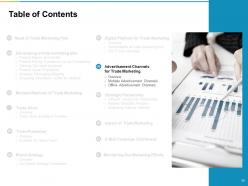
Diapositiva 31 : esta diapositiva representa los canales de publicidad para el marketing comercial.
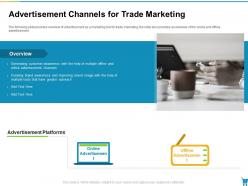
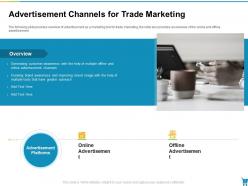
Diapositiva 32 : Esta diapositiva muestra una descripción general de la publicidad como herramienta de marketing para el marketing comercial.
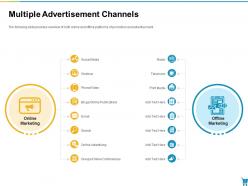
Diapositiva 33 : Esta diapositiva presenta una descripción general de las plataformas de promoción y publicidad tanto en línea como fuera de línea.
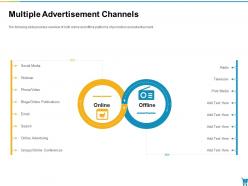
Diapositiva 34 : Esta diapositiva muestra una descripción general de las plataformas de promoción y publicidad tanto en línea como fuera de línea.
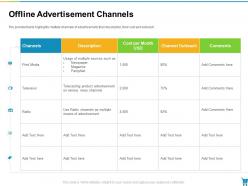
Diapositiva 35 : Esta diapositiva destaca múltiples canales de publicidad, su descripción, su costo y alcance.
Diapositiva 36 : esta diapositiva representa la tabla de contenido de la presentación.
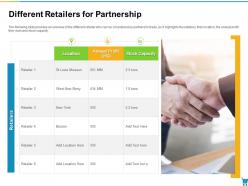
Diapositiva 37 : Esta diapositiva muestra una descripción general de los diferentes minoristas que pueden considerarse socios comerciales.
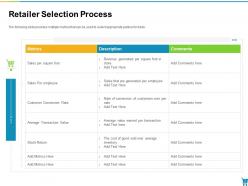
Diapositiva 38 : La siguiente diapositiva proporciona varias métricas que se pueden usar para seleccionar el socio comercial adecuado.
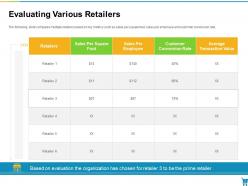
Diapositiva 39 : La siguiente diapositiva compara varios minoristas en función de métricas clave como las ventas por pie cuadrado, las ventas por empleado y la tasa de conversión de clientes.
Diapositiva 40 : esta diapositiva muestra la tabla de contenido de la presentación.
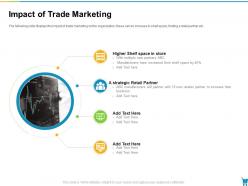
Diapositiva 41 : esta diapositiva representa el impacto del marketing comercial en la organización, que puede ser aumentar el espacio en los estantes, encontrar un socio minorista, etc.
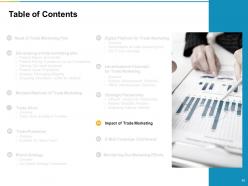
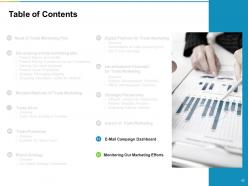
Diapositiva 42 : esta diapositiva muestra la tabla de contenido de la presentación.
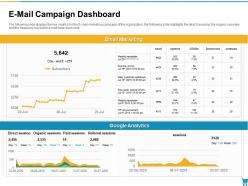
Diapositiva 43 : Esta diapositiva presenta las métricas clave para la campaña de marketing por correo electrónico de la organización.
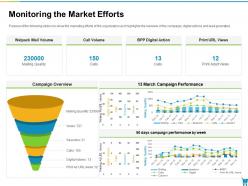
Diapositiva 44 : esta diapositiva muestra los esfuerzos de marketing de la organización, ya que destaca la descripción general de la campaña, las acciones digitales y los clientes potenciales generados.
Diapositiva 45 : esta diapositiva se titula Diapositivas adicionales para avanzar.
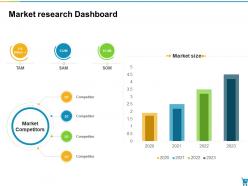
Diapositiva 46 : esta diapositiva representa el panel de investigación de mercado.
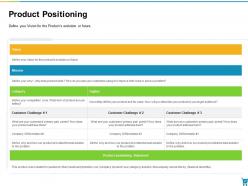
Diapositiva 47 : Esta diapositiva muestra Defina su visión para la evolución o el futuro del producto.
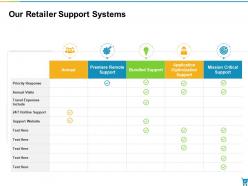
Diapositiva 48 : Esta diapositiva presenta nuestros sistemas de soporte para minoristas.
Diapositiva 49 : Esta es la diapositiva Acerca de nosotros para mostrar las especificaciones de la empresa, etc.
Diapositiva 50 : Esta es la diapositiva Nuestra misión con imágenes y texto relacionados.
Diapositiva 51 : esta diapositiva representa la hoja de ruta con cuadros de texto adicionales.
Diapositiva 52 : esta diapositiva muestra un plan de 30 60 90 días con cuadros de texto.
Diapositiva 53 : Esta es la diapositiva Nuestro equipo con nombres y designación.
Diapositiva 54 : Esta diapositiva muestra Post-It Notes. Publique sus notas importantes aquí.
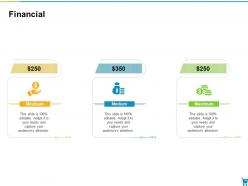
Diapositiva 55 : Esta es una diapositiva financiera. Muestre sus cosas relacionadas con las finanzas aquí.
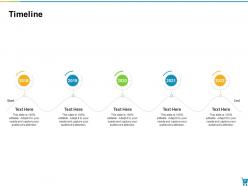
Diapositiva 56 : Esta es una diapositiva de la línea de tiempo. Mostrar datos relacionados con los intervalos de tiempo aquí.
Diapositiva 57 : Esta es una diapositiva de comparación para establecer la comparación entre productos básicos, entidades, etc.
Diapositiva 58 : Esta es una diapositiva de agradecimiento con dirección, números de contacto y dirección de correo electrónico.
Desarrollo y administración del plan de marketing comercial Diapositivas de presentación de Powerpoint con las 58 diapositivas:
Utilice nuestras diapositivas de presentación de Powerpoint para el desarrollo y la gestión del plan de marketing comercial para ayudarlo de manera efectiva a ahorrar su valioso tiempo. Están listas para adaptarse a cualquier estructura de presentación.

FAQs for Developing and managing trade marketing plan
Here's what I'd focus on for your trade marketing plan. Target retailers first - figure out who they are and what problems they're dealing with. Promotional strategy comes next: trade shows, co-op ads, channel incentives, all that stuff. Sales training and materials are huge but everyone seems to skip this part for some reason. You need metrics to track how partnerships are actually performing too. Oh, and definitely set up regular check-ins with your trade partners. I'd start by looking at what you've already got, then tackle the biggest holes first.
Start with your existing customer data - who's actually buying from you? Check their demographics, what they purchase, where they hang out online. Honestly, stalking your competitors' audiences is totally fair game too. Survey your current customers about their problems and needs. Google Analytics and social media insights are goldmines for understanding behavior patterns. The magic happens when you combine all this data with real conversations - that's how you build solid buyer personas. Oh, and don't overthink it at first. You can always refine as you go.
Track the obvious stuff first - sales lift, incremental revenue, market share in your key accounts. ROI matters since trade spend gets pricey. Distribution metrics are huge too: weighted distribution, shelf space, how fast inventory's moving. Shows if you're actually gaining ground with retailers. Honestly, the soft stuff like retailer satisfaction scores gets overlooked but it's gold for long-term relationships. I'd build a simple dashboard tracking maybe 3-4 metrics weekly. Don't go crazy with data - just pick what directly connects to your goals and watch those like a hawk.
So trade marketing is basically when you're targeting retailers and distributors instead of regular customers. You're trying to get the store managers to stock your stuff and give it good shelf placement. Regular marketing is like "hey consumers, buy this!" but trade marketing is more "hey Target buyer, please carry our product." It's way more about relationships than I thought it'd be when I first learned about it. You've got to convince stores that customers will actually want what you're selling. Promotions and incentives help a lot. Start by figuring out who makes the buying decisions at your target retailers.
Retail partnerships can make or break your whole trade marketing thing, honestly. You want them as actual partners, not just people shoving your stuff on shelves. Joint promos and getting good placement? That's where the magic happens for hitting your numbers. Too many brands ignore retailers until it's too late, then act shocked when nothing works. Share your data with them and ask for theirs back - sounds obvious but most people skip this step. Pick your top 3-5 retail partners and do regular check-ins. Oh, and start building those relationships way before you need them.
Digital tools are honestly a game-changer for trade marketing. CRM systems help you track all your retailer relationships way better than spreadsheets. Analytics platforms show you what's actually working in real-time instead of guessing. Oh, and digital asset management keeps your materials consistent everywhere - super clutch. Automated email sequences save tons of time, plus social listening tools catch market trends before you miss out. My advice? Don't try to do everything at once. Pick whatever's driving you crazy right now and fix that first. Build up from there and you'll see the difference pretty quickly.
Honestly, I'd go with co-op advertising first - splitting costs with retailers means everyone's actually invested in making it work. Trade shows are kinda exhausting but still worth it for the face-to-face relationship building. Volume discounts and promotional allowances are solid too, plus don't sleep on point-of-sale materials since they actually help retailers sell your stuff. Oh, and retailer incentives can work wonders if you structure them right. My advice? Pick like 2-3 things that fit your budget and test them out first. No point going crazy with everything at once.
Honestly, seasonal trends are everything for trade marketing timing. You've gotta plan your promos and retailer partnerships around peak seasons - back-to-school, holidays, whatever hits big for your category. We totally screwed this up one year by missing Q4 deadlines (still haunts me lol). Pull your historical sales data first to spot patterns. Then front-load your trade spend before those busy periods hit. The real key? Start planning at least 6 months out. Sounds crazy early but that's how you lock down the good shelf space before competitors do.
Look, you can't outspend the giants so play to what makes you different. Find another small business that targets your same customers and team up for promotions - boom, double the audience for the same cost. Hit up local trade shows too, way better than online ads honestly because you actually get to talk to people face-to-face. Big corporations hate those messy human conversations anyway. Being small means you can change direction fast and give customers that personal touch they're craving. Pick one potential partner this week and pitch them something simple. Your size isn't the problem - it's literally your advantage if you use it right.
Look, your trade marketing needs to match your brand story - same message across consumer ads and retailer partnerships. Don't let trade deals mess with your brand equity. Like if you're going premium, stop with the constant deep discounts (I know, retailers make this super hard). Time your trade calendar with brand launches and seasonal stuff. Honestly, most companies are terrible at this sync. Your merchandising and trade promos should reinforce what consumers already see from you. Quick audit: do your current trade activities actually support your positioning or are they working against it? That'll tell you everything.
Honestly, the worst part is when sales and marketing can't agree on priorities - drives me crazy. Budget's always tight too, so you're constantly picking battles. Communication falls apart fast, especially with field teams who miss the whole point of your campaign. Oh, and good luck measuring ROI properly since everything's so indirect. Takes forever to see real results. Retailers? Half the time they ignore your display plans anyway. I'd say do weekly calls with everyone involved. Sounds like overkill but trust me, it saves your sanity. Also build in extra time because something always goes sideways.
Dude, your sales team is basically sitting on a goldmine of info. Set up monthly check-ins or send quick surveys asking what promos are actually working, which retail partners need help, stuff like that. Those reps know what's moving and what's flopping better than anyone - they're talking to customers all day! Take their feedback and tweak your promotional calendar accordingly. Oh, and actually DO something with what they tell you, otherwise they'll just stop bothering to respond. Make it super easy for them to share intel too.
Your packaging is literally selling for you when you're not there. Retailers will give you better shelf placement if your design pops and shows clear value. Eye-catching stuff drives those impulse buys, which keeps your retail partners happy since their sales go up too. Just make sure it actually looks good under those harsh store lights - I've seen gorgeous designs that looked terrible in real stores. You'll want your packaging to work with whatever promos you're running. Oh, and test it in actual retail spaces, not just your office. Trust me on that one.
Honestly, dig into your POS data and customer purchase history first - that's where the gold is. You'll spot actual buying patterns and see which promotions genuinely move product instead of just burning budget. Numbers beat gut feelings every time, sorry not sorry. Pull your last 12 months of trade promotion data and check which activities gave you the biggest sales lift. Also peek at competitor pricing because context matters. This helps you figure out which retailers actually deliver ROI and what product bundles customers are grabbing. Way better than throwing money at promotions and hoping something sticks.
Keep your messaging super clean and benefit-focused - retailers only care about profit margins, turnover, and what customers actually want. I swear, buyers see like 50 cluttered presentations daily and just trash them immediately. Real case studies from similar stores beat generic market stats every time. Make your key points pop within seconds of them opening it (their attention span is basically zero). Oh, and always throw in specific next steps with timelines. Test everything with friendly contacts first - they'll roast you honestly and catch stuff you totally missed. Way better than going in blind.
-
Easily Understandable slides.
-
Best way of representation of the topic.
-
Great quality slides in rapid time.
-
Easily Understandable slides.
-
Much better than the original! Thanks for the quick turnaround.
-
Great quality product.
-
Awesome presentation, really professional and easy to edit.
-
Top Quality presentations that are easily editable.
-
Great experience, I would definitely use your services further.