


International Marketing Management Powerpoint Presentation Slides






Try Before you Buy Download Free Sample Product
 Impress Your
 Audience
 100%
100% Editable
 Save Hours
 of Time


Showcase your global marketing strategy with this content ready International Marketing Management Powerpoint Presentation Slides. The international marketing research PowerPoint complete deck includes set of visually appealing PPT templates such as capture market insights, global market potential graphical & tabular format, survey insights, opportunity analysis, connect with customers, creating customer value & loyalty, purchase stage, moderate effect of customer decision making, medium that influence purchase decision, analysing business situation, consumer market segmentation, build strong brands, create brand equity, brand positioning framework, develop strategic positioning, competitive analysis, shape the marketing offerings, setting product strategy, designing & managing services, develop pricing strategies, communicate the value, marketing reach by channels, introducing new market offerings, new product detailed overview, tapping into global markets etc. Improve coordination and communication of various marketing activities using the international marketing process PPT slides. Download this professionally designed easy-to-use international dimensions of marketing presentation deck to analyze global business situations. Allow them to have a ball with our International Marketing Management Powerpoint Presentation Slides. They will find each one absolutely enjoyable.
People who downloaded this PowerPoint presentation also viewed the following :
Content of this Powerpoint Presentation
Slide 1: This slide introduces International Marketing Management. State Your Company Name and begin.
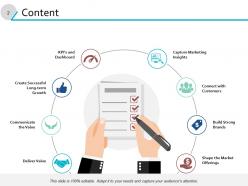
Slide 2: This slide shows Content of the presentation.
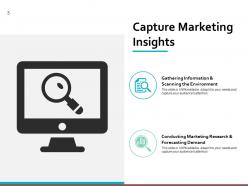
Slide 3: This slide presents Capture Marketing Insights describing- Gathering Information & Scanning the Environment, Conducting Marketing Research & Forecasting Demand.
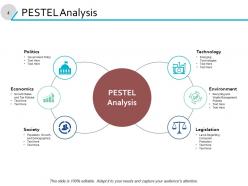
Slide 4: This slide displays PESTEL Analysis describing- Economics, Legislation, Society, Technology, Environment, Politics.
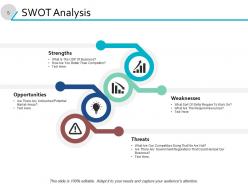
Slide 5: This slide represents SWOT Analysis describing- Strengths, Weaknesses, Opportunities, Threats.
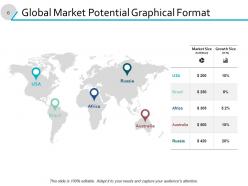
Slide 6: This slide showcases Global Market Potential Graphical Format with maps to describe Market Size and Growth Size of different countries.
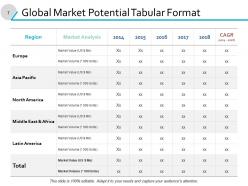
Slide 7: This slide shows Global Market Potential Tabular Format with categories as region, market analysis, years and CAGR.
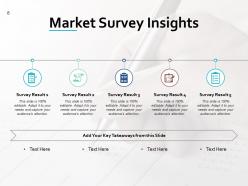
Slide 8: This slide presents Market Survey Insights with related icons and text boxes to show information.
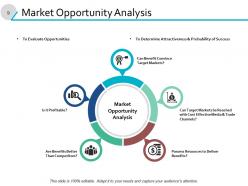
Slide 9: This slide displays Market Opportunity Analysis describing- Is It Profitable? Can Benefit Convince Target Markets? Can Target Markets Be Reached With Cost Effective Media & Trade Channels? Possess Resources To Deliver Benefits? Are Benefits Better Than Competitors?
Slide 10: This slide represents Connect with Customers describing- Creating Customer Value and Loyalty, Analyzing Consumer Market, Analysing Business Markets, Identifying Market Segments & Targets.
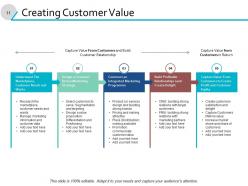
Slide 11: This slide showcases Creating Customer Value describing- Understand the marketplace, customer needs and wants, Design a customer driven marketing strategy, Construct an integrated marketing programme, Build profitable relationships and create delight, Capture Value From Customers And Build Customer Relationship.
Slide 12: This slide shows Creating Customer Loyalty with- Recognition Program, Rebate Program, Bonus Points, Loyalty Programs.
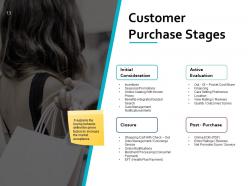
Slide 13: This slide presents Customer Purchase Stages describing- Initial Consideration, Active Evaluation, Closure.
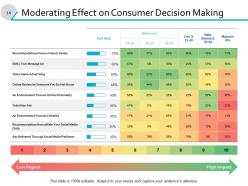
Slide 14: This slide displays Moderating Effect on Consumer Decision Making with SMS / text message ad, Video game advertising, Online review by someone you do not know, An endorsement from an online personality, Recommendation from within your social media circle, Recommendation from within your social media circle. Television ads
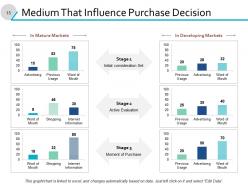
Slide 15: This slide represents Medium that Influence Purchase Decision in mature and developing markets.
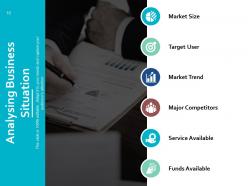
Slide 16: This slide showcases Analysing Business Situation with- Funds Available, Service Available, Major Competitors, Market Trend, Target User, Market Size.
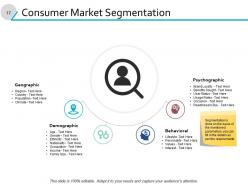
Slide 17: This slide shows Consumer Market Segmentation describing- Geographic, Demographic, Behavioral and Psychographic factors.
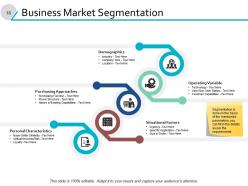
Slide 18: This slide presents Business Market Segmentation describing- Operating Variable, Demographics, Purchasing Approaches, Personal Characteristics, Situational Factors.
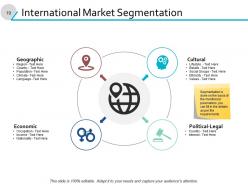
Slide 19: This slide displays International Market Segmentation describing- Segmentation is done on the basis of the mentioned parameters, you can fill in the details as per the requirements Geographic, Cultural, Economic, Political-Legal.
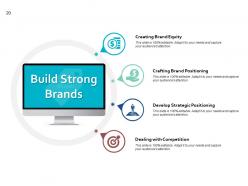
Slide 20: This slide represents Build Strong Brands with- Creating Brand Equity, Crafting Brand Positioning, Develop Strategic Positioning, Dealing with Competition.
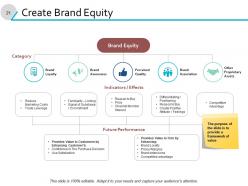
Slide 21: This slide showcases Create Brand Equity with- Brand Loyalty, Brand Awareness, Perceived Quality, Brand Associations, Other Proprietary Assets.
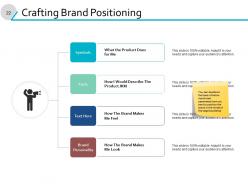
Slide 22: This slide shows Crafting Brand Positioning describing- How The Brand Makes Me Look, What The Product Does For Me, How The Brand Makes Me Feel, How I Would Describe The Product.
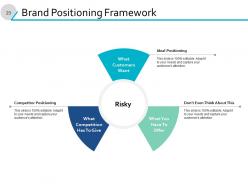
Slide 23: This slide presents Brand Positioning Framework describing- What Customers Want, What You Have To Offer, What Competition Has To Give.
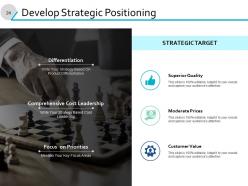
Slide 24: This slide displays Develop Strategic Positioning with- Differentiation, Comprehensive Cost Leadership, Focus on Priorities, Superior Quality, Moderate Prices, Customer Value.
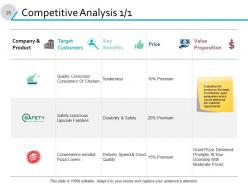
Slide 25: This slide represents Competitive Analysis describing- Company & Product, Target Customers, Price, Value Proposition, Key Benefits.
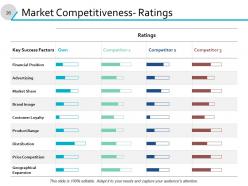
Slide 26: This slide showcases Market Competitiveness- Ratings with Key success factors, competitor ratings etc.
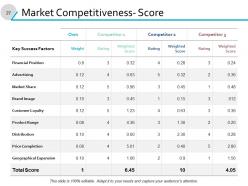
Slide 27: This slide shows Market Competitiveness- Score with Key success factors, weighted score, ratings etc.
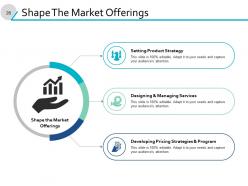
Slide 28: This slide presents Shape the Market Offerings with- Setting Product Strategy, Designing & Managing Services, Developing Pricing Strategies & Program.
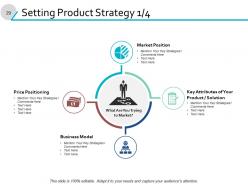
Slide 29: This slide displays Setting Product Strategy describing- Key Attributes Of Your Product / Solution, Price Positioning, Market Position, Business Model.
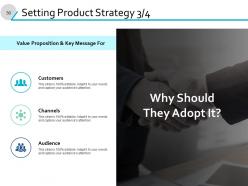
Slide 30: This is another slide on Setting Product Strategy describing- Customers, Channels, Audience.
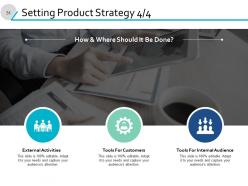
Slide 31: This is another slide on Setting Product Strategy describing- External Activities, Tools For Customers, Tools For Internal Audience.
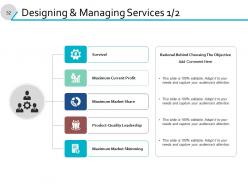
Slide 32: This slide shows Designing & Managing Services describing- Survival, Maximum Current Profit, Maximum Market Share, Product-Quality Leadership, Maximum Market Skimming.
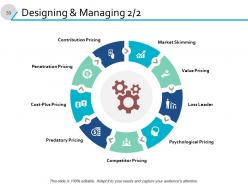
Slide 33: This is another slide on Designing & Managing Services describing- Market Skimming, Value Pricing, Loss Leader, Psychological Pricing, Competitor Pricing, Predatory Pricing, Cost-plus Pricing, Penetration Pricing, Contribution Pricing.
Slide 34: This slide presents Developing Pricing Strategies and Programs with imagery and text boxes to show information.
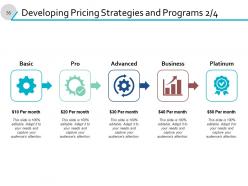
Slide 35: This is another slide on Developing Pricing Strategies and Programs with categories as- Basic, Pro, Advanced, Business, Platinum.
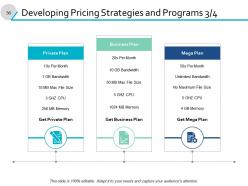
Slide 36: This is another slide on Developing Pricing Strategies and Programs with- Business Plan, Private Plan and Mega Plan.
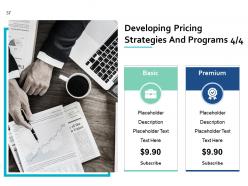
Slide 37: This is one more slide on Developing Pricing Strategies and Programs with basic and premium pricing options.
Slide 38: This slide displays Deliver Value describing- Manage Channel Partner, Managing Retailing, Wholesaling, & Logistics.
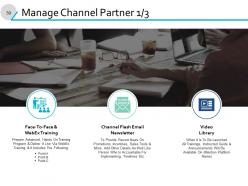
Slide 39: This slide represents Manage Channel Partner with- Face-to-Face & WebEx Training, Channel Flash Email Newsletter, Video Library.
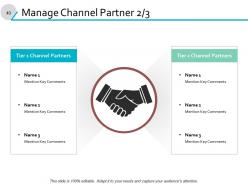
Slide 40: This is another slide to Manage Channel Partner with related imagery and text boxes.
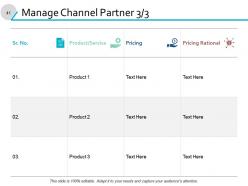
Slide 41: This slide showcases Manage Channel Partner in a tabular form with categories as product/ service, pricing etc.
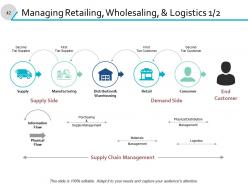
Slide 42: This slide shows Managing Retailing, Wholesaling, & Logistics with- Supply, Distribution & Warehousing, Manufacturing, Retail, Consumer.
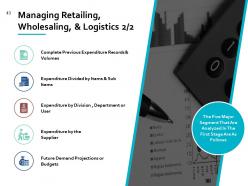
Slide 43: This slide presents Managing Retailing, Wholesaling, & Logistics describing- Complete Previous Expenditure Records & Volumes, Expenditure Divided by Items & Sub Items, Expenditure by the Supplier, Expenditure by Division , Department or User, Future Demand Projections or Budgets.
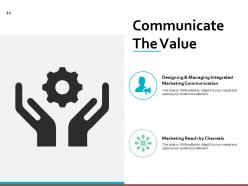
Slide 44: This slide displays Communicate the Value describing- Designing & Managing Integrated Marketing Communications, Marketing Reach by Channels.
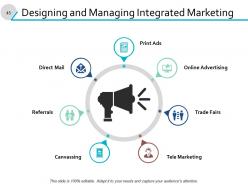
Slide 45: This slide represents Designing and Managing Integrated Marketing describing- Print Ads, Online Advertising, Trade Fairs, Tele Marketing, Referrals, Direct Mail, Canvassing.
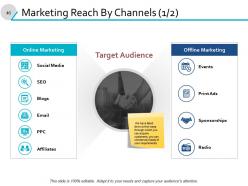
Slide 46: This slide showcases Marketing Reach by Channels with online and offline marketing.
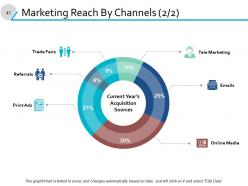
Slide 47: This is another slide on Marketing Reach by Channels describing- Tele Marketing, Emails, Online Media, Print Ads, Referrals, Trade Fairs.
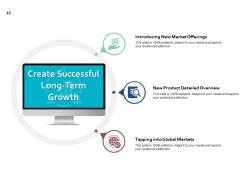
Slide 48: This slide shows Create Successful Long-term Growth with- Introducing New Market Offerings, New Product Detailed Overview, Tapping into Global Markets.
Slide 49: This slide presents Introducing New Market Offerings describing Idea and product details.
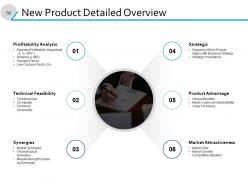
Slide 50: This slide displays New Product Detailed Overview describing- Strategic, Product Advantage, Market Attractiveness, Synergies, Technical Feasibility, Profitability Analysis.
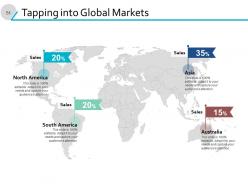
Slide 51: This slide represents Tapping into Global Markets with maps and related text.
Slide 52: This slide is titled as Dashboard and KPIs. You can modify it as per requirements.
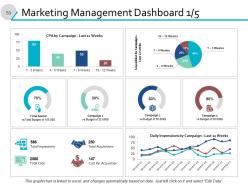
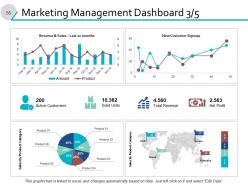
Slide 53: This slide showcases Marketing Management Dashboard with pie charts, line graphs, bar graphs etc to show information and campaign spendings.
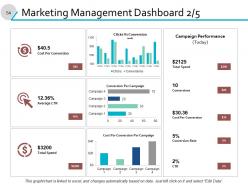
Slide 54: This is another slide presenting Marketing Management Dashboard describing- total spendings, conversions, cost per conversion, conversion rate etc.
Slide 55: This is another slide representing Marketing Management Dashboard with line, bar and pie charts to show information.
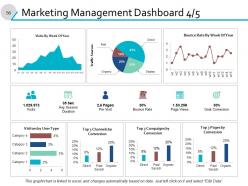
Slide 56: This slide shows Marketing Management Dashboard with visits, average session duration, bounce rate, page views etc.
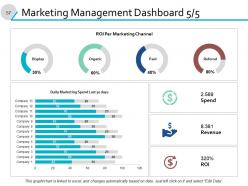
Slide 57: This slide presents Marketing Management Dashboard describing ROI on different marketing channels which includes Display, Organic, Paid and referral.
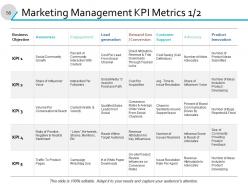
Slide 58: This slide displays Marketing Management KPI Metrics with objectives as- awareness, engagement, lead generation, customer support etc.
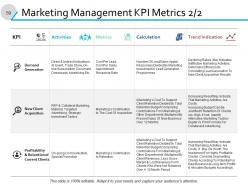
Slide 59: This is another slide with Marketing Management KPI Metrics describing- KPI, activities, metrics etc.
Slide 60: This slide reminds about a 30 minutes break.
Slide 61: This slide displays International Marketing Management Icons.
Slide 62: This is another slide continuing International Marketing Management Icons.
Slide 63: This slide is titled as Additional Slides for moving forward.
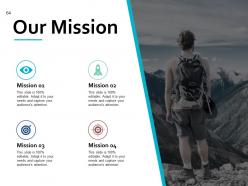
Slide 64: This is Our Mission slide with imagery and text boxes.
Slide 65: This is Our Team slide with names and designation.
Slide 66: This is Our Main Goal slide. State your important goals here.
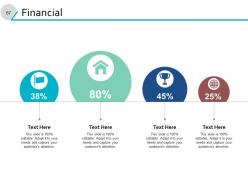
Slide 67: This is a Financial slide. Show your finance related stuff here.
Slide 68: This is Blub Or Idea slide to state a new idea or highlight specifications, information etc.
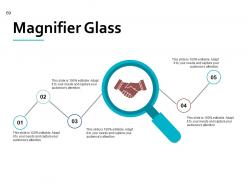
Slide 69: This slide displays Magnifying Glass with text boxes to show information.
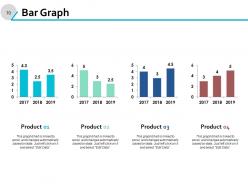
Slide 70: This slide shows Bar Graph with four products comparison.
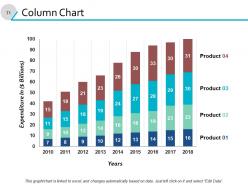
Slide 71: This slide presents Column Chart with four products comparison.
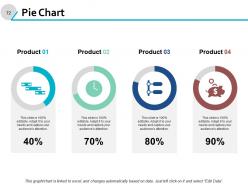
Slide 72: This slide displays Pie Chart with data in percentage.
Slide 73: This is a Thank You slide with address, contact numbers and email address.
International Marketing Management Powerpoint Presentation Slides with all 73 slides:
Use our International Marketing Management Powerpoint Presentation Slides to effectively help you save your valuable time. They are readymade to fit into any presentation structure.









FAQs for International Marketing Management
Domestic marketing is way easier - you're just dealing with one culture and currency. International marketing? Total different beast. You've got multiple cultures, currencies fluctuating all over the place, and legal stuff that varies everywhere. Your messaging needs to change for each region, sometimes your whole product too. What kills in the US might bomb in Japan, you know? Research becomes this massive thing since consumer behavior is so different across countries. Honestly, I'd pick just one international market first and test it out there. Way less stressful than trying to conquer the world at once.
Dude, this is huge - what works in one country can totally bomb somewhere else. I learned the hard way that white means mourning in some Asian cultures, not purity like here. Your messaging needs to match local values. Americans love that "be unique" car pitch, but other cultures? They want to hear about family safety instead. Colors, communication styles, even what benefits you highlight - it all matters. Do your cultural homework first or you're basically shooting blind. Oh and don't just Google it, actually talk to people from those markets if you can.
Honestly, digital marketing is perfect for going global without spending a fortune on traditional campaigns. You can test different markets super easily and adjust your messaging on the fly. Facebook and Google let you target specific demographics in different countries - way better than trying to set up actual offices everywhere (what a nightmare that would be). The analytics are amazing too. Start with maybe one or two markets first though. Figure out what actually works there, then expand from what you learn. Oh, and you'll be able to see exactly what clicks with each audience and pivot fast if something isn't working.
Dude, regulations basically control what you can sell and where. Tariffs will jack up your prices. Import restrictions can block entire markets. Compliance stuff might force you to completely redo your marketing approach - it's honestly such a pain. GDPR is a perfect example - that law changed how everyone collects customer data and runs campaigns. These rules shift constantly too, depending on politics and trade relationships. My advice? Do your regulatory homework before entering any market. Way better than getting hit with surprises later that could've been avoided.
Honestly, I'd go with content marketing that's super localized first. Partner up with local influencers or brands people already trust - way easier than building from scratch. Social platforms are everything, but here's the thing: what kills it in the US might be totally dead in Southeast Asia. Don't just translate your stuff either, make it actually culturally relevant. Sponsoring local events or sports teams works great too. Oh, and be patient! Start small, see what clicks, then double down on whatever's working. Testing is your best friend here.
Honestly, you can't just copy-paste your US strategy everywhere - learned that the hard way watching brands crash and burn in Asia. Different countries live on totally different platforms. Like, everyone's on WeChat in China while Japan's all about LINE. Don't just translate your English posts either - that's lazy and people see right through it. Actually research the culture and adapt your content. Partner with local influencers too since they've got way more street cred than you do as an outsider. Oh, and hire native speakers if you can swing it.
Track ROI and conversion rates per market obviously, but brand awareness matters way more internationally than people realize. Currency swings will mess with your numbers constantly - just roll with it. Social sentiment and local share of voice show if you're actually connecting culturally. Customer lifetime value varies like crazy between countries, so measure that regionally. Market share growth is key too. Oh and compare against local competitors, not your usual global benchmarks - that's where you'll see what's really working. Set up dashboards for all this or you'll drown in data.
Dude, consumer behavior is so different region to region - cultural stuff, money situations, just what people are used to. What kills it in one place might totally bomb somewhere else. You've gotta switch up your messaging, pricing, even how you sell things based on what locals actually want. Like, collectivist cultures hate that "you're special" individualistic marketing we love here. I learned this the hard way when I first started consulting internationally - yikes. Don't even think about copy-pasting your strategy. Do real research for each market first. It's more work but you'll actually make sales.
Honestly, the big headaches are infrastructure problems, crazy regulations, and just not getting the culture right. Supply chains can be a nightmare - logistics that just don't work reliably. Then you've got local rules that change constantly (I swear some places switch things up weekly). What kills companies though is assuming their home market playbook will work everywhere else. Currency swings and political drama make it even messier. My advice? Find local partners who actually know their stuff. They're worth every penny and will stop you from face-planting into obvious mistakes you can't see coming.
Honestly, you'll need to tweak everything for each market - and I mean everything. Products might need totally different features or packaging (like McDonald's does with their rice burgers in Taiwan). Price based on what locals can actually afford, not what works back home. Distribution is huge too - what works in the US might be completely useless in other countries. But here's the thing that trips up most companies: your messaging needs way more than just translation. Colors mean different things, humor doesn't always translate, even basic imagery can backfire. Pick one market first and really get to know them before you spread yourself too thin.
Dude, you absolutely need market research before going international. Trust me on this one. Different countries have completely different buying habits and cultural stuff that'll trip you up. What kills it in America might bomb hard in Japan or somewhere else. First, dig into some basic online research to get a feel for things. Then spend real money on proper studies for the markets you actually care about. You've gotta understand their pricing expectations, how they like to shop, and what regulations you're dealing with. Honestly, it also helps you figure out which countries are even worth your time in the first place.
Dude, language barriers will absolutely wreck your brand messaging if you're not careful. Translation mishaps happen ALL the time - like when KFC's "finger lickin' good" became "eat your fingers off" in Chinese. Awkward much? But it's not just literal translation problems either. Cultural context matters huge. What's hilarious in one country might be totally offensive somewhere else. Technical terms don't always have equivalents. My advice? Skip Google Translate and work with actual native speakers who get the culture. Otherwise you'll confuse the hell out of potential customers instead of connecting with them.
Dude, you really can't mess around with ethics when going international. Research each market's cultural expectations first - what flies in the US might totally bomb in Japan or Germany. Be transparent about everything and respect local values, because honestly? One bad move will destroy your rep in that entire region. Different countries have crazy different rules about data privacy and advertising claims too. My friend's company learned this the hard way in Europe last year - total nightmare. Just don't be exploitative and you'll build way better long-term relationships anyway.
Dude, partnerships are seriously the way to go for international stuff. You get instant access to someone who already knows the local market inside and out - all those cultural quirks and regulations that would take you forever to learn. Customers trust local brands way more than random foreign companies too, which is huge. Joint ventures or licensing deals let you split the costs and risks, which honestly makes the whole thing less terrifying. I'd say find partners who are strong where you're weak, then nail down the details upfront so nobody gets screwed later.
Dude, it's way more than just translating words. You've gotta adapt everything - colors, images, even your whole sales pitch - for local culture and what people actually care about there. Research their humor, customs, what makes them tick emotionally. I totally bombed once trying to sell "premium" stuff in a market where everyone shops for deals lol. Don't forget practical stuff too - payment methods, regulations, seasonal trends are all different. Work with native speakers who get marketing, not just translation. Oh and test locally first! You'll save yourself major headaches.
-
Attractive design and informative presentation.
-
Great product with highly impressive and engaging designs.