


Digital Marketing And Social Media Pitch Deck Ppt Template




Try Before you Buy Download Free Sample Product
 Impress Your
 Audience
 100%
100% Editable
 Save Hours
 of Time


Social media makes businesses learn so much about how the platform can help them develop their brands. Check out our efficiently designed Digital Marketing and Social Media PPT pitch deck that will provide insight into the social media platforms new approach and how it can market itself to other companies. The social media presentation deck has a simple interface and many photos, making it easy to understand. The storyline of this presentation can be used as a guideline for arranging a deck logically. This entails introducing an issue, a solution, and a firm conclusion and call to action. This deck outline is based on best practices for fundraising pitch slides and is suitable for a B2B marketing deck. Here Problem is defined as Adopting new marketing techniques to target consumers through social media apps, Product Features, statistics for Market User Data, etc. Lastly, this PPT describes Competition with Similar Social Media Apps, Business Features and Built in Marketing Tools, Team and Company History, Success Stories, and Testimonials. Get access to our insightful digital marketing ppt now.
People who downloaded this PowerPoint presentation also viewed the following :
Content of this Powerpoint Presentation
Slide 1: This slide introduces Digital Marketing And Social Media Pitch Deck. State your company name and begin.
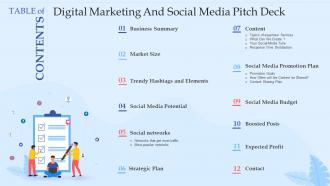
Slide 2: This slide shows Table of Content for the presentation.
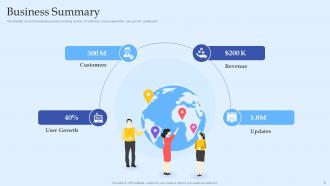
Slide 3: This slide covers the business summary including number of customers, revenue generated , user growth , updates etc.
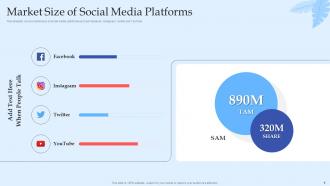
Slide 4: This slide covers market size of social media platforms such as Facebook, Instagram, twitter and YouTube.
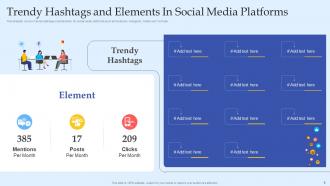
Slide 5: This slide covers Trendy Hashtags And Elements for social media platforms such as Facebook, Instagram, twitter and YouTube.
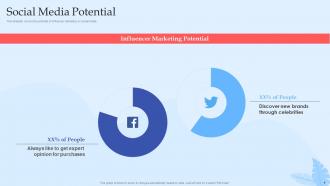
Slide 6: This slide covers the potential of influencer marketing on social media.
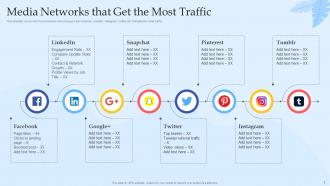
Slide 7: This slide covers list of sociomedical networks such as Facebook, LinkedIn, Instagram, twitter etc. that gets the most traffic.
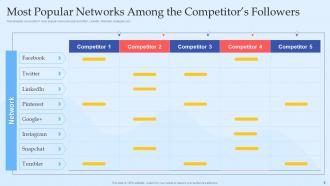
Slide 8: This slide covers list of most popular networks such as twitter, LinkedIn, Pinterest, Instagram etc.
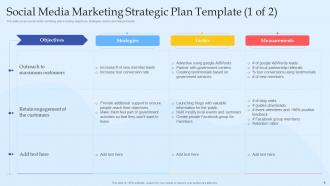
Slide 9: This slide covers social media marketing plan including objectives, strategies, tactics and measurements.
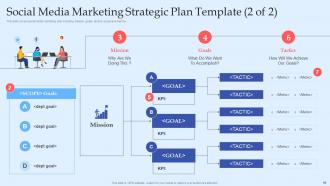
Slide 10: This slide covers social media marketing plan including mission, goals, tactics, scope and metrics.
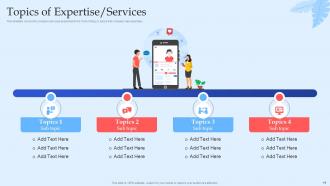
Slide 11: This slide covers the company services presented in the form of blog or topics that company has expertise.
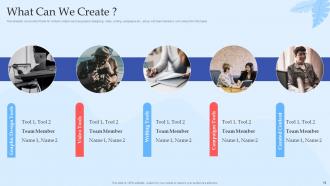
Slide 12: This slide covers list of tools for content creation such as graphic designing, video, writing, campaigns etc.
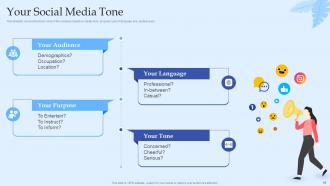
Slide 13: This slide covers the brand voice of the company based on media tone, purpose, type of language and, audience etc.
Slide 14: This slide covers the response time for the social media queries for the week.
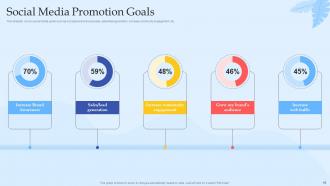
Slide 15: This slide covers social media goals such as increase brand awareness, sales/lead generation, increase community engagement etc.
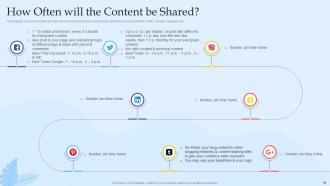
Slide 16: This slide covers the number per time frame for content shared on social media platforms such as Facebook, twitter, LinkedIn, Instagram etc.
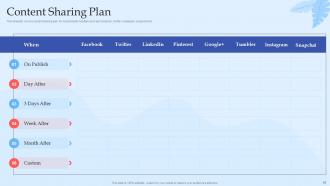
Slide 17: This slide covers content sharing plan for social media handles such as Facebook, twitter, Instagram, snapchat etc.
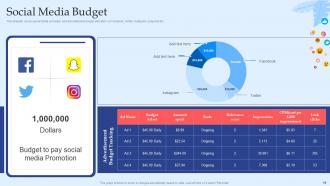
Slide 18: This slide covers social media promotion and advertisement budget allocation on Facebook, twitter, Instagram, snapchat etc.
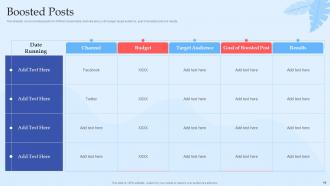
Slide 19: This slide covers boosted posts for different social media channels along with budget, target audience, goal of boosted post and results.
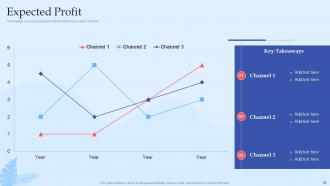
Slide 20: This slide covers the expected profit from all the social media channels.
Slide 21: This slide showcases contact details of the company.
Slide 22: This slide is titled as Additional Slides for moving forward.
Slide 23: This slide contains all the icons used in this presentation.
Slide 24: This slide provides 30 60 90 Days Plan with text boxes.
Slide 25: This slide presents Roadmap with additional textboxes.
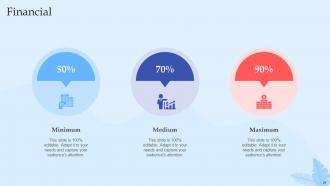
Slide 26: This is a Financial slide. Show your finance related stuff here.
Slide 27: This slide depicts Venn diagram with text boxes.
Slide 28: This slide contains Puzzle with related icons and text.
Slide 29: This slide showcases Magnifying Glass to highlight information, specifications etc
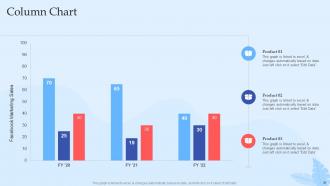
Slide 30: This slide displays Column chart with two products comparison.
Slide 31: This is a Thank You slide with address, contact numbers and email address.
Digital Marketing And Social Media Pitch Deck Ppt Template with all 36 slides:
Use our Digital Marketing And Social Media Pitch Deck Ppt Template to effectively help you save your valuable time. They are readymade to fit into any presentation structure.





FAQs for Digital Marketing And Social Media Pitch
You need to figure out who your audience is first - like actually know where they spend time online. Create content that solves their real problems. Set up analytics from the start so you can see what's working (trust me on this one). Most people jump into every social platform at once and just get overwhelmed. Pick maybe 2-3 channels max. Email marketing is still huge too, don't sleep on that. SEO stuff matters but honestly focus on the audience thing first. Oh and make sure your content is actually good - sounds obvious but you'd be surprised how many people skip that part.
Track the stuff that actually matters for your goals - conversion rates, cost per acquisition, ROAS, click-through rates. Google Analytics is a lifesaver here, honestly can't imagine running campaigns without it. Don't forget engagement metrics too like social shares and email opens. Here's the thing though - pick maybe 3-5 metrics max or you'll go crazy trying to analyze everything. I learned that the hard way lol. Quality of traffic matters more than just pure numbers. Set up monthly reports so you can spot what's working and pivot when something isn't.
Honestly, social media is where everyone spends their time now, so that's where you need to be too. The targeting is crazy good - like you can literally reach people who checked out your competitor's stuff recently. Building actual relationships there beats just throwing ads at people any day. Traffic, leads, customer feedback - it all flows from there. Don't spread yourself too thin though. Pick 2-3 platforms where your people actually are and focus there. And actually respond to comments, don't just post and disappear! That's the biggest mistake I see.
So SEO is basically getting Google to notice your site when people search for your stuff. You optimize keywords, make pages load fast, write good content - all so search engines think you're legit. Honestly, it's kind of a slow burn but totally worth it once it kicks in. Higher rankings = more free traffic instead of paying for ads all the time. Oh and definitely start with keyword research first. Like, actually figure out what your customers are typing into Google. That's where everything else builds from.
Honestly, you gotta really know who you're talking to first. What keeps them up at night? Hook them in those first few seconds because people's attention spans are shot these days. Tell stories instead of just pushing products - nobody wants to feel sold to, you know? Mix it up with videos, polls, behind-the-scenes content, whatever feels right for your brand. Oh, and steal ideas from your competitors but make them better (don't feel bad about it, everyone does this). Visual stuff that actually pops will get you way further than boring text posts. Always tell people what to do next, but don't be weird about it.
Here's the thing - email marketing is like having customers' actual phone numbers instead of just screaming into the social media void. The ROI is ridiculous, something like $40 back for every dollar you spend (honestly sounds too good to be true but apparently it's legit). You can take all that content you're already making and just repurpose it into newsletters. Great for getting people back to your site who've already visited. Short bursts work. But the real trick is putting signup forms everywhere - your landing pages, social profiles, wherever people are hanging out. It's your most direct shot at people who actually care about what you're doing.
Honestly, personalization is where it's at right now - people want brands that actually understand them. Third-party cookies are basically dead, so you've gotta start collecting your own customer data through surveys or loyalty programs. Video's still crushing it, but I'm seeing interactive stuff like polls and AR filters blow up too. Oh, and don't sleep on sustainability messaging. Gen Z literally won't buy from you if they think you're destroying the planet lol. I'd probably start by looking at what personalization tools you're already using and figure out where the gaps are. Most brands are way behind on this stuff.
Okay so first things first - stop obsessing over followers and likes, that stuff doesn't pay the bills. What you actually need to watch is conversion rates, how much you're spending to get customers, and what each customer's worth over time. Google Analytics is your best friend here, plus whatever data you can pull from your social accounts. I'm telling you, most people completely ignore this goldmine of info about what's actually making them money. Figure out which channels bring in your best customers and what content gets them to buy. Oh, and see where people are bailing in your sales process - that's huge. Set up conversion tracking ASAP if you haven't already.
Honestly, the speed is huge - you can get traffic rolling in hours vs waiting forever for SEO to do its thing. You get way more control too, like exactly who sees your ads and how much you spend. Testing different audiences is super easy, and the data's actually useful since you can see which keywords are bringing in real customers. SEO's cool for the long haul but it's such a slow burn. Oh, and you can switch up ad copy on the fly to see what actually converts. I'd throw a small budget at it first - maybe test a couple campaigns and see what clicks with your people.
Dude, you HAVE to make your site mobile-friendly. More than half of people browse on their phones now, so if your site looks terrible on mobile, you're basically telling customers to leave. Google ranks mobile-optimized sites higher too - double whammy if you ignore it. And honestly? People get annoyed so fast when they're on their phones. Slow loading or weird formatting = instant bounce. I'd start by just pulling up your site on different phones and seeing how bad it looks (might be eye-opening). Google has this mobile-friendly checker thing that's pretty helpful too.
Honestly, you don't need a massive budget to get started. Pick one or two social platforms where your customers actually are - don't try to be everywhere at once. Email marketing is still ridiculously effective and cheap with something like Mailchimp. Google My Business is free and a total no-brainer for local stuff. Oh, and blogging helps your SEO without paying for ads. Partnering with other local businesses for cross-promotion works great too. I'd say start with maybe two of these, get decent at them, then add more. You'll be surprised how much traction you can get without spending much.
Find influencers whose followers match your target audience first. Then let them create content that feels natural to their style while hitting your goals. Don't micromanage them - I've watched so many brands ruin campaigns by being control freaks about every detail. Take their posts and spread them everywhere: repost on your socials, drop testimonials into emails, turn them into ads. Oh, and track the stuff that actually matters. Sure, reach looks nice in reports, but engagement and conversions tell you if it's working. Their audience trusts them way more than they'll ever trust your brand directly.
Just be straight with people, honestly. Always tell them when something's sponsored or if you're collecting their data - nobody likes feeling tricked. Give users actual control over their info too. Those "one weird trick" headlines are so cringe anyway, so skip those entirely. Also don't go after vulnerable groups with sketchy tactics. The biggest thing? Actually deliver what your ads promise. I'd start by looking through your current stuff with fresh eyes - bet there's more to fix than you think. People can smell BS from miles away these days.
Honestly, I used to think customer personas were total BS marketing nonsense. But they actually work? Like, instead of throwing content at everyone and hoping something sticks, you can actually talk to people in a way that clicks with them. Once you figure out where your ideal customers hang out online, what bugs them, and how they shop, your messaging gets so much better. No more generic "hey buy this" posts that nobody cares about. Your ad copy improves, you pick better platforms, timing gets easier. Start with just one persona for your best customer type - don't overthink it.
Honestly? Most people just post random stuff without any plan and wonder why nothing works. Pick maybe 2 platforms max where your people actually are - I see too many brands trying to be on TikTok, Instagram, Twitter, LinkedIn all at once and just burning out. Track your numbers too, otherwise you're basically throwing spaghetti at the wall. Oh and quit with the constant sales pitches! Nobody wants their feed clogged with "buy now" every single day. Mix in stuff that's actually useful or entertaining. Focus on getting really good at just two channels first, then you can think about expanding later.
-
A beautiful, professional design paired with high-quality images and content that is sure to impress. It is a must-use PPT template in my opinion.
-
Spacious slides, just right to include text. SlideTeam has also helped us focus on the most important points that need to be highlighted for our clients.