


Digital marketing opportunities and challenges powerpoint presentation slides





Try Before you Buy Download Free Sample Product
 Impress Your
 Audience
 100%
100% Editable
 Save Hours
 of Time


Building a Digital Marketing PowerPoint presentation from scratch is indeed a tricky task. To help you out in this, here we are presenting our pre-made 62 slides Digital Marketing Opportunities and Challenges PowerPoint Presentation Slides deck. With support of our excellent Digital Marketing deck, you can easily cover topics like Online Marketing, Performance Overview, Search Engine Optimization Fundamentals, SEO Opportunities, Ranking, Monthly Traffic etc. With so many people online, it’s necessary for businesses to be online as well and digital marketing is an immediate way to reach them. Using the designs of this descriptive presentation show, you can also brief onlookers about the importance of digital marketing and its advantages. Furthermore, using our digital marketing presentation PPT example deck, consultants can discuss outcome and impact of digital marketing on the business to ensure whether proper marketing strategies and regulations are followed correctly or not. It has exclusive PowerPoint presentation slides like Organic Visits and Backlist, Web Traffic Insights, Web Marketing Plan, Lead Generation Activates, Monthly Social Media Dashboard etc. are included for better awareness of the topic. Download this online marketing Opportunities and Challenges PPT sample deck file and let audience see your proactive approach for internet marketing. Get away from it all with our Digital Marketing Opportunities And Challenges Powerpoint Presentation Slides. They can even create an entertaining break.
People who downloaded this PowerPoint presentation also viewed the following :
Content of this Powerpoint Presentation
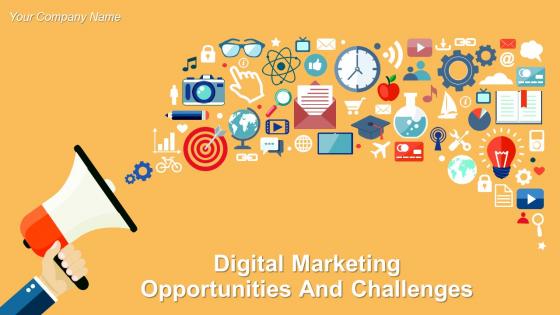
Slide 1: This slide showcases Digital Marketing Opportunities & Challenges with creative imagery. State Your Company Name and begin.
Slide 2: This is an Agenda slide. State your agendas here.
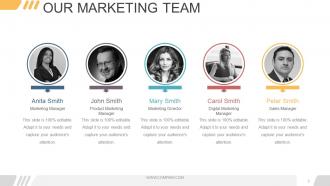
Slide 3: This is Our Marketing Team slide with name, designation and image box to go with.
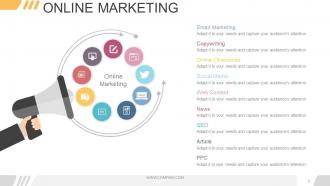
Slide 4: This slide displays Online Marketing showcasing- Email Marketing, Online Directories, SEO, Social Media, Web Content, Article, Copywriting, News, PPC.
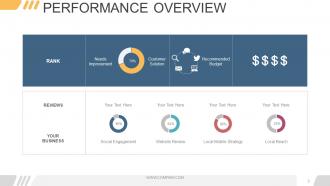
Slide 5: This slide showcases Performance Review consisting of- Recommended Budget, Needs Improvement, Customer Solution, RANK, YOUR BUSINESS, REVIEWS, Local Reach, Social Engagement, Website Review, Local Mobile Strategy.
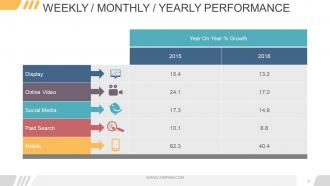
Slide 6: This slide showcases Weekly/ Monthly/Yearly Performance. State perf0rmance aspects here.
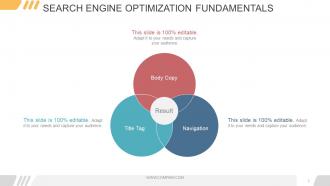
Slide 7: This slide displays Search Engine Optimization Fundamentals with- Result comprising of: Body Copy Navigation Title Tag
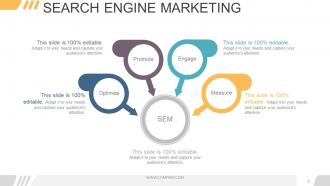
Slide 8: This slide presents Search Engine Marketing with the following points- SEM, Promote, Engage, Measure, Optimize.
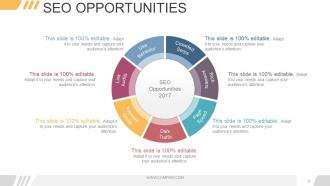
Slide 9: This slide shows SEO Opportunities consisting of- Keyword Group, Link Audits, User Behavior, Crowded Serps, Rich Answers, Page Speed, Dark Traffic.
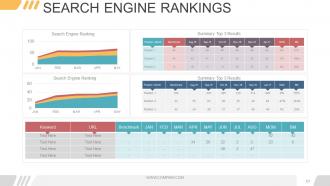
Slide 10: This slide displays Search Engine Rankings tables and graphs.
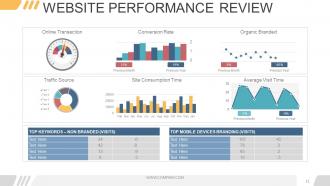
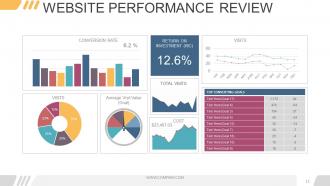
Slide 11: This slide displays Website Performance Review tables and graphs.
Slide 12: This slide also displays Website Performance Review tables, charts and graphs.
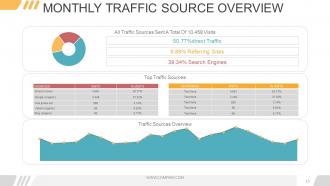
Slide 13: This slide shows Monthly Traffic Source Overview showcasing- Top Traffic Sources, direct Traffic, Referring Sites, Search Engines, Traffic Sources Overview.
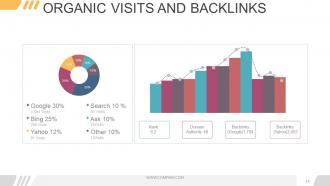
Slide 14: This slide showcases Organic Visits And Backlinks graph and chart showing- Rank, Domain Authority, Backlinks, Google, Bing Visits, Yahoo Visits, Search, Ask, Other.
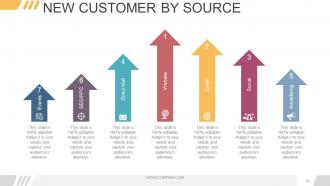
Slide 15: This slide New Customer By Source showing- Events, SEO/PPC, Direct Mail, Website, Email, Social, Advertising.
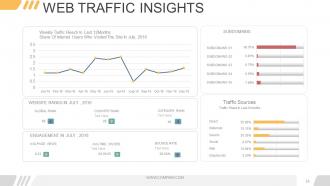
Slide 16: This slide displays Web Traffic Insights Graphs showing- Website Ranks, GLOBAL Rank, COUNTRY Rank, CATEGORY Rank, ENGAGEMENT, AVG.TIME ON SITE, BOUNCE RATE, AVG.PAGE VIEWS, Traffic Sources, Traffic Share, Direct Referrals, Search, Social, Mail, Display Ads, SUBDOMAINS.
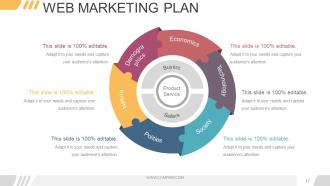
Slide 17: This is a Web Marketing Plan to show aspects of- Economics, Demographics, Technology, Nature, Society, Polities, Product Service, Buyers, Sellers.
Slide 18: This slide showcases a Website Update Plan. State substantials here.
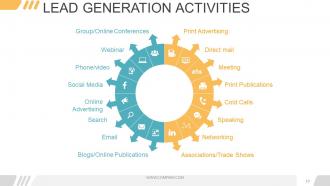
Slide 19: This slide showcases Lead Generation Activities such as- Networking, Speaking, Meeting, Print Publications, Direct mail, Cold Calls, Print Advertising, Associations/Trade Shows, Webinar, Blogs/Online Publications, Email, Search, Online Advertising, Phone/video, Group/Online Conferences, Social Media.
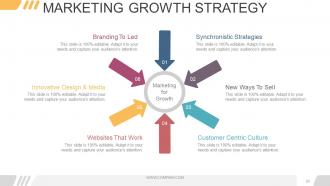
Slide 20: This slide showcases Marketing Growth Strategy with the following subheadings- Branding To Led Innovative Design & Media Websites That Work Customer Centric Culture New Ways To Sell Synchronistic Strategies as Marketing For Growth strategies.
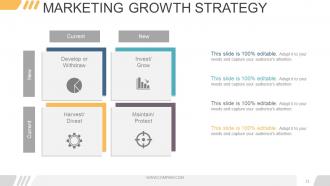
Slide 21: This slide showcases Marketing Growth Strategy matrix displaying- Maintain/ Protect, Invest/ Grow, Harvest/ Divest, Develop or Withdraw in terms of new and current as parameters to gauge.
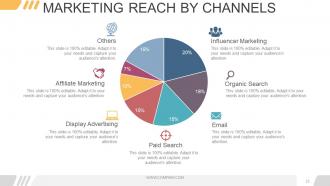
Slide 22: This slide presents Marketing Reach By Channels displaying- Organic Search Paid Search Email Display Advertising Affiliate Marketing Influencer Marketing Others in pie chart form.
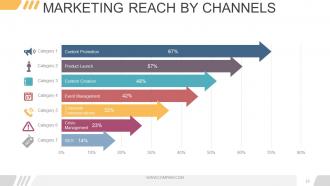
Slide 23: This slide presents Marketing Reach By Channels displaying- Content Promotion Product Launch Content Creation Event Management Crisis Management SEO Corporate Communications in creative arrow graph form.
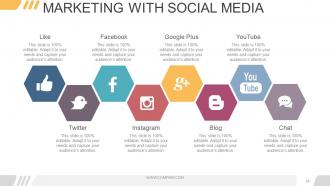
Slide 24: This slide displays Marketing With Social Media showing platforms- Chat, Twitter, Instagram, Blog, YouTube, Facebook, Google Plus.
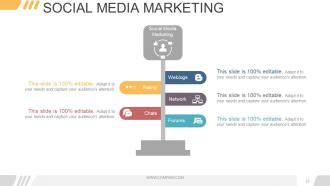
Slide 25: This slide showcases Social Media Marketing with the following parameters- Weblogs, Network, Forums, Chats, Rating.
Slide 26: This slide displays a Monthly Social Media Dashboard.
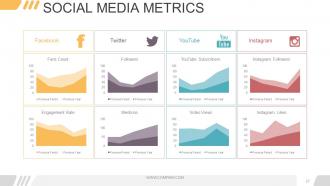
Slide 27: This slide presents Social Media Metrics for- Facebook, Twitter, YouTube, Instagram.
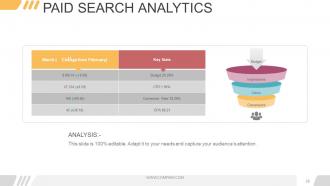
Slide 28: This slide displays Paid Search Analytics- Impressions, Clicks, Conversions, Budget.
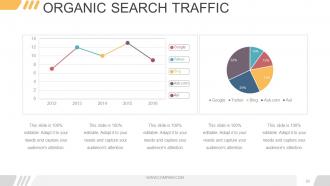
Slide 29: This slide prresents Organic Search Traffic graph and chart for- Google, Yahoo, Bing, Ask.com, Aol.
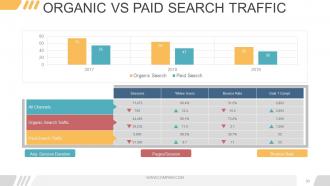
Slide 30: This slide presents Organic vs Paid Search Traffic Avg. Session Duration, Bounce Rate, Pages/Session.
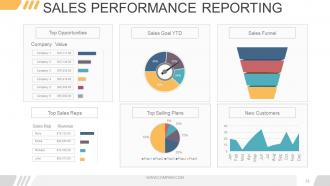
Slide 31: This slide shows Sales Peformance Reporting funnel, chart, graph showcasing- Top Selling Plans, New Customers, Revenue, Top Sales Reps, Sales Goal YTD, Sales Funnel, Visitors, Leads, Repeat Customer, Customer, Top Opportunities, Company, Value.
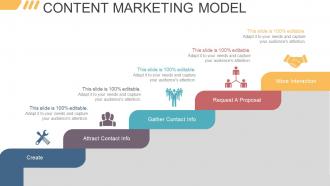
Slide 32: This slide presents Content Marketing Model comprising of- More Interaction, Request a Proposal, Gather Contact Info, Attract Contact Info, Create.
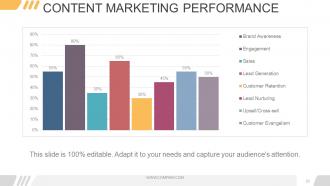
Slide 33: This slide presents Content Marketing Performance Graph.
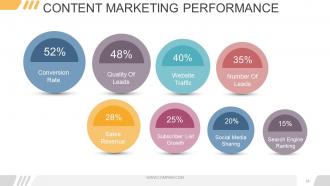
Slide 34: This slide presents Content Marketing Performance with- Conversion Rate, Quality Of Leads, Website Traffic, Number Of Leads, Subscriber List Growth, Sales Revenue, Social Media Sharing, Search Engine Ranking.
Slide 35: This slide showcases Email Marketing. State email marketing aspects here.
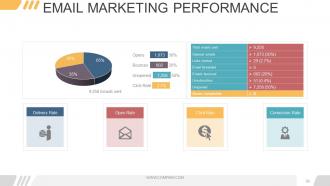
Slide 36: This slide presents Email Marketing Performance with- Open Rate, Click Rate, Conversion Rate, Delivery Rate, Emails sent, Click Rate, Opens, Bounces, Unopened.
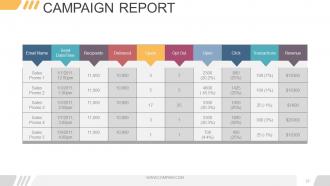
Slide 37: This slide showcases a Campaign Report in tabular form.
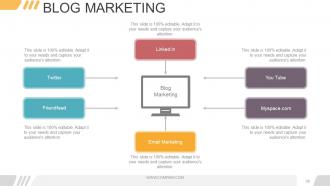
Slide 38: This slide presents Blog Marketing through- Linked in, Email Marketing, Twitter, Friendfeed, You Tube, Myspace.com.
Slide 39: This slide presents Blog Marketing comprising of- Positive: Brand Advocates, Neutral: Brand Awareness, Negative: Brand Detractors, Good and Bad Experience.
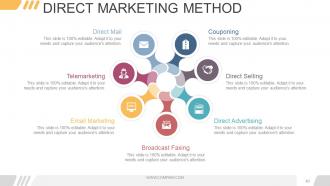
Slide 40: This slide showcases Direct Marketing Method showcasing- Broadcast Faxing, Couponing, Direct Mail, Direct Selling, Telemarketing, Email Marketing, Direct Advertising.
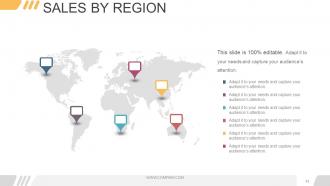
Slide 41: This slide dislpays Sales By Region on world map image to show global presence, market etc.
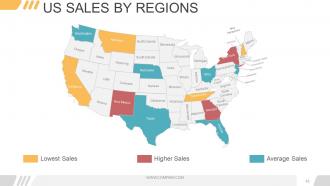
Slide 42: This slide dislpays US Sales By Region.
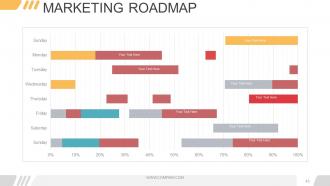
Slide 43: This slide displays a Marketing Roadmap.
Slide 44: This slide is titled Additional slides. You can change the slide content as per need.
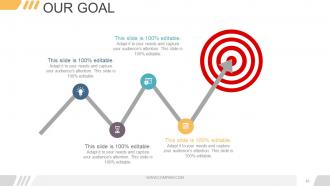
Slide 45: This is Our Goal slide. State your goals here.
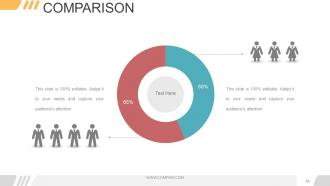
Slide 46: This is a Comparison slide for males and females. State comparison, specifications etc. here.
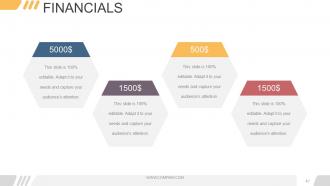
Slide 47: This is a Financial score slide to state financial aspects etc.
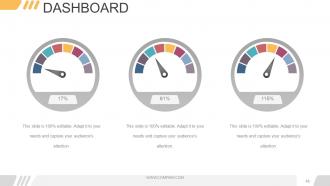
Slide 48: This is a Dashboard slide to state Low, medium and High aspects, kpis, metrics etc.
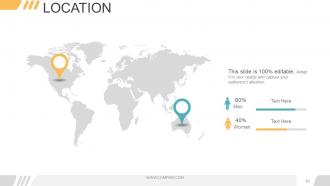
Slide 49: This is a Location slide of world map image. Mark specific locations for company growth, market etc. here.
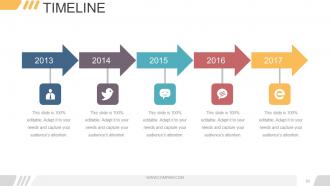
Slide 50: This slide showcases a Project Timeline to show milestones, important highlights etc.
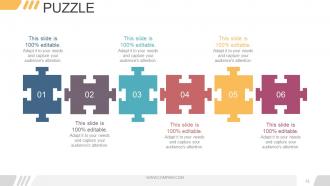
Slide 51: This is a Puzzle image slide. State information, specifications etc. here.
Slide 52: This is a Target slide. State your targets here.
Slide 53: This is a Puzzle slide. State information, specifications etc. here.
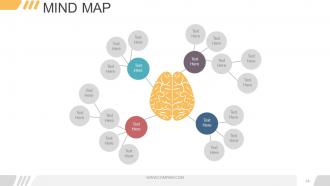
Slide 54: This is a Mind Map image slide to show segmentation, information, specifications etc.
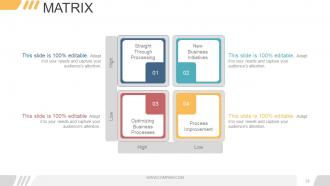
Slide 55: This is a Matrix slide to show segmentation, information, specifications etc. such as- Process Improvement, Optimizing Business Processes, New Business Initiatives, Straight Through Processing.
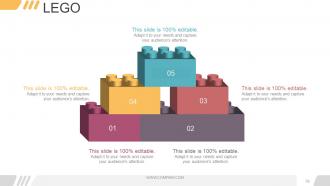
Slide 56: This is a Lego image slide. State information, specifications etc. here.
Slide 57: This slide shows Silhouettes with text boxes. State people related information, specifications etc. here.
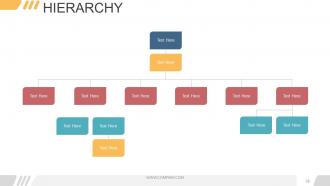
Slide 58: This is a Hierarchy slide. State team/department, organization information, specifications etc. here.
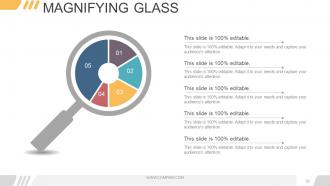
Slide 59: This is a Magnifying Glass image slide to show information, specifications etc.
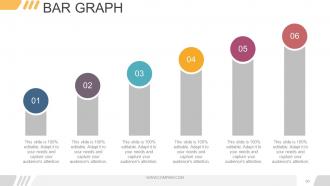
Slide 60: This is a Bar graph slide to show product/entity comparison.
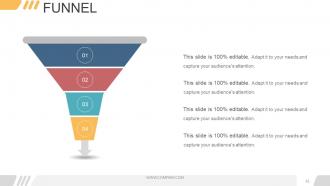
Slide 61: This slide shows a Funnel image. State information, data specifications here.
Slide 62: This is a Thank You slide with Address# street number, city, state, Contact Numbers, Email Address.
Digital marketing opportunities and challenges powerpoint presentation slides with all 62 slides:
Deliver instant advice with our Digital Marketing Opportunities And Challenges Powerpoint Presentation Slides. Immediately give the guidance desired.




FAQs for Digital marketing opportunities and challenges
Okay so you need five things for digital marketing that actually works. First, figure out exactly who you're targeting and where they spend time online. Create content that solves real problems they have - not just promotional stuff. Then spread it across multiple channels: social media, email, SEO, paid ads. Keep your messaging consistent everywhere (this trips up way more people than you'd think). And track everything with analytics from day one. I know data sounds boring but it's literally how you know what's working. Most people just post randomly and hope for the best, but you can't fix what you don't measure.
Honestly, just pick 1-2 platforms where your customers actually are. Don't spread yourself everywhere - I learned that the hard way lol. Post maybe 3x a week but actually talk to people who comment. Too many small business owners treat it like a billboard when it's really about relationships. Behind-the-scenes stuff works great, plus customer stories and helpful tips. The algorithm actually prefers real engagement over those polished ads anyway. I'd start with like 15 minutes daily just responding to comments and jumping into conversations in your space. Consistency beats perfection every time.
So SEO is how you get Google to actually show your stuff when people search for it. Basically you're trying to speak Google's language - which sounds nerdy but whatever, it works. You find keywords your audience uses, then create content around those terms. Good SEO means free traffic instead of paying for ads all the time. The technical setup matters too, but honestly start with keyword research first. It's like raising your hand higher than everyone else in a crowded room. More visibility = more people finding your site naturally.
Honestly, email marketing works because it's like having a direct line to people who actually want to hear from you. Break your audience into groups so you're not sending random stuff to everyone - way better open rates that way. I always tell people to focus on giving value first, whether that's tips, updates, or deals. Consistency matters too, but don't stress about being perfect. When people can easily reply or click through to your site, that's where the real engagement happens. Oh, and definitely set up a welcome series for new subscribers - it's like the easiest win ever.
Look, forget follower counts and all that vanity stuff - it's not gonna pay your rent. Focus on what actually moves the needle: conversion rates, how much you're spending to get customers, and your return on ad spend. Traffic and engagement matter too, obviously. Click-through rates and email opens are solid for tweaking campaigns as you go. Pick like 5-7 metrics tops that match what you're after - sales, leads, whatever. I'd probably throw them in a basic dashboard so you can catch trends early. Way easier to make quick fixes that way.
Don't treat content marketing like it's this separate thing sitting in a corner. Your blog posts should feed into your social media, email newsletters, SEO - everything. I've literally turned blog headlines into some of my best-performing ads (weird how that works, right?). One solid piece of content can hit multiple spots in your funnel if you're smart about it. The trick is thinking about where it'll all go before you even start writing. Otherwise you're just scrambling later trying to make stuff fit.
Honestly, micro-influencers are where it's at right now - their engagement rates are insane compared to the big accounts. Everyone's doing long-term partnerships instead of those random one-off posts that feel super fake. Video is basically non-negotiable now, especially TikTok and Reels (which makes sense since that's where everyone lives). Performance-based pricing is taking over too, which is way better than throwing money at flat fees and hoping for the best. Oh, and brands are finally getting it - they're picking creators who actually match their vibe instead of just going for whoever has the most followers. Focus on engagement and audience quality when you're checking people out.
Dude, your mobile site speed matters way more than you think. People literally have zero patience on their phones - like 3 seconds max before they bounce. I've watched conversion rates shoot up 20-30% just from fixing loading issues, no joke. Your customers will straight up go to competitors if your site's clunky on mobile. Here's what I'd do: grab your phone right now and actually use your site. Annoying to navigate? Slow to load? Yeah, that's exactly how your customers feel. Fix the mobile experience and people will actually stick around long enough to buy stuff.
Your headline's gotta hook people instantly - like 2 seconds or they're gone. Don't use those random stock photos that have nothing to do with what you're selling (seriously, why do people do this?). Write like you're talking to someone, not pitching features they don't care about yet. Test different audiences because what clicks with millennials totally bombs with boomers. Your call-to-action should be specific - skip "Learn More" and try "Get Your Free Quote" instead. Oh, and start small with your budget. Test a few versions first, then throw money at whatever's working.
Look, data analytics basically gives you superpowers for your marketing. You'll see exactly which channels actually convert instead of just burning cash. Track your best customer segments, spot patterns you'd never catch otherwise - like when your posts get the most engagement or which email headlines people actually open. Real-time optimization beats guessing every single time. I started with just Google Analytics goals for the main stuff I cared about, then built from there. Honestly wish I'd done it sooner because flying blind with your budget is just painful.
Honestly, just pick one thing and get good at it first. Content marketing is solid - write stuff that actually helps people instead of just promoting yourself. LinkedIn ads are insanely good for targeting if you're B2B. Email's still huge for following up with leads, though everyone thinks it's dead for some reason. SEO takes forever but it's free traffic once it kicks in. Oh, and make sure your landing pages don't suck - clear buttons, tell people exactly what to do. I'd probably start with content since it feeds into everything else. Don't try to be everywhere at once, you'll just burn out.
Oh dude, you NEED to keep your branding consistent everywhere. Seriously, I've watched companies totally shoot themselves in the foot because their Instagram looks nothing like their website. It's like... why would I trust you if you can't even figure out your own identity? Your audience gets confused and just bounces. Quick fix: make a basic brand guide with your colors, fonts, and how you talk to people. Then go check all your platforms - bet you'll find some weird inconsistencies you didn't notice before. Trust builds way faster when everything feels cohesive.
Honestly, A/B testing is a game changer because you're making decisions with real data instead of just winging it. Test different headlines, images, CTAs, whatever - see what actually clicks with your audience. Your conversion rates will thank you. Plus you can tweak campaigns as they're running rather than waiting to see what bombed at the end. I always tell people to start small though - even something as basic as two different subject lines teaches you tons about what works. Way better than throwing money at ads and hoping for the best.
Oh man, you'll save yourself so much headache with these tools. Instead of having like 20 browser tabs open, everything's in one place - scheduling posts, tracking email stats, watching your ad spend. The automation stuff is clutch for running campaigns while you work on bigger picture things. I honestly don't know how people used to manage multiple campaigns without losing their minds. You can set up email sequences and test different versions automatically. Best part? The data actually shows you what's worth your money and what isn't. Just pick one good platform first - don't go crazy connecting a bunch of random tools.
Dude, transparency is everything - tell people what data you're grabbing and get their permission first. Don't use those sleazy tricks to manipulate clicks or emotions. Honestly? Half the marketers out there are doing shady stuff that makes us all look terrible. Be upfront about your claims, let people opt out when they want, and don't forget actual humans are behind those numbers. Oh and definitely audit what you're doing now - if it'd embarrass you on the front page, probably time to change it.
-
Design layout is very impressive.
-
Illustrative design with editable content. Exceptional value for money. Highly pleased with the product.