


Digital Marketing Plan for Service Based Organizations Powerpoint Presentation Slides




Try Before you Buy Download Free Sample Product
 Impress Your
 Audience
 100%
100% Editable
 Save Hours
 of Time


Introducing our comprehensive Digital Marketing Plan for Service Based Organizations PowerPoint presentation, a powerful advertisement strategy to boost sales and brand awareness. It is ideal for organizations seeking to overcome challenges, conduct competitor analysis, and implement effective measures to drive success. The Marketing Plan to Launch Service deck commences with an insightful service marketing overview, differentiating it from product marketing and incorporating the 7Ps of the marketing mix. It provides a solid foundation for crafting a successful marketing approach. Additionally, our Strategic Marketing Plan PPT includes a dedicated competitive analysis section, enabling enterprises to identify key initiatives used by competitors to maintain a leading edge in the market. This invaluable information helps refine strategies and stand out from the competition. Furthermore, the Digital Marketing Campaign module covers a range of industries, addressing the unique challenges faced in service marketing. It showcases new service launches to boost sales and achieve impactful results. Lastly, the template offers a set of slides with statistics and KPI dashboards, facilitating marketing managers in efficiently evaluating the success of their service marketing plan. Get access to our 100 percent editable digital marketing ppt templates now.
People who downloaded this PowerPoint presentation also viewed the following :
Content of this Powerpoint Presentation
Slide 1: This slide introduces Digital Marketing Plan for Service Based Organizations. Commence by stating Your Company Name.
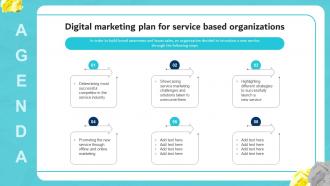
Slide 2: This slide depicts the Agenda of the presentation.
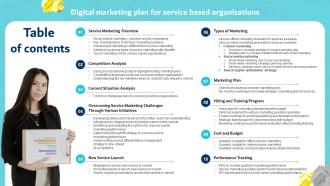
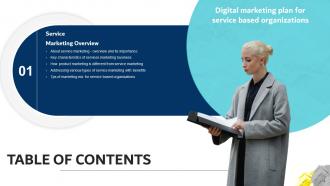
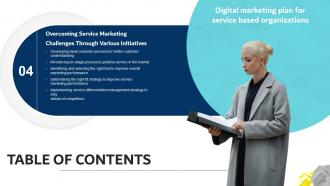
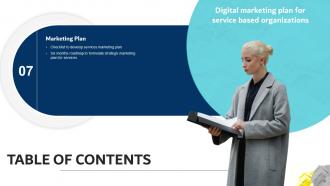
Slide 3: This slide includes the Table of contents.
Slide 4: This slide highlights the Title for the Topics to be covered further.
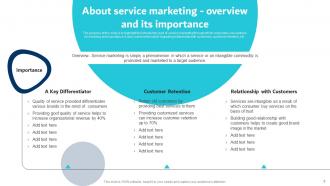
Slide 5: This slide highlights the introductory part of service marketing.
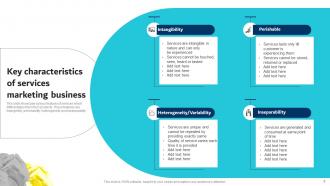
Slide 6: This slide states the Key characteristics of services marketing business.
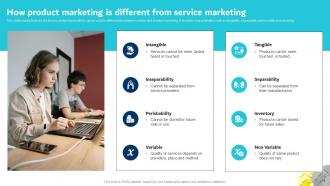
Slide 7: This slide shows features of services and products to differentiate between service and product marketing.
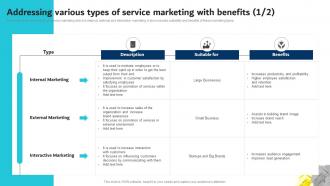
Slide 8: This slide deals with Addressing various types of service marketing with benefits.
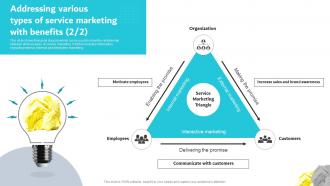
Slide 9: This slide continues Addressing various types of service marketing with benefits.
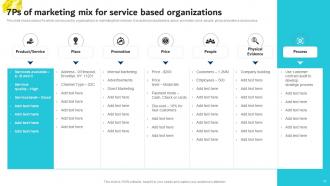
Slide 10: This slide states the various Ps which can be used by organizations in marketing their services.
Slide 11: This slide includes the Heading for the Contents to be discussed next.
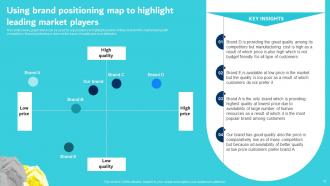
Slide 12: This slide focuses on Using brand positioning map to highlight leading market players.
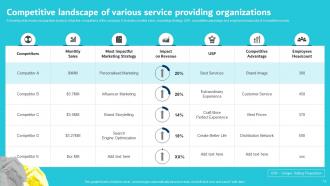
Slide 13: This slide reveals the comparative analysis of top five competitors of the company.
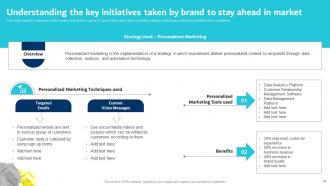
Slide 14: This slide emphasizes on Understanding the key initiatives taken by brand to stay ahead in market.
Slide 15: This slide mentions the Title for the Ideas to be covered in the forth-coming template.
Slide 16: This slide exhibits the Common challenges faced by service providing organizations.
Slide 17: This slide indicates the Heading for the Ideas to be discussed further.
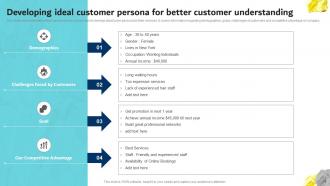
Slide 18: This slide deals with Developing ideal customer persona for better customer understanding.
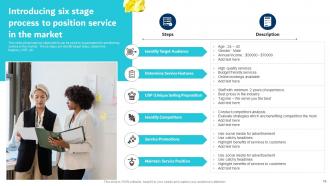
Slide 19: This slide shows various steps which can be used by organization for positioning service in the market.
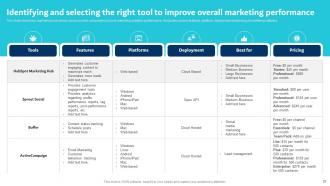
Slide 20: This slide focuses on Identifying and selecting the right tool to improve overall marketing performance.
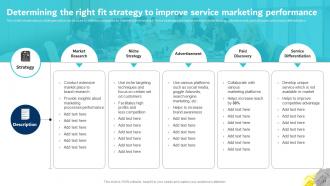
Slide 21: This slide emphasizes on Determining the right fit strategy to improve service marketing performance.
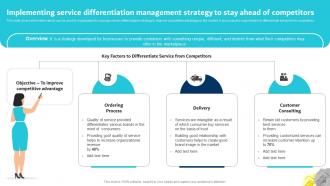
Slide 22: This slide stresses on Implementing service differentiation management strategy to stay ahead of competitors.
Slide 23: This slide includes the Title for the Contents to be covered in the next template.
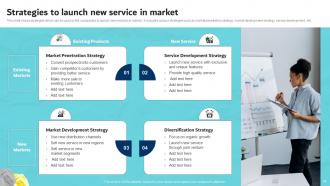
Slide 24: This slide exhibits the Strategies to launch new service in market.
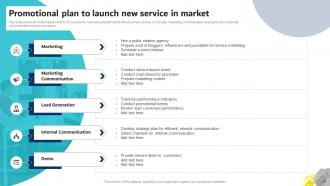
Slide 25: This slide highlights the Promotional plan to launch new service in market.
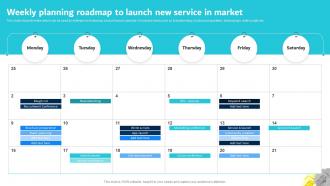
Slide 26: This slide reveals the Weekly planning roadmap to launch new service in market.
Slide 27: This slide mentions the Heading for the Topics to be discussed further.
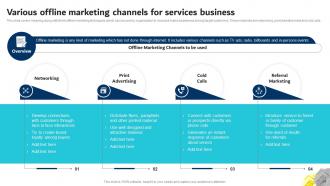
Slide 28: This slide states the Various offline marketing channels for services business.
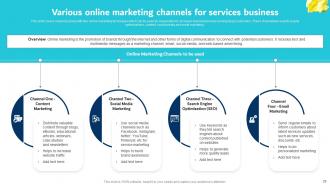
Slide 29: This slide covers meaning along with four online marketing techniques to be used by the organization.
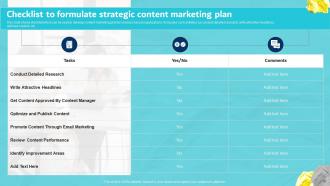
Slide 30: This slide reveals the Checklist to formulate strategic content marketing plan.
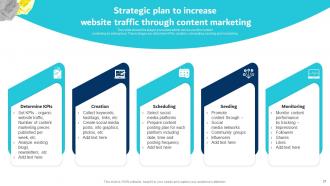
Slide 31: This slide elucidates the Strategic plan to increase website traffic through content marketing.
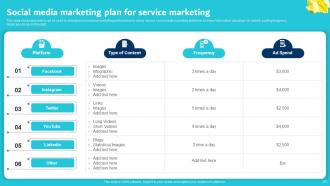
Slide 32: This slide displays the Social media marketing plan for service marketing.
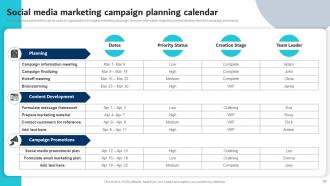
Slide 33: This slide showcases the Social media marketing campaign planning calendar.
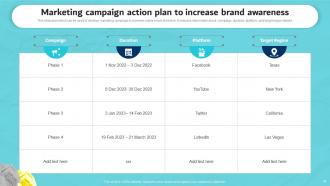
Slide 34: This slide represents the Marketing campaign action plan to increase brand awareness.
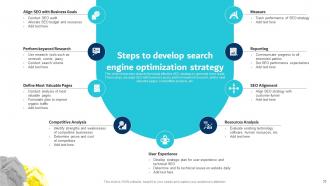
Slide 35: This slide highlights the Steps to develop search engine optimization strategy.
Slide 36: This slide includes the Title for the Ideas to be further discussed.
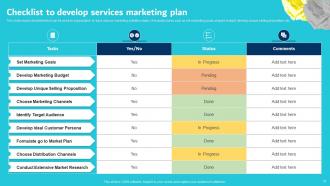
Slide 37: This slide shows checklist which can be used by organization to track various marketing activities status.
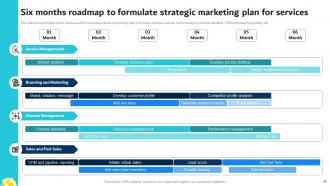
Slide 38: This slide highlights the Six months roadmap to formulate strategic marketing plan for services.
Slide 39: This slide depicts the Heading for the Ideas to be covered in the forth-coming template.
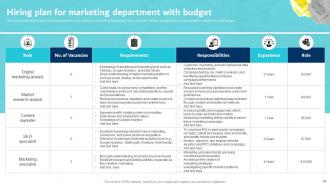
Slide 40: This slide reveals the Hiring plan for marketing department with budget.
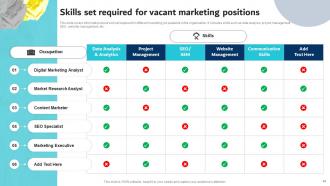
Slide 41: This slide covers information about skill set required for different marketing jobs available in the organization.
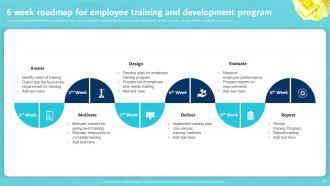
Slide 42: This slide elucidates 6 week roadmap for employee training and development program.
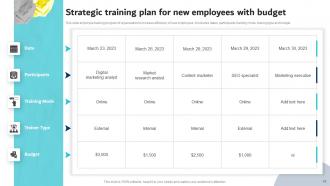
Slide 43: This slide presents the Strategic training plan for new employees with budget.
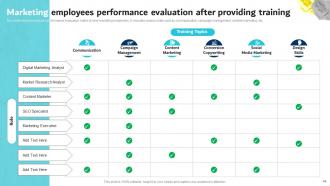
Slide 44: This slide focuses on the Marketing employees performance evaluation after providing training.
Slide 45: This slide displays the Title for the Contents to be discussed next.
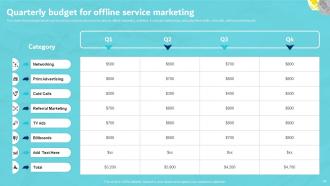
Slide 46: This slide displays the Quarterly budget for offline service marketing.
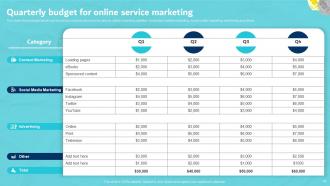
Slide 47: This slide shows budget which can be used by services business for various online marketing activities.
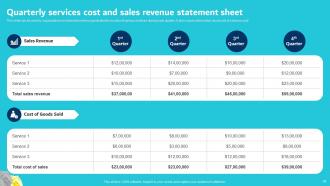
Slide 48: This slide reveals the Quarterly services cost and sales revenue statement sheet.
Slide 49: This slide includes the Heading for the Topics to be covered in the forth-coming template.
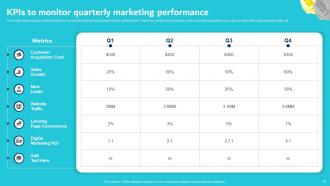
Slide 50: This slide highlights the KPIs to monitor quarterly marketing performance.
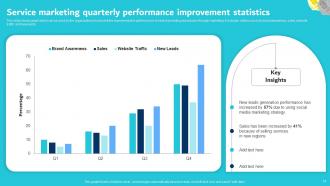
Slide 51: This slide mentions the Service marketing quarterly performance improvement statistics.
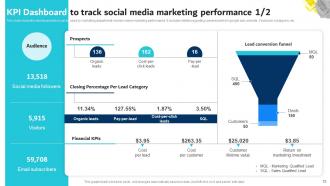
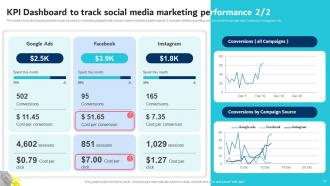
Slide 52: This slide presents the KPI dashboard to track social media marketing performance.
Slide 53: This slide continues the KPI dashboard to track social media marketing performance.
Slide 54: This is the Icons slide containing all the Icons used in the plan.
Slide 55: This slide is used for depicting some Additional information.
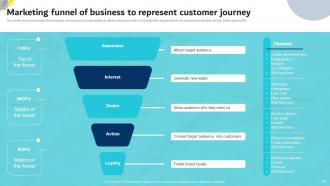
Slide 56: This slide showcases the Marketing funnel of business to represent customer journey.
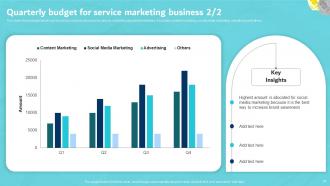
Slide 57: This slide illustrates the Quarterly budget for service marketing business.
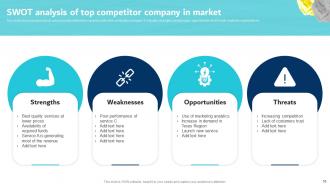
Slide 58: This slide elucidates the SWOT analysis of top competitor company in market.
Slide 59: This slide indicates the organization's Pie chart.
Slide 60: This is the Clustered column with line chart slide.
Slide 61: This is the About us slide. State your company-related information here.
Slide 62: This slide incorporates the vision, mission and goal of the organization.
Slide 63: This slide presents information related to the Financial topic.
Slide 64: This is the Idea generation slide for encouraging innovative ideas.
Slide 65: This slide displays the Venn diagram.
Slide 66: This is the Quotes slide for motivation.
Slide 67: This slide highlights the Location of the company across the globe.
Slide 68: This slide depicts the Mind map of the company.
Slide 69: This slide contains the Post it notes for reminders and deadlines.
Slide 70: This slide shows the firm's Roadmap.
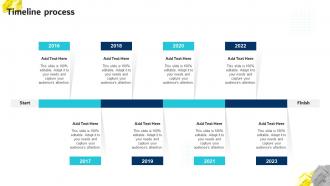
Slide 71: This slide elucidates the Timeline process.
Slide 72: This is the Thank You slide for acknowledgement.
Digital Marketing Plan for Service Based Organizations Powerpoint Presentation Slides with all 71 slides:
Use our Digital Marketing Plan for Service Based Organizations Powerpoint Presentation Slides to effectively help you save your valuable time. They are readymade to fit into any presentation structure.









FAQs for Digital Marketing Plan for Service Based Organizations
Okay so you need five things that actually matter. Set real goals with numbers - not vague "brand awareness" BS. Know your audience's actual problems, not just age/gender stuff. Pick maybe two channels where they actually spend time (Instagram stories vs LinkedIn, totally different vibes). Content should help people, not just sell. And track everything properly - this is where most people totally blow it tbh. I'd honestly start small with one channel, get good at it, then add more. Way better than being mediocre everywhere at once.
Look at who's already buying from you first - what problems are they actually solving? Analytics will show you who's engaging and where they hang out online. Social media data is super helpful here too. Build those buyer personas from real info, not just what you think makes sense (honestly, so many people just wing this part and wonder why nothing works). Survey your current customers about what bugs them most. Once you've got solid personas, run some small test campaigns to see if you're on the right track before spending your whole budget.
Okay so here's the deal with SEO and content marketing - they're like best friends who make each other look good. Content marketing gives people something worth reading when they land on your site. SEO makes sure they actually find you in the first place. Google's gotten way smarter about this stuff, so you can't just cram keywords everywhere anymore (thank god, that was annoying). Your content has to actually help people solve problems or answer questions. The sweet spot? Write things your audience genuinely wants to read, then tweak it so search engines can connect you with the right people.
Think of social media as ways to spread your main content around, not separate projects. Take one blog post and chop it up - Instagram carousel, LinkedIn article, Twitter thread. Pick maybe 2-3 platforms max and actually do them well (I see too many people spreading themselves thin). Give each platform a job: Instagram for awareness, LinkedIn for leads, Twitter for support - whatever makes sense for you. Focus on metrics that matter to your business, not just follower counts. Honestly, being selective about where you show up is way better than being everywhere badly.
Honestly, don't get sucked into vanity metrics - they're basically useless. Focus on stuff that actually shows if you're making money: conversion rates, cost per acquisition, return on ad spend. Website traffic matters too, obviously. Sure, social media likes feel good, but if they're not turning into sales, who cares? I'd also watch email open rates and customer lifetime value closely. The thing is, you can drown in all this data pretty quickly. Pick like 3-5 metrics that actually matter for YOUR business and stick with those. Way better than tracking everything and understanding nothing.
Dude, forget those blast emails everyone sends - they're basically useless now. What actually works is weaving email into your whole customer journey. Start with automated sequences like welcome series and educational stuff for new leads. Then keep existing customers happy with newsletters and product updates. Segmentation is huge though - split your lists by how people behave and what they want. I probably spend way too much time on this part, but it's worth it. Track your open rates and click-throughs so you know what's working. Map out maybe 3-4 automated flows that match your main goals and you'll be golden.
Honestly, personalization is where it's at - targeted emails and stuff like polls or quizzes really work. Social proof is huge too. Get those testimonials and reviews up everywhere. Your site needs to load fast (I swear people bounce if it takes more than 3 seconds) and have super clear call-to-action buttons. A/B test everything - headlines, colors, copy, whatever. I'd probably start with retargeting ads since they're pretty straightforward, then add other tactics once you see what's working. Oh, and don't try to do everything at once or you'll go crazy trying to track results.
Budget controls literally everything you can do with digital marketing. Got $5K? You're doing totally different stuff than someone with $50K. The whole game changes. Start with whatever's already working for you - pour money there first. Then test new channels bit by bit. I always tell people to focus on the cheap, high-impact stuff initially. You can get scrappy and still see results, honestly. Once you start proving ROI, that's when you scale up and get fancy with the bigger campaigns and better tools. But yeah, don't spread yourself too thin early on.
Honestly, video is still where it's at - especially those short TikTok/Reel formats. Even boring B2B brands are crushing it there, which kinda surprised me. AI personalization is getting really good now, so that's worth exploring. Interactive stuff like polls and quizzes work great too since people want to actually engage, not just scroll past. Oh, and voice search optimization matters way more than it used to - everyone's constantly asking Siri things. Privacy updates make first-party data collection super important. For influencers, skip the celebrities and go micro instead. I'd start by looking at your current content and figuring out where you can add more video.
Honestly, track what's actually working instead of guessing. I'd start with Google Analytics and your social media insights - they're free and you'll get plenty to work with. Look at conversion rates, where people drop off, which campaigns bring in good leads. The data can be crazy overwhelming at first (I spent way too much time in spreadsheets when I started), but stick to the basics. See what content your audience actually engages with. Then shift your budget and messaging based on what the numbers tell you. Customer acquisition costs are huge too - some channels just aren't worth it.
Honestly, influencer marketing works at basically every stage if you do it right. Micro-influencers are perfect for getting your name out there and launching new products. Their content is gold - you can repost it everywhere, from Instagram to your email newsletters. Story takeovers during events are clutch too, though I feel like everyone's doing those now. Here's the thing: don't get caught up in follower numbers. Find people whose audience actually matches who you're trying to reach. Start small with maybe 3-5 influencers in your space and pitch them something specific, not some copy-paste message they'll ignore.
Dude, seriously - mobile optimization isn't optional anymore. Most people (like 60%+) browse on their phones now, so if your site sucks on mobile you're literally losing customers. Google prioritizes mobile-friendly sites too, which means bad mobile = terrible search rankings. I actually watched a client's traffic crash last year because of this exact issue, it was brutal. Your site needs to work smoothly whether someone's on desktop or scrolling on their phone during lunch. Check your mobile loading speed first - that's usually what kills people's patience and tanks conversions.
Google Analytics is a must for tracking your site - can't really do marketing without knowing what's working. For social media, Buffer or Hootsuite will save you so much time scheduling posts. Email marketing? Mailchimp's solid, though I've been loving ConvertKit lately. SEMrush handles all your SEO research and spying on competitors (which honestly everyone does). Canva's perfect for quick graphics when you're not a designer. Oh, and Google Ads obviously. Start with free versions first - you'll figure out what you actually need pretty fast. Most tools have way more features than you'll ever use anyway.
Honestly, start with a brand style guide - logo specs, colors, fonts, the whole thing. Boring but necessary. Then actually stick to it everywhere. Your Instagram shouldn't look like it's from a different company than your emails, you know? Have someone be the brand police before stuff goes live. Trust me on this one. First though, look at what you've got now across all your channels. Fix the worst mismatches first - like if your website is blue but your social is red or whatever. Oh, and make sure your team can actually find these guidelines when they need them.
Dude, most people mess up by setting super vague goals like "get more followers" - which honestly tells you nothing. Pick specific numbers instead. Also, stop trying to be on every single platform! Choose maybe 2-3 where your people actually are and nail those. I see this all the time - brands spreading their budget so thin it's basically useless. Oh, and set up your tracking from the start. Can't tell you how many times I've seen people realize months later they have zero data to work with. Focus on what you can actually measure, ya know?
-
The Designed Graphic are very professional and classic.
-
I took a chance with SlideTeam. I never looked back. Great products and great service.