


Digital Transformation Of Help Desk Management Powerpoint Presentation Slides




Try Before you Buy Download Free Sample Product
 Impress Your
 Audience
 100%
100% Editable
 Save Hours
 of Time


Service Desk is a ticket management framework that enables the business to implement strong and effective workflows for internal and customer-oriented support departments. Check out our professionally designed presentation on Digital Transformation of Help Desk Management. It provides a general overview, major trends, statistics, and best practices that service desk professionals or enterprises can refer to. This PowerPoint presentation offers access to multiple strategies that can help businesses optimize their service desk operations; these include automation, knowledge management, incident management, ticket management, and service request escalation management. Also, the module covers self-service portal deployment, utilization of service desk management tools, customer experience management, etc. Furthermore, the complete deck includes slides that can help the support teams through the RACI matrix, training program, and communication plan, assisting in re-organizing and streamlining workflows. Moreover, it also provides details related to costs and software selection relating to service desk management. Lastly, the PPT deck can help assess the performance of the above strategies through impact analysis, KPIs, and dashboards. Customize this 100 parcent editable template through assistance from our highly-skilled research or design team. Get access now
People who downloaded this PowerPoint presentation also viewed the following :
Content of this Powerpoint Presentation
Slide 1: This slide introduces Digital Transformation of Help Desk Management. State your company name and begin.
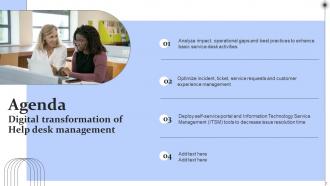
Slide 2: This slide states Agenda of the presentation.
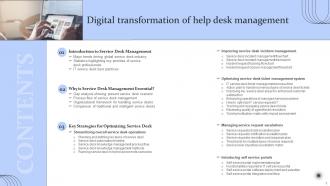
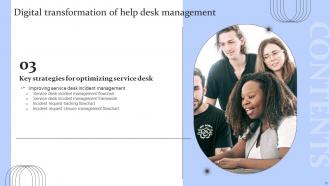
Slide 3: This slide shows Table of Content for the presentation.
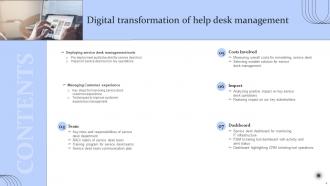
Slide 4: This is another slide continuing Table of Content for the presentation.
Slide 5: This slide highlights title for topics that are to be covered next in the template.
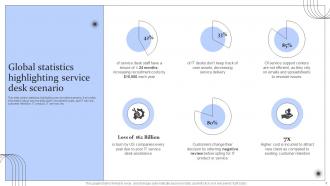
Slide 6: This slide presents Global statistics highlighting service desk scenario.
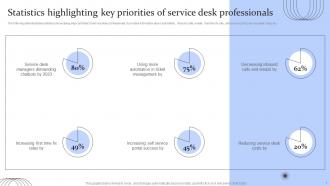
Slide 7: This slide displays Statistics highlighting key priorities of service desk professionals.
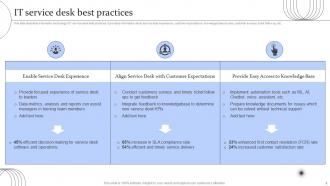
Slide 8: This slide represents IT service desk best practices.
Slide 9: This slide highlights title for topics that are to be covered next in the template.
Slide 10: This slide showcases Gap analysis showing present service desk scenario.
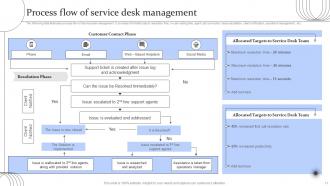
Slide 11: This slide shows Process flow of service desk management.
Slide 12: This slide presents Organizational framework for handling service desks.
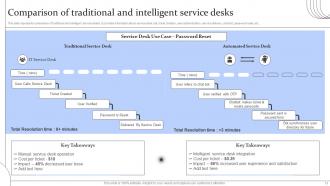
Slide 13: This slide displays Comparison of traditional and intelligent service desks.
Slide 14: This slide highlights title for topics that are to be covered next in the template.
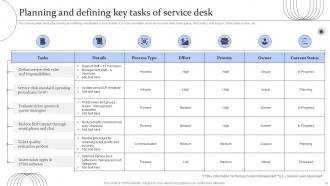
Slide 15: This slide represents Planning and defining key tasks of service desk.
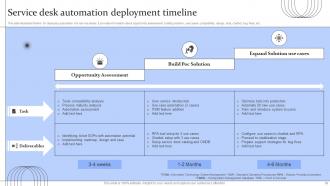
Slide 16: This slide showcases Service desk automation deployment timeline.
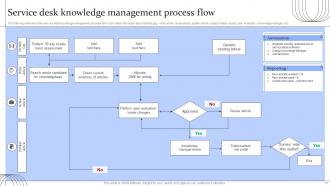
Slide 17: This slide shows Service desk knowledge management process flow.
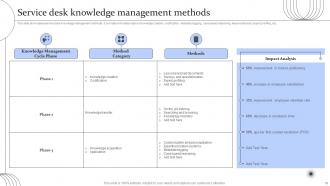
Slide 18: This slide presents Service desk knowledge management methods.
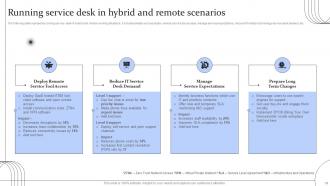
Slide 19: This slide displays Running service desk in hybrid and remote scenarios.
Slide 20: This slide highlights title for topics that are to be covered next in the template.
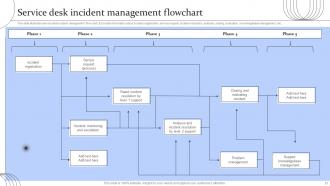
Slide 21: This slide represents Service desk incident management flowchart.
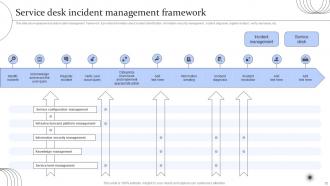
Slide 22: This slide showcases Service desk incident management framework.
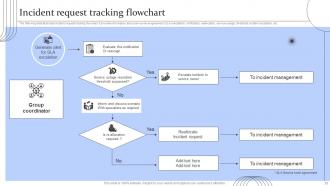
Slide 23: This slide shows Incident request tracking flowchart.
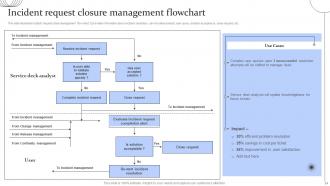
Slide 24: This slide presents Incident request closure management flowchart.
Slide 25: This slide highlights title for topics that are to be covered next in the template.
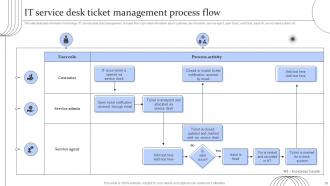
Slide 26: This slide displays IT service desk ticket management process flow.
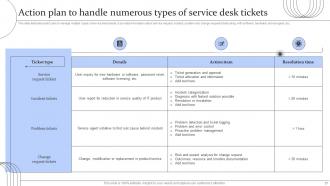
Slide 27: This slide represents Action plan to handle numerous types of service desk tickets.
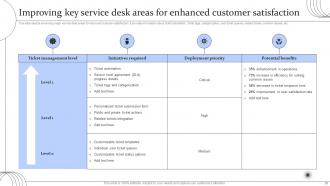
Slide 28: This slide showcases Improving key service desk areas for enhanced customer satisfaction.
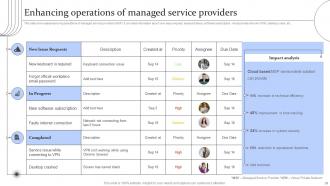
Slide 29: This slide shows Enhancing operations of managed service providers.
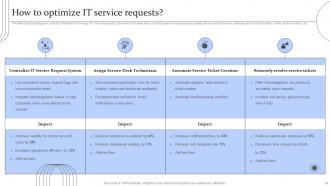
Slide 30: This slide depicts strategies to optimize information technology (IT) service requests.
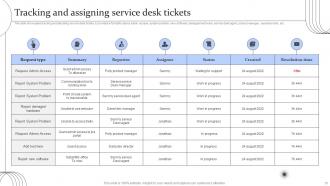
Slide 31: This slide presents Tracking and assigning service desk tickets.
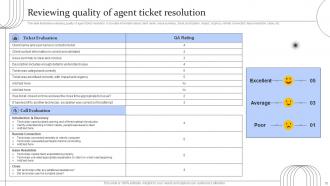
Slide 32: This slide displays Reviewing quality of agent ticket resolution.
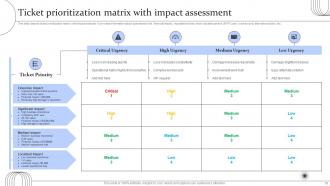
Slide 33: This slide represents Ticket prioritization matrix with impact assessment.
Slide 34: This slide highlights title for topics that are to be covered next in the template.
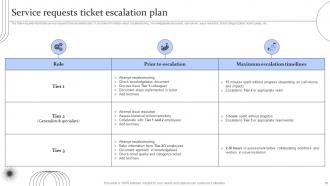
Slide 35: This slide showcases Service requests ticket escalation plan.
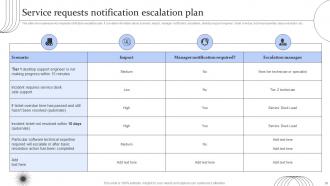
Slide 36: This slide shows Service requests notification escalation plan.
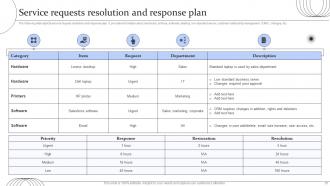
Slide 37: This slide presents Service requests resolution and response plan.
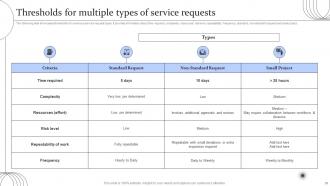
Slide 38: This slide displays Thresholds for multiple types of service requests.
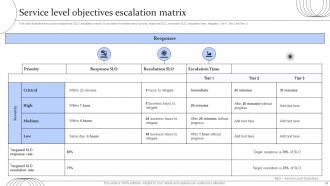
Slide 39: This slide represents Service level objectives escalation matrix.
Slide 40: This slide highlights title for topics that are to be covered next in the template.
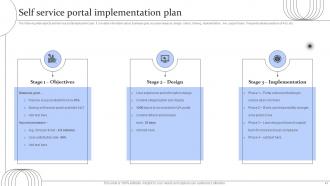
Slide 41: This slide showcases Self service portal implementation plan.
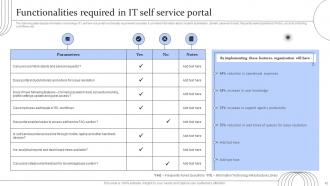
Slide 42: This slide shows Functionalities required in IT self service portal.
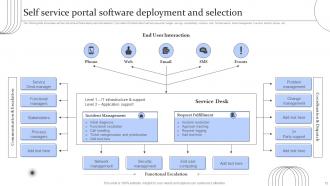
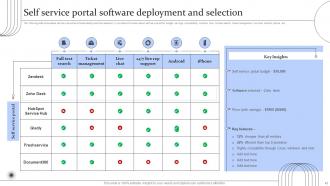
Slide 43: This slide presents Self service portal software deployment and selection.
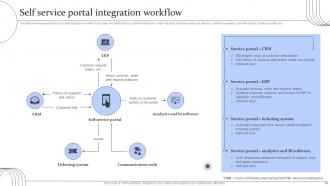
Slide 44: This slide displays Self service portal integration workflow.
Slide 45: This slide highlights title for topics that are to be covered next in the template.
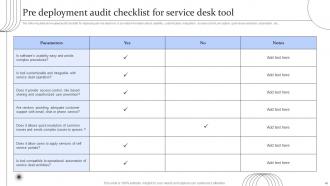
Slide 46: This slide represents Pre deployment audit checklist for service desk tool.
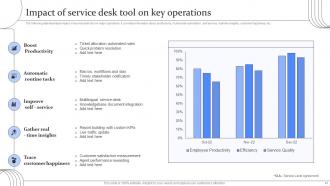
Slide 47: This slide showcases Impact of service desk tool on key operations.
Slide 48: This slide highlights title for topics that are to be covered next in the template.
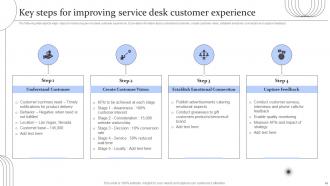
Slide 49: This slide shows Key steps for improving service desk customer experience.
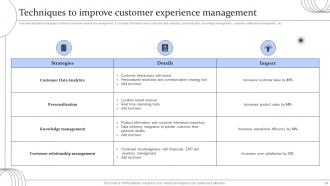
Slide 50: This slide presents Techniques to improve customer experience management.
Slide 51: This slide highlights title for topics that are to be covered next in the template.
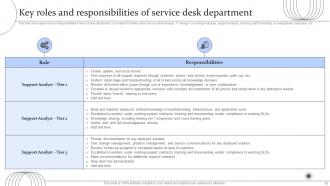
Slide 52: This slide displays Key roles and responsibilities of service desk department.
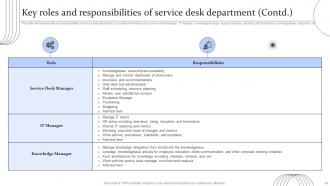
Slide 53: This is another slide continuing Key roles and responsibilities of service desk department.
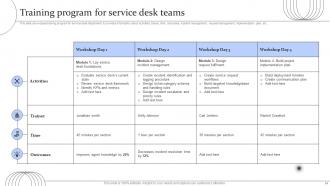
Slide 54: This slide represents Training program for service desk teams.
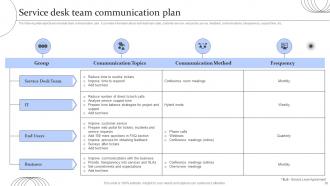
Slide 55: This slide showcases Service desk team communication plan.
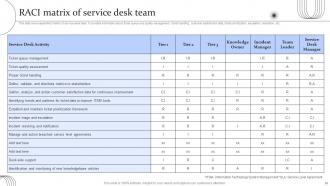
Slide 56: This slide shows RACI matrix of service desk team.
Slide 57: This slide highlights title for topics that are to be covered next in the template.
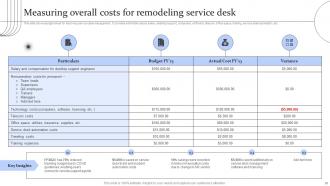
Slide 58: This slide presents Measuring overall costs for remodeling service desk.
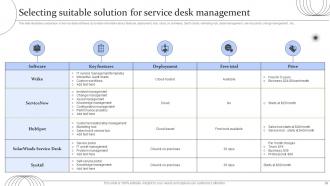
Slide 59: This slide displays Selecting suitable solution for service desk management.
Slide 60: This slide highlights title for topics that are to be covered next in the template.
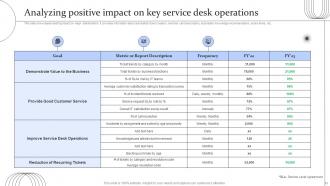
Slide 61: This slide represents Analyzing positive impact on key service desk operations.
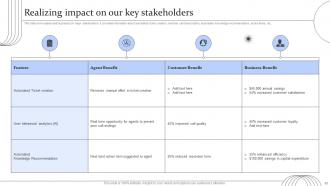
Slide 62: This slide showcases Realizing impact on our key stakeholders.
Slide 63: This slide highlights title for topics that are to be covered next in the template.
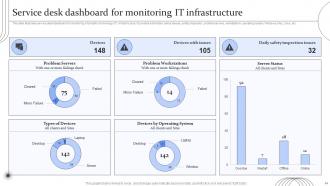
Slide 64: This slide shows Service desk dashboard for monitoring IT infrastructure.
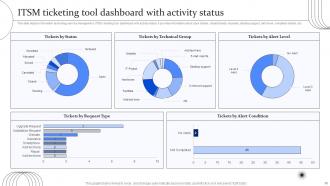
Slide 65: This slide presents ITSM ticketing tool dashboard with activity status.
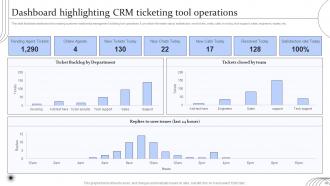
Slide 66: This slide displays Dashboard highlighting CRM ticketing tool operations.
Slide 67: This slide contains all the icons used in this presentation.
Slide 68: This slide is titled as Additional Slides for moving forward.
Slide 69: This slide contains Puzzle with related icons and text.
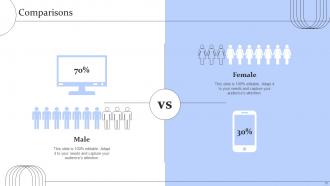
Slide 70: This is a Comparison slide to state comparison between commodities, entities etc.
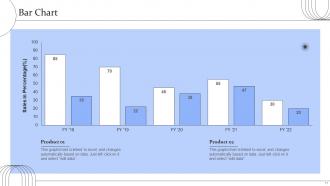
Slide 71: This slide presents Bar chart with two products comparison.
Slide 72: This slide depicts Venn diagram with text boxes.
Slide 73: This is an Idea Generation slide to state a new idea or highlight information, specifications etc.
Slide 74: This is a Thank You slide with address, contact numbers and email address.
Digital Transformation Of Help Desk Management Powerpoint Presentation Slides with all 79 slides:
Use our Digital Transformation Of Help Desk Management Powerpoint Presentation Slides to effectively help you save your valuable time. They are readymade to fit into any presentation structure.








FAQs for Digital Transformation Of Help Desk Management
Honestly, your leadership team will make or break this whole thing. They've got to set the vision and actually show up - not just throw money at it and vanish into more meetings. I've watched so many digital transformations crash and burn because executives wouldn't get their hands dirty. Your leaders need to constantly explain WHY you're doing this (people forget fast), smash those departmental walls, and yeah... take some real risks on new tech. The worst thing? When they just delegate everything and pretend they're still involved. Make sure they're genuinely fighting for this transformation, not just nodding along in PowerPoints.
You've gotta track the obvious stuff first - revenue growth, cost savings, customer satisfaction scores. That's what your boss cares about anyway. But here's the thing, most transformations crash because of the people side. So also watch employee adoption rates and how fast teams actually use the new tools (not just say they will). Measure everything before you start so you have something to compare against. Check in quarterly, not monthly - trust me on that one. Build a simple dashboard mixing financial and operational metrics with the human stuff. Makes it way easier to catch problems before they blow up.
Honestly, the biggest pain points are always people resisting change and those awful data silos where nothing connects properly. Employees get freaked out by new tech - can't blame them really. Start with explaining why you're doing this whole transformation thing, then throw money at training programs. Don't try to fix everything overnight though. Pick small pilot projects first and get some wins under your belt. Oh, and definitely get leadership on board early or you're screwed. Having digital champions in each department helps too since they can push adoption from the inside. Breaking down data silos should be priority number one.
So digital transformation is huge for customer experience - you get way more ways to reach people and everything just flows better. Data lets you personalize stuff, customers can help themselves 24/7, and you respond way faster to problems. People can hit you up however they want too - apps, chatbots, social media. The cool part is when you connect all these channels so it feels seamless everywhere. I've actually seen companies go from taking days to respond to literally minutes once they automate their support. Honestly, just start by looking at your customer journey and find where people get frustrated most - that's where you'll see the biggest wins with digital tools.
Honestly, start with cloud migration if you haven't already - everything else builds on that. Data analytics is huge too because you actually need to know what customers want instead of just guessing. Automation tools will save your sanity, trust me. Oh and make sure all your systems can talk to each other through APIs - managing a bunch of disconnected platforms is a nightmare. AI and machine learning aren't optional anymore either, especially for customer service stuff. I know it sounds like a lot but cloud first, then tackle the rest.
Honestly, data analytics is like having a GPS for your digital transformation project. Track user behavior and adoption rates so you can catch problems early. The numbers don't lie about what's actually broken versus what people just love to complain about (there's always a difference). You'll get real ROI data to wave at leadership when asking for more budget too. Pick 3-4 metrics that match your goals and build some basic dashboards. Makes decision-making way less of a guessing game about where to spend money next.
Here's the thing - you've got a huge advantage over big companies because you can actually move fast. While they're stuck in committee hell for months, you can test new tools and pivot overnight. Start by automating whatever's eating up most of your time right now. SaaS tools are pretty affordable these days, so you're not really at a disadvantage anymore. Plus you can do personalized customer stuff that big corps can't pull off - they're too clunky. Honestly, just pick one or two digital changes that'll give you the biggest bang for your buck and go from there.
Honestly, you need both the techy stuff and people skills. Being comfortable with new platforms and basic data analysis is huge right now. Critical thinking matters too since everything changes so fast. I'd say collaboration skills are probably underrated - so much work happens virtually now across different teams. Communication gets trickier when you're dealing with different time zones and channels. Oh, and adaptability is non-negotiable. Here's what I'd do: pick one digital tool you've been putting off learning and just dive in this month. That shift in mindset will help with everything else.
Security can't be something you slap on at the end - learned that the hard way at my last job. Do risk assessments before rolling out new tools. Map where all your sensitive data actually lives (seriously, you'll probably find stuff you forgot about). Strong access controls are non-negotiable, plus encrypt everything in transit and at rest. Your vendors need to meet compliance standards too. Honestly, the biggest thing is getting security and compliance people involved from the start of planning. Don't wait until you're halfway through deployment - that's when everything gets messy and expensive.
Look, digital transformation is basically forcing old-school business models to adapt or die. Companies that were all about physical stores and paper everything? They're scrambling to go digital-first now. Remember Blockbuster getting destroyed by Netflix? Yeah, brutal lesson there. But honestly, it's not necessarily bad news. Smart businesses are using this shift to cut costs, find new customers, and actually improve what they offer. You don't have to throw your whole model out the window - just add digital pieces where they make sense. Figure out what your customers actually love about what you do, then work backwards from there.
Digital transformation totally changes company culture - I've seen it happen so many times. People become way more collaborative and start making decisions based on actual data instead of gut feelings. Your team gets more excited about work too since they're using decent tools finally. Some folks will push back though (my last company had a few holdouts who complained for months). Don't just throw new software at people and expect magic. Get them involved from the start. Show how these tools actually make their lives easier, not more complicated. Training is huge.
AI's literally everywhere now - can't escape it. Edge computing is huge too, bringing all that processing power closer to users. Everyone's going cloud-first these days. Low-code platforms are kind of blowing my mind honestly - my cousin built this whole inventory system without writing a single line of code. Wild stuff. APIs are connecting everything to everything else now. Start small with AI tools in whatever you're already doing. That's where people are seeing real results right away, not the flashy stuff.
Honestly, agile is perfect for digital transformation because you're not betting everything on one massive project that could totally bomb. Break stuff down into small sprints instead - way less overwhelming. You'll get actual user feedback super early, which saves you from building something nobody wants (been there). Teams talk to each other constantly, so problems get caught fast. When priorities change - and trust me, they will - you can pivot without losing months of work. I'd say start with just one system or process, run it through agile sprints, then expand once you've got some wins under your belt.
Dude, partnerships seriously change the game for digital stuff. You'll get specialized skills without hiring a whole team - which honestly saves you from budget hell. Most companies I know tried doing everything themselves and just burned money for months. Short version: find where you're weakest first. Then hunt for partners who've already figured out those exact problems. The cool thing is you skip all the trial-and-error disasters because they've been there. Way faster than building everything from scratch, plus you get their battle-tested tech right away.
So basically, instead of just guessing if your green initiatives are working, digital tools let you actually see what's happening. Real-time energy tracking, AI catching waste you'd miss, supply chain optimization - all that stuff actually works. Remote work tech is honestly a game-changer for cutting commuting emissions too. Better transparency tools help you keep tabs on labor practices and show stakeholders you're not just talking. I'd say pick one area where you can get quick wins first though - builds momentum when people see actual results.
-
The designs are super attractive. Me and my team love using SlideTeam’s presentations.
-
The quality of PowerPoint templates I found here is unique and unbeatable. Keep up the good work and continue providing us with the best slides!