

Distributors flow chart




Try Before you Buy Download Free Sample Product
 Impress Your
Audience
 100%
Editable
 Save Hours
of Time


Explain the supply chain process with this Distributors Flow Chart PowerPoint presentation. Utilize this supply chain PPT template to showcase the people involved in the delivery process namely wholesalers, retailers or middlemen. Highlight significant matters like response time, inventory costs, etc. with the help of this layout. Take the assistance of this supply network PPT visual to unveil the prime decisions that should be taken during designing of a distribution network. Take advantage of this logistics management PowerPoint slideshow for demand estimation to help your employees in the future. Present the storage types like manufacturer storage, distributor storage with carrier delivery and many more with this distribution PPT graphic. Portray the contemporary trends of distribution like channel switching, customer value, and disintermediation with this distribution channel PPT slide. Download this amazing distribution channel PPT graphic to maintain cordial relations with your suppliers.
People who downloaded this PowerPoint presentation also viewed the following :
Content of this Powerpoint Presentation
Description:
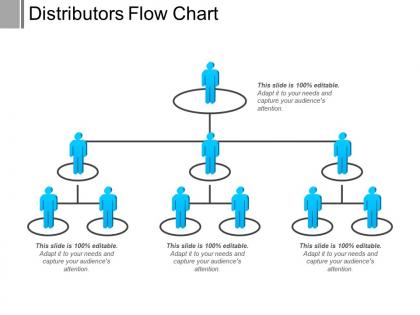
The image depicts a PowerPoint slide titled "Distributors Flow Chart," which is designed to represent the structure or hierarchy of a distribution network. The flow chart shows a series of figures connected by lines, indicating the relationship or flow of products, information, or authority between distributor levels. The figures are arranged in tiers, suggesting a multi-tiered distribution model where the top tier could represent a principal distributor or manufacturer, and the subsequent tiers could signify secondary or tertiary distributors.
Use Cases:
This type of slide is versatile and could be useful in several industries that operate with a distribution network:
1. Consumer Goods:
Use: Mapping the distribution channels for consumer products.
Presenter: Supply Chain Manager.
Audience: Distribution Partners, Sales Team.
2. Pharmaceuticals:
Use: Visualizing the supply chain from manufacturers to pharmacies.
Presenter: Distribution Director.
Audience: Pharma Distributors, Logistics Personnel.
3. Automotive:
Use: Outlining the dealer network for automotive parts or vehicles.
Presenter: Regional Sales Manager.
Audience: Dealers, Sales Representatives.
4. Technology:
Use: Demonstrating the flow of tech products from producers to retail.
Presenter: Channel Strategy Lead.
Audience: Retailers, Channel Partners.
5. Agriculture:
Use: Showing the distribution of agricultural products to markets.
Presenter: Agribusiness Coordinator.
Audience: Farmers, Wholesale Buyers.
6. Energy:
Use: Tracing the distribution of energy resources to end-users.
Presenter: Logistics Analyst.
Audience: Utility Managers, Regulatory Agencies.
7. Publishing:
Use: Detailing the network of book distribution from publishers to bookstores.
Presenter: Distribution Strategist.
Audience: Publishers, Retail Chains.
Distributors flow chart with all 5 slides:
Acquire the best cards with our Distributors Flow Chart. They allow you to play a good hand.


FAQs for
Honestly, it all comes down to knowing where your customers actually hang out and shop. Map out their journey first – that'll show you the gaps. Don't try to be everywhere at once though, you'll just burn out your resources. Pick channels that actually make sense for your margins and business model. Coverage matters, but I'd rather see you nail a few partnerships than half-ass a bunch of them. The whole control vs. reach thing is always gonna be a balancing act. Oh, and make sure you can actually support whatever partners you choose – nothing kills a relationship faster than leaving them hanging.
Look, your distribution channels totally control how customers see your brand. Retail gives people that hands-on vibe, but online is just way more convenient - though you lose the personal connection there. I've watched companies completely bomb this by trying every channel without really thinking it through first. Each one creates different expectations too. Like, people want lightning-fast shipping from your site but actual expertise when they walk into a store. Honestly? Just pick what your customers actually use and make sure you can nail it consistently. Don't overthink it.
Dude, you can't really run distribution without good tech anymore. Warehouse management systems track everything live, route optimization cuts delivery costs by like 20-30%, and AI helps predict what you'll actually need so you don't get stuck with random inventory. Customer tracking apps are huge too - people expect that stuff now. My cousin tried running his business old-school for way too long and it was painful to watch. I'd start by figuring out where you're bleeding the most time or money, then tackle those gaps first.
Track the obvious stuff first - sales, revenue growth, how well you're penetrating new markets. Then look at operational metrics like how fast you're fulfilling orders and inventory turnover. Customer satisfaction is massive, especially around delivery. Honestly, don't overthink it at the start. I made that mistake early on - got buried in data that didn't actually matter. Pick your top 5-7 metrics that actually connect to what you're trying to achieve. Monthly check-ins work well for spotting patterns. A simple dashboard beats a complex one you'll never look at.
Dude, social media completely changes how you get products to people. Instagram Shopping, Facebook Marketplace, TikTok Shop - you can sell directly without dealing with retailers at all. Influencers basically become your sales team too, which is honestly genius when you think about it. One viral post can literally send crowds to your store or crash your website (good problem to have though). The thing is, don't just use these platforms for ads. Actually sell through them. My cousin started doing this and her sales doubled in like three months. Treat them as real sales channels from the start.
Oof, logistics will be your biggest headache - different shipping routes, customs paperwork, the whole mess. Currency swings are brutal too. Plus you're juggling time zones when problems hit (and they will). Regulatory stuff varies everywhere, which gets expensive fast. Language barriers don't help either. Honestly, consumer preferences change so much country to country it's wild. Oh and taxes - that's a nightmare I forgot to mention. My take? Pick one or two markets you actually get first. Find good local partners who know their stuff. Solid tracking systems are worth every penny upfront.
Man, seasonal swings will totally mess with your distribution if you're not ready for it. December's insane shipping volumes versus that dead zone in January? Night and day difference. I'd start digging into your past seasonal data right now - like 3-6 months before each big season hits. Buffer stock becomes your best friend during peak times, plus you'll want flexible carrier deals instead of being locked into rigid contracts. Temporary warehouse space might save your butt too. The whole game is building flexibility so you're not drowning in costs when things slow down.
Look at their market reach first - do they actually hit your target customers? Logistics and financials come next. Their sales team matters a lot too, honestly some distributors will just bury your product under everything else they're pushing. Check their track record with similar stuff. Oh and cultural fit is huge since you'll be dealing with them constantly. I'd make a simple scorecard and weight each factor by what matters most to your business. Sounds boring but it works way better than just going with your gut.
Start with whatever's easiest for your setup - maybe transportation or packaging. Electric vehicles are great if you can swing it, but even just optimizing routes saves tons of fuel. Right-size your boxes too (seriously, why do companies ship tiny items in massive boxes?). LED lighting in warehouses makes a huge difference. You'll want to partner with carriers who actually care about this stuff. Recyclable packaging materials are pretty standard now. Don't try to overhaul everything at once though - pick one area and build from there.
Dude, inventory management literally makes or breaks distribution - I've seen companies crash because of this. You need the right stuff in the right places, or you're screwed. Stockouts happen constantly when it's poorly managed. Customers get pissed waiting around, costs spiral out of control. The whole network suffers from these ripple effects. Honestly, most people underestimate how bad it can get. Real-time tracking is a game changer though. Demand forecasting too - both will save your sanity. Get those two things sorted first, then worry about the fancy stuff later.
Honestly, analytics just shows you what's actually happening instead of guessing. Track your delivery times and how fast inventory moves first - that's your baseline. From there you can see where the bottlenecks are and predict when you'll get slammed seasonally. It'll tell you if your Chicago warehouse is sitting there doing nothing while Miami's drowning in orders. The route optimization stuff is pretty sweet too - finds the cheapest ways to move things around. I'd start small though, pick a few key metrics and build from there instead of trying to track everything at once.
So direct distribution is basically cutting out the middleman - you're selling straight to customers through your own store or website, like how Apple does it. Way more control over everything from pricing to how customers experience your brand. But man, it's a lot more work to handle all that yourself. Going indirect means using retailers or distributors to sell for you. Less headache since they deal with the sales process, though you'll make less money per sale and won't have that direct connection with your customers. Really depends on whether you want maximum control or you'd rather keep things simple. What kind of product are we talking about here?
Look, your customers basically tell you where to sell your stuff. Online shoppers? You'll need solid e-commerce instead of pushing retail stores. Some people want everything NOW, others don't mind waiting - that changes whether you need local warehouses everywhere or can ship from one big center. Here's what's weird though: tons of people research online but still buy in person, so you need both channels working together. Honestly, just figure out where your customers actually hang out and spend, then build your distribution around that. Makes way more sense than guessing.
Honestly, route optimization software is a game changer - you're looking at 15-20% cost savings right there. Group your deliveries by area and give customers flexible time windows. Micro-fulfillment centers help too if you can swing it. Don't sleep on driver training either. Pissed off drivers make customers miserable, trust me on this one. Dynamic routing that adapts to traffic jams? Absolute must-have. Start with auditing what you're doing now. I bet you'll find tons of unnecessary stops just because that's how things have always been done. Most companies are shocked at how inefficient their routes actually are.
Honestly, regulatory changes can wreck your distribution setup faster than you'd think. New compliance stuff might mean rerouting shipments or changing how you package things. Sometimes distribution centers get shut down if they can't meet the new standards - it's pretty harsh. Environmental rules are the worst offenders right now, forcing everyone toward greener logistics whether they like it or not. Driver quals change. Warehouse safety gets stricter. Cross-border paperwork becomes a nightmare that slows everything down. My advice? Set up alerts for your industry and keep your network flexible so you're not scrambling when new regulations hit.
-
Nice and innovative design.
-
Visually stunning presentation, love the content.