

Wholesale business distribution flow chart




Try Before you Buy Download Free Sample Product
 Impress Your
 Audience
 100%
100% Editable
 Save Hours
 of Time


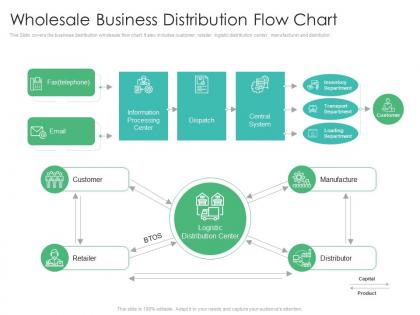
This Slide covers the business distribution wholesale flow chart. It also includes customer, retailer, logistic distribution center , manufacturer and distributor.
People who downloaded this PowerPoint presentation also viewed the following :
Wholesale business distribution flow chart with all 2 slides:
Use our Wholesale Business Distribution Flow Chart to effectively help you save your valuable time. They are readymade to fit into any presentation structure.
FAQs for Wholesale business
So there's basically four main parts: getting products from manufacturers, managing your inventory, processing orders, then shipping everything out. Inventory tracking is honestly where most people mess up - you really need decent software or you'll lose your mind. When orders come in, you're picking items, packing them up, getting shipments ready. Then there's all the delivery stuff to figure out. Everything's connected though, so if one part gets backed up, the whole thing falls apart. I'd say map out what you're doing now first - way easier to fix problems when you can actually see where things are getting stuck.
So wholesale distributors basically use demand forecasting and set up automatic reorder points - that way they don't run out of stuff. ABC analysis is huge too, where you rank products by revenue. Most use software to track sales patterns and seasonal trends. Honestly, the automated reordering is a lifesaver once you get it set up right. Skip the giant annual inventory counts - cycle counting throughout the year works way better. Keep safety stock for your bestsellers. Oh, and focus on your top 20% money-makers first. Those other products can wait while you get the important ones figured out.
Dude, you literally can't survive in wholesale without good tech anymore. Real-time inventory tracking shows what's actually selling vs what's just taking up space - saves tons of headaches. EDI handles all the boring order/invoice stuff automatically with your suppliers and customers. Warehouse software maps out the best picking routes (honestly didn't know this was a thing until recently). Analytics help you see what's coming before everyone else catches on. Still doing everything by hand? You're bleeding money and probably don't even know it yet.
Okay so three things to tackle: inventory, logistics, and your suppliers. Get some demand forecasting going first - seriously, dead inventory will murder your cash flow faster than anything. Route optimization and consolidating shipments helps too, though honestly the savings add up slower than you'd think. Supplier negotiations are super awkward but you gotta do it. Drop the ones dragging you down. Automate whatever you can in ordering and warehouse stuff. Start with forecasting since that's where you'll see money back quickest.
Honestly? Inventory management will make you want to pull your hair out. Cash flow sucks too - customers pay whenever they feel like it while suppliers breathe down your neck. Supply chain issues pop up out of nowhere, and retailers constantly push for better margins. Get decent inventory software first, that real-time stuff actually helps. Spread out your suppliers so you're not totally screwed when one flakes. Oh, and fight hard for payment terms that don't kill you. Building solid relationships saves your ass when everything goes sideways - which it definitely will.
Look for suppliers who nail the basics: good quality, competitive prices, and they actually deliver on time. Check if they're financially stable and can grow with you - nobody wants a supplier who disappears when you scale up. Communication is huge for keeping relationships solid. Pay them promptly, do regular check-ins, and share your forecasts so they can plan ahead. Oh, and proximity matters more than people think - shorter shipping distances save you money and headaches. Create some kind of scorecard to track how each supplier performs. Makes it way easier to figure out who deserves more of your business.
Look, market demand is what makes or breaks your wholesale game. High demand? Stock up and maybe add new products to cash in. When it's slow, you gotta be pickier - focus on clearing what you've got instead of buying more. Honestly, the worst thing is getting stuck with inventory that just sits there collecting dust. I'd say track those demand patterns religiously so you can pivot your buying plans before things go sideways. It's basically a juggling act between having enough stock and not overcommitting.
Honestly, start with an ERP like NetSuite or SAP - everything else connects to it anyway. You'll need a solid WMS for warehouse stuff, tracking inventory and optimizing how your team picks orders. CRM is obvious for managing customers and sales. EDI integration is a game changer though, seriously cuts down on manual work with big clients. Oh, and get some decent reporting dashboards set up so you can actually see how you're doing with turnover rates and fill rates. I'd probably tackle the ERP first since it's the foundation, then build out from there.
Honestly, focus on three main things: documentation, audits, and training your team. Document literally everything - transactions, supplier certs, how you handle products. Regulators are obsessed with paper trails, so give them what they want. Do internal audits regularly so you catch problems before they do. Your team needs to know the current rules, which change all the damn time btw. Subscribe to industry updates and stay friendly with regulatory people. Oh, and start with a compliance check of what you're doing now - that'll show you where you're screwing up.
Honestly, wholesale pricing is tricky but doable. Start with your costs plus margin, then see what competitors are doing. Volume discounts are everything - bigger orders should get better prices, period. Payment terms matter way more than people think too. Markets move fast, so I'd check pricing every quarter or so. Oh, and set up some kind of alert system for when competitors change their stuff. You don't want to be the last one to know. The whole game is keeping retailers happy while you still make money - easier said than done but totally worth figuring out.
So most wholesalers either build their own logistics teams or team up with 3PLs to handle shipping. They'll usually have warehouses scattered around to cut down on costs and delivery times. The tech stuff gets pretty wild - warehouse management systems, route optimization software, all that. But honestly, it's what keeps prices reasonable. Speed vs cost is always the big tradeoff, especially when customers want different things. Oh, and definitely ask about peak season capacity when you're checking out wholesalers. That's when things get messy if they can't handle the volume.
Dude, track your inventory turnover first - basically how fast stuff moves off your shelves. Fill rates are clutch too (what % of orders you actually complete). Order accuracy will make or break you - mess up someone's shipment and they're done with you. Also watch your gross margins and days sales outstanding because cash flow issues will kill you fast. Oh and fill rates always make me nervous lol. Just throw these on a simple dashboard you check weekly. Don't overcomplicate it yet - nail these basics then add fancier stuff later.
Dude, you're probably sitting on a ton of data you don't even realize. Start with something simple like tracking your inventory turnover - which stuff moves fast vs. what just sits there collecting dust. From there, you can spot seasonal patterns and figure out when to reorder without guessing. Customer segmentation is huge too - some buyers are way more profitable than others, even if they order less volume. Honestly, demand forecasting sounds fancy but it's just predicting what you'll need based on past sales. Don't try analyzing everything at once though, you'll drive yourself crazy. Pick one thing and nail it first.
Dude, customer service makes or breaks wholesale relationships. When products and pricing are basically the same everywhere, how fast you respond to inventory questions or fix problems is what keeps buyers loyal. I've seen companies lose huge accounts over one screwed up order that wasn't handled well. Your team needs real-time access to inventory systems so they can actually give useful updates. The good wholesale reps? They're constantly checking in, almost like they're managing the account relationship itself. Be upfront about delays too - buyers hate surprises when they've got their own customers breathing down their necks.
Dude, e-commerce basically turned everything upside down. Brands are going straight to customers now, cutting out the middleman completely. Online marketplaces connect everyone instantly - it's wild how fast things move. Sure, relationships still count for something, but customers want real-time inventory updates and crazy fast shipping like they're ordering from Amazon. Honestly, the biggest game-changer is that you NEED digital tools now. I'm talking online catalogs, API connections, analytics - the whole package. Old-school phone orders? Pretty much dead. You should've started upgrading your tech setup years ago, but better late than never.
-
Good research work and creative work done on every template.