


Ecommerce Online Order System Data Flow Diagram




Try Before you Buy Download Free Sample Product
 Impress Your
 Audience
 100%
100% Editable
 Save Hours
 of Time


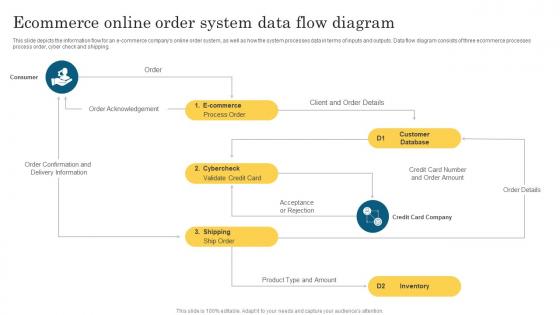
This slide depicts the information flow for an e commerce companys online order system, as well as how the system processes data in terms of inputs and outputs. Data flow diagram consists of three ecommerce processes process order, cyber check and shipping.
People who downloaded this PowerPoint presentation also viewed the following :
Ecommerce Online Order System Data Flow Diagram with all 6 slides:
Use our Ecommerce Online Order System Data Flow Diagram to effectively help you save your valuable time. They are readymade to fit into any presentation structure.





FAQs for Ecommerce Online Order System
Mobile-first is everything right now - people literally abandon sites that don't work on their phones. AI personalization is getting scary good at predicting what you want. Social commerce is blowing up too, like buying stuff directly through Instagram posts. Live shopping streams are weirdly addictive (I got sucked into one for kitchen gadgets last week). Voice ordering through Alexa keeps growing, and honestly, sustainability isn't optional anymore - customers expect it. Focus on making the experience smooth across all channels and use your data to stay ahead of what people actually want.
Honestly, start with site speed - if it loads slow, people bounce before even seeing your stuff. Your checkout needs to be brain-dead simple, like maybe 2-3 steps max. Good product photos are huge, and you absolutely need customer reviews visible everywhere since nobody trusts anything without them anymore. Oh and test everything on mobile first - that's where most people shop now anyway. I'd run a speed test right away, then time yourself going through checkout. Fix whatever annoys you most because it's probably annoying everyone else too.
Dude, mobile shopping is absolutely taking over - we're looking at like 70%+ of all online sales happening on phones pretty soon. People are buying stuff while they're on the train, at lunch, basically anywhere now. The payment stuff is getting insanely smooth with one-tap checkout and those AI suggestions that actually work. Honestly, if your site sucks on mobile, you might as well not exist. I'm not even kidding about that part. The whole future is heading toward mobile-native everything - AR try-ons, voice ordering, all that sci-fi stuff becoming normal. You should probably check how many taps your mobile checkout takes right now because each extra step is costing you money.
Honestly, social media is where it's at for ecommerce right now. I'd focus on Instagram and TikTok first - post lifestyle shots, behind-the-scenes content, stuff your customers share. Make it feel natural, not salesy. Those shopping features are clutch too. People can buy without leaving the app, which is huge. Target ads to people similar to your best customers - that's worked really well for me. Oh, and don't spread yourself too thin at first. Pick one platform and actually get good at it before jumping to others. Building real relationships comes first, then the sales follow.
Honestly, start with your checkout - make sure it's rock solid with SSL and all that security stuff. Clear contact info is huge too, people get sketchy when they can't find a real address or phone number. Get some trust badges on there, I know they look cheesy but they actually help. Your return policy should be front and center, and don't be stingy about it. High-quality product photos matter way more than you'd think since nobody can actually hold your stuff. Oh, and definitely push customer reviews and testimonials everywhere - social proof is everything these days. Work backwards from checkout and you'll be golden.
Dude, payment options are huge for sales. Customers will literally abandon their cart if they don't see PayPal or Apple Pay - I've done it myself lol. Digital wallets are king right now. Buy-now-pay-later stuff like Klarna is also pretty popular, especially with younger buyers. Trust badges help too, even though they look kinda cheesy sometimes. The whole point is making checkout super easy. More options = less friction = better conversion rates. I'd start with at least 2-3 methods beyond regular credit cards. PayPal's probably the easiest first add since everyone has it.
Dude, AI is a game-changer for personalizing your ecommerce site. It digs into browsing patterns, purchase history, all that customer data to build profiles that actually make sense. Your product recommendations become weirdly spot-on, homepage layouts shift for each visitor, even pricing can adjust on the fly. The crazy part? It gets smarter as people use your site. You can do dynamic content, personalized emails, chatbots that remember what someone bought last month - honestly didn't think this stuff would be mainstream so fast. I'd start with recommendation engines if you're testing the waters.
Get good forecasting software first - tracks your sales patterns and seasonal stuff. The biggest mess happens when you can't see stock levels across all your channels in real time. Like, you end up overselling products that aren't even there anymore, which sucks. Connect your inventory system directly to suppliers so reorders happen automatically. Set up safety stock levels that actually make sense. If you're growing fast, maybe look into a 3PL for warehousing and shipping - they're usually way better at it than trying to do everything yourself. Oh, and clean up your data before automating anything or you'll just automate the chaos.
Honestly, start with segmenting your list - new subscribers need different emails than your repeat buyers. Personalization is everything too, so use those dynamic product recs based on what they've browsed or bought. You'll want to set up a few automated flows first - abandoned cart emails are money makers, plus welcome series and post-purchase stuff. Oh, and test your subject lines like crazy because if people don't open, nothing else matters. Most folks read email on mobile anyway so make sure it looks good there. I'd focus on just 2-3 flows initially rather than going overboard. Way easier to perfect those first.
Check your analytics - conversion rates, cart abandonment, where people are actually dropping off. Google Analytics works, or just use whatever your platform gives you. I know it's a lot of data at first (honestly made my head spin when I started). Focus on the customer journey from landing page to checkout. Which pages make people bounce? What products actually sell? Then test stuff - better photos, easier checkout flow, maybe some follow-up emails. Oh, and definitely start with your busiest pages since that's where you'll see results fastest. The drop-off points will tell you everything you need to know.
Honestly, AI and machine learning are everywhere now - the personalized recommendations actually work, and chatbots don't make you want to scream anymore. AR/VR is pretty cool too, customers can try stuff virtually before buying. Voice shopping through Alexa is picking up steam (though I still feel weird talking to my kitchen). Social commerce is huge - TikTok and Instagram are basically mini Amazon now. Blockchain's helping with supply chain stuff, which sounds boring but matters. Before jumping into anything though, figure out what'll actually help your specific business. No point chasing shiny objects.
Honestly, customer feedback is like having a cheat sheet for what to build next. People literally tell you what's broken and what they want - mine your reviews and support tickets for patterns. If half your users are saying checkout sucks, boom, that's your next priority. Way better than guessing what features matter, you know? I always tell people to sort feedback into themes each week and just send it straight to the dev team. Saves you from building random stuff nobody actually cares about. Works way better than those fancy product meetings where everyone just argues.
Dude, shipping can totally make or break your business. Customers want options - like 2-3 different speeds at least. Free shipping is pretty much expected now (just bake it into your prices, nobody cares). The Amazon thing has everyone expecting lightning fast delivery, but here's what I've learned - being honest about timing beats overpromising every time. Don't hit people with surprise costs at checkout, that's the worst. Always send tracking info automatically too. Oh and fast shipping creates this weird addiction where people keep coming back for more stuff they don't need lol.
First thing - get your terms of service, privacy policy, and refund stuff sorted. Can't skip those. GDPR is huge if you've got EU customers, and sales tax gets complicated fast across different states. Accessibility standards matter too, though honestly most people overlook that. Food or electronics? There's extra regulations for those. The tax situation alone will make your head spin depending on where you're selling. Seriously though, once you start growing, have a lawyer look everything over. Worth every penny to avoid headaches later.
Honestly, packaging is probably your easiest win - just switch to recyclable stuff and stop using massive boxes for tiny products. Supply chain matters too, so find eco-friendly suppliers if you can. Carbon-neutral shipping is getting pretty popular now. What really works though is being super transparent about your environmental impact right on product pages - customers eat that up. Maybe start a take-back program for old products? I know it sounds like extra work, but people genuinely expect this stuff now. Pick one thing and build from there instead of trying to do everything at once.
-
Time saving slide with creative ideas. Help a lot in quick presentations..
-
SlideTeam is a great place for PPT templates. They have many templates on a single topic. It has made my life a lot easier.