

Cloth Ordering System Data Flow Diagram




Try Before you Buy Download Free Sample Product
 Impress Your
 Audience
 100%
100% Editable
 Save Hours
 of Time


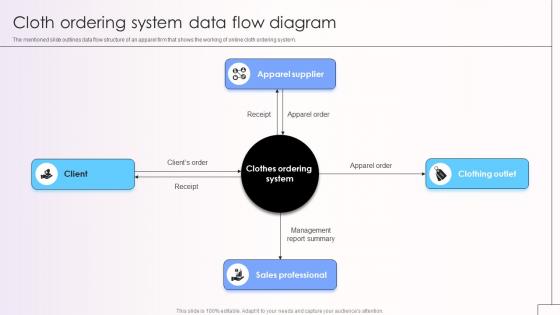
The mentioned slide outlines data flow structure of an apparel firm that shows the working of online cloth ordering system.
People who downloaded this PowerPoint presentation also viewed the following :
Cloth Ordering System Data Flow Diagram with all 9 slides:
Use our Cloth Ordering System Data Flow Diagram to effectively help you save your valuable time. They are readymade to fit into any presentation structure.








FAQs for Cloth Ordering System
A user-friendly cloth ordering system should include intuitive size guides, high-resolution product images, fabric detail descriptions, real-time inventory tracking, and seamless checkout processes. These features streamline customer decision-making by minimizing sizing errors, enhancing product visualization, and reducing cart abandonment, with many retail organizations finding that integrated systems ultimately deliver faster order processing and improved customer satisfaction.
Inventory management integrates into cloth ordering systems through automated stock tracking, real-time demand forecasting, supplier integration, and predictive analytics that monitor fabric quantities, seasonal trends, and reorder points. Through these technologies, retailers streamline procurement processes, minimize overstock situations, and reduce stockouts, while enhancing supply chain efficiency and ultimately delivering improved cash flow and customer satisfaction.
**INPUT**: What technologies are most effective for developing a mobile application version of a cloth ordering system? **OUTPUT**: Effective technologies for cloth ordering mobile apps include React Native, Flutter, Swift/Kotlin for native development, cloud platforms like AWS or Azure, and integrated payment gateways. These technologies streamline development by enabling cross-platform compatibility, real-time inventory management, and seamless customer experiences, with many fashion retailers finding that strategic combinations ultimately deliver faster order processing and enhanced customer engagement. **Word count: 56 words**
Personalization can be incorporated through AI-driven recommendation engines, customizable design interfaces, size prediction algorithms, and preference-based filtering systems. These technologies streamline the ordering experience by analyzing purchase history, body measurements, and style preferences, with many fashion retailers finding that personalized ordering ultimately delivers higher customer satisfaction and increased conversion rates.
Secure online payment methods include SSL encryption, tokenization, two-factor authentication, PCI DSS compliance, and fraud detection algorithms. These technologies streamline transactions by protecting customer data, minimizing chargebacks, and enabling real-time verification, with many fashion retailers finding that robust payment security ultimately enhances customer trust and reduces operational costs.
Data analytics improves cloth ordering efficiency by predicting demand patterns, optimizing inventory levels, and identifying seasonal trends through historical sales data. Retail chains and fashion manufacturers leverage these insights to reduce overstock costs, minimize stockouts, and streamline supplier relationships, ultimately delivering faster fulfillment and enhanced customer satisfaction.
Common implementation challenges include integration complexities with existing inventory systems, staff training requirements, supplier onboarding difficulties, and initial setup costs. However, businesses can overcome these through phased rollouts, comprehensive training programs, and strategic vendor partnerships, with many retail and manufacturing organizations finding that proper planning and stakeholder engagement ultimately delivers streamlined operations and enhanced customer satisfaction.
Customer feedback can be integrated through automated post-purchase surveys, real-time rating systems, review platforms, social media monitoring, and direct communication channels within the ordering interface. These mechanisms enable clothing retailers to identify sizing issues, quality concerns, and delivery preferences, while streamlining product recommendations and inventory decisions, ultimately delivering enhanced customer experiences and competitive advantage.
A cloth ordering system reduces operational costs by automating inventory management, minimizing overstock and stockouts, and streamlining supplier communications. Through real-time demand forecasting and automated reordering, fashion retailers and textile manufacturers eliminate manual procurement processes, reduce carrying costs by up to 30%, and accelerate order fulfillment, ultimately delivering improved cash flow and operational efficiency.
User interface design fundamentally determines a cloth ordering system's success by enhancing customer experience, streamlining navigation, optimizing product visualization, and reducing cart abandonment rates. Effective UI design enables fashion retailers and apparel manufacturers to deliver intuitive browsing experiences, seamless size selection, and efficient checkout processes, ultimately driving higher conversion rates and customer satisfaction.
Cloth ordering systems accommodate diverse fabric types through comprehensive material databases, customization modules, specification tools, inventory management features, and visual configuration interfaces. These platforms enable textile businesses to offer cotton, silk, wool, synthetic blends, and specialty fabrics with personalized options like color matching, pattern selection, and texture preferences, ultimately delivering enhanced customer experiences and streamlined operations.
Best practices for integrating cloth ordering systems with e-commerce platforms include API compatibility assessment, inventory synchronization protocols, payment gateway alignment, customer data mapping, and real-time order tracking implementation. These integrations streamline operations by automating stock updates, reducing manual errors, and enhancing customer experiences, with many retail businesses finding that seamless integration ultimately delivers faster fulfillment and competitive advantage.
Social media enhances cloth ordering system visibility through targeted advertising, influencer partnerships, user-generated content campaigns, and strategic platform-specific marketing across Instagram, Facebook, and TikTok. Fashion retailers and boutique brands increasingly leverage visual storytelling, customer testimonials, and trend-based content to drive traffic, build brand awareness, and ultimately boost sales conversions while creating authentic customer engagement.
Environmental considerations for cloth ordering systems include sustainable material sourcing, carbon footprint reduction through optimized logistics, waste minimization via accurate demand forecasting, packaging sustainability, and supplier environmental compliance tracking. These systems enable fashion retailers and manufacturers to streamline eco-friendly practices by reducing overproduction, minimizing transportation emissions, and enhancing supply chain transparency, ultimately delivering cost savings while meeting increasingly stringent sustainability requirements.
A cloth ordering system facilitates better communication by providing real-time inventory updates, automated order confirmations, and centralized messaging platforms for supplier-retailer interactions. These digital platforms streamline communication through instant notifications about stock levels, delivery schedules, and order modifications, with many fashion retailers finding that enhanced transparency ultimately reduces miscommunications and accelerates fulfillment processes.
-
Stunning collection! With a wide variety of options available, I was able to find a perfect slide for my presentation. Thank you, SlideTeam!
-
A library of engaging, customizable and content-ready templates.