

Elements Of HSE Management System Framework




Try Before you Buy Download Free Sample Product
 Impress Your
 Audience
 100%
100% Editable
 Save Hours
 of Time


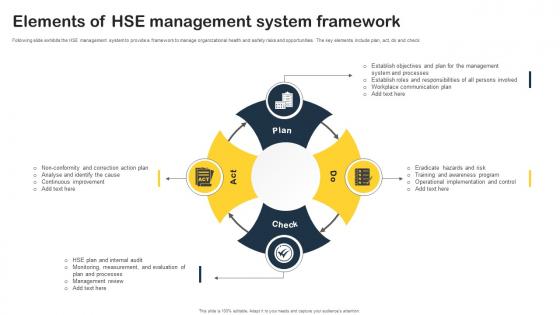
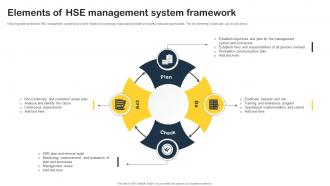
Following slide exhibits the HSE management system to provide a framework to manage organizational health and safety risks and opportunities. The key elements include plan, act, do and check.
People who downloaded this PowerPoint presentation also viewed the following :
Elements Of HSE Management System Framework with all 6 slides:
Use our Elements Of HSE Management System Framework to effectively help you save your valuable time. They are readymade to fit into any presentation structure.





FAQs for Elements Of HSE
You'll need a few core things: leadership buy-in, risk assessments, compliance tracking, training programs, incident reporting, and regular audits. Leadership commitment is honestly the make-or-break piece - without that, you're just spinning your wheels. Risk assessments help catch problems before they bite you. Training keeps everyone sharp on safety protocols. The incident reporting system gives you actual data to work with instead of guessing what went wrong. Oh, and don't forget the audit piece for continuous improvement. Start with getting your bosses on board first. Everything else becomes way easier once they're backing the program.
Honestly, the best thing you can do is bake compliance right into your day-to-day HSE processes. Get some automated tracking set up for regulations - saves you from that last-minute panic when auditors show up (learned that one the hard way). Train your people properly so they actually know what's expected. Internal audits are clutch for catching issues early. I'd start by figuring out which regs actually matter for your specific operations, then build everything around those. The goal is making compliance feel natural, not like extra paperwork nobody wants to deal with. Clear procedures and solid documentation will save your butt later.
Honestly, risk assessment is what keeps your whole HSE thing from falling apart. You're basically trying to catch problems before they happen - figuring out what hazards exist, how likely they are, and what you need to do about them. Sounds super dry, I know, but it actually prevents people from getting hurt. Don't just do it once and forget about it though. Keep updating them regularly, and here's the thing - talk to the workers doing the actual job. They'll tell you about risks management never even thought of.
Honestly, tech can totally transform your HSE stuff if you do it right. Mobile apps let people report incidents instantly instead of filling out paperwork later (which nobody ever does anyway). IoT sensors automatically track environmental conditions, and you can get dashboards that actually make sense of your safety data. Training becomes way less of a headache too - people can just access it on their phones whenever. The coolest part? Predictive analytics can spot trouble before it happens. My advice: pick one tool that fixes your worst problem first, then expand from there.
Honestly, the worst part is dealing with people who just don't want to change how they do things. Leadership always talks about safety being a priority, but then you ask for actual budget and suddenly it's crickets. Most employees think you're just adding more forms to their day - and yeah, there is gonna be paperwork at first, not gonna lie. Regulations keep shifting too, especially if you've got multiple sites. My advice? Start with something small that you can actually win at. Show them it works before you go crazy trying to roll out everything. Otherwise you'll just piss everyone off and make your job way harder.
Don't just slap training on top of your HSE stuff - build it right into the system from day one. New hires get mandatory induction, then you set up regular refreshers plus role-specific training based on what hazards they actually face. Track who's completing what and test if people remember anything (honestly, half the time they zone out). When incidents happen or procedures change, update your content. The companies that just check boxes? They're wasting everyone's time. Make it ongoing and relevant to what people do daily. Stick to your schedule because that's what actually prevents accidents.
You'll want both types - the stuff that predicts problems and the stuff that shows what already happened. For leading indicators: training completion, hazard reports, near-miss data, audit scores. Lagging ones are your injury rates, lost time incidents, violations, comp claims. Honestly the leading indicators matter way more since you can actually prevent stuff. Employee surveys about safety culture are clutch too - people will tell you things before incidents happen. Oh, and environmental metrics if you deal with that. Don't go crazy though, start with maybe 5-7 metrics tops then build from there.
Honestly, leadership commitment makes or breaks your whole HSE program. If your bosses actually show up to safety meetings and ask real questions about incidents, people notice. But here's the thing - everyone can tell when it's fake. I've seen way too many leaders who just talk a good game while cutting corners behind the scenes. Your team will stop caring real fast if that happens. The best programs I've worked with? Leaders who genuinely put safety first, even when it costs more time or money. They don't just sign policies - they're out there participating. Trust me, that stuff trickles down through the whole organization.
Honestly, leadership has to actually care about safety, not just pretend to in meetings. Let people report stuff without freaking out about blame - nobody talks if they think they'll get fired. Training helps but those random hallway conversations about safety? Way more effective than boring PowerPoints. Don't dump everything on your HSE team either. Everyone should feel responsible. Oh and definitely celebrate when things go right! Learn from close calls together. I'd start by just asking your team what's actually stopping them from being safe day-to-day. You'll probably be surprised by their answers.
Annual reviews are the standard, but don't get stuck there. Big incidents or reg changes should trigger extra reviews too. I'd do quarterly check-ins for anything high-risk - learned that the hard way at my last place. The whole point is keeping it current, not letting it gather dust between audits. Most companies I know do the formal annual thing plus ad-hoc ones when stuff happens. After any major incident or near-miss, definitely revisit your system. Make it actually useful instead of just compliance theater, you know?
Yeah so HSE systems are pretty different depending on what industry you're in. Oil & gas is all about process safety and not blowing things up, while construction focuses more on fall protection stuff. Healthcare's obviously way more about infection control - completely different world there. Manufacturing usually centers on machinery safety and chemical exposure. The basic framework is similar everywhere though (risk assessment, training, incident response), but the actual hazards you're dealing with? Totally different. Oh and compliance requirements can be night and day between industries. I'd check out industry standards like API for oil & gas when you're setting yours up.
Honestly, most companies treat audits like a necessary evil, but they're actually goldmines for spotting real problems. Instead of just checking compliance boxes, use them to see where your procedures don't match reality - that gap is usually huge. Look at the findings and pick your battles. Focus resources on the stuff that'll actually move the needle safety-wise. Make action plans with real deadlines and assign owners who'll actually follow through. The worst thing you can do? Let that audit report collect dust in a filing cabinet somewhere. Those insights should drive actual changes in how people work day-to-day.
Think of incident reporting like having a crystal ball for workplace accidents. You document what went wrong so you can spot patterns before someone gets seriously hurt. Yeah, some people think it's about pointing fingers, but really you're just collecting data to fix broken systems. The tricky part is getting everyone comfortable with actually reporting stuff - nobody wants to be "that person," you know? Near-misses are gold mines of information. Just don't be one of those companies that files everything away and never acts on it.
Look, good HSE systems save you serious money by cutting down accidents and insurance costs. Fewer incidents means no downtime or legal headaches eating your profits. Your team actually works better when they're not stressed about getting hurt - makes sense, right? Plus insurance companies love seeing solid safety records, so your premiums drop. Clients these days won't even consider you without decent HSE practices. I'd honestly track what you spend on safety versus what incidents used to cost you. The numbers will probably surprise you in a good way.
Start with gap analyses and audits - boring but necessary to see what's actually happening vs what looks good on paper. Track both leading stuff (near-misses, training rates) and lagging indicators like incident trends. Employee feedback through surveys or safety committees is gold, honestly. When incidents happen, dig into root causes instead of just slapping a band-aid on it. Benchmark against industry standards so you know where you stand. Monthly progress tracking with clear ownership works better than hoping things improve on their own. Don't try to fix everything at once though - pick one improvement cycle and build momentum from there.
-
Informative design.
-
“I really like the convenient operation and professionalism I saw on the SlideTeam website. I want to express my regards and appreciation to the team.”