


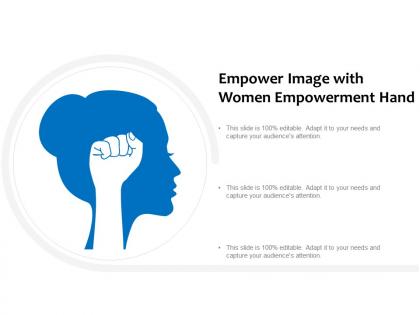
Empower image with women empowerment hand




Try Before you Buy Download Free Sample Product
 Impress Your
 Audience
 100%
100% Editable
 Save Hours
 of Time


Enhance your gift with our Empower Image With Women Empowerment Hand. Make a convincing display of your ability.
People who downloaded this PowerPoint presentation also viewed the following :
Empower image with women empowerment hand with all 5 slides:
Your ability to analyse is extraordinary. Convince them of your gift with our Empower Image With Women Empowerment Hand.
FAQs for Empower image with
Honestly, it comes down to three main things. First, you need autonomy - like being able to tackle projects your own way without someone breathing down your neck constantly. Second is skill development opportunities. Can't feel empowered if you're stuck doing the same boring stuff forever, you know? Having a real voice in decisions matters too. Plus your manager actually has to trust you and listen when you speak up. Oh, and clear expectations are huge - I hate when bosses leave you guessing what they actually want. Which one of these feels like your biggest gap right now? Maybe start there with your manager.
Hey! So basically you want your slides to make people feel like they can actually DO something after your talk. Keep visuals bold but not crazy overwhelming - nobody wants their eyes to hurt, you know? Pick colors that energize without being obnoxious, and make your text big enough so the person in the back row isn't squinting. White space is clutch because it gives your main points room to breathe. Oh, and honestly? Your slides should just back you up, not steal the show. The whole point is people walking out thinking "yeah, I've totally got this."
Honestly, leadership makes or breaks the whole empowerment thing. Trust your people with real decisions and actually back them up - it spreads fast. I've watched managers flip entire teams just by ditching the micromanaging and becoming more like coaches instead. Don't be afraid to say "I don't know, what do you think?" when you're genuinely stuck. Give them clear boundaries but then step back. Oh, and pick one thing this week where you can just let them run with it completely. The hardest part is fighting that urge to jump in and "fix" everything yourself.
So here's what I've found works really well - tell stories about regular people who dealt with the same crap your audience is going through. People love seeing themselves as the main character, not just sitting there getting lectured at. Data's cool and all, but honestly? Stories hit different. Pick ones that actually mirror what they're struggling with and show how someone made it through. Make the person relatable, then walk through exactly what they did to fix things. Oh, and don't forget to tie it back to what your audience can actually do next. That connection is everything.
So here's what I've found works really well - let different people lead sections based on what they're actually good at. Your team gets to show off their expertise, which builds their confidence big time. Plus they feel way more invested when it's not just you carrying everything. Honestly, stakeholders love hearing from multiple voices too. You get better insights, less stress on yourself, and everyone develops those presentation skills they'll need later. Sometimes the quieter team members surprise you with how good they are once given the chance. Just rotate it around and watch engagement go through the roof.
Oh totally, tech is a game changer for remote work. Slack and video calls mean your location doesn't matter - everyone's input carries the same weight. I actually love the async stuff because you can think before responding instead of getting steamrolled by loud talkers in meetings. Project management tools keep you in the loop on decisions too, which is huge. Plus all the online learning resources are right there whenever you need them. My advice? Pick one collaboration tool and get really good at it first, then branch out. Don't try to master everything at once.
Start with baseline measurements before rolling anything out - that's crucial. Employee engagement scores and retention rates are your bread and butter metrics. Survey people directly about autonomy and decision-making power too. I'd also watch how fast teams make decisions without running everything upstairs (that one's honestly my favorite indicator). Internal promotion rates tell a story. So does participation in voluntary programs and stretch assignments. Oh, and track who's stepping into leadership roles. Check progress quarterly instead of waiting forever to see what's actually working. Mixed quantitative and qualitative data gives you the full picture.
Honestly, start by hunting down diverse speakers and giving them real slots - not those awkward 5-minute "diversity moments." Those all-male panels discussing inclusion? Yeah, we need to retire those. Set up mentorship programs so underrepresented folks can nail their presentation skills. Oh, and here's something I love - if you get invited to speak but know someone from a marginalized group who'd crush it, pass the mic to them instead. Short version: be deliberate about it. Diversity doesn't just magically appear at conferences.
Look, giving your team real decision-making power is honestly a game changer. They'll actually care about results when it's their call to make. Nobody wants some boss breathing down their neck constantly - that's just soul-crushing. Trust builds loyalty, and people won't jump ship if they feel valued. The trick? Hand over authority on stuff that actually matters, not just silly things like office supplies (though good coffee does help morale lol). Pick one project area where you can step back. Let them own it. You'll be surprised how much better they perform when they're not just order-takers.
Honestly, empowerment and innovation go hand in hand. Give people real decision-making power and they'll start taking smart risks. Makes perfect sense when you think about it - nobody wants to constantly ask permission for every tiny thing. Empowered employees feel safe to experiment without worrying they'll get fired for an intelligent failure. They can spot problems in their actual work and fix them instead of just griping about it. The trick is creating that psychological safety where people know they won't get punished for trying something new. That's where the magic happens, at least in my experience.
Honestly, feedback systems work best when people actually see results from them. Set up regular brainstorming sessions or maybe a digital platform where ideas don't just disappear into the void. The real trick? Always close the loop. Even if you can't use someone's suggestion, tell them why. I've watched so many companies mess this up - they collect ideas but never follow through. People stop caring pretty quickly when that happens. Short feedback: "Thanks, we're looking into it." Longer explanation when you decide. Celebrate the good stuff publicly too. Builds momentum and shows you're serious about listening.
You've gotta read people first - like, actually pay attention to how they tick. Some folks want you to be super direct with encouragement, while others need space to work things out themselves. The whole emotional intelligence thing lets you figure out which approach works for who. Plus when you're tuned into emotions, people notice and feel safer being real around you. Honestly, I think half of empowering people is just listening to how they talk about stuff they're stressed or excited about, then adjusting how you support them. It's not rocket science, but most people skip that step.
Honestly, visuals are what make people *feel* empowered instead of just thinking about it. Go with upward stuff - arrows pointing up, mountain climbers, rising charts. Bold colors work way better too. I'm talking deep blues, bright oranges, not those depressing grays everyone uses. Show diverse faces that look confident and successful. Your fonts should feel strong and readable. Oh, and here's the thing - pick maybe 2-3 visual themes and don't deviate from them. Every single element needs to scream "you've got this" without actually saying it. It's all about that consistent feeling throughout your whole presentation.
Honestly, you gotta make people feel safe to mess up first - that's where real growth happens. Celebrate the little wins and give them actual feedback, not just "good job." When someone pitches a half-baked idea, don't shut it down immediately. Listen to it. Give them stretch projects that'll challenge them but won't make them want to quit. Oh, and here's the thing most managers get wrong - you need to show your own screwups too. People won't take risks if their boss acts perfect all the time. Maybe add some quick check-ins during your regular meetings to see how they're feeling about taking on more responsibility.
Okay so basically - ask the communities what they actually need first, then build around that. Way better than assuming you know what's best. Focus on stuff like skill training, mentorship programs, or helping local entrepreneurs get started. The goal is giving people tools they can use on their own later, not just temporary help that makes your company look good. I mean, anyone can write a check, right? But programs that teach people skills or connect them with resources? That creates real change. It's more work upfront but way more sustainable than the whole charity approach most companies still do.
-
Very nice
-
Great