


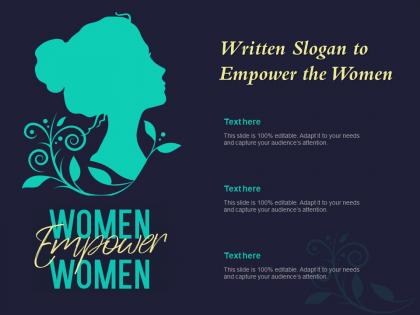
Written slogan to empower the women




Try Before you Buy Download Free Sample Product
 Impress Your
 Audience
 100%
100% Editable
 Save Hours
 of Time


Give a fillip to demand with our Written Slogan To Empower The Women. They fuel greater desire.
People who downloaded this PowerPoint presentation also viewed the following :
Written slogan to empower the women with all 6 slides:
Give accurate feedback with our Written Slogan To Empower The Women. Benefit them with an elaborate assessment.





FAQs for Written slogan to
Honestly, empowerment is just having control over your own decisions and the resources to back them up. You want a role where you can actually execute ideas without asking permission for every tiny thing. Trust matters a ton here - your boss needs to believe you won't mess everything up (shocking, right?). Clear goals help so you're not wandering around confused. Oh, and psychological safety is key - you should be able to take risks without getting completely screwed if something doesn't work out. Look for jobs where you influence both what gets done and how it happens.
Honestly, when you give people real decision-making power, the whole vibe changes. They stop waiting around for approval on everything and actually start owning their work. Meetings become way less painful too - everyone's throwing out ideas instead of just nodding along. I've seen teams go from this weird hierarchical thing to actually collaborating like equals. They bounce back from problems faster because they don't need to run everything up the chain first. Maybe try it on your next project? Give them more control and see what happens. The energy shift is pretty obvious once people realize you actually trust them.
Honestly, leadership makes or breaks whether people feel empowered at work. When you delegate real decisions and share info openly, your team starts feeling trusted instead of micromanaged. I've watched entire teams flip from cautious to confident once their boss stopped breathing down their necks! Celebrating good judgment calls matters too - even when things don't go perfectly. Oh, and here's something concrete you can try: pick one decision you always make yourself and hand it off to someone else. That psychological safety thing is real - people need to know they won't get burned for taking initiative.
Yeah, empowerment seriously boosts innovation. Give people real autonomy and they stop just following orders - they actually start thinking like owners. Your team will catch problems you totally missed because they're doing the actual work every day. Creativity thrives when people aren't asking permission for everything. Micromanagement? That's innovation's worst enemy, honestly. You just need clear boundaries up front so they know what risks are okay to take. Oh, and trust me - employees come up with solutions you'd never even think of when they feel empowered to actually solve stuff.
Honestly, you need both the numbers and the actual conversations with people. Check your engagement scores and retention rates - those usually go up when folks feel empowered. Also track how many decisions stay at lower levels instead of getting pushed upstairs. But here's the thing - surveys can get really old really fast if you overdo them. The best info comes from regular one-on-ones where you straight-up ask people if they've got what they need to do their jobs. Decision-making speed is another good indicator. I'd start with quarterly check-ins combining the data with feedback sessions.
Honestly, it's usually fear of screwing up that holds people back the most. Plus not having the right resources or support system. Sometimes you literally just don't know where to begin, which is so frustrating. Oh, and people who benefit from keeping things exactly as they are? They'll definitely push back - happens all the time at work. Start small though. Figure out what's actually scaring you or blocking you first. Build some confidence with little wins, then work up to bigger stuff. Find mentors or communities that actually get it and can help you out. The whole empowerment thing is basically like going to the gym - you get stronger the more you practice using your voice and taking action.
Oh man, this is such a real thing! Different cultures have totally different relationships with authority and decision-making. Like, some people feel super uncomfortable bypassing hierarchy - it seems disrespectful to them. Others love flat structures where they can just own stuff individually. What's "empowering" to your American teammates might actually stress out colleagues from more group-oriented cultures who need that consensus first. It's honestly crazy how much this varies between people. Best bet? Just ask each person directly how they prefer to get autonomy and make decisions. Way better than assuming everyone wants the same approach.
So there's basically three big theories here. Self-determination theory is probably the most useful one - people need autonomy (controlling their work), competence (feeling capable), and relatedness (connecting with teammates). Then you've got social cognitive theory, which is just about believing in yourself. If you think you can handle something, you'll probably do better at it. Control theory's kind of obvious - it's about having actual control over decisions and your environment. Honestly, the whole thing boils down to: give people real choices, help them build skills, and don't make them scared to take risks.
Honestly, the right tech can totally change how empowered your team feels. Self-service portals are clutch - people can submit expenses, handle HR requests, whatever, without waiting around for someone to approve every little thing. Slack and Teams make a huge difference too because suddenly everyone's actually talking to each other across departments instead of working in silos. Mobile access is another game-changer since your team can solve problems on the spot instead of being stuck until they're back at their desk. Just don't pick tools that create more headaches than they solve - I've seen that backfire so many times.
Ask your team what's actually stopping them from making decisions first - that's where you start. Then build around fixing those specific problems. Honestly, most companies mess this up by creating programs nobody asked for. Get feedback through surveys, focus groups, whatever works for your crew. But here's the thing - you HAVE to act on what they tell you, or they'll stop caring completely. I've seen that happen so many times. Keep it ongoing too, not just some one-off thing you do once a year.
Oh man, there's some cool stuff out there! Gmail actually came from Google's 20% time thing where people get a whole day each week for random projects. Netflix does this "keeper test" where they just let their best people run wild with ideas. 3M has something similar - that's literally how Post-it Notes happened, which is kind of wild when you think about it. Grameen Bank does microcredit for women entrepreneurs, giving them small loans and teaching financial skills. Honestly if you're gonna try this, just start tiny. Maybe give your team like one afternoon a month to mess around with creative stuff?
Honestly, when people have real control over their work, they don't want to leave. There's actual research backing this up - empowerment seriously boosts retention and job satisfaction. Think about it: would you rather follow orders like a drone or actually make decisions that matter? Your team wants to feel trusted with their expertise. I'd say pick one thing this week where you can give them more ownership over the process. It's wild how much of a difference that autonomy makes in how people feel about showing up every day.
Look, most managers think they're already killing it at delegation, but real empowerment is a whole different beast. Start with leadership training focused on letting go and building trust - that's the hardest part honestly. Your teams need decision-making frameworks and conflict resolution skills too. Communication training helps everyone speak the same language. Oh, and make sure people actually have access to the info they need to make choices independently. Don't treat this like a one-time workshop either - ongoing coaching is crucial. Figure out where your current leaders struggle with control first, then build training around those specific pain points.
You can totally do both! Just set clear boundaries so people know what they can decide on their own. Hierarchy becomes like guardrails instead of roadblocks. Let your team own the "how" while you handle the bigger picture stuff - the "what" and "why." Be super upfront about which decisions need your approval and which don't. Honestly, the best managers I've worked with act more like coaches than micromanagers. Maybe start small? Pick one area where you can let them run with it and see what happens. Oh, and transparency is huge here - people need to actually understand their scope.
So here's the thing - empowerment and accountability totally go hand in hand. You give someone real decision-making power, and suddenly they actually care about the results. It's wild how that works. Start small though - don't just throw them into the deep end right away. Be super clear about what you expect upfront, and honestly? Create that safe space where people won't get crucified for screwing up. I learned this the hard way at my last job. Build trust gradually by letting them handle bigger decisions over time. Once they feel ownership, the accountability just follows naturally.
No Reviews