


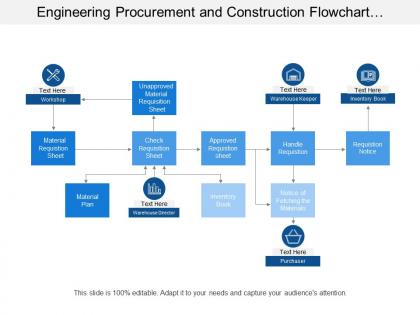
Engineering procurement and construction flowchart showing requisition




Try Before you Buy Download Free Sample Product
 Impress Your
 Audience
 100%
100% Editable
 Save Hours
 of Time


Our Engineering Procurement And Construction Flowchart Showing Requisition help cut down the constraints. They create favorable conditions.
People who downloaded this PowerPoint presentation also viewed the following :
Engineering procurement and construction flowchart showing requisition with all 5 slides:
Explain how ideas are interlinked with our Engineering Procurement And Construction Flowchart Showing Requisition. Indicate the existence of common interest.




FAQs for Engineering procurement and construction
Ok so there's basically five steps to this whole thing. You start by figuring out what you need and filling out the requisition form with all the details. Your manager has to approve it next - honestly this is where things usually get stuck because approvals can drag on forever depending on your company. Procurement takes over after that, finding vendors and doing their thing. They'll send a purchase order to whoever you're buying from. Last step is getting your stuff delivered and having finance handle the invoice. Oh and write really detailed specs from the start or you'll be going back and forth a million times trying to clarify what you actually wanted.
Honestly, start by mapping out your current process - you'll probably be shocked at where things actually get stuck. Automated approval workflows are a game changer because let's be real, people are usually the bottleneck, not the system. Standardize your request forms too so everyone isn't creating their own version every time. Oh, and set spending thresholds where small stuff gets auto-approved or fast-tracked. Like, why does a $50 purchase need three signatures? Focus on those specific pain points you find rather than overhauling everything at once.
Honestly, going digital with requisitions is a game changer. No more paper chaos everywhere. You'll get automated routing to the right people, real-time tracking (finally!), and everything connects with your procurement stuff. Digital approvals are clutch - beats running around with forms like it's 1995. Set up spending limits and approval chains so routine requests handle themselves. I'd probably start with your most common requisition types first, then build out from there. Makes the whole thing way less of a headache.
So basically your department budget is like a spending limit that gets checked every time you submit a requisition. The system automatically compares your request against what's left in your budget - super convenient actually. If there's not enough money, it'll either flag your request or just reject it outright. Smaller purchases usually get approved faster if you're still within budget, but the big stuff still needs your manager's approval. Pro tip: always peek at your budget balance first because nothing's more annoying than waiting around for a request that was doomed from the start.
Ugh, so the usual suspects are approval delays, people submitting half-finished forms, and budget drama. Automated reminders help with the delays - saves you from being the nagging person. Make your forms super simple or people just won't fill them out properly (learned this the hard way). Budget stuff is annoying but staying tight with finance helps. Oh, and having backup vendors is clutch. Honestly though, the real game-changer is getting buddy-buddy with the important people early on. Way easier than scrambling when something urgent pops up.
Honestly, it comes down to timing and how complex things get. Manufacturing deals with raw materials and crazy long lead times, so you've got to plan way ahead with requisitions. Service companies? They're usually ordering stuff they need right now - software licenses, consulting work, whatever. The approval process is totally different too. Manufacturing has these strict chains because material costs can tank your margins fast. Nobody wants production shutting down because someone forgot to order steel! Service companies move quicker with approvals since they're more flexible. My advice? Figure out your industry's typical procurement cycle first, then build in some buffer time. Trust me on that one.
Set clear expectations upfront about timelines and approvals - saves everyone headaches later. Always shoot back quick responses to their questions, even if it's just "hey, still waiting on my boss, I'll update you Friday." Documentation is huge too since someone else might need to jump in. Oh, and this sounds cheesy but treat them like actual partners instead of just vendors. They want things to run smoothly too. Radio silence kills good relationships fast - I've watched it happen way too many times. Build that rapport early and the whole requisition process becomes so much easier for everyone.
Honestly, data analytics is a game changer for requisition stuff. Instead of just guessing, you'll actually see your spending patterns and which suppliers show up on time consistently. Budget trends become obvious before they bite you in the ass later. Plus you can predict when demand's gonna spike - no more scrambling in Q4 when money's tight. The historical pricing data alone makes negotiations so much easier. Oh, and supplier performance metrics are clutch for making smart choices. Don't go crazy though, just pick 2-3 metrics to start tracking and build up from there.
Ugh, requisitions are such a pain but you gotta hit the basics. Get approvals from whoever's supposed to sign off at each spending level - finance gets weird about that stuff. Budget alignment is obvious but easy to mess up. Stay within your approved vendor list or procurement will literally hunt you down. Oh, and if you're buying anything specialized, double-check it doesn't need special certifications first. Save all your paperwork because auditors live for that drama. Honestly though? Just text your procurement person early if something feels sketchy. Way easier than explaining later.
Dude, seriously - training your people upfront will save you SO much headache later. Most companies skip this part and then wonder why everything's a mess. Users who actually know the forms, approval flows, and spending rules don't send you garbage requests that bounce back. They catch budget problems early too. Plus they already know which vendors are approved, so things move faster. I learned this the hard way at my last job - we had people submitting random stuff constantly. Take the time to train them properly and you won't be drowning in follow-up emails and corrections.
So I'd start with cycle time - like from when someone submits a request to final approval. Approval rates matter too, plus how happy people actually are with the process. Processing costs per request and compliance stuff are huge (trust me, audits suck). Error rates show you where things get stuck. Track how long each approval stage takes - that's where you'll find your slowest bottlenecks. Oh, and definitely survey your actual users since they're dealing with this headache daily. Honestly though? Just pick 3-4 metrics that hit your worst problems first. Don't overcomplicate it.
So basically requisitions are your formal way to ask for inventory when you're running low. You submit the req, someone approves it, then purchasing does the actual ordering. It's like the middleman between "we need this stuff" and actually getting it ordered. Honestly, I used to think it was just annoying paperwork too. But it actually helps track what you're using and keeps stock levels where they should be. Without it, inventory becomes this weird guessing game - what do people actually need vs what they *think* they need? Just don't go crazy with quantities when you submit. Keeps everyone's forecasting on track.
So approval workflows are basically like having guardrails for your spending. The system automatically routes purchases to the right people - managers, budget owners, whoever - based on dollar amounts or categories. No more running around chasing signatures! Plus you get a solid audit trail showing who approved what and when. Trust me, set your approval thresholds right from day one or you'll be fixing that mess later. Oh and honestly? It's such a relief not having to wonder if something actually got the okay before money walks out the door.
You know what kills me about most procurement processes? Nobody knows what's going on. But when you're upfront about timelines, budgets, and who needs to sign off on what, it cuts through all that annoying back-and-forth. People can actually plan ahead instead of panicking about urgent requests. Your stakeholders aren't left wondering if their stuff disappeared into a black hole, and procurement can figure out what to tackle first. Honestly, just setting up some kind of status tracker or sending regular updates makes a huge difference. Way less "hey, what happened to my thing?" messages cluttering your inbox.
There's a bunch of good options out there. SAP Ariba, Coupa, and Oracle are the heavy hitters if you need enterprise stuff. Smaller teams can get away with ProcurementExpress or even ServiceNow workflows. I've honestly seen companies make SharePoint work with approval workflows - not pretty but it does the trick. Make sure whatever you pick plays nice with your current ERP and accounting setup or you'll be doing double data entry forever (trust me on this one). Demo a few and see what your team won't hate using every day.
-
Best Representation of topics, really appreciable.
-
Commendable slides with attractive designs. Extremely pleased with the fact that they are easy to modify. Great work!