


Finance and accounting transformation strategy with road map powerpoint presentation slides




Try Before you Buy Download Free Sample Product
 Impress Your
 Audience
 100%
100% Editable
 Save Hours
 of Time


Finance and Accounting Transformation might include restructuring and implementing the finance operating model, accounting and finance organizations, accounting and finance processes, financial capabilities, and platforming finance and accounting systems. Here is an efficiently designed template on Finance and Accounting Transformation Strategy with a Road Map that provides the details on primary objectives of accounting and finance transformation and significant accounting aims and finance transformation. At present, the company wants to highlight the key steps, roadmap, and strategies for finance and accounting transformation and cover all the artifacts included in the transformation. Also, this presentation provides details on various key artifacts included in the accounting and finance transformation such as transformation roadmap and business case, finance transformation change management plan, financial software vendor scan, mini-profiles, finance transformation project plan, and finance transformation program RACI matrix. Additionally, this powerful template provides details on the finance transformation program checklist, finance transformation program success metrics, finance transformation training plan for different teams, finance transformation program significant reasons for failure, and critical challenges in achieving objectives of financial transformation. Get access to it now.
People who downloaded this PowerPoint presentation also viewed the following :
Content of this Powerpoint Presentation
Slide 1: This slide introduces Finance and Accounting Transformation Strategy with Road Map. State Your Company Name and begin.
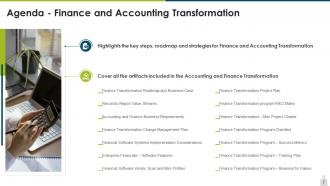
Slide 2: This slide shows Agenda - Finance and Accounting Transformation.
Slide 3: This slide presents Table of Contents - Finance and Accounting Transformation.
Slide 4: This slide shows Table of Contents - Finance and Accounting Transformation.
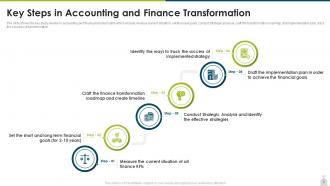
Slide 5: This slide displays Key Steps in Accounting and Finance Transformation.
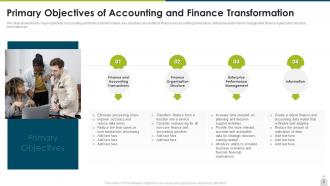
Slide 6: This slide represents Primary Objectives of Accounting and Finance Transformation.
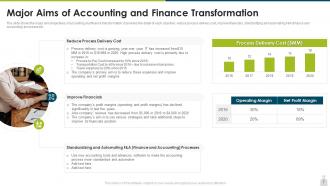
Slide 7: This slide shows Major Aims of Accounting and Finance Transformation.
Slide 8: This slide presents Five Year Financial Performance a Finance Company.
Slide 9: This slide shows Current Performance of Key Accounting Indicators.
Slide 10: This slide displays Table of Contents - Finance and Accounting Transformation.
Slide 11: This slide represents Accounting and Finance Transformation Roadmap.
Slide 12: This slide shows financials services company that wants to implement accounting and finance transformation in their company.
Slide 13: This slide presents case study of an event organizer company that wants to design accounting and finance transformation roadmap.
Slide 14: This slide shows Record to Report Value Streams – Current State vs Expected Results.
Slide 15: This slide displays inputs and outputs of record to report (finance) value streams.
Slide 16: This slide represents Accounting and Finance Business Requirements for Transformation.
Slide 17: This slide shows Finance Transformation Change Management Plan Process.
Slide 18: This slide presents Finance Transformation Change Management Strategy Analysis Table.
Slide 19: This slide shows Financial Software Systems Implementation Considerations.
Slide 20: This slide displays Financial Software Vendor Scan and Mini Profiles.
Slide 21: This slide represents key features of an accounting software.
Slide 22: This slide shows Finance Transformation Project Plan – Current Scope and Future Phase.
Slide 23: This slide presents key focus areas and objective of key steps taken.
Slide 24: This slide shows focus points and rationale related to the steps taken under strategic direction of the company.
Slide 25: This slide displays Key Points to Consider While Following the Steps.
Slide 26: This slide represents Process and the Policies – Overview, Rationale, and Key Focus Points.
Slide 27: This slide shows Key Points to Consider While Following the Steps.
Slide 28: This slide presents Finance Transformation Program RACI Matrix for Different Projects.
Slide 29: This slide shows Finance Transformation Program RACI Matrix for Project Management.
Slide 30: This slide displays Finance Transformation – Brief Overview of a Mini Project Charter.
Slide 31: This slide represents Finance Transformation Program Checklist with Key Activities and Final Status.
Slide 32: This slide shows Finance Transformation Program Checklist Related to Forecasting and Strategy Implementation.
Slide 33: This slide presents Key Performance Indicators to Track the Success of Accounting and Finance Transformation.
Slide 34: This slide shows Financial Performance of the Company After Accounting and Finance Transformation.
Slide 35: This slide displays table of training plan for different teams in an organization.
Slide 36: This slide represents key reasons for the failure of accounting and finance transformation program.
Slide 37: This slide shows Key Challenges in Achieving Objectives of Financial Transformation.
Slide 38: This slide presents Table of Contents - Finance and Accounting Transformation.
Slide 39: This slide shows Sales and Profit Margin Analysis Dashboard.
Slide 40: This slide displays Accounting Statement Profit and Loss Analysis Dashboard.
Slide 41: This slide represents Icons Finance and Accounting Transformation Strategy with Road Map.
Slide 42: This slide is titled as Additional Slides for moving forward.
Slide 43: This slide presents Area Chart with two products comparison.
Slide 44: This is Our Mission slide with related imagery and text.
Slide 45: This is a Timeline slide. Show data related to time intervals here.
Slide 46: This is Our Team slide with names and designation.
Slide 47: This is Our Target slide. State your targets here.
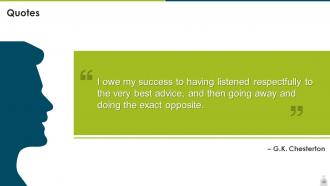
Slide 48: This is a Quotes slide to convey message, beliefs etc.
Slide 49: This is a Thank You slide with address, contact numbers and email address.
Finance and accounting transformation strategy with road map powerpoint presentation slides with all 49 slides:
Use our Finance And Accounting Transformation Strategy With Road Map Powerpoint Presentation Slides to effectively help you save your valuable time. They are readymade to fit into any presentation structure.
-
Finance and Accounting Transformation Strategy with Road Map
-
Agenda Finance and Accounting Transformation
-
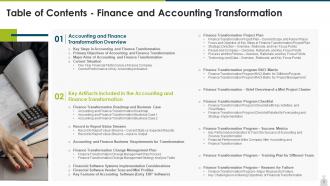
Table of Contents Finance and Accounting Transformation
-
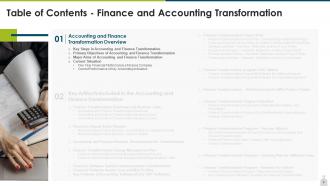
Table of Contents Finance and Accounting Transformation
-
Key Steps in Accounting and Finance Transformation
-
Primary Objectives of Accounting and Finance Transformation
-
Major Aims of Accounting and Finance Transformation
-
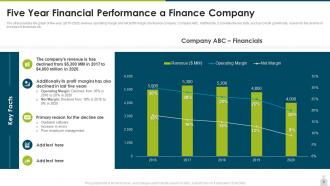
Five Year Financial Performance a Finance Company
-
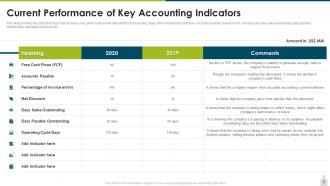
Current Performance of Key Accounting Indicators
-
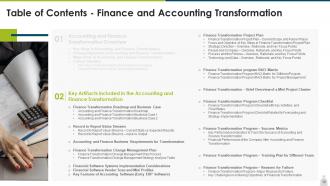
Table of Contents Finance and Accounting Transformation
-
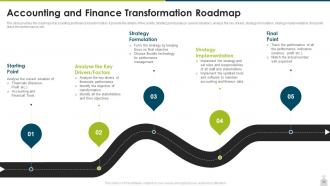
Accounting and Finance Transformation Roadmap
-
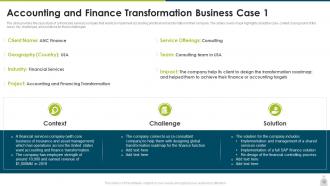
Accounting and Finance Transformation Business Case 1
-
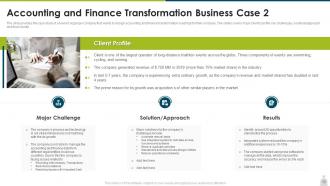
Accounting and Finance Transformation Business Case 2
-
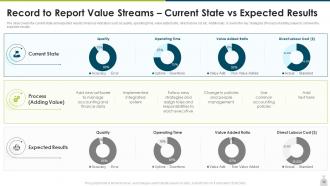
Record to Report Value Streams Current State vs Expected Results
-
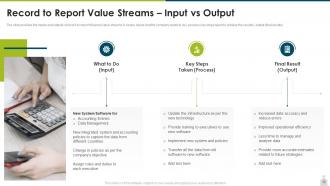
Record to Report Value Streams Input vs Output
-
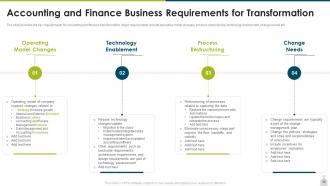
Accounting and Finance Business Requirements for Transformation
-
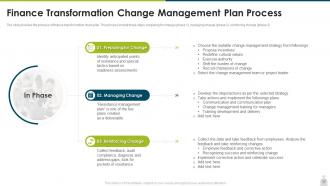
Finance Transformation Change Management Plan Process
-
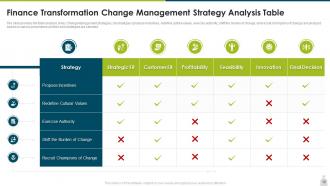
Finance Transformation Change Management Strategy Analysis Table
-
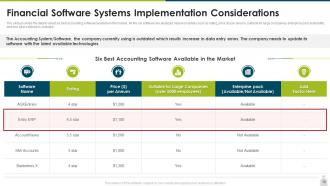
Financial Software Systems Implementation Considerations
-
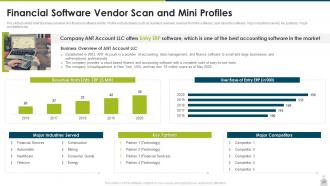
Financial Software Vendor Scan and Mini Profiles
-
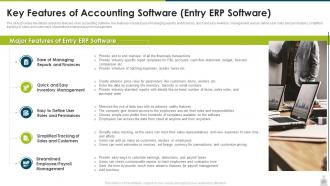
Key Features of Accounting Software Entry ERP Software
-
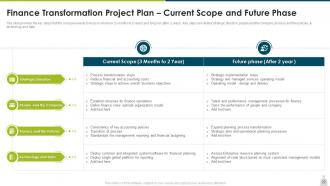
Finance Transformation Project Plan Current Scope and Future Phase
-
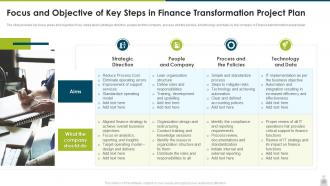
Focus and Objective of Key Steps in Finance Transformation Project Plan
-
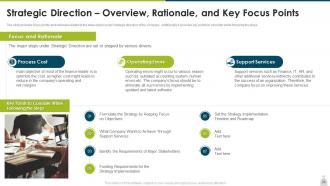
Strategic Direction Overview Rationale and Key Focus Points
-
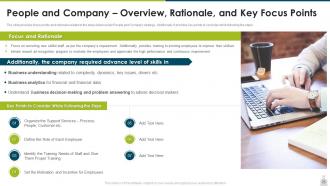
People and Company Overview Rationale and Key Focus Points
-
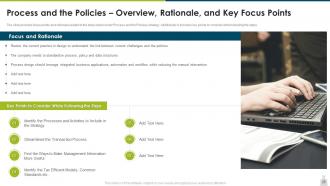
Process and the Policies Overview Rationale and Key Focus Points
-
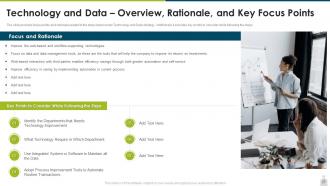
Technology and Data Overview Rationale and Key Focus Points
-
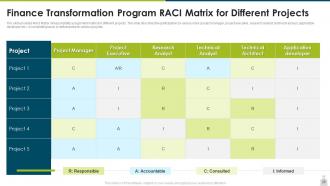
Finance Transformation Program RACI Matrix for Different Projects
-
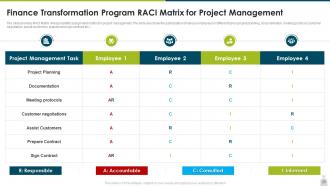
Finance Transformation Program RACI Matrix for Project Management
-
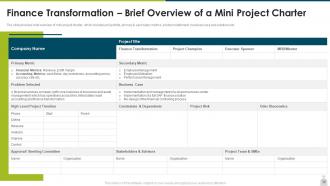
Finance Transformation Brief Overview of a Mini Project Charter
-
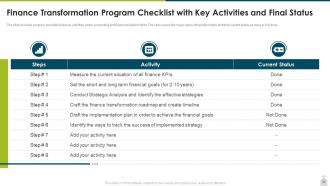
Finance Transformation Program Checklist with Key Activities and Final Status
-
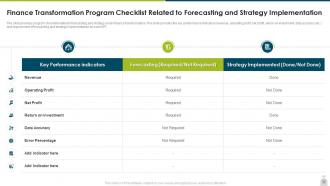
Finance Transformation Program Checklist Related to Forecasting and Strategy Implementation
-
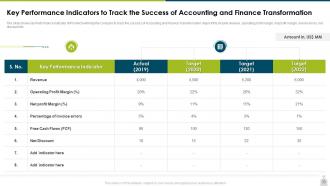
Key Performance Indicators to Track the Success of Accounting and Finance Transformation
-
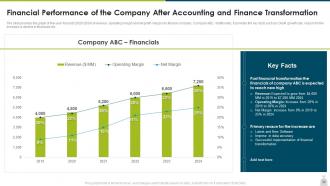
Financial Performance of the Company After Accounting and Finance Transformation
-
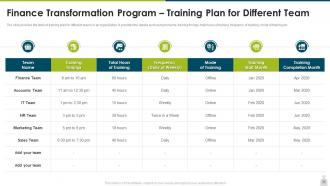
Finance Transformation Program Training Plan for Different Team
-
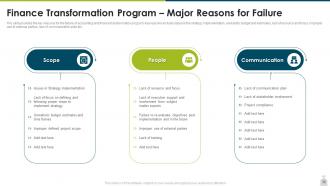
Finance Transformation Program Major Reasons for Failure
-
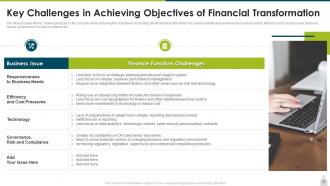
Key Challenges in Achieving Objectives of Financial Transformation
-
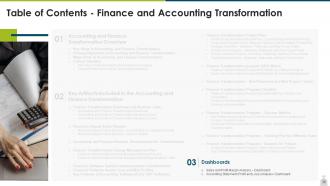
Table of Contents Finance and Accounting Transformation
-
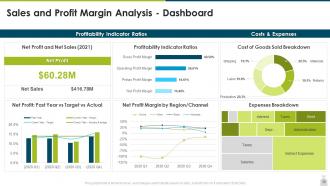
Sales and Profit Margin Analysis Dashboard
-
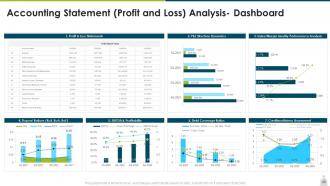
Accounting Statement Profit and Loss Analysis Dashboard
-
Icons Slide Finance and Accounting Transformation Strategy with Road Map
-

Additional Slides
-
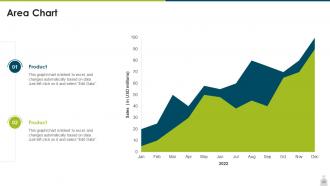
Area Chart
-
Our Mission
-
Timeline
-
Our Meet Team
-
Target
-
Quotes
-
Thank You
FAQs for Finance and accounting transformation strategy with road map
You'll want three main things: process automation, data analytics, and change management. First step? Map out your current workflows - seriously, the bottlenecks you'll discover are wild. Cloud platforms work best for scaling up later. Get the right automation tools and real-time reporting setup, but honestly the people part is harder than the tech. Your team needs training and leadership has to actually want this to work. I'd start small though - pick one process that'll show clear ROI, then use that win to expand. Way less overwhelming that way.
Map out your current workflows first - where are the bottlenecks and time wasters? Talk to your team, they'll tell you exactly what's broken (and probably have strong opinions about it). Track your cycle times and error rates. Then compare yourself to industry benchmarks to see how far behind you really are. Old tech systems are usually the worst offenders, so audit those too. I'd document everything before making changes though. That way you can prioritize fixes based on what'll actually move the needle versus what's just annoying.
Look, tech is what makes modern finance transformation actually work. Automation handles all that tedious stuff - data entry, reconciliations, you name it. Advanced analytics give you insights in real-time instead of waiting forever for reports. Cloud systems changed everything (especially after 2020) since your team can work from literally anywhere. AI's pretty solid for forecasting and catching fraud too. Honestly though? Don't just chase the latest flashy tool. Map out your current manual processes first - that's where automation will save you the most headache. Pick tech that fixes your actual problems.
Honestly, analytics is a game-changer for finance stuff. You'll stop guessing and actually see what's happening with cash flows in real time. Predicting budget issues before they blow up? Yeah, that's possible now. Plus you can catch those little inefficiencies that are quietly draining money everywhere. The dashboards look way better than the old garbage we used to stare at - thank god for that upgrade. What's really cool though is running "what if" scenarios for leadership. Like showing them exactly what happens when you automate accounts payable or whatever. My advice? Pick one metric that's driving you crazy right now and start there.
Honestly, resistance from your team will be your biggest headache - people hate change, period. Data quality is another nightmare that'll bite you later if you don't fix it upfront. Everyone and their mom will try to sneak their random projects into scope too, so you gotta be ruthless about saying no. Legacy system integration? Good luck with that mess. Budget's gonna blow up no matter what you plan. Get everyone on board early though, and actually clean your data before touching any new tech. Oh, and have a real change management strategy - not just some PowerPoint deck.
Look, compliance stuff is basically your fence when you're doing finance transformation - it controls what you can automate and what has to stay manual. Map out all your rules first (SOX, GDPR, whatever applies to your industry) before touching any systems. The real pain is these regulations shift all the time, so build flexibility in from the start. Oh, and definitely loop in your compliance people right away. I've seen too many projects where they bring compliance in at the end and suddenly everything's wrong.
Track both numbers and feelings, honestly. Financial stuff like how fast you close books, cost per transaction, accuracy rates - that's the obvious part. But employee satisfaction surveys? Game changer. Miserable teams kill any transformation, period. Don't forget stakeholder feedback from people who actually use your work. Here's what I learned the hard way - get your baseline numbers BEFORE you start changing anything. Pick maybe 5-6 metrics tops and actually look at them monthly. Creating some fancy dashboard that nobody checks is pointless. Oh, and cycle times for invoice processing - that one always tells the real story.
Your team needs to feel safe failing without getting blamed for it. Celebrate the small wins and talk openly about mistakes - finance people are naturally risk-averse so this is honestly the hardest part. Give everyone an hour a week to mess around with new ideas. Mix your finance folks with tech and operations people who think completely differently. Oh, and definitely share your own screw-ups and what you learned from them. People need to see you're not perfect either. The goal is making innovation feel totally normal instead of some terrifying extra thing on their plate. Cross-functional teams work really well for this stuff.
Dude, this is honestly make-or-break stuff. Get your key people bought in early - department heads, IT folks, the actual users - or you'll face pushback constantly. I've watched solid tech rollouts completely tank because leadership skipped this step. Your stakeholders need to become your cheerleaders, spreading the vision to their teams. They have to get WHY you're doing this transformation in the first place. Map out who matters most and keep them in the loop with regular updates. Trust me, their support will save you so many headaches down the road.
Honestly, get your team bought in from day one or you're screwed. Run a pilot first - I can't stress this enough because new systems always have weird quirks you don't expect. Your data migration needs to be rock solid, and don't just dump training on people all at once. Phase the whole thing out so when stuff breaks (and it will), you can fix it without everything falling apart. Oh, and figure out how you'll actually measure success before you start, not after. Otherwise you're just guessing if it's working.
Honestly, you gotta mix old-school finance chops with change management and tech stuff. Start with financial planning and data analytics - that's your bread and butter. But here's the thing most finance people suck at: actually talking to humans. Work on communication and stakeholder management first, seriously. Get cozy with digital tools and automation possibilities too. The trick is translating finance-speak into normal business language that doesn't make people's eyes glaze over. Oh, and don't be afraid to try new things - growth mindset and all that. Pick one skill to focus on this quarter and find someone who's done this transformation thing before to guide you.
So finance transformation basically gets your money stuff talking to your actual business goals. Better data means quicker decisions, which is huge. Streamline your reporting, automate the boring tasks - then your team can actually think strategically instead of drowning in spreadsheets. Modern systems also fix that nightmare where departments can't share info (seriously, why is this still a problem?). You get live updates on cash flow and profits. Leadership can pivot fast when things change. Honestly, I'd start by figuring out what manual garbage is sucking up everyone's time first.
Honestly, the biggest thing is just being super transparent about WHY you're doing this transformation. People freak out when they don't get it. Get your main stakeholders on your side early - like, make them actual advocates. I've watched so many of these projects crash because leadership thought everyone would magically be cool with massive changes. Training is huge since finance people usually hate new systems. Build in ways to get feedback fast so you can pivot when stuff goes sideways. Oh, and don't forget to celebrate the small victories! Keeps everyone motivated. Regular check-ins help catch problems before they explode too.
Look, finance transformation is really all about your customers - you're basically changing how they interact with your money stuff. When you fix invoicing or add better payment options, you're making their lives easier. Nobody has time for weird payment systems that don't work properly. Map out where customers get frustrated with your billing and payment processes. The good transformations cut down processing time and give people options - like, let them pay how they want and see their account status instantly. Oh, and definitely ask your customers what's bugging them first. That's where the real insights come from.
Dude, cloud stuff is seriously worth it for finance. Real-time data, automated processes, way less IT headaches - and you're not dropping crazy money upfront on servers. Modern ERP systems deploy so much faster than the old on-premise nightmare setups. Your forecasting gets smarter with AI tools too. Honestly, I think the auto-updates alone make it worth switching. Start small though - figure out what's driving everyone nuts process-wise, then find cloud solutions for those specific problems first. Don't try to fix everything at once.
-
Really like the color and design of the presentation.