


Finance transformation strategy





Try Before you Buy Download Free Sample Product
 Impress Your
 Audience
 100%
100% Editable
 Save Hours
 of Time


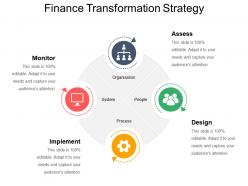
Manage key finance activities of your company by employing this Finance Transformation Strategy PPT slide. You can identify the weaknesses in their finance organization with the help of this PowerPoint theme. Redefine the finance function processes of the organization with the help of this business transformation PPT visual. Drive efficiency in Finance and operational processes, and ensure that they’re aligned. With the help of this readily available PowerPoint slideshow, you can improve your finance technology strategy with new approaches. Describe strategic initiatives aimed at improving Finance within a company by using this financial planning PowerPoint layout. This financial planning PPT template will help the finance executives to design and implement change to their finance organization. Discuss the tasks that improve the financial performance of the company such as reducing overhead costs, implementing new accounting software, etc. Hence, assess the finance strategy and vision of your company by downloading this ready-to-use finance transformation PPT presentation.
People who downloaded this PowerPoint presentation also viewed the following :
Finance transformation strategy with all 5 slides:
Educate them on your background with our Finance Transformation Strategy. They are great for displaying antecedents.




FAQs for
Honestly, it comes down to speed and everyone wanting answers yesterday. Stakeholders don't want month-old reports anymore - they need real-time stuff. Plus you're drowning in data from like 50 different sources now, and don't even get me started on how regulations keep shifting. Those manual processes? They worked fine before but now it's just painful. Your team's probably stuck doing the same boring tasks over and over instead of actually analyzing anything useful. I'd focus on whatever's eating up the most time or leaving you blind when you need to make big decisions. That's where you'll see the biggest impact.
Start by measuring the obvious stuff - cycle times, cost savings, error rates. Those numbers don't lie. But here's what most people miss: survey your team about whether they actually like the new processes. Are they doing more strategic work or still drowning in manual BS? Also check if stakeholders are happier - finance changes should make everyone's job easier, not harder. Set your baselines first (learned this the hard way), then review quarterly. Short sentences mixed with longer explanations work best for reporting. You can always pivot if the data shows something's not working.
Honestly, tech is what makes the whole finance transformation thing actually work. Automation kills off all that tedious data entry stuff. Cloud platforms give you real-time visibility into everything - which is huge. AI catches patterns your team would totally miss otherwise. The reporting features alone will save you hours every week, no joke. But here's the thing that really matters: it finally connects all your departments. Finance can actually talk to operations and sales without jumping through hoops. My advice? Figure out what's driving you crazy first, then find the specific tools that fix those exact problems. Don't overthink it.
Honestly, most finance teams just live in their own little world and wonder why nobody cares about their projects. First thing - actually talk to department heads about what they're trying to accomplish. Map out their priorities, then connect your finance stuff directly to those goals. I can't tell you how many transformations I've seen crash because they only focused on making finance more efficient instead of helping with revenue or customer stuff. Build KPIs that bridge both sides. Oh, and when you update people? Skip the accounting jargon - speak their language instead.
Honestly, the worst part is people just hate change - your team will push back hard. Data's usually a disaster too, so plan on spending forever cleaning that mess up first. Legacy systems? Total nightmare to connect anything new to those ancient things. Everyone thinks their way of doing stuff is perfect, so good luck getting them to follow your shiny new processes. Oh and you'll blow your budget. Happens every single time because someone always wants "just one more feature." Get everyone on board super early though, and seriously - fix your data before you touch any new tech. Learned that one the hard way.
Analytics is honestly a huge deal for finance transformation. You get instant visibility into cash flows and can catch bottlenecks before they become headaches. Manual reviews? Forget about it - this stuff spots trends and weird patterns so much faster. The forecasting alone makes it worth it, plus you can actually measure if your transformation efforts are paying off or just burning money. Oh, and it handles all that boring routine reporting automatically, which is amazing. I'd start with whatever's causing you the biggest headaches right now and see where the data can help there first.
Honestly, finance transformation is a game-changer for compliance and risk stuff. Your data gets way cleaner, controls become automated, and you can see everything happening in real-time. Auditors actually get excited about clean audit trails and standardized processes - weird flex but okay. The analytics help you catch risks before they blow up, which is huge. Oh, and the reporting becomes so much smoother. Just don't make compliance an afterthought! Build it right into your transformation plan from the start. I've seen too many companies try to bolt it on later and regret it big time.
Honestly, finance transformation is a game-changer for talking to stakeholders. You get real-time dashboards and automated reports instead of those painful weeks waiting for outdated stuff. People can actually dig into the data themselves with self-service analytics - which is huge because nobody wants to bug you for every little question. The data quality gets so much better too, so you're not constantly defending weird numbers or explaining why things don't match up. I mean, who has time for that? You'll end up spending way less time making reports and more time actually discussing what the numbers mean for business decisions.
Honestly, data skills are where it's at right now - learn Excel inside and out, maybe some Python if you're feeling ambitious. But here's the thing everyone overlooks: you've gotta be able to talk to people who aren't finance nerds. Half my day is explaining why the numbers matter to marketing folks who just want their budget approved. Business partnering is the new buzzword, but it basically means being strategic instead of just cranking out reports. Oh, and get comfortable with automation tools since everything's moving to the cloud anyway. Pick one data visualization tool first and master that.
Look, the culture stuff will make or break you way more than whatever software you pick. Your team needs to actually want these changes - if they're scared about getting replaced by robots, good luck getting anywhere. People have to stop saying "but we've always done it this way" and start getting excited about data and working across departments. Honestly? The finance people who do best see this as their chance to become more strategic, not just number crunchers. Get your influential team members excited first - they'll help sell everyone else. And yeah, you'll be explaining the reasoning behind every single change about a million times, but that's just how it goes.
Honestly, the biggest thing is getting leadership on board first - without that you're dead in the water. Map your current processes before changing anything (I know it sounds basic but people skip this step constantly). Bring your team into the planning early and actually train them properly. Most resistance happens because people are scared of what they don't understand. Don't try to change everything overnight - that's a recipe for disaster. Phase it out gradually and set realistic deadlines. Oh, and celebrate the small wins! People need to see progress. One more thing - assign someone to actually manage this full-time instead of dumping it on someone's already packed schedule.
Honestly, automation is a game-changer for finance stuff. Start with the boring, high-volume tasks - invoice processing, reconciliations, all that data entry nonsense that makes people want to quit. Your team will actually thank you. Pick one process to test first (don't go crazy and try everything at once). Once that's running smooth, expand it. The rule-based stuff gives you the best results anyway. Then your people can do the interesting work - actual analysis instead of mindlessly matching invoices all day.
Look, finance transformation is a game changer for FP&A teams. Instead of wasting 80% of your time hunting down data, you'll actually get to do strategic analysis. Real-time reporting becomes possible, and you can run scenarios way faster than before. Your team turns into business consultants since the data is finally clean and accessible. The catch? You need to train everyone on the new tools before implementation wraps up - learned that one the hard way at my last job. But honestly, it's worth it just to stop explaining last month's numbers and start predicting what's coming.
Start by figuring out where you actually are right now - what's broken, what works, all that stuff. Most people skip this step and wonder why everything falls apart later. Set realistic goals for maybe 12-18 months out, nothing crazy ambitious. Break it into chunks and go for some easy wins first to get people excited. You'll need your boss/leadership totally on board or you're screwed. Pick one area to focus on instead of trying to fix everything at once. I've seen too many companies try to transform their entire operation overnight and just create chaos. Phase it out, be patient with timelines.
Honestly, consultants are worth it for finance transformation because they've done this stuff a million times before. You'll get someone who actually knows what works and won't get stuck in your company's weird internal drama or legacy processes. They handle the big chunks - redesigning workflows, picking the right tech, managing all the change management headaches. Just make sure your team shadows them throughout so you're not screwed when they leave. The good ones have war stories from other companies that'll save you from making expensive mistakes.
-
Helpful product design for delivering presentation.
-
Amazing product with appealing content and design.