


Finance transformation program raci matrix finance and accounting transformation strategy




Try Before you Buy Download Free Sample Product
 Impress Your
 Audience
 100%
100% Editable
 Save Hours
 of Time


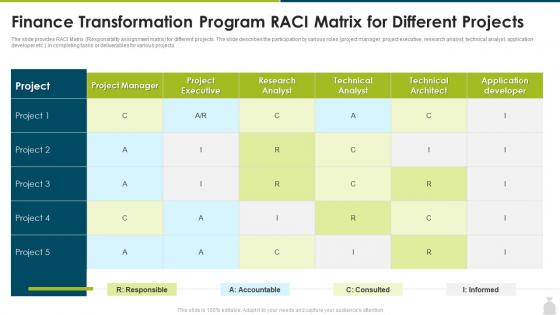
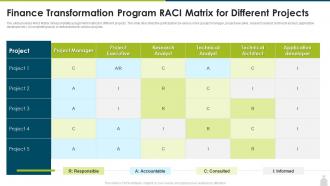
The slide provides RACI Matrix Responsibility assignment matrix for different projects. The slide describes the participation by various roles project manager, project executive, research analyst, technical analyst, application developer etc. in completing tasks or deliverables for various projects
People who downloaded this PowerPoint presentation also viewed the following :
Finance transformation program raci matrix finance and accounting transformation strategy with all 9 slides:
Use our Finance Transformation Program Raci Matrix Finance And Accounting Transformation Strategy to effectively help you save your valuable time. They are readymade to fit into any presentation structure.








FAQs for Finance transformation program raci matrix finance and
Honestly, start by mapping out what you're doing now - that's gonna show you where the real headaches are. Three big things to tackle: modernize your tech, standardize processes, and train your people up. Automate the boring repetitive stuff first (trust me on this one). Better data tools and consistent workflows across teams make a huge difference. Change management is make-or-break though. I've watched so many companies blow this because they forgot about the human side. Leadership needs to actually care, not just say they do. Communication has to be crystal clear from day one. Once you know your pain points, building that roadmap becomes way easier.
Track both the obvious stuff and the harder-to-measure benefits. Hard metrics are things like faster processing, fewer people needed, less errors, lower audit costs. Soft stuff includes quicker decisions and better data quality - honestly this matters more than people think but it's annoying to quantify. Get your baseline numbers first, then check progress every few months. Most finance transformations pay for themselves in 12-18 months if you do it right. Build a simple dashboard showing costs vs benefits. Trust me, you'll need it later when you're asking for budget on the next project.
Honestly, you can't do finance transformation without good tech - it's what gets you from tedious manual work to actually useful automated stuff. Automated reporting and real-time analytics are where you'll see huge improvements. Cloud platforms are amazing (seriously changed everything), plus integrated ERP systems that stop those nightmare month-end reconciliations. But here's the thing - don't just pick whatever looks coolest. Map out what's actually broken first, then find tech that fixes those specific problems. Otherwise you're just throwing money at shiny objects that won't help.
Honestly, the biggest win is getting real-time data instead of waiting forever for month-end reports. Your teams can pull their own numbers through automated dashboards and predictive tools - no more bugging finance for every little thing. The flexibility is huge too. Want to model "what if we slash marketing by 20%" or shift budgets mid-quarter? Done in minutes, not days. Finance stops being the spreadsheet department and becomes actual strategic partners (which they probably prefer anyway). I'd start with whatever reporting nightmare takes the longest right now and automate that first.
Honestly, resistance to change is gonna be your biggest headache - people love their spreadsheets way too much lol. Data quality will bite you too if you're not careful. Get the higher-ups on board first, then constantly explain WHY you're doing this stuff. Clean your data before moving anything over. Training takes forever - like, triple whatever time you think you need. Oh and don't go crazy trying to change everything at once. Pick one department, nail it, then move on. I learned that the hard way at my last job.
Look, regulatory changes will totally mess with your finance transformation plans - they're like getting a surprise exam when you're halfway through studying for a different class. Build flexibility into your systems from the start, especially for reporting stuff. New rules always come with crazy tight deadlines that don't give a damn about your project timeline. Honestly, I've seen too many companies get burned by this. Pick platforms that can adapt when regulations shift. You don't want to rebuild everything from scratch every time some bureaucrat changes the rules. Design for change upfront and you'll save yourself major headaches later.
Honestly, data analytics is a total game-changer for finance stuff. You'll get real-time cash flow visibility and spot spending patterns you had no clue about. The predictive modeling thing? Super helpful for budget forecasting - way more accurate than guessing. Automated reporting saves tons of time on the boring tasks. Interactive dashboards are clutch too since they make financial data actually make sense to non-finance folks (trust me, they need it). Oh, and you can find cost-saving opportunities that would take ages to catch manually. I'd start with something simple like expense analysis first, then build out from there.
Look, first thing - explain WHY you're doing this transformation. People won't get on board if they don't understand the reasoning. Bring your finance team into planning from day one, not just when you're rolling it out. I've watched so many of these projects crash because they ignored the people side (honestly, it's painful to see). Train everyone hands-on way before launch. There will be pushback - that's just reality when you're messing with someone's daily routine. Build some early wins to get momentum going. Oh, and definitely put change champions in each finance area. They'll be your lifeline during the transition.
Dude, stop being the spreadsheet police and start being their business buddy. Embed your finance people right into other departments - they become advisors, not just bean counters. Most teams don't actually hate finance, they just have no clue what you're doing or why. Run some workshops where you explain the reasoning behind decisions instead of just dumping numbers on them. Shared dashboards that everyone can actually read help too. Oh, and don't try to transform everything at once - pick one department first, nail it there, then expand. Trust me on this one.
Oh man, finance transformation definitely shakes things up culturally. People actually start collaborating more since everyone's working with the same data and processes. The cool part? Your team spends way less time on boring manual stuff and gets to do actual strategic work that matters. Don't get me wrong - there's always pushback at first, people hate change. But honestly, your finance folks end up feeling like real business partners instead of just the spreadsheet people. One thing though - definitely get everyone involved from the start. When they help build it, they won't fight it later.
Honestly, start with figuring out what your business actually wants to accomplish - skip the corporate fluff and focus on real priorities. Connect your finance changes directly to those goals, like better cash flow or quicker decisions. I've watched so many finance projects that looked great on paper but didn't help with anything leadership actually worried about. Get your business stakeholders involved from the beginning - they should help build this thing, not just deal with whatever you hand them. Also make sure you can explain exactly how each change helps them win. That's what matters.
You're gonna need both tech skills and people skills for this. Data analytics and automation tools are obvious must-haves, plus getting comfortable with AI and cloud stuff. But here's the thing - the people side might actually be harder. Change management is huge because nobody likes switching up their workflow, you know? Communication skills are critical too since you'll constantly be explaining finance jargon to people who couldn't care less about EBITDA. Oh, and stakeholder management - that's basically just keeping everyone happy while you turn their world upside down. I'd start with a skills audit of your team first.
Honestly, automation is a game-changer for finance stuff. Start with your most annoying repetitive tasks - invoice processing, expense reports, month-end close. Your team will thank you for not making them live in Excel hell anymore. I'd hit accounts payable first since that's where most errors happen anyway. Reconciliations are another quick win. The thing is, once you automate one process and show leadership the results, everyone gets excited about doing more. Pick something that's currently eating up tons of time and causing headaches. You'll free people up for actual strategic work instead of data entry.
Look, without continuous improvement, your finance transformation just becomes another failed project gathering dust. People will slide back into their old habits once the novelty wears off. Monthly check-ins with your team are a must - figure out what's actually working and what needs fixing. Regular feedback loops keep things moving forward instead of getting stuck. Your business keeps changing, so your processes need to change too. It's honestly like working out - you can't just get in shape once and expect it to stick forever. Small tweaks and reviews make all the difference.
Build compliance right into your processes from the start - don't try to add it later. Get someone on your team who actually knows regulations, not just the tech stuff. I've watched companies get halfway through and realize they've made a total mess compliance-wise. Map out all your risk points first, then test everything in a sandbox. Continuous monitoring dashboards will catch problems early. Oh, and definitely pilot this with just one business unit first to work out the bugs before you go company-wide. Trust me on that one.
-
It saves your time and decrease your efforts in half.
-
Great product with highly impressive and engaging designs.