Five yearly accounting financial roadmap with milestones
Try Before you Buy Download Free Sample Product
Audience
Editable
of Time
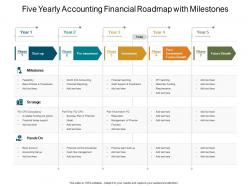
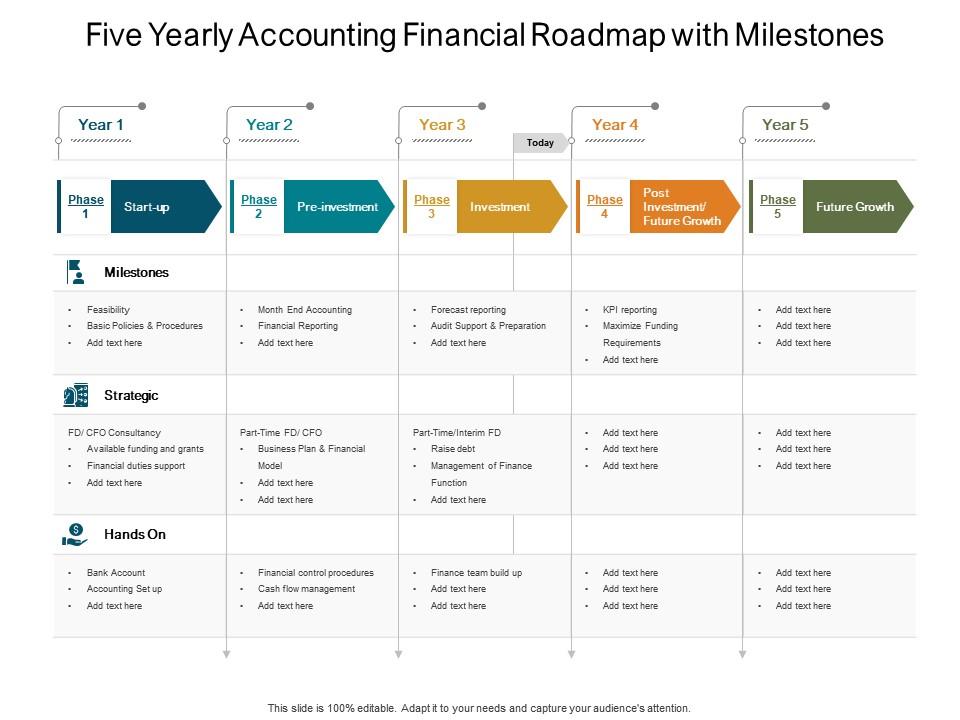
Utilize our pre build Five Yearly Accounting Financial Roadmap With Milestones to present your plan of action in the most effective way. Reduce the paperwork and showcase how different activities are linked to each other by incorporating this attention grabbing PowerPoint theme. This completely editable roadmap PPT layout is suitable to fit all your needs and to have a structured outline of the entire process flow using color coding. Provide guidelines to your teammates about the progression process by employing our PPT theme. Team members can easily be designated into teams by accessing the work milestones to be accomplished within the timeframe. You can easily modify the PowerPoint slide according to real time situations. Download our stunning Five Yearly Accounting Financial Roadmap With Milestones, and you are good to go to prove your expertise in strategic planning.
People who downloaded this PowerPoint presentation also viewed the following :
Five yearly accounting financial roadmap with milestones with all 2 slides:
Use our Five Yearly Accounting Financial Roadmap With Milestones to effectively help you save your valuable time. They are readymade to fit into any presentation structure.
FAQs for Five yearly accounting financial
Okay so first thing - figure out what you actually want money-wise, like specific goals with real dates. Then make a budget that isn't complete BS (track everything for a month first, trust me). Emergency fund is huge - save 3-6 months of expenses before you do anything fancy. Got debt? Kill it with an actual plan, not just paying minimums forever. For investing, compound interest is literally insane if you start early. I wish someone had drilled this into my head at 22. Get some basic insurance too so you don't lose everything if life happens. But honestly, just start by writing down what you're worth right now and pick one goal to hit this year.
Start by figuring out what you actually own vs what you owe - just make a list of everything. Then track where your money's been going for like 3-6 months because we're all terrible at guessing our own spending habits lol. Check your credit score too while you're at it. I'd also write down any money goals you have or debts you're dealing with. The whole thing's pretty boring honestly, but once you see the real numbers you can actually set goals that make sense. Plus you'll spot the problem areas way easier when everything's laid out in front of you.
Okay so basically short-term goals are like your stepping stones - paying off that credit card, emergency fund, vacation savings. They keep you motivated because you actually see progress. Long-term stuff is your big picture goals - house, retirement, kids' college (if that's your thing). Here's the deal though: you need both or you're either gonna feel overwhelmed looking too far ahead, or you'll just be putting out fires with no real direction. The short-term goals honestly make everything feel way more manageable. I'd start with maybe 2-3 in each category and see how they connect.
Honestly, budgeting changed everything for me. I used to just spend and hope for the best - terrible idea lol. Once I started tracking where my money went, I could actually plan for stuff like saving for a house or whatever. It's like having a roadmap instead of driving blind. Track your spending for a month first (sounds boring but trust me). Then figure out how much you can realistically put toward each goal. Short sentences work. Your budget basically tells every dollar where to go so you're not wondering why you're broke again. Makes hitting those bigger financial goals way more doable.
Hey! So the biggest thing is building wiggle room into your plan right away. Even just $500 in emergency savings helps when stuff goes sideways. I'd automate everything you can - willpower is basically useless for long-term money stuff, trust me. If debt's crushing you, try paying minimums everywhere then throwing everything extra at your highest interest rate first. Oh and check your budget regularly, maybe monthly? The key thing though - when you mess up (and you will), don't scrap the whole thing. Just tweak it and keep going.
Hey! So I'd definitely hit the high-interest stuff first - anything over 6-7%. It's like getting a guaranteed return when you pay that off, which honestly beats trying to invest while drowning in credit card debt. But don't totally skip your emergency fund though. Maybe start with $1k as a buffer, then go nuts on the debt payoff, then build up that 3-6 month cushion. Your mortgage? Eh, you can probably invest alongside that since the rates are usually pretty low. Just make a list of everything you owe with the interest rates and knock out the worst ones first.
Honestly, I peek at mine every month because everything's so crazy right now with the markets. Quarterly is probably fine for most people though. Just set a phone reminder or you'll totally forget - I always do when life gets hectic. Compare where you actually are vs where you thought you'd be. Has your job changed? New baby? Stuff like that matters for your plans. I learned the hard way that waiting a whole year to check is a mistake. Better to make tiny tweaks as you go. Maybe spend like 30 minutes this weekend seeing where you're at?
Honestly, financial apps are total lifesavers for staying on track with money stuff. I'd start with something like Mint or YNAB - they'll connect to your bank and show everything in one place, which is honestly so much easier than spreadsheets (learned that the hard way lol). The automated savings transfers are clutch because you can't accidentally "forget" to save. Some apps will even call you out when you're overspending, which is annoying but helpful. Investment platforms are great too for watching your long-term goals actually grow. Just pick one app to start - don't overwhelm yourself with like five different ones right away.
Look, risk assessment is just being real about what could mess up your money plans. Job stability, market crashes, health scares - all that stuff matters when you're figuring out your financial future. Nobody likes thinking about worst-case scenarios but pretending they don't exist is how people get screwed over later. Your comfort level with uncertainty also tells you whether to play it safe with investments or go more aggressive. I'd start by writing down your biggest financial weak spots and then build some cushion into whatever plan you're making. Trust me, future you will thank you for it.
Think of a financial roadmap like GPS but for your money - it maps out your goals and how to actually hit them. Start by writing down what you want: emergency fund, house down payment, retirement, whatever. Then do the math on how much you need to save monthly for each thing. I know, I know, the numbers can be scary at first. But honestly just pick what matters most right now and work backwards from there. Don't keep this stuff floating around in your head - write it down with real timelines and amounts. That's when it stops being wishful thinking.
No Reviews