


Presentación de diapositivas sobre valores de renta fija





Try Before you Buy Download Free Sample Product
 Impress Your
Audience
 100%
Editable
 Save Hours
of Time


Estamos presentando Diapositivas de Presentación de Valores de Renta Fija, que ayudan a realizar pagos de una cantidad fija. Con la ayuda de la plantilla de PPT del mercado de bonos, puede mostrar los diversos tipos de valores de marketing. Si desea categorizar los bonos y los valores de renta fija por separado, utilice esta presentación de PowerPoint de inversión en ingresos financieros completa. Puede describir los beneficios, como la generación de ingresos, la reducción del riesgo y la protección contra la volatilidad, utilizando esta presentación visual de PPT. También hay valores convertibles, que puede resaltar con la ayuda de la plantilla de presentación de PowerPoint de acuerdos de tasa de reenvío. Estas diapositivas de PPT de swaps de inflación le ayudan a diferenciar entre warrants de compra y de venta. Con la ayuda de nuestra presentación de PowerPoint de swaps de tasas de interés diseñada profesionalmente, puede generar una tabla que incluya activos actuales, rendimientos del período y una clase de valores de alto rendimiento. Mediante el uso de la plantilla de PPT de valores de renta fija y apalancamiento, puede clasificar los diversos apalancamientos financieros. Por lo tanto, descargue estas diapositivas de presentación de PowerPoint de swaps de incumplimiento de crédito listas para usar y calcule los ingresos totales por ventas.
People who downloaded this PowerPoint presentation also viewed the following :
Contenido de esta presentación de Powerpoint
Diapositiva 1: Esta diapositiva presenta los Valores de Renta Fija. Indique el nombre de su empresa y comience.
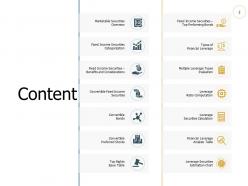
Diapositiva 2: Esta diapositiva muestra el contenido de la presentación.
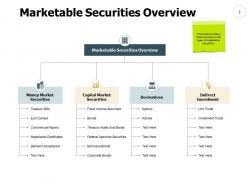
Diapositiva 3: Esta diapositiva presenta una descripción general de los valores negociables, que incluye valores del mercado monetario, valores del mercado de capitales, derivados e inversión indirecta.
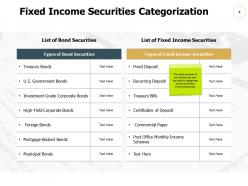
Diapositiva 4: Esta diapositiva muestra la categorización de los valores de renta fija con la ayuda de tablas.
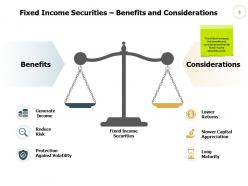
Diapositiva 5: Esta diapositiva muestra los beneficios y consideraciones que ofrecen los valores de renta fija.
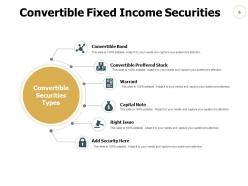
Diapositiva 6: Esta diapositiva representa los valores de renta fija convertibles, como acciones preferentes convertibles, derechos de emisión, warrants, notas de capital, bonos convertibles, etc.
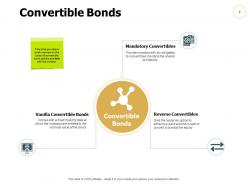
Diapositiva 7: Esta diapositiva muestra los bonos convertibles, describiendo los tipos de opciones de bonos convertibles disponibles para el inversor.
Diapositiva 8: Esta diapositiva presenta las categorías de warrants, describiendo brevemente los warrants de compra y venta.
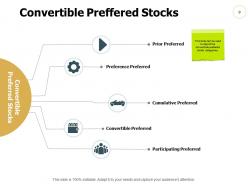
Diapositiva 9: Esta diapositiva muestra las acciones preferentes convertibles, como acciones preferentes participativas, acumulativas, convertibles, preferenciales y prioritarias.
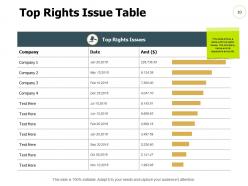
Diapositiva 10: Esta diapositiva representa una tabla de las principales emisiones de derechos con el nombre de la empresa y el monto.
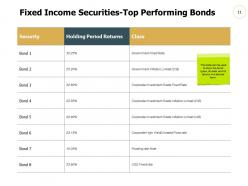
Diapositiva 11: Esta diapositiva muestra los valores de renta fija de mayor rendimiento, describiendo los tipos de bonos, su clase y sus rendimientos en forma de tabla.
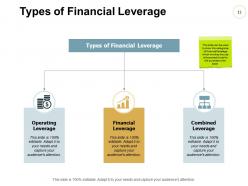
Diapositiva 12: Esta diapositiva muestra los tipos de apalancamiento financiero, como apalancamiento operativo, financiero y combinado.
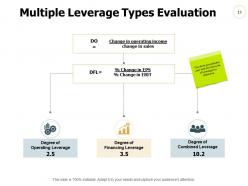
Diapositiva 13: Esta diapositiva presenta la evaluación de múltiples tipos de apalancamiento con fórmulas.
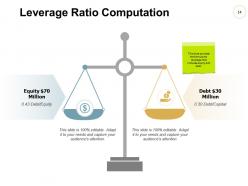
Diapositiva 14: Esta diapositiva muestra el cálculo de la ratio de apalancamiento, incluyendo el patrimonio y la deuda.
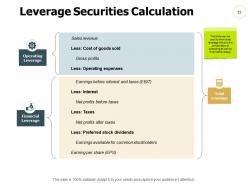
Diapositiva 15: Esta diapositiva representa el cálculo de los valores de apalancamiento, mostrando el apalancamiento total, que es la combinación del apalancamiento operativo y financiero.
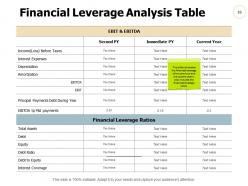
Diapositiva 16: Esta diapositiva muestra una tabla de análisis de apalancamiento financiero del año anterior y el año actual.
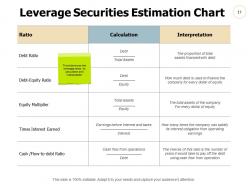
Diapositiva 17: Esta diapositiva muestra un gráfico de estimación de valores de apalancamiento con ratios de apalancamiento, su cálculo e interpretación.
Diapositiva 18: Esta es la diapositiva de Nuestra Misión con imágenes relacionadas y cuadros de texto.
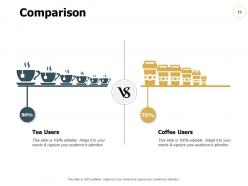
Diapositiva 19: Esta es una diapositiva de comparación para establecer comparaciones entre productos básicos, entidades, etc.
Diapositiva 20: Esta es la diapositiva de Nuestras Metas. Indique sus metas aquí.
Diapositiva 21: Esta es una diapositiva de rompecabezas con cuadros de texto.
Diapositiva 22: Esta es una diapositiva de agradecimiento con la dirección, los números de contacto y la dirección de correo electrónico.
Títulos de renta fija presentación de diapositivas con las 22 diapositivas: 1. Introducción a los títulos de renta fija 2. Tipos de títulos de renta fija 3. Características de los títulos de renta fija 4. Factores que afectan los precios de los títulos de renta fija 5. Rendimiento de los títulos de renta fija 6. Riesgo de los títulos de renta fija 7. Diversificación de la cartera de renta fija 8. Estrategias de inversión en títulos de renta fija 9. Análisis de crédito de los emisores de títulos de renta fija 10. Mercados de títulos de renta fija 11. Regulación y supervisión de los mercados de renta fija 12. Tendencias y desarrollos en los mercados de renta fija 13. Títulos de renta fija gubernamentales 14. Títulos de renta fija corporativos 15. Títulos de renta fija municipales 16. Títulos de renta fija respaldados por activos 17. Títulos de renta fija híbridos 18. Derivados de renta fija 19. Gestión de carteras de renta fija 20. Evaluación del desempeño de las inversiones en renta fija 21. Consideraciones éticas y sostenibles en la inversión en renta fija 22. Conclusiones y recomendaciones
Disfruta de un poco de humor con nuestras Diapositivas de Presentación de Valores de Renta Fija. Transmite tus ideas con una sonrisa.





FAQs for Fixed income securities
So fixed income stuff is basically IOUs - bonds, CDs, treasury bills where you loan money out and get steady interest payments back. Your principal comes back when they mature too. Stocks make you a business partner sharing all the crazy ups and downs, but bonds are more like playing banker with predictable cash flows. Yeah, you're still dealing with credit risk and interest rate swings, but honestly it's way less stressful than watching your portfolio bounce around with market drama. Perfect for when you want something stable mixed in with your other investments.
So there's government bonds like Treasuries, corporate bonds, municipal bonds, and agency securities. CDs and commercial paper work for short-term needs. Mortgage-backed securities too if you're feeling adventurous. Municipal bonds can save you a ton on taxes if you're in a higher bracket - honestly wish I'd known that sooner. Corporate stuff pays more but comes with extra risk compared to government bonds. It really comes down to how much risk you can stomach and your timeline. I'd figure out what duration makes sense first, then worry about credit quality from there.
So bond prices and interest rates are basically enemies - when one goes up, the other tanks. Picture you're stuck with a 3% bond but suddenly everyone's getting 5% on new ones. Nobody wants your crappy bond unless you slash the price, right? Duration is this number that shows how much your bond gets hammered when rates move 1%. Longer bonds get hit way harder too, which honestly seems unfair but whatever. Just something to think about when you're picking bonds - rate changes can really mess with your portfolio if you're not careful.
Credit ratings basically tell you how sketchy a bond is - the worse the rating, the higher yield you'll demand. AAA bonds are rock solid so they pay less, while junk bonds have to offer way more to get anyone interested. It's like the market's quick way to judge if you'll actually get paid back. Though honestly, after 2008 I don't trust ratings blindly anymore - those agencies screwed up pretty bad. The rating gives you a starting point for how much extra yield to demand over Treasury bonds. Just don't rely on it completely, do your own homework too.
So credit risk is probably the biggest thing - basically, can the company actually pay you back? Check their credit rating first. Bond prices move opposite to interest rates, which is annoying but predictable. Duration shows how much your bond will swing when rates change - longer duration = more drama. You also gotta think about liquidity (how easy it is to sell) and inflation slowly eating your returns. I know it sounds overwhelming but honestly most of this stuff you can find pretty easily online. I'd start with credit quality and duration based on when you need the money back.
So bonds basically give you three solid perks: regular interest payments, way less drama than stocks, and they balance out your portfolio when everything else goes nuts. Honestly, I think of them as the dependable friend who's always there when you need them. Stocks tanking? Bonds usually do their own thing and keep you from losing your mind. They're perfect if you're gonna need that money soonish too. I'd probably put like 20-40% in bonds depending on how much risk makes you sweat at night.
So inflation expectations mess with bonds pretty badly - prices drop, yields spike. Investors get spooked about their money losing value, so they want better returns to make up for it. Long-term bonds get hit the worst since you're stuck with crappy rates for years. There's this thing called TIPS that actually protects against inflation by adjusting with it, which is pretty clever honestly. When building your portfolio, maybe shorten up those bond durations if inflation's looking sketchy. Or just throw in some inflation-protected stuff to hedge your bets.
So yield curves are basically your map for interest rates and bond pricing across different timeframes. They show how yields relate to maturity dates - longer bonds usually pay more because nobody wants their money tied up for decades at current rates, right? You can spot economic trends with them, price bonds against each other, and find trading opportunities. Honestly, inverted curves (when short rates beat long rates) often mean recession worries ahead. Watch for steepening or flattening - it'll help you position better. Pretty useful stuff once you get the hang of it.
Ugh, taxes are brutal on fixed income stuff. Corporate bonds and CDs get hit with ordinary income rates - way worse than capital gains. Municipal bonds dodge federal taxes though, which is pretty sweet even if the yields suck. Oh, and Treasuries skip state taxes at least. Here's the thing - I learned this the hard way - you gotta calculate what you're actually keeping after taxes. Makes a huge difference. If you can stuff bonds in your 401k or IRA, do it. The tax shelter is worth it.
So bond laddering is where you buy bonds that mature at different times instead of dumping everything into one maturity date. Like maybe 1, 3, 5, 7 years - spreads out your interest rate risk. When each one matures, you reinvest at whatever rates are available then. It's diversifying through time rather than just different assets, which honestly makes more sense than people realize. You can do equal amounts for each "rung" or focus on short/long-term only. First figure out your timeline and how much steady cash you actually need each year. Way better than trying to time the market.
So basically, when the economy's doing well, interest rates go up and that sucks for bond prices. But credit spreads get tighter, which is good. Flip side - in a recession, rates drop so bond prices rise, but then you've got way more credit risk especially with corporate stuff. Inflation's probably the worst part though since it just eats away at what your fixed payments are actually worth. I'd definitely spread things around - different credit qualities, different durations. That way you're not getting completely screwed if one scenario hits. Makes sense?
Yeah so corporate bonds are way riskier than government ones - companies can actually go belly up while governments just print more money or tax people harder. Plus when the economy tanks, corporations get hit first and default rates shoot up. Treasury bonds are basically the gold standard everyone compares everything else to. But here's the thing - you do get paid better yields for that extra risk, which is nice. I'd definitely spread it around though, like different companies and industries. Don't want to get burned if one sector implodes.
So municipal bonds are pretty sweet if you're looking at tax-free income. The interest doesn't get hit by federal taxes, and usually state taxes either if you buy local ones. Higher tax brackets make them way more appealing - like once you're at 24% or above, the math starts working in your favor big time. You'd calculate something called taxable equivalent yield to compare them fairly against regular bonds. Honestly, it's kind of cool that you're basically funding roads and schools while getting better after-tax returns than most taxable stuff.
So QE drives bond prices up and yields down - pretty straightforward supply and demand stuff. Central banks flood the market buying government and corporate debt, creating this huge artificial demand spike. Long-term bonds get hit hardest since that's what they're targeting. Corporate bonds do well too because investors can't find decent yields anywhere else, so they pile into riskier stuff. Honestly, it's been the same pattern since '08. The whole yield curve gets flattened out, which is why I'd focus more on credit risk than duration risk if you're repositioning. Duration becomes less of a factor when rates are getting suppressed artificially.
Start with duration and yield-to-maturity - they'll cover most of what you need for basic analysis. Credit spreads are super important for figuring out default risk. Modified duration helps when you're comparing bonds with different maturities. For callable bonds, you'll want to look at option-adjusted spread (OAS), though honestly that stuff gets pretty messy fast. Most people also track yield curve shape and do total return analysis for performance. Oh, and yield-to-worst is useful for return analysis too. I'd focus on duration and YTM first though - way less overwhelming to start there.
No Reviews