

Financial statement analysis powerpoint presentation slides





Try Before you Buy Download Free Sample Product
 Impress Your
 Audience
 100%
100% Editable
 Save Hours
 of Time


In case you need to present economic status of your company then our content-ready financial statement analysis PowerPoint Presentation is ideal for you. This income statement PPT presentation having multiple slides such as financial projections, key financial ratios, liquidity ratios, cash flow statement KPIs, profitability ratios, activity ratios, solvency ratios, income statement overview and funding updates etc. This cash flow assessment PowerPoint template goes well with topics like profitability analysis, business impact analysis, financial health, and income statement, balance sheet, statement of cash flow, business performance analysis, financial health, and future prospects of an organization, project future performance, economic analysis, company analysis, business valuation, fundamental analysis. For successful business presentation, PowerPoint background is as important as the content in the slides. Our accounting statement PPT slide provides you both content rich as well as professional slides. Download our financial statement analysis presentation slides to project your business future performance. Elucidate on your ideas with our Financial Statement Analysis Powerpoint Presentation Slides. Drive your team to excellence.
People who downloaded this PowerPoint presentation also viewed the following :
Content of this Powerpoint Presentation
Slide 1: This slide introduces Financial Statement Analysis. State Your Company Name and begin.
Slide 2: This is an Agenda slide. Present it cohesively here.
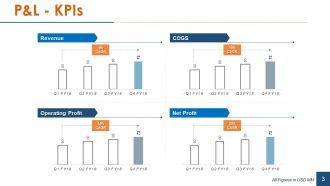
Slide 3: This is P&L - KPIs showcasing- COGS, Net Profit, Operating Profit, Revenue CAGR.
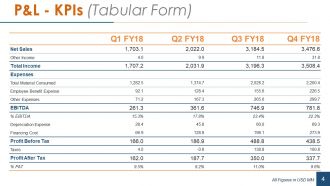
Slide 4: This is P&L - KPIs (Tabular Form) slide.
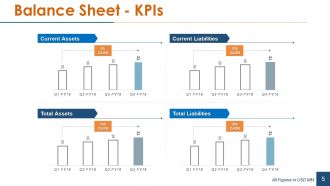
Slide 5: This slide presents Balance Sheet - KPIs Current Liabilities,, Total Liabilities Total Assets, Current Assets CAGR.
Slide 6: This is a Balance Sheet - KPIs (Tabular Form) slide.
Slide 7: This is a Balance Sheet -...continued KPIs (Tabular Form) slide.
Slide 8: This slide showcases Cash Flow Statement - KPIs displaying- Financing Activities, Net Increase in Cash, Investing Activities, Operations CAGR.
Slide 9: This is a Cash Flow Statement-KPIs (Tabular Form) slide.
Slide 10: This slide shows Financial Projections – P&L Income Statement (USD MM).
Slide 11: This slide presents Financial Projections – Balance Sheet.
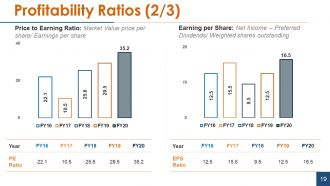
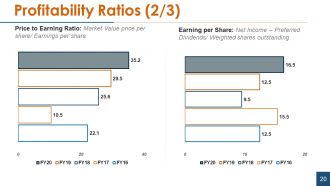
Slide 12: This slide presents Key Financial Ratios of- P/E Ratio, Debt Equity Ratio, Current Ratio with- Return on Assets, Return on Equity, Return on Investment, Return on Assets.
Slide 13: This slide presents Key Financial Ratios of- P/E Ratio, Debt Equity Ratio, Current Ratio with- Return on Assets, Return on Equity, Return on Investment, Return on Assets.
Slide 14: This slide presents Key Financial Ratios of- Liquidity, Profitability, Activity, Solvency.
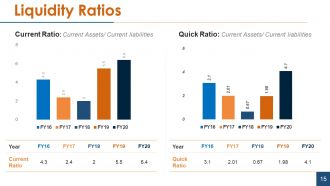
Slide 15: This slide showcases Liquidity Ratios displaying- Current Ratio: Current Assets/ Current liabilities, Quick Ratio: Current Assets/ Current liabilities.
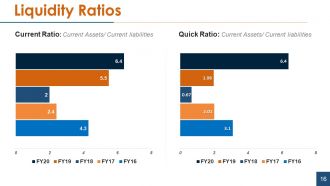
Slide 16: This slide showcases Liquidity Ratios displaying- Current Ratio: Current Assets/ Current liabilities, Quick Ratio: Current Assets/ Current liabilities.
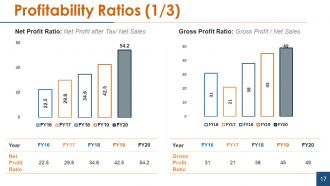
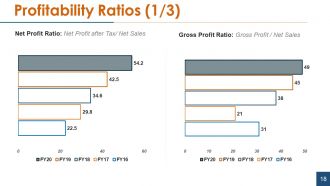
Slide 17: This slide presents Profitability Ratios (1/3) displaying- Net Profit Ratio: Net Profit After Tax/ Net Sales, Gross Profit Ratio: Gross Profit / Net Sales.
Slide 18: This slide presents Profitability Ratios (1/3) displaying- Net Profit Ratio: Net Profit After Tax/ Net Sales, Gross Profit Ratio: Gross Profit / Net Sales.
Slide 19: This slide presents Profitability Ratios (1/3) displaying- Net Profit Ratio: Net Profit After Tax/ Net Sales, Gross Profit Ratio: Gross Profit / Net Sales.
Slide 20: This slide presents Profitability Ratios (1/3) displaying- Net Profit Ratio: Net Profit After Tax/ Net Sales, Gross Profit Ratio: Gross Profit / Net Sales.
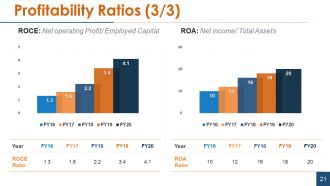
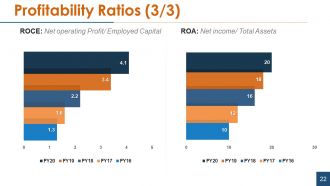
Slide 21: This slide shows Profitability Ratios (3/3) displaying- ROCE: Net operating Profit/ Employed Capital ROA: Net income/ Total Assets
Slide 22: This slide shows Profitability Ratios (3/3) displaying- ROCE: Net operating Profit/ Employed Capital ROA: Net income/ Total Assets
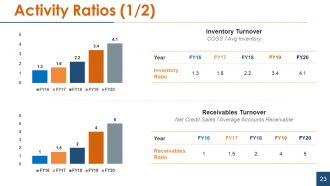
Slide 23: This slide showcases Activity Ratios (1/2) displaying- Inventory Turnover: COGS / Average Inventory, Receivable Turnover: Net Credit Sales/ Average Accounts Receivable.
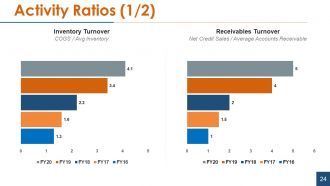
Slide 24: This slide showcases Activity Ratios (1/2) displaying- Inventory Turnover: COGS / Average Inventory, Receivable Turnover: Net Credit Sales/ Average Accounts Receivable.
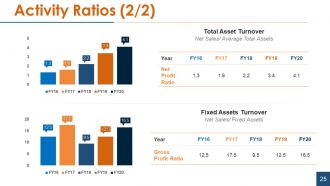
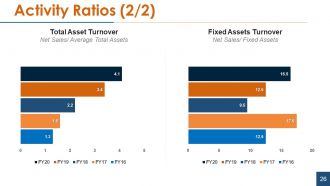
Slide 25: This slide showcases Activity Ratios (1/2) displaying- Total Asset Turnover, Net Sales/ Average Total Assets, Fixed Assets Turnover, Net Sales/ Fixed Assets.
Slide 26: This slide showcases Activity Ratios (1/2) displaying- Total Asset Turnover, Net Sales/ Average Total Assets, Fixed Assets Turnover, Net Sales/ Fixed Assets.
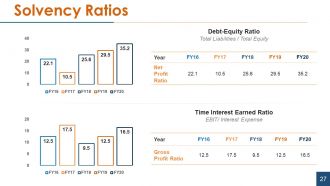
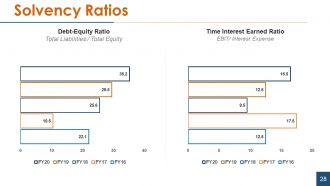
Slide 27: This slide shows Solvency Ratios displaying- Debt-Equity Ratio: Total Liabilities / Total Equity, Time Interest Earned Ratio: EBIT/ Interest Expense.
Slide 28: This slide shows Solvency Ratios displaying- Debt-Equity Ratio: Total Liabilities / Total Equity, Time Interest Earned Ratio: EBIT/ Interest Expense.
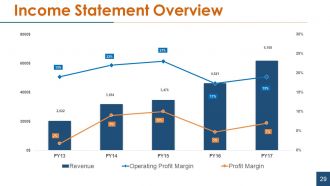
Slide 29: This is an Income Statement Overview in graphical form.
Slide 30: This slide showcases Funding Updates - Debt in tabular form.
Slide 31: This slide showcases Funding Updates - Equity in tabular form.
Slide 32: This slide showcases Icons For Financial Statement Analysis. Use them as per requirement.
Slide 33: This slide is titled Additional Slides. You may change the slide content as per need.
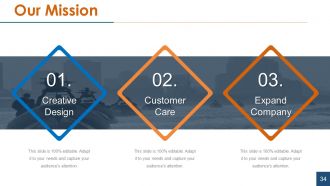
Slide 34: This is Our Mission slide with Vision and Goal etc. icon imagery. State them here.
Slide 35: This is an About Our Company slide. Show company/team specifications etc. here.
Slide 36: This slide presents Meet Our Team with name, designation to put relevant information.
Slide 37: This is Our Goal slide. State them here.
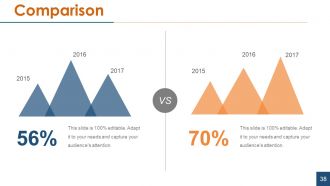
Slide 38: This slide shows Comparison in a creative manner. State comparing aspects here.
Slide 39: This slide shows Financial Score. State financial aspects here.
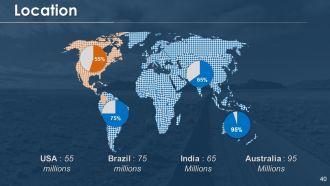
Slide 40: This is a Location slide of a world map image to show global growth, presence etc.
Slide 41: This is a Quotes slide. State business message, beliefs etc. here.
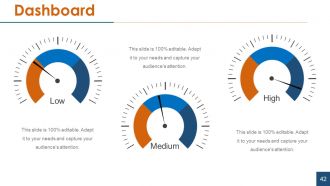
Slide 42: This is a Dashboard slide to display metrics, kpis, etc.
Slide 43: This slide displays Important Notes to flash company event, news or anything to highlight.
Slide 44: This slide displays Newspaper image to flash company event, news or anything to highlight. You may change the content as per need.
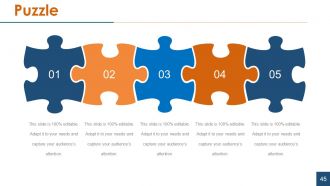
Slide 45: This is a Puzzle image slide to show information, specifications etc.
Slide 46: This is Our Main Target slide to show targets, plans etc
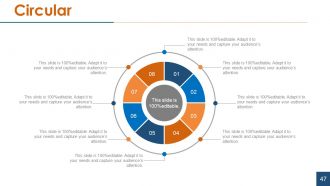
Slide 47: This is a Circular image slide to show information, specifications etc.
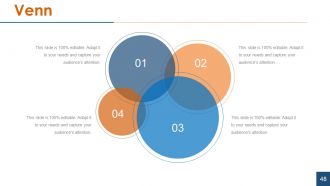
Slide 48: This is a Venn diagram image slide to show information, specifications etc.
Slide 49: This is a Mind Map Chart slide to show information, segregation, specifications etc.
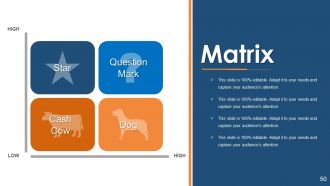
Slide 50: This is a Matrix slide (bcg) to show information, specifications, comparison etc.
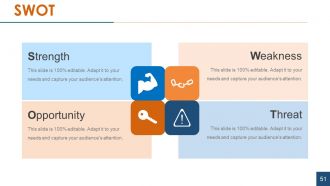
Slide 51: This is a SWOT Analysis slide.
Slide 52: This is continuation of Timeline slide to show growth, evolution etc.
Slide 53: This slide showcases Lego imagery. Present information, specifications etc. here.
Slide 54: This slide shows Silhouettes image with text boxes. State information etc. here.
Slide 55: This is a Hierarchy slide to state team specifications, organizational structure etc.
Slide 56: This is an Idea Bulb slide to state team specifications, organizational structure etc.
Slide 57: This slide shows a Magnifying glass image with text boxes. State information etc. here.
Slide 58: This slide displays a Funnel image. State information, funneling aspects etc. here.
Slide 59: This slide is titled Our Charts and Graphs to move forward. You may change the slide content as per need.
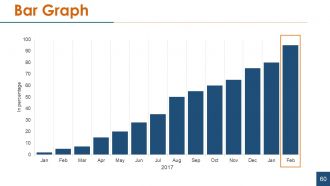
Slide 60: This slide displays a Bar Graph for two product/entity comparison, information, specifications etc.
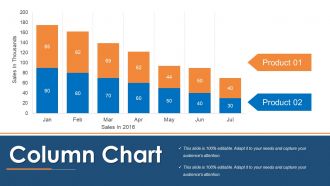
Slide 61: This slide presents a Column Chart for two product/entity comparison, information, specifications etc.
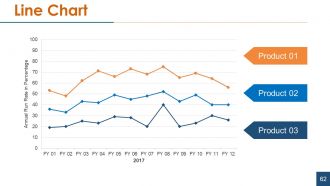
Slide 62: This slide showcases a Line Chart for two product/entity comparison, information, specifications etc.
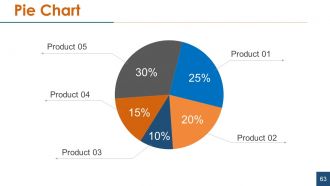
Slide 63: This slide presents a Pie Chart for two product/entity comparison, information, specifications etc.
Slide 64: This slide displays an Area Chart for two product/entity comparison, information, specifications etc.
Slide 65: This slide presents a Scatter Chart for two product/entity comparison, information, specifications etc.
Slide 66: This slide showcases a Stock Chart for two product/entity comparison, information, specifications etc.
Slide 67: This slide presents a Radar Chart for two product/entity comparison, information, specifications etc.
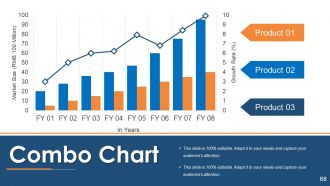
Slide 68: This slide showcases a Combo Chart for two product/entity comparison, information, specifications etc.
Slide 69: This is a Thank You slide with Address# street number, city, state, Contact Numbers, Email Address.
Financial statement analysis powerpoint presentation slides with all 69 slides:
Your thoughts are truly comprehensive. Add another dimension with our Financial Statement Analysis Powerpoint Presentation Slides.
-

Financial Statement Analysis
-

Agenda Slide
-
P L KPIs
-
P L KPIs Tabular Form
-
Balance Sheet KPIs
-
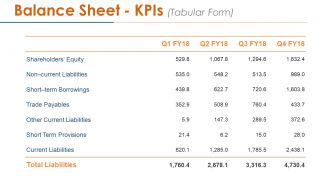
Balance Sheet KPIs Tabular Form
-
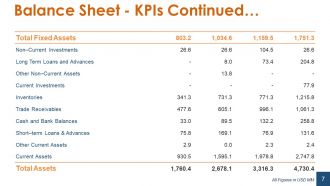
Balance Sheet KPIs Continued
-
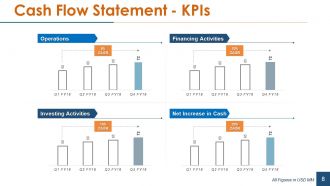
Cash Flow Statement KPIs
-
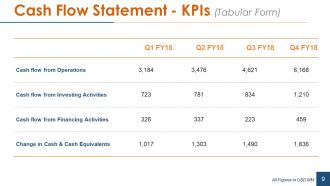
Cash Flow Statement KPIs Tabular Form
-
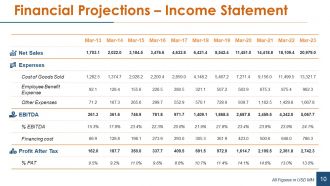
Financial Projections Income Statement
-
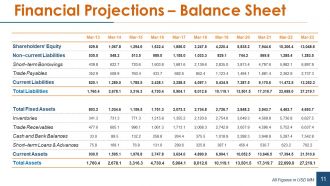
Financial Projections Balance Sheet
-
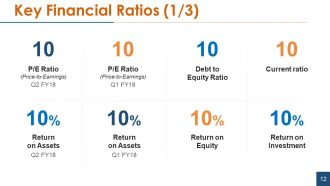
Key Financial Ratios 1 3
-
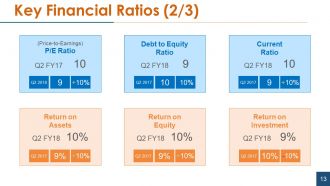
Key Financial Ratios 2 3
-
Key Financial Ratios 3 3
-
Liquidity Ratios
-
Liquidity Ratios
-
Profitability Ratios 1 3
-
Profitability Ratios 1 3
-
Profitability Ratios 2 3
-
Profitability Ratios 2 3
-
Profitability Ratios 3 3
-
Profitability Ratios 3 3
-
Activity Ratios 1 2
-
Activity Ratios 1 2
-
Activity Ratios 2 2
-
Activity Ratios 2 2
-
Solvency Ratios
-
Solvency Ratios
-
Income Statement Overview
-
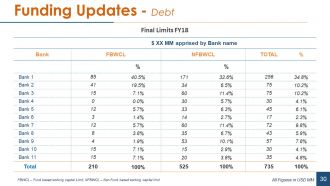
Funding Updates Debt
-
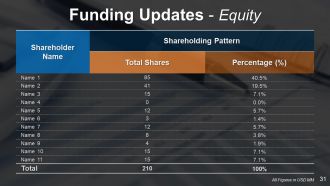
Funding Updates Equity
-
Icons for Financial Statement Analysis
-

Additional Slides
-
Our Mission
-
About Our Company
-

Meet Our Team
-

Our Goal
-
Comparison
-

Financial
-
Location
-

Quotes
-
Dashboard
-

Important Notes
-

News Paper
-
Puzzle
-

Our Main Target
-
Circular
-
Venn
-

Mind Map
-
Financial Statement Analysis
-
SWOT Analysis
-

Timeline
-
Lego
-

Silhouettes
-

Hierarchy
-
Idea Bulb
-

Magnifying Glass
-
Funnel
-

Our Charts Graph
-
Bar Graph
-
Column Chart
-
Line Chart
-
Pie Chart
-
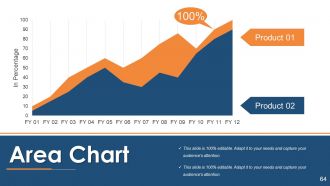
Area Chart
-
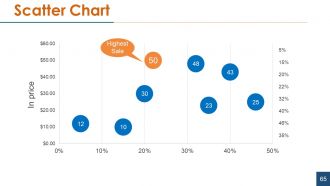
Scatter Chart
-
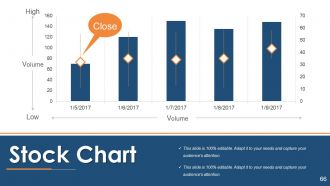
Stock Chart
-
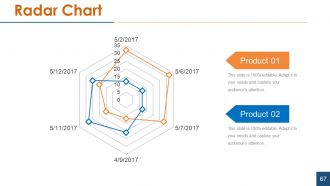
Radar Chart
-
Combo Chart
-

Thank You
FAQs for Financial statement analysis
So you've got three main ones to focus on - income statement, balance sheet, and cash flow statement. Income statement breaks down your revenue and expenses over time. Balance sheet is more like a snapshot of what you own vs what you owe at one specific moment. Cash flow is honestly my favorite because it shows actual money moving around, not just theoretical profit on paper. There's also stockholders' equity statements but eh, those other three will get you pretty far. Oh and heads up - companies can be "profitable" but still broke if their cash flow sucks.
So basically, looking at just one year's financials is pretty useless - it's like judging how good someone is at basketball from watching them shoot one free throw. Pull maybe 3-5 years of data instead. Watch how revenue, profit margins, and debt change over time. That's where you'll actually see if a company's getting stronger or slowly falling apart. I always get suspicious when margins keep shrinking year after year, even if everything else looks fine. The patterns tell you way more than any single snapshot ever could.
So there are four main types you should know: liquidity ratios (current ratio), profitability ones like ROE and net margin, debt ratios (debt-to-equity), and efficiency stuff like asset turnover. I know it sounds like a lot, but honestly most analysts just focus on a few key ones. Liquidity tells you if they can pay their bills short-term. Profitability is pretty obvious - how much money they're actually making. Debt ratios show how risky their borrowing is. And efficiency measures how well they're using what they own. Start with current ratio, ROE, and debt-to-equity - those three will tell you most of what you need to know about whether a company's doing well or not.
So liquidity ratios basically tell you if a company can cover its bills right now - like, do they have enough cash for payroll next month? Profitability ratios are different though. They show whether the business model actually works and generates money over time. Here's the thing - you really need to look at both. I've seen companies that were super profitable on paper but still went under because they couldn't pay their suppliers. Current ratio vs profit margin, totally different stories. Cash flow kills businesses way faster than you'd think. But yeah, a company that's liquid but losing money operationally? That's just a slow death instead of a quick one.
So vertical analysis is clutch for comparing companies that are totally different sizes. You take everything and turn it into percentages of one main number - like revenue or total assets. That way you can actually compare how a tiny startup spends money versus how Apple does it, which is pretty neat honestly. The percentages normalize everything, so when you see 5% going to R&D, it means the same thing whether it's a million-dollar company or billion-dollar one. Just pick your base number first, then calculate each line item as a percentage of that. Super useful for spotting trends over time too.
So horizontal analysis basically tracks percentage changes in financial stuff over time - way more useful than staring at random dollar amounts. You can see if revenue's growing steadily or if expenses are getting out of hand. I use this all the time when looking at stocks, honestly makes patterns so obvious. Calculate year-over-year changes for the big items like revenue and profit first. Multiple years will show you if growth is speeding up or slowing down. Watch for weird spikes too - those usually mean something's up that needs digging into.
Financial statements? They're basically just history books - you're seeing what already happened, not what's coming. Companies can fudge those numbers anyway (hello, Enron vibes). What really matters often doesn't show up: how good the management team is, whether employees actually like working there, brand reputation stuff. Plus they totally ignore valuable things like patents or how much people trust the brand. Those could be worth way more than what's on paper. Honestly, start with the numbers but then dig into the messy real-world stuff - that's where you'll find the actual story.
Think of benchmarks as your sanity check - without them, you're basically guessing whether your numbers are decent or trash. A 15% profit margin could be killer in grocery but garbage in tech, you know? So you've got to compare against industry averages and competitors to figure out what's actually happening. I usually start with IBISWorld or trade groups for the broad picture, then dig into specific companies that are actually similar size. Otherwise you're comparing apples to... well, massive corporate oranges. The trick is finding recent data that matches your situation - old benchmarks are pretty useless.
Oh man, this is such a pain point in finance. Companies can pick totally different accounting methods - like how they recognize revenue or value inventory - and it makes the same business look completely different on paper. The numbers you're analyzing might be super misleading depending on their choices. I always have to dig through those boring footnotes to see what methods they're actually using. Short sentences aside, you really can't compare two companies unless they're using similar accounting policies, or you'll be comparing apples to oranges. It's honestly why I sometimes just adjust the numbers myself.
Look, income statements can totally fool you with all that revenue recognition nonsense. Cash flow shows actual money moving around - way more honest. I've watched "profitable" companies crash because they couldn't cover basic expenses, which is wild when you think about it. The cash flow tells you if growth is real or fake, whether the business model works, and how much they're begging banks for money. Quick tip: compare operating cash flow to net income. If cash flow's consistently higher? Good sign. Lower? Red flag.
Honestly, financial statement analysis is your best bet for not picking garbage investments. Check out those P/E ratios, debt-to-equity, ROI - that stuff actually tells you what's going on. Way smarter than trusting random tips or just winging it. You'll want to see if revenue's growing, whether they're buried in debt, how well they use their cash. Compare their numbers to previous years and similar companies too. I know it sounds boring but the math doesn't BS you like everything else does. Those trends will show you which companies are actually solid versus the ones just riding hype.
Dude, off-balance-sheet stuff is where companies hide the sketchy things. Operating leases, contingent liabilities, those weird special purpose entities - none of it shows up on the main balance sheet but it totally changes how risky a company actually is. I learned this the hard way when I missed some major lease commitments once. Check the footnotes and MD&A sections, that's where they're forced to admit what they owe. Also, always recalculate debt ratios to include operating leases. The regular numbers basically lie to you without that context.
You've gotta read financial statements totally differently depending on what's happening with the economy. Good numbers during a boom? Maybe not so impressive. During recessions, I'm way more paranoid about cash flow and debt - that stuff can kill companies fast. Growth periods are more forgiving if companies are spending big on expansion. Inflation really screws with everything though, makes comparing to old data pretty useless since costs and asset values get all warped. 2020 taught me that lesson hard when nothing made sense anymore! Compare to industry peers instead of just looking backward.
Start with the cash flow statement - way harder to fake than income statements. Look for big changes in gross margins, how fast they're collecting receivables, or inventory that doesn't match what competitors are doing. Major red flags? Revenue shooting up while cash flow stays flat, weird transactions with related companies, and switching auditors all the time (seriously, that's sketchy). The Beneish M-Score is actually solid for spotting fraud - it's basically an algorithm that catches this stuff. Compare their ratios to industry peers too. Aggressive accounting estimates are another giveaway.
Look, financial statements are basically your business reality check. They show you what's actually happening with revenue, margins, and cash flow - not just what you're hoping for. Honestly, it's pretty dry stuff, but tracking debt ratios and working capital can save your butt by spotting cash problems months early. You'll also catch growth opportunities you might've missed otherwise. I'd start simple - pick maybe 3-5 key ratios and check them every quarter. It's like having a roadmap instead of just winging it with your forecasts and big decisions.
-
Very well designed and informative templates.
-
Good research work and creative work done on every template.
-
Very well