


Food Industry KPI Powerpoint Ppt Template Bundles




Try Before you Buy Download Free Sample Product
 Impress Your
 Audience
 100%
100% Editable
 Save Hours
 of Time


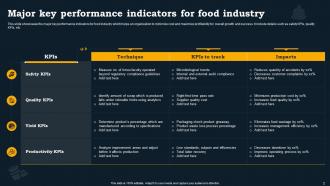
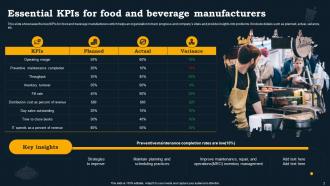
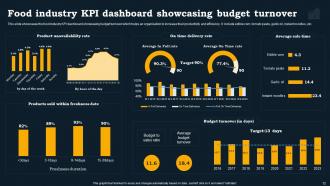
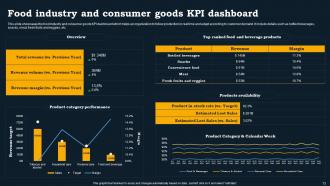
Introducing our comprehensive and insightful PowerPoint PPT presentation on Food Industry KPIs designed to revolutionize the way food and beverage businesses measure success. This expertly crafted PPT showcases key performance indicators for the food industry, equipping F and B managers with powerful metrics to enhance operational efficiency and drive growth. Unlock the potential of your business with KPIs tailored specifically for the food and beverage industry, enabling you to monitor crucial aspects such as inventory management, sales performance, customer satisfaction, and cost control. Delve into the realm of data driven decision making and strategize effectively using real-time insights from our KPI framework. Whether you are a restaurant owner, food manufacturer, or distributor, this PPT will empower you to make informed choices, optimize processes, and stay ahead of the competition in the dynamic and ever evolving food industry landscape.
People who downloaded this PowerPoint presentation also viewed the following :
Food Industry KPI Powerpoint Ppt Template Bundles with all 24 slides:
Use our Food Industry KPI Powerpoint Ppt Template Bundles to effectively help you save your valuable time. They are readymade to fit into any presentation structure.









FAQs for Food Industry KPI Powerpoint
Honestly, start with microbiological testing and sensory scores - that's your bread and butter. pH, moisture content, all those physical/chemical specs matter too. First-pass yield is probably the most telling metric though, shows you how often stuff comes out right the first time. Customer complaints and returns are obvious ones but super important since that's what actually reaches people. Oh, and if you're doing anything with cold storage, temperature tracking is non-negotiable. I always tell people to nail these basics first, then you can get fancy with product-specific metrics later. Way easier than trying to track everything at once.
Look, KPI tracking is basically having a crystal ball for your supply chain. You can catch problems before they blow up your budget. Track stuff like how fast inventory moves, spoilage rates, delivery times - the usual suspects. Honestly, once you see the patterns laid out, it's kind of addictive. Short bursts of data become this whole story about where things get stuck. You'll optimize ordering without thinking about it. Reduce overstock. Catch spoilage early instead of discovering moldy lettuce a week later. Just start with 3-5 metrics that hit your biggest headaches.
Oh man, satisfaction metrics are huge in food - like, they literally make or break repeat customers and referrals. NPS surveys work great, plus tracking online reviews and how often people actually come back. Mystery shoppers are honestly so underrated! You'll want to measure complaint response times too. Start simple though - just ask customers to rate their experience 1-10 after they order. Then break it down by specifics like food quality and delivery speed. The industry's brutal competitive, so even minor satisfaction drops hurt your bottom line fast. Customer lifetime value is another good one to track, but that's getting a bit into the weeds.
So restaurants are all about speed - they're watching daily stuff like how fast tables turn over, ticket sizes, labor costs per hour. Makes sense since margins are crazy tight. Manufacturing's different though, they look at longer-term things like production yield and inventory turnover. Restaurants freak out about customer reviews (honestly, one bad Yelp review can tank you), but manufacturers care more about keeping retailers happy. Restaurant numbers change weekly while manufacturing trends take months to see. Quick service vs. steady output, basically.
Look at your old data first - you can't fix what you don't actually measure. Pick maybe 3-5 metrics that really matter for your money, like OEE, yield rates, food safety stuff. I've watched way too many places try tracking everything and honestly? They end up doing none of it well. Your targets should push you but not be crazy - maybe 5-10% better instead of some wild number. Oh, and definitely get your floor people involved when you're setting these. They actually know what's doable way better than management does.
Honestly, analytics just cuts through all the BS of manual reporting that's usually wrong anyway. You'll catch trends in food safety or inventory way quicker than the old spreadsheet method. The cool part? Predictive stuff can warn you before equipment craps out and ruins a whole batch - saved my buddy's company like $50K last month. Pattern recognition is getting weirdly accurate now. I'd start with your most critical metrics first, see what happens, then build from there once you're convinced it actually works.
Water and energy efficiency are your big wins - track usage per unit you're making. Waste diversion is huge too. Carbon footprint matters a ton if retailers are breathing down your neck about sustainability stuff. Food waste is honestly a gimme since cutting it saves money AND helps the planet. I'd also look at packaging waste and renewable energy percentage, but honestly? Don't go crazy at first. Pick like 2-3 metrics that match your biggest environmental headaches, get some solid baseline numbers, then add more later. You'll burn out trying to track everything at once.
So for the food industry, track the obvious stuff first - how many orders people process per hour, accuracy rates, food safety scores. Customer service gets measured on service speed and satisfaction ratings. Kitchen staff? Look at food waste, prep times, recipe compliance. Honestly, the hardest part is not letting speed kill quality because fast crappy food helps nobody. Also keep an eye on attendance and safety incidents since those mess up everything else. Monthly reviews work well - gives people clear targets without being annoying about it.
Focus on gross profit margin first - shoot for 20-30% in food manufacturing. EBITDA margin shows your real operational profits without all the accounting noise getting in the way. Track COGS as a percentage of revenue too. Inventory turnover is huge since, well, food goes bad. Working capital cycle matters more than people think - food companies can burn through cash stupid fast if you mess up the timing on receivables and payables. Oh, and definitely benchmark against industry averages. Makes it way easier to spot where you're bleeding money.
Just integrate the food safety stuff right into your current dashboards - don't make it a separate thing. Focus on critical control point compliance, how fast you respond to incidents, and audit scores since those fit your existing KPIs perfectly. Operations teams will probably grumble at first (they always do), but they'll get it once they see the benefits. Track proactive metrics too - training completion rates, near-miss reports. That's way more useful than just waiting for actual contamination events. Oh, and set up automated alerts so you can catch problems early. Trust me on this one.
Check out FoodLogiQ, SafetyChain, or ComplianceMetrix - they're designed specifically for food operations and handle quality metrics plus supply chain stuff. Way better than generic tools like Tableau honestly, since they actually understand HACCP compliance and traceability (which is a nightmare otherwise). Most connect directly to your ERP and inventory systems, so no tedious manual data entry. Actually, I'd grab trials of 2-3 platforms first. See which dashboard clicks with your team since they all have different vibes. The specialized ones just make more sense for food industry weirdness.
Dude, seasonal stuff will mess with your numbers big time if you're not careful. Ice cream sales obviously spike in summer - that's not your marketing genius at work, it's just hot weather. Compare the same months year-to-year instead of looking at month-to-month changes. Like, don't freak out when your hot chocolate sales tank in July, you know? Set different targets for each season based on what normally happens. I learned this the hard way when I thought our Q1 was amazing, but it was just typical January behavior. Do quarterly check-ins that actually account for these swings so your team isn't chasing impossible numbers.
Ugh, compliance KPIs are such a drag but you gotta track them. Food safety incidents, audit scores, recall times, documentation accuracy - none of it makes you money but it'll destroy your business if you screw up. The weird thing is these "boring" metrics actually catch problems before they explode into disasters. Map out what regulations you need to hit, then turn those into measurable stuff. Build dashboards so your team can see this data instead of burying it in spreadsheets somewhere. Trust me, making compliance visible saves your ass later.
Engagement metrics are honestly way better than just counting followers. Likes, comments, shares - that stuff shows people actually care about your food content. Track which posts work best too. Recipe videos vs behind-the-scenes content can be totally different. The trick is connecting those numbers to real business stuff like website clicks or actual sales. I'd set some benchmarks for your industry (food brands are weird compared to like, tech companies). Month-over-month tracking helps you catch trends before they get away from you. Way more useful than vanity metrics.
Honestly, KPIs are game-changers for innovation - they give you actual targets instead of just winging it. Track stuff like time-to-market, how consumers react, ingredient costs, nutritional hits. Forces you to use real data, not just vibes (though gut instincts still count obviously). I'd focus on maybe 3-4 metrics that match what you're trying to achieve - sustainability targets, shelf-life goals, flavor scores, whatever matters most. Check them weekly during development. Oh and pick ones that'll actually push your team toward those breakthrough moments, not just busy work metrics that look good on paper.
-
What an exhaustive collection of templates you guys have there in slideteam. Impressive!!!
-
Editable, diversified, compatible with MS PPT and Google Slides, and on top of that finest graphics!! I mean in the words of the famous Ross Geller, “What more do you want!”