

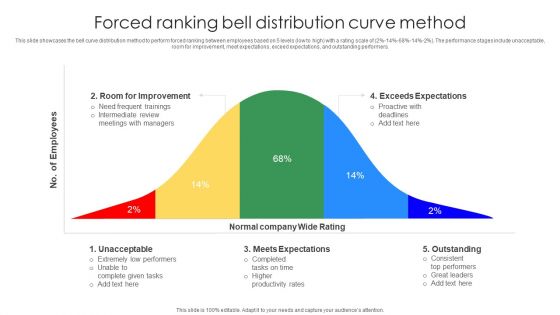
Forced Ranking Bell Distribution Curve Method




Try Before you Buy Download Free Sample Product
 Impress Your
 Audience
 100%
100% Editable
 Save Hours
 of Time


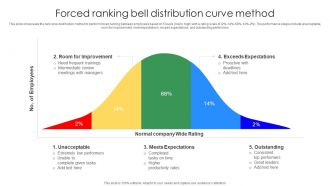
This slide showcases the bell curve distribution method to perform forced ranking between employees based on 5 levels low to high with a rating scale of 2percentage 14percentage 68percentage 14percentage 2percentage. The performance stages include unacceptable, room for improvement, meet expectations, exceed expectations, and outstanding performers.
People who downloaded this PowerPoint presentation also viewed the following :
Forced Ranking Bell Distribution Curve Method with all 6 slides:
Use our Forced Ranking Bell Distribution Curve Method to effectively help you save your valuable time. They are readymade to fit into any presentation structure.





FAQs for Forced Ranking Bell
Look, forced ranking definitely helps you spot your actual top performers - can't have everyone being "above average" anymore, right? Makes compensation decisions way clearer too. But man, I've seen it turn workplaces absolutely brutal. People start sabotaging teammates instead of helping each other out. You might end up labeling someone "poor" when they're really just fine - you need bodies for that bottom 10% somehow. The whole thing assumes your team's performance fits a neat bell curve, which... doesn't always work, especially with smaller groups. If you're thinking about it, just make sure your team won't implode from all the competition first.
Ugh, forced ranking is the worst. It destroys morale because people know someone has to get thrown under the bus no matter what. Creates this toxic environment where nobody wants to help each other - why would you when you're competing for spots? Your star employees might just coast since they're obviously safe, and everyone else freaks out constantly. I've seen decent workers get labeled as "bottom tier" just because the system demands it. Total collaboration killer. If you can't escape it though, at least push for clear expectations and frequent check-ins so people aren't blindsided.
Ugh, forced ranking is such a nightmare for teams. People start hoarding info and avoiding anything risky because they know someone's gotta end up at the bottom. The whole "teamwork makes the dream work" thing? Yeah, that goes out the window fast. Why would you help Sarah nail her project if it might tank your own review, you know? Teams basically split into little cliques and nobody shares knowledge anymore. I've seen it happen - it gets ugly quick. Your best bet is pushing for team goals that actually reward everyone when the group wins, not just individual stuff.
Honestly, there are way better options than forced ranking. Try continuous feedback instead - you can coach people in real time rather than waiting for some annual review. 360-degree feedback is solid too since you get input from peers and direct reports, not just your take on things. Goal-based evaluations work well because they focus on actual outcomes instead of pitting teammates against each other (which is kinda toxic anyway). Self-assessments combined with manager reviews create better conversations. The research backs this up - better retention and performance than forced ranking. Start with quarterly check-ins around specific goals. Much less drama for everyone.
Dude, forced rankings are tricky when you're dealing with different cultures. Japan and Latin America? Forget about it - publicly ranking people goes against everything they believe about respect and harmony. The US though? We eat that competitive stuff for breakfast, so it's way easier here. Here's the thing - some cultures want you to sugarcoat feedback while others prefer you just tell them straight up. Oh, and don't even get me started on hierarchy expectations. My advice? Get your local HR people involved from day one. They'll spot the cultural issues you didn't even know existed. Trust me, it's better than dealing with the fallout later.
Ugh, these convos are the worst but you gotta do them. Be upfront about the process being fair across the board, then get into the actual feedback. Don't just focus on where they ranked - talk about what they can improve and how you'll help. For the lower performers, frame it like "let's work on this together" instead of making them feel like crap. High performers deserve recognition too, just don't rub it in everyone else's faces. Always wrap up with real next steps. The whole point is helping them grow, not dwelling on past stuff. Trust me, avoiding these talks just makes everything way more awkward later.
Yeah, forced ranking is brutal for retention - turnover jumps like 10-15% because nobody wants to compete against their teammates. Top performers get paranoid about hitting quotas, middle ones just check out mentally. The really messed up part? You lose solid people who got unlucky being on strong teams where someone *had* to be bottom 10%. I've seen it tank morale so fast. If they're pushing this at your company, fight it. Push for one-on-one development talks instead - way better than forcing managers to rank people like they're fantasy football players or something.
Oh yeah, forced ranking - that's where managers have to sort everyone into buckets like top 20%, middle 70%, bottom 10%. Pretty brutal honestly. The whole point is spotting your stars for promotions and weeding out underperformers. Sounds logical on paper, but man does it mess with team dynamics. People start backstabbing each other instead of working together because someone HAS to be in that bottom tier, you know? I've seen it wreck perfectly good teams. If your workplace is already cutthroat it might work, but most places? It just makes everyone miserable and drives out decent employees.
Honestly, forced ranking usually makes diversity worse, not better. Unconscious bias kicks in hard when managers have to slot people into boxes - diverse employees who don't match the "typical leader" image get screwed over. It also turns everyone against each other instead of working together, which is dumb. The whole "bottom 10%" thing hits underrepresented folks the hardest since they might need extra support or are dealing with barriers others don't face. Way better to have clear performance standards and give regular feedback. Skip the ranking drama entirely.
Honestly, you've gotta watch both the numbers and how people actually feel about it. Check your turnover rates and see if your best people are bolting. Performance trends matter too, obviously. But here's what's wild - managers will totally game the system by just rotating who gets the bottom spot each time. Happens constantly. Employee engagement scores will tell you if everyone's turning toxic-competitive. Set your baseline metrics first, then review every quarter. If you're hemorrhaging talent but not seeing real performance jumps? Yeah, time to ditch this approach. The stress usually isn't worth it.
Discrimination lawsuits are your biggest headache here. If all your bottom performers end up being older employees or minorities, you're asking for trouble. Microsoft and GE ditched forced ranking partly because of this mess. Document everything - show your criteria are actually job-related and you're applying them fairly across the board. Check your ranking data by demographics before you launch anything. Honestly, I've seen too many companies get burned by patterns they didn't notice until lawyers got involved. Work with legal to audit this stuff first. Don't let your curve accidentally target protected groups.
Yeah, industry totally matters for this stuff. Sales teams? Forced ranking works pretty well since you can actually measure who's crushing it. But creative teams or R&D? It's a disaster - kills all the collaboration they need to function. High turnover industries handle the stress fine, but places where you need people sticking around for years? Not so much. I've seen it go sideways when companies don't think about whether they actually need individual superstars or team players first. Forced ranking will definitely push you toward the superstar route whether that's what you want or not.
Ugh, forced ranking is rough on people. Those labeled as low performers get seriously stressed out - anxiety goes up, motivation tanks, self-esteem takes a beating. They stop taking risks because why bother when you're already at the bottom? Most get defensive and avoid feedback entirely, which obviously makes things worse. Teams fall apart too since everyone's competing instead of collaborating. Honestly feels pretty toxic. If your company's doing this, at least push for actual coaching and development for the bottom-tier folks instead of just... abandoning them.
Honestly, forced ranking can be brutal for creativity, but there are ways around it. Mix in some team-based metrics alongside individual stuff - reward people for collaborating and taking creative risks. Don't penalize the "failures" that come from real experimentation (that's where the good ideas usually come from anyway). Set up brainstorming sessions and cross-team projects that exist outside the ranking BS. Make it super clear you value creative thinking and knowledge-sharing, not just crushing your coworkers. Regular innovation meetings where collaboration is the only thing measured? Game changer.
Definitely start by training managers hard - they need to know the criteria cold and how to handle tough conversations. Your whole company needs to understand why you're doing this or people will freak out and assume the worst. I'd honestly pilot it with just one department first because rollouts are always messier than HR thinks they'll be. Calibration sessions help managers stay consistent across teams. Oh, and you absolutely need a solid appeal process ready to go. The pushback will be real - people have strong feelings about this stuff - so prep your talking points now.
-
The visual appeal of the templates is just unparalleled! I was so worried about the design of my presentation but SlideTeam made it all so easy.
-
Informative design.