


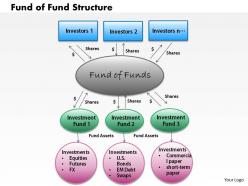
Fund of fund structure powerpoint presentation slide template





Try Before you Buy Download Free Sample Product
 Impress Your
 Audience
 100%
100% Editable
 Save Hours
 of Time


Ensure balanced development with our Fund Of Fund Structure powerpoint presentation slide template. Get everyone to go along.
People who downloaded this PowerPoint presentation also viewed the following :
Fund of fund structure powerpoint presentation slide template with all 5 slides:
Gauge their attention with our Fund Of Fund Structure powerpoint presentation slide template. Decode the concern they display.

FAQs for Fund of fund structure powerpoint
So basically you get instant diversification since you're buying into a bunch of different fund managers at once instead of being stuck with just one guy's strategy. Pretty neat, right? Plus you can access those fancy institutional funds that normally require like $100K minimums or whatever. Downside is the fees stack up - you're paying the fund of funds fee on top of all the underlying fund fees, which honestly kinda sucks. But for most people the diversification is worth it. I'd definitely check what you're actually paying in total fees before diving in though.
So Fund of Funds handle this by spreading out their redemption schedules - some monthly, some quarterly. That way they're not screwed if one fund suddenly locks up. They also try to keep cash buffers, though that's tough when everyone's freaking out at once. Honestly, the whole point is giving you better liquidity than if you went directly into individual hedge funds. But don't expect instant access when markets are imploding - you're still looking at 30-90 days minimum. My cousin learned this the hard way in 2020.
So for fund of funds - first thing, check out the manager's track record and how they actually pick the underlying funds. The fees are gonna bite you since you're paying double layers, which honestly sucks but whatever. You want good diversification across different strategies and regions, plus make sure the liquidity terms work for you. Main thing though? Figure out if this manager is actually adding real value or just shuffling your money around. Because if they're not bringing something special to the table, those extra fees aren't worth it.
Yeah so with fund of funds you're basically getting hit twice on fees. The main fund charges you maybe 1%, then each fund inside it has their own fees too - like 0.8% on average. So you're paying around 1.8% total, which honestly kinda sucks for returns. But here's the thing - you get diversification without having to do all that research yourself. I mean, some people are into that convenience. Just don't forget to calculate those combined costs when you're looking at how well it's actually performing for you.
So asset allocation is basically how Fund of Funds managers split up the money between different underlying funds - different sectors, regions, all that stuff. It's like your investment recipe, which sounds cheesy but honestly makes sense. This directly affects your risk and returns, plus how much diversification you actually get. Good allocation smooths out the crazy market swings while still letting you capture gains from multiple areas. The main thing? Make sure their allocation style actually fits your timeline and risk comfort level. That's literally what determines if the strategy works for you or not. Otherwise you're just throwing money at something random.
So fund of funds basically spread your money across tons of different funds instead of just picking one. Like diversification but way more intense. One fund tanks? No big deal because you've got like 20 others holding you up. You're getting exposure to different managers, styles, sectors - the whole nine yards without having to research each one yourself. Honestly pretty convenient if you're lazy like me. Only downside is you're paying fees on top of fees, which can add up fast. Just make sure the extra safety net is actually worth those costs eating into your returns.
Yeah so Fund of Funds are tricky - you're basically doubling down on market moves, good or bad. During rough patches, all your underlying funds usually tank together. So much for diversification, right? The fee structure is brutal too since you're paying managers who are paying other managers. Bull markets are different though - you get access to tons of strategies catching various opportunities. Just heads up, volatility will probably be higher than you expect. Oh and definitely dig into what the actual underlying managers are doing before you jump in.
So they start by running numbers - performance, risk, fund size, all that stuff. Then comes the real work: deep dives into the managers, their strategies, how stable their teams are. They'll actually visit the offices and call up other investors for references. Honestly, some of these due diligence processes are ridiculous - we're talking months sometimes. It's like they're hiring a CEO but for way more money. The whole thing hinges on trusting someone else to pick good investments for you, which is kinda wild when you think about it. Just make sure you get what their criteria actually are first.
Double taxation is gonna bite you with Fund of Funds. The underlying funds throw off taxable income, then the FoF creates more taxable events buying and selling shares. It's messy as hell honestly. K-1s instead of clean 1099s are likely too, especially if there's partnerships or alternative stuff underneath. Distribution timing? Totally unpredictable since you're dealing with multiple fund managers making decisions. My cousin got burned by this last year - definitely talk to your accountant first before putting serious money in.
So fund of funds are like investment buffets where you pick different plates based on your risk tolerance. Conservative ones stick to stable, boring stuff. Aggressive picks go for high-growth but volatile funds. Some automatically rebalance as you get older, which is honestly pretty convenient. You get instant diversification across tons of fund managers without doing all that research yourself - and trust me, that research gets tedious fast. Just find ones that match your timeline and whatever level of market swings won't make you panic.
You're getting hit with double fees when you invest in fund of funds - paying both the main manager AND every underlying fund manager. That fee drag usually costs you 1-2% per year compared to just buying the funds directly. Honestly, it adds up fast over time. Some fund of funds managers are worth it if they're really good at picking winners, but most aren't. I'd compare the actual net returns after all fees are taken out - don't look at the gross numbers. If you can do the research yourself, you'll probably come out ahead going direct.
Dude, the tech stuff is totally changing how Fund of Funds pick investments. AI can now screen thousands of managers and catch red flags automatically - way better than waiting around for quarterly reports. You get real-time tracking of everything, plus way smarter portfolio construction. The whole industry's getting more transparent, which is honestly overdue. Trading patterns, risk analysis, rebalancing - it's all data-driven now. My cousin works at one of these funds and says they'd be screwed without these tools. Don't sleep on this if you're in the space because everyone else is already using it.
Dude, Fund of Funds are a compliance nightmare honestly. Double taxation hits you hard, plus you're dealing with disclosure requirements from your fund AND all the underlying ones. The '40 Act stuff is brutal if you're in the US. Due diligence becomes this massive headache because you're basically vouching for every single manager's compliance - talk about stress. Oh and don't get me started on liquidity issues. Different funds have totally different redemption periods so timing gets weird fast. Seriously though, hire solid legal and compliance people from day one. You can't just figure this out as you go.
Track your fund's returns against a blended benchmark of whatever asset classes it holds - that's the real test. Sharpe ratio and max drawdown over 3-5 years will tell you if you're actually getting smoother returns for those extra fees. Honestly, most people forget to check if the manager is picking good funds or just getting lucky with timing. Diversification should mean less wild swings, so make sure that's happening. I'd review quarterly but don't panic over one bad stretch. The whole point is paying more for steadier performance, right?
Honestly, the biggest issue is you're paying double fees - their management fee plus whatever each underlying fund charges. That shit adds up fast. You're also giving up control since they're picking everything for you, which might not match what you actually want or need. It's kinda like hiring someone to grocery shop when you could just do it yourself, you know? Less transparency too since you can't see the actual holdings directly. Pretty convenient though, so just weigh whether that's worth the extra cost.
-
Professional and unique presentations.
-
Attractive design and informative presentation.