

Fundraising Strategy To Raise Capital For Startup Powerpoint Presentation Slides





Try Before you Buy Download Free Sample Product
 Impress Your
Audience
 100%
Editable
 Save Hours
of Time


A fundraising strategy can help the organization formulate a plan for raising market funds and help startups compare and evaluate their funding options. Check out our efficiently designed presentation on Fundraising Strategy to Raise Capital for Startup. This PPT showcases the need to raise funds from the market and estimate the net funding required for the organization. It provides sources for raising funds from debt financing and shows the advantages and disadvantages of debt as an option for fundraising. The PowerPoint offers an overview of fundraising using equity financing. It also showcases drawbacks and compares equity fundraising options based on startup failure rate. Furthermore, the PPT includes a process of raising capital using venture capitalist financing. It also illustrates raising funds impact on shareholding patterns and financial ratios. Lastly, it showcases return expectations and strategies to exit from a startup for investors. Download our 100 percentage editable and customizable template, which is also compatible with Google Slides.
People who downloaded this PowerPoint presentation also viewed the following :
Content of this Powerpoint Presentation
Slide 1: This slide displays the title Fundraising Strategy to Raise Capital for Startup.
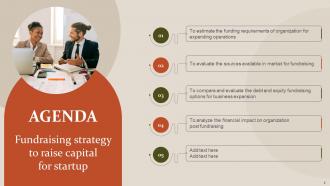
Slide 2: This slide displays the title AGENDA.
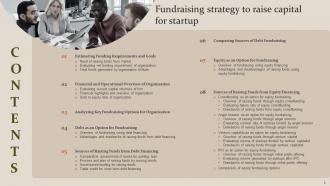
Slide 3: This slide exhibit table of content.
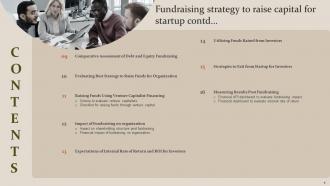
Slide 4: This slide exhibit table of content.
Slide 5: This slide exhibit table of content- Estimating Funding Requirements and Goals.
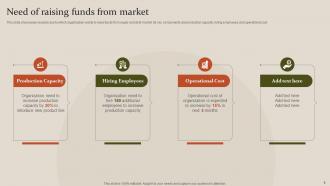
Slide 6: This slide showcases reasons due to which organization wants to raise funds from equity and debt market.
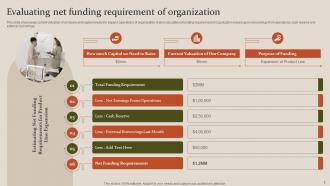
Slide 7: This slide showcases current valuation of company and capital needed to expand operations of organization.
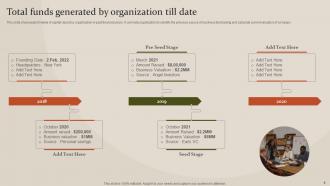
Slide 8: This slide showcases timeline of capital raised by organization in past financial years.
Slide 9: This slide exhibit table of content- Financial and Operational Overview of Organization.
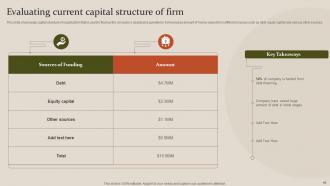
Slide 10: This slide showcases capital structure of organization that is used to finance the company’s assets and operations.
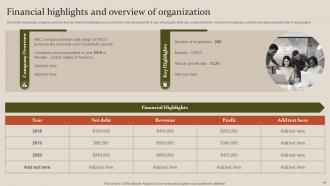
Slide 11: This slide showcases company overview and key financial highlight such as net debt, revenue and profit.
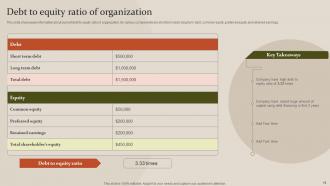
Slide 12: This slide showcases information about current debt to equity ratio of organization.
Slide 13: This slide exhibit table of content- Analyzing Key Fundraising Options for Organization.
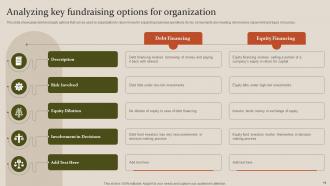
Slide 14: This slide showcases debt and equity options that can be used by organization to raise money for expanding business operations.
Slide 15: This slide exhibit table of content- Debt as an Option for Fundraising.
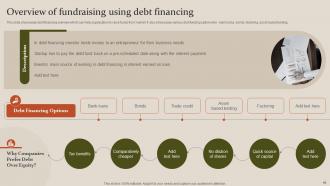
Slide 16: This slide showcases debt financing overview which can help organization to raise funds from market.
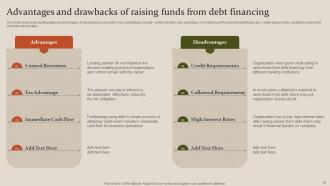
Slide 17: This slide showcases disadvantage and advantages of raising funds using debt.
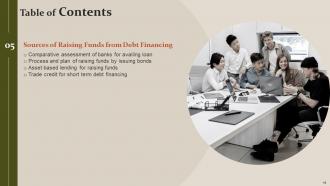
Slide 18: This slide exhibit table of content- Sources of Raising Funds from Debt Financing
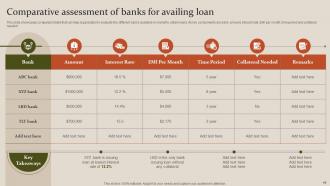
Slide 19: This slide showcases comparison table that can help organization to evaluate the different banks available in market to obtain loans.
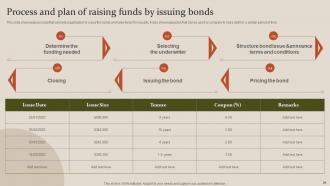
Slide 20: This slide showcases process that can help organization to issue the bonds and raise funds from public.
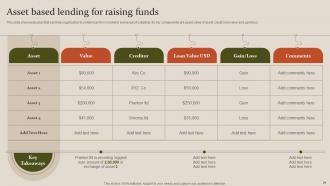
Slide 21: This slide showcases plan that can help organization to obtain loan from market in exchange of collateral.
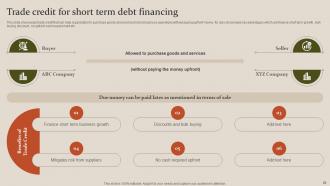
Slide 22: This slide showcases trade credit that can help organization to purchase goods and services to fund business operations without paying upfront money.
Slide 23: This slide exhibit table of content- Comparing Sources of Debt Fundraising.
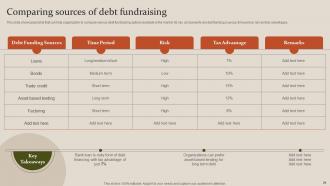
Slide 24: This slide showcases table that can help organization to compare various debt fundraising options available in the market.
Slide 25: This slide exhibit table of content- Equity as an Option for Fundraising.
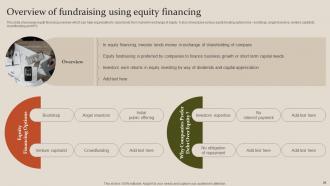
Slide 26: This slide showcases equity financing overview which can help organization to raise funds from market in exchange of equity.
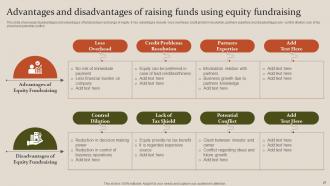
Slide 27: This slide showcases disadvantages and advantages of fundraising in exchange of equity.
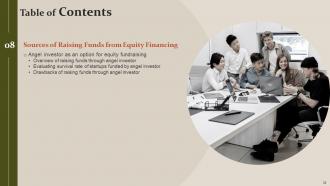
Slide 28: This slide exhibit table of content- Sources of Raising Funds from Equity Financing.
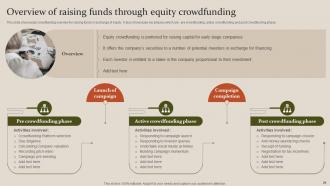
Slide 29: This slide showcases crowdfunding overview for raising funds in exchange of equity.
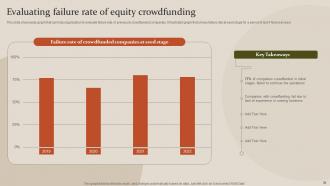
Slide 30: This slide showcases graph that can help organization to evaluate failure rate of previously crowdfunded companies.
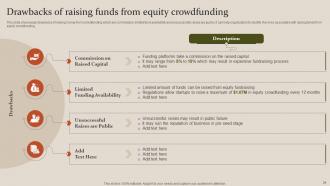
Slide 31: This slide showcases drawbacks of raising money from crowdfunding which are commission, limited fund availability and unsuccessful raises are public.
Slide 32: This slide showcase table of content that is to be discuss further.
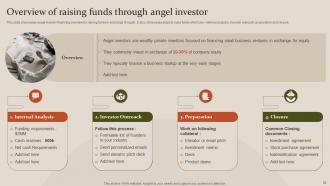
Slide 33: This slide showcases angel investor financing overview for raising funds in exchange of equity.
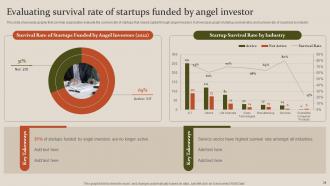
Slide 34: This slide showcases graphs that can help organization evaluate the survival rate of startups that raised capital through angel investors.
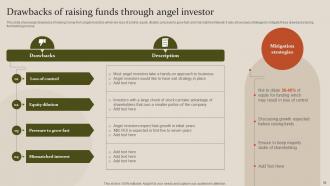
Slide 35: This slide showcases drawbacks of raising money from angel investors which are loss of control, equity dilution, pressure to grow fast and mismatched interest.
Slide 36: This slide showcase table of content that is to be discuss further.
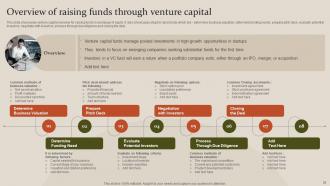
Slide 37: This slide showcases venture capital overview for raising funds in exchange of equity.
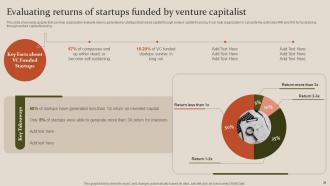
Slide 38: This slide showcases graphs that can help organization evaluate returns generated by startups that raised capital through venture capital financing.
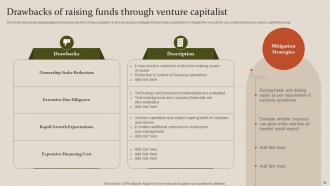
Slide 39: This slide showcases disadvantages of raising funds from venture capitalist.
Slide 40: This slide showcase table of content that is to be discuss further.
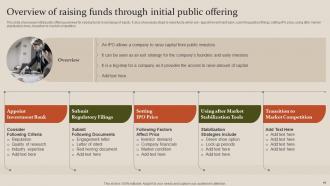
Slide 41: This slide showcases initial public offering overview for raising funds in exchange of equity.
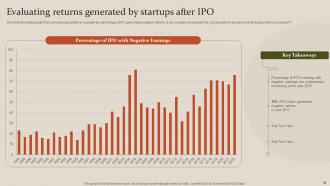
Slide 42: This slide illustrates graph that can help organization to evaluate the percentage of IPO generating negative returns.
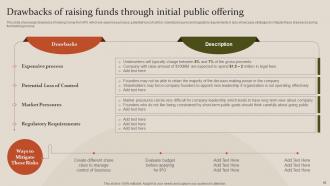
Slide 43: This slide showcases drawbacks of raising money from IPO which are expensive process, potential loss of control, market pressures and regulatory requirements.
Slide 44: This slide exhibit table of content- Sources of Raising Funds from Equity Financing.
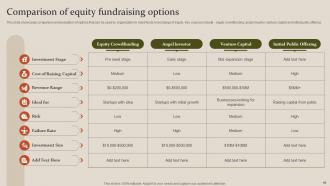
Slide 45: This slide showcases comparison and evaluation of options that can be used by organization to raise funds in exchange of equity.
Slide 46: This slide exhibit table of content- Comparative Assessment of Debt and Equity Fundraising.
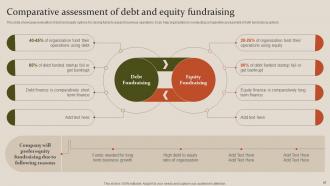
Slide 47: This slide showcases evaluation of debt and equity options for raising funds to expand business operations.
Slide 48: This slide exhibit table of content- Evaluating Best Strategy to Raise Funds for Organization.
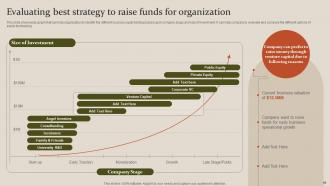
Slide 49: This slide showcases graph that can help organization to identify the different sources equity funding based upon company stage and size of investment.
Slide 50: This slide exhibit table of content- Raising Funds Using Venture Capitalist Financing
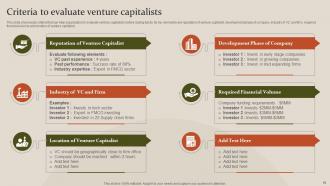
Slide 51: This slide showcases criteria that can help organization to evaluate venture capitalists before raising funds.
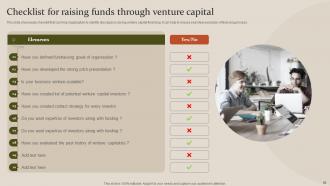
Slide 52: This slide showcases checklist that can help organization to identify discrepancy during venture capital financing.
Slide 53: This slide showcase table of content that is to be discuss further.
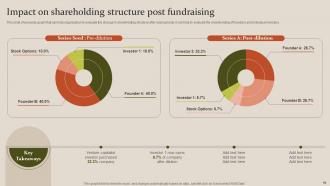
Slide 54: This slide showcases graph that can help organization to evaluate the change in shareholding structure after raising funds.
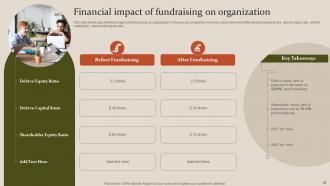
Slide 55: This slide showcases financial impact of raising funds on organization.
Slide 56: This slide exhibit table of content- Expectations of Internal Rate of Return and ROI for Investors.
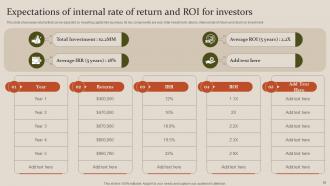
Slide 57: This slide showcases returns that can be expected by investing capital into business.
Slide 58: This slide exhibit table of content- Utilizing Funds Raised from Investors
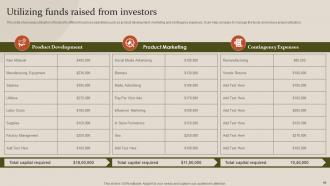
Slide 59: This slide showcases utilization of funds into different business operations such as product development, marketing and contingency expenses.
Slide 60: This slide exhibit table of content- Strategies to Exit from Startup for Investors.
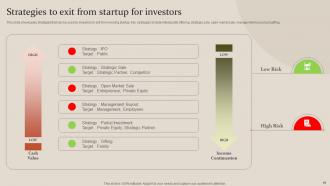
Slide 61: This slide showcases strategies that can be used by investors to exit from running startup.
Slide 62: This slide showcase table of content that is to be discuss further.
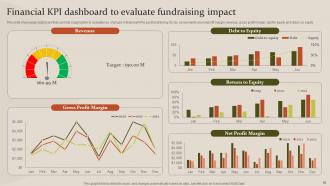
Slide 63: This slide showcases dashboard that can help organization to evaluate key changes in financial KPIs post fundraising.
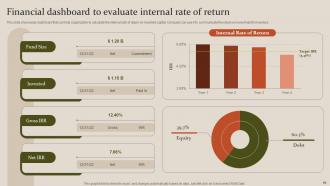
Slide 64: This slide showcases dashboard that can help organization to calculate the internal rate of return on invested capital.
Slide 65: This is the icons slide.
Slide 66: This slide presents title for additional slides.
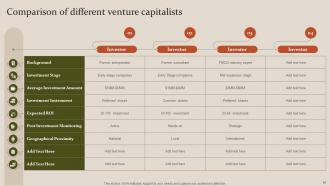
Slide 67: This slide showcase Comparison of different venture capitalists.
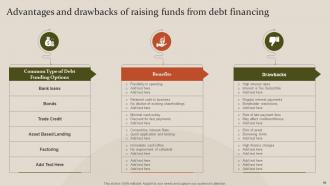
Slide 68: This slide showcase Advantages and drawbacks of raising funds from debt financing.
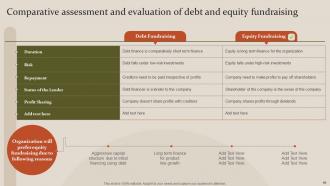
Slide 69: This slide showcase Comparative assessment and evaluation of debt and equity fundraising
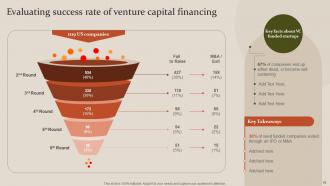
Slide 70: This slide showcase Evaluating success rate of venture capital financing.
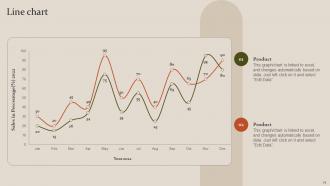
Slide 71: This slide exhibits yearly profits stacked line charts for different products.
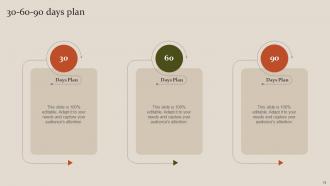
Slide 72: This slide depicts 30-60-90 days plan for projects.
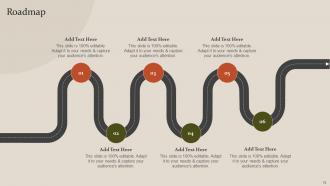
Slide 73: This slide shows roadmap of company.
Slide 74: This slide display Venn.
Slide 75: This slide exhibits yearly timeline of company.
Slide 76: This slide showcase Mind map.
Slide 77: This slide depicts posts for past experiences of clients.
Slide 78: This is thank you slide & contains contact details of company like office address, phone no., etc.
Fundraising Strategy To Raise Capital For Startup Powerpoint Presentation Slides with all 83 slides:
Use our Fundraising Strategy To Raise Capital For Startup Powerpoint Presentation Slides to effectively help you save your valuable time. They are readymade to fit into any presentation structure.
















FAQs for Fundraising Strategy To Raise Capital For Startup
So you'll need four key things: clear goals (like how much cash and what for), solid donor research, multiple ways to reach people, and a timeline with checkpoints. Most people totally bomb the research part though - they just spam everyone instead of finding the right targets. Tailor your messaging for different donor groups, mix up events with digital stuff and direct asks. Oh and build in follow-ups because donors usually need several touches before they bite. I'd start with your timeline first, then figure out when everything else needs to happen. That backward planning thing actually works.
Look at who's already giving to you - their age, income, why they care about your cause. Find people who look similar but aren't donating yet. People who benefit from your work are obvious targets too, plus their friends and family. I spend way too much time on LinkedIn stalking potential donors, but it works! Check wealth indicators and what other causes they support through databases and social media. Make profiles of your ideal donors. Test different messages with small groups first. Don't try appealing to everyone - being specific beats casting a wide net every time.
Oh man, storytelling is everything for fundraising! Donors connect way better with one kid's story than "we helped 500 students" - numbers just don't hit the same. Focus on individual stories with specific details that show real change happening. Structure matters too: problem, solution, impact. Super straightforward but it works. Start collecting these stories from people you've helped right now and build up a good collection. Trust me, you'll need different ones for different campaigns. People remember stories, not stats - that's just how our brains work.
Honestly, social media is a game-changer for fundraising because it gets your story in front of way more people. You can post real photos and videos showing your actual impact - that visual stuff hits different than just text, you know? Facebook and Instagram have those donation buttons built right in, which makes it dead simple for people to give. Don't just constantly ask for money though, that's annoying. Mix in real stories about who you're helping. Figure out where your potential donors actually hang out online first. Then maybe do like a content calendar or whatever - I always forget to post consistently but it really does help when you stay active.
Look at both money stuff and engagement - you need the full picture. Revenue per donor and retention rates are obvious ones. But honestly, engagement metrics like email opens and event turnout are way more predictive than most people realize. Cost per dollar raised is huge too. Don't forget donor acquisition costs and how gift sizes are trending. The trick? Keep your dashboard dead simple - maybe 5-7 metrics you'll actually check monthly. I've seen too many orgs build these elaborate tracking systems that nobody ever uses. Start small, then add more later.
Basically you want to spread your funding around so you're not screwed if one source dries up. Mix it up - individual donors, grants, corporate sponsors, events, maybe some earned revenue too. I learned this the hard way when a "guaranteed" major donor bailed on us last minute (still bitter about that tbh). Short sentences work. Longer ones keep things interesting when you're explaining the whole strategy. Don't put everything on one funder, even if they seem super reliable right now. Map out what you've got currently and see where the holes are. Trust me, diversifying now beats scrambling later when funding disappears.
Lead with a story that hits them in the feels - real impact beats boring stats every time. Be super specific about where their money goes. I wasted months sending those generic "help our cause" letters that probably went straight to trash. Structure it: problem, your solution, proof you don't suck at this, then exactly what their donation accomplishes. Tailor each one to what gets that donor excited. Oh, and don't just end with "thanks for considering" - give them a clear next step like asking for a quick 20-minute call.
Don't just ask for money - that's where most people mess up. Companies want something back, so figure out what they actually need. Maybe it's getting their brand in front of your audience, or helping with their community goals. Do some digging on businesses that actually match what you're about. Then craft real sponsorship packages showing exactly how you'll help them. Generic "please sponsor us" emails are honestly useless. Build relationships first - hit up networking events or connect on LinkedIn. When you finally pitch, make it super clear what's in it for them. That's how you get a yes.
Stop only hitting people up when you need money - that's where most nonprofits screw up. Build actual relationships instead. Send updates showing what their donations accomplished, not just boring thank-you cards. Handwritten notes hit different, or better yet, have program recipients call donors directly. Stay in touch year-round with newsletters and volunteer stuff. Make donating easy with recurring options. Oh, and definitely segment your donor list - someone who gives $25 needs a totally different approach than your major donors. Personal touches matter way more than fancy campaigns anyway.
Honestly, tech makes fundraising way less painful. Start with one good platform that handles donations and basic donor stuff - don't overcomplicate it at first. You'll save hours on manual outreach since email automation can nurture donors without you writing individual messages constantly. CRM systems track relationships, social media amplifies your reach, and one-click payment tools make giving ridiculously easy. Data analytics show you which donors are worth focusing on (super helpful tbh). The follow-up automation alone is a game changer. Add more tools later once you figure out what actually works for your org.
Ugh, the worst mistake? Blasting pitches to random people without doing your homework first. Such a time-waster. Don't ignore small recurring donors either while chasing whales - honestly, those $25/month people are gold. Most orgs set crazy tight deadlines too (fundraising is slow as hell, just accept it). You can't just email someone out of nowhere asking for cash. Build actual relationships first. Map out who your ideal donors are, then give yourself like 12-18 months minimum. Way more realistic than whatever timeline you're probably thinking.
Skip the boring stats and tell actual stories instead. Like, "Maria can now walk to school safely" hits way harder than "we improved infrastructure" or whatever. Donors want to see real transformation, not just busy work. Match how you talk to each person too - some love detailed reports, others just want quick updates with photos. Honestly, everyone claims they "make a difference" but what does yours actually look like day-to-day? Focus on one person whose life changed because of your work. Track that story and you'll have something powerful to share next week.
Dude, you HAVE to focus on community engagement - it's literally everything for fundraising. People don't give money to organizations that just spam them with glossy mailers. They donate when they actually feel connected to what you're doing. Your engaged supporters? They're basically free marketing that actually works. Word-of-mouth beats paid ads every single time, honestly. The whole thing works because supporters start feeling like they're part of the mission instead of just... I don't know, walking wallets or whatever. Listen to what your community actually cares about first, then show them their involvement matters.
Definitely research local customs first - what crushes it in the US might totally bomb elsewhere. Like, direct asks work here but can seem super pushy in Japan where you gotta build relationships first. (Trust me, learned that one the hard way!) Religious calendars matter. So does whether people make decisions as families vs individually. Some places are all about group giving instead of targeting single donors. Your whole approach needs to shift - messaging, visuals, even event styles. Oh, and get local advisors who actually know the culture. They'll save you from stepping in it big time.
Honestly, storytelling campaigns are killing it right now - especially if you throw in some social media challenges. People eat that stuff up. Facebook's peer-to-peer thing is working really well too because nobody trusts organizations anymore, but they'll donate if their friend asks. Virtual events stuck around after COVID (thank god, because they're so much cheaper to run). Oh, and text-to-give is perfect for younger people who basically live on their phones. I'd probably start small with whatever matches how your audience actually behaves first though.
-
SlideTeam’s pool of 2Million+ PPTs has really benefited my team, everyone from the IT department to HR. We are lucky to have crossed ways with them.
-
Awesome presentation, really professional and easy to edit.