


Investor Pitch Deck For A Start Up Powerpoint Presentation Slides
Creating a pitch deck that attracts investment for new business is not a child’s play. To help you with this daunting task, we have provided content-ready investor pitch deck for a start up PowerPoint presentation slides. It will provide a brief overview of your business start up to the investors and persuade them to invest. These investment management PPT templates include slides on company overview, product service, business model, revenue model, growth strategy, marketing strategy, SWOT analysis, financial projection, and exit strategy of the investors. You can make use of this presentation to know about related topics as well, including angel funder, seed investor, private investor, investment capital, venture capital, and elevator pitch. Download pitch deck for a start up PowerPoint visuals right now. It will prove to be an essential fundraising tool for your new company. Display hard facts with our Investor Pitch Deck For A Start Up Powerpoint Presentation Slides. Put actual deeds in correct focus.
Creating a pitch deck that attracts investment for new business is not a child’s play. To help you with this daunting task,..












-

- Google Slides is a new FREE Presentation software from Google.
- All our content is 100% compatible with Google Slides.
- Just download our designs, and upload them to Google Slides and they will work automatically.
- Amaze your audience with SlideTeam and Google Slides.
-

Want Changes to This PPT Slide? Check out our Presentation Design Services
-

- WideScreen Aspect ratio is becoming a very popular format. When you download this product, the downloaded ZIP will contain this product in both standard and widescreen format.
-

- Some older products that we have may only be in standard format, but they can easily be converted to widescreen.
- To do this, please open the SlideTeam product in Powerpoint, and go to
- Design ( On the top bar) -> Page Setup -> and select "On-screen Show (16:9)” in the drop down for "Slides Sized for".
- The slide or theme will change to widescreen, and all graphics will adjust automatically. You can similarly convert our content to any other desired screen aspect ratio.
Compatible With Google Slides

Get This In WideScreen
You must be logged in to download this presentation.


Do you want to remove this product from your favourites?
PowerPoint presentation slides
100% editable graphics to match your liking. 79 deeply researched pages are available. Instantly downloadable with just a click. Suitable for standard as well as widescreen devices. Can be opened using Google Slides also. Suitable for businessmen, start-ups, entrepreneurs. Premium Customer Support provided.

People who downloaded this PowerPoint presentation also viewed the following :
Content of this Powerpoint Presentation
Slide 1: This slide introduces Investor Pitch Deck for a Start-up.
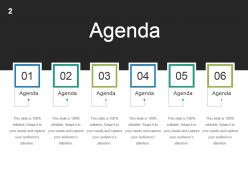
Slide 2: This is an Agenda slide. Showcase your agendas here.
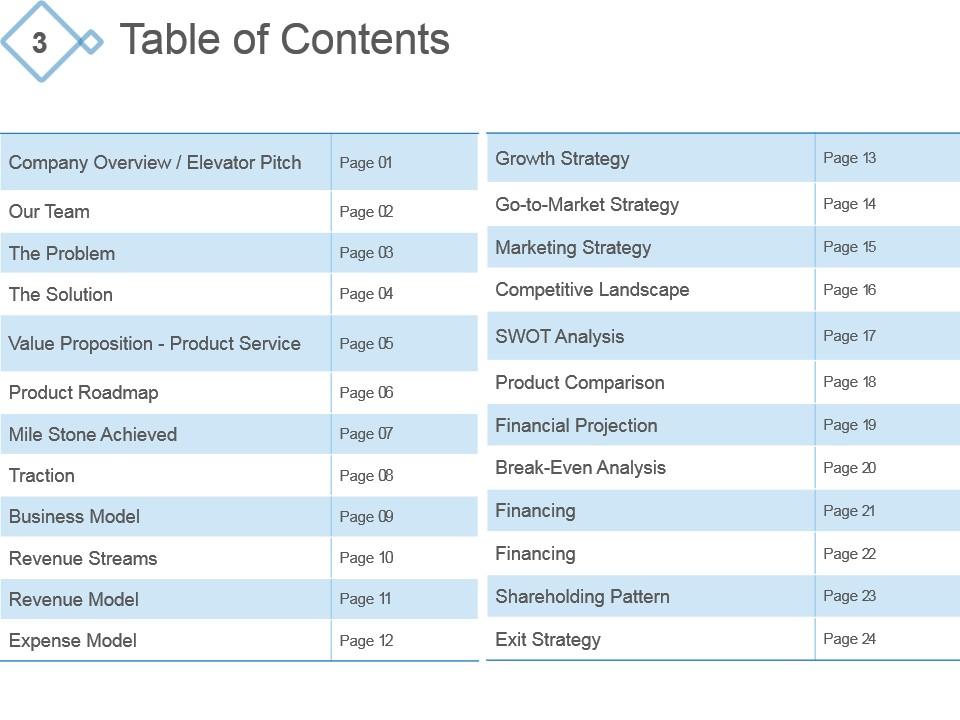
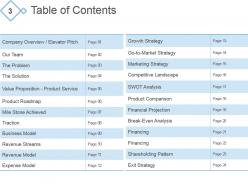
Slide 3: This slide presents Table of Contents showcasing- Company Overview / Elevator Pitch, Our Team, The Problem, The Solution Service, Value Proposition - Product Service, Product Roadmap, Mile Stone Achieved, Traction, Business Model, Revenue Streams, Revenue Model, Expense Model, Growth Strategy, Go-to-Market Strategy, Marketing Strategy, Competitive Landscape, SWOT Analysis, Product Comparison, Financial Projection, Break-Even Analysis, Financing, Use of Funds, Shareholding Pattern, Exit Strategy.
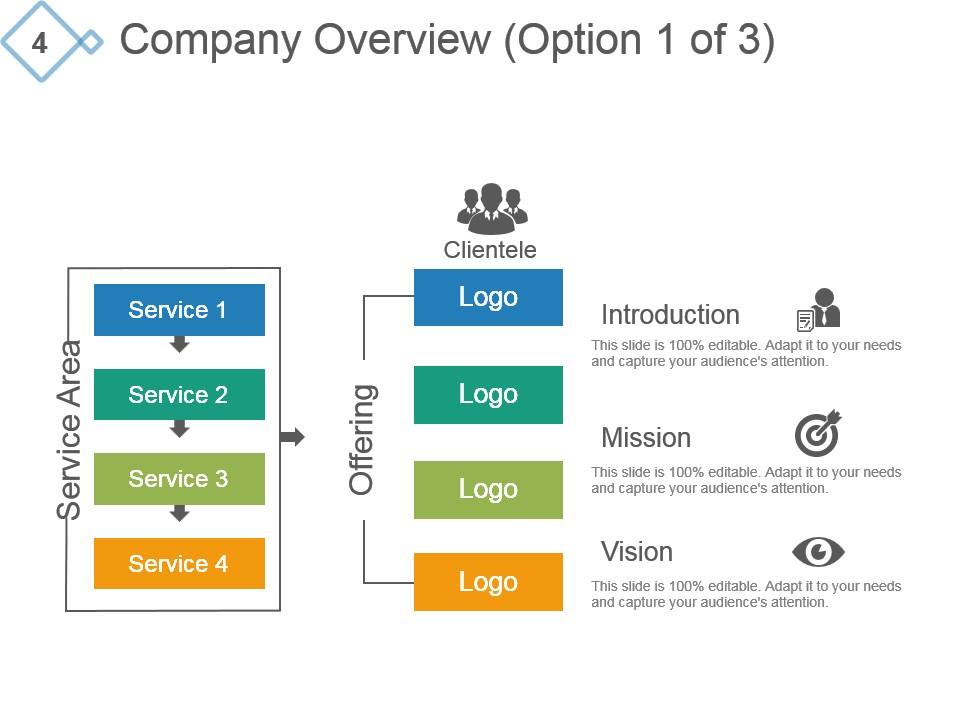
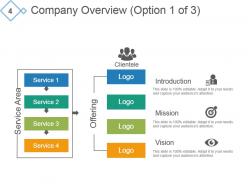
Slide 4: This is a slide on Company Overview displaying- Introduction, Mission, Our Mission & Vision, Clientele, Service Area, Logo, Offering.
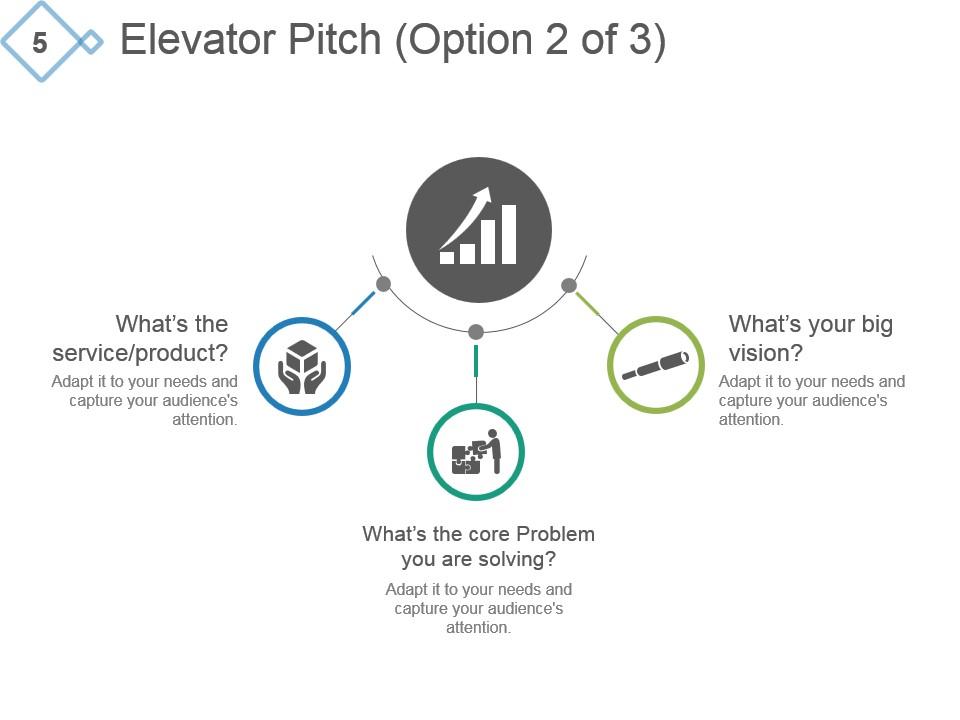
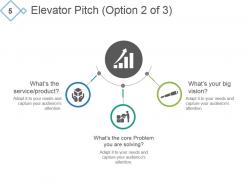
Slide 5: This is an Elevator Pitch slide showcasing- What’s the service/product? What’s the core problem you are solving? What’s your big vision?
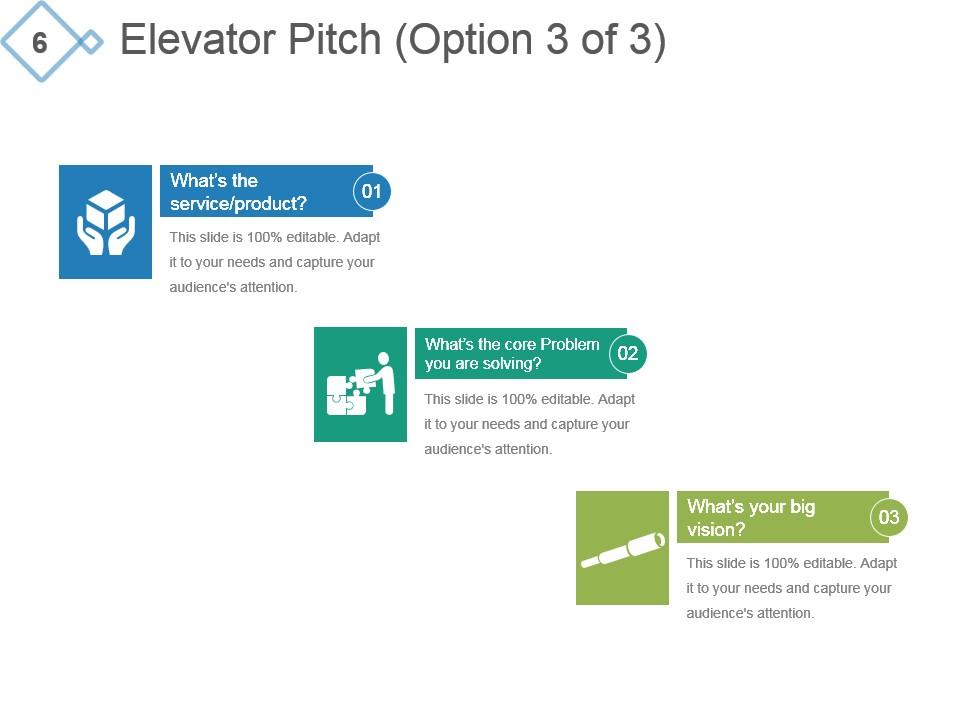
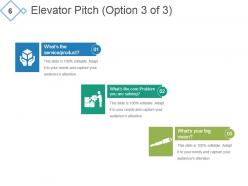
Slide 6: This slide shows the Elevator Pitch showing- What’s the core problem you are solving? What’s the service/product? What’s your big vision?
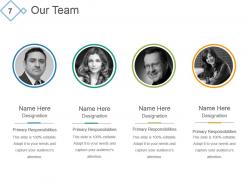
Slide 7: This slide presents Our team with names, designation and image boxes.
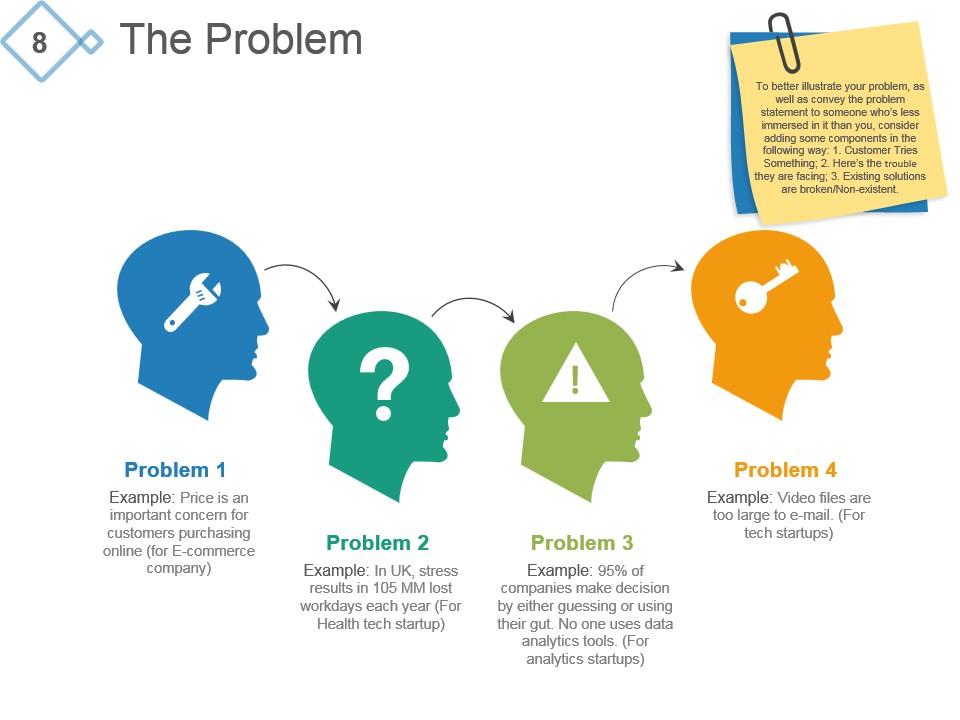
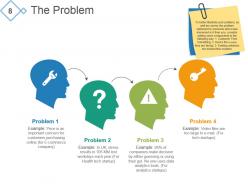
Slide 8: This slide shows The Problem to be presented and strategized about.
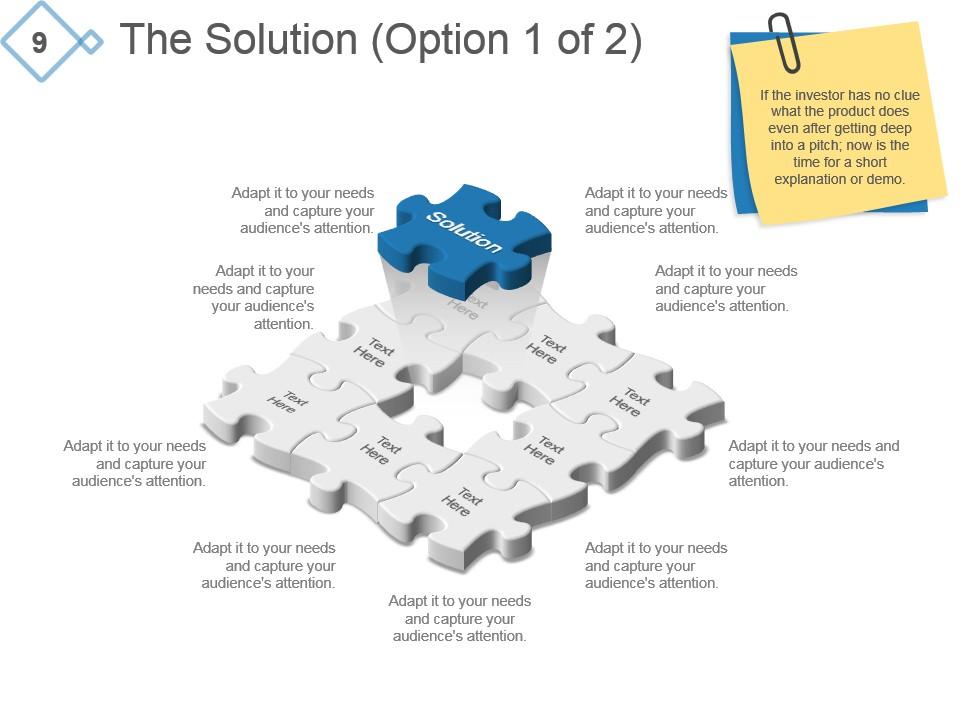
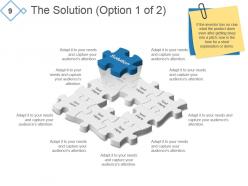
Slide 9: This slide shows The Solution to be presented and implemented. If the investor has no clue what the product does even after getting deep into a pitch; now is the time for a short explanation or demo.
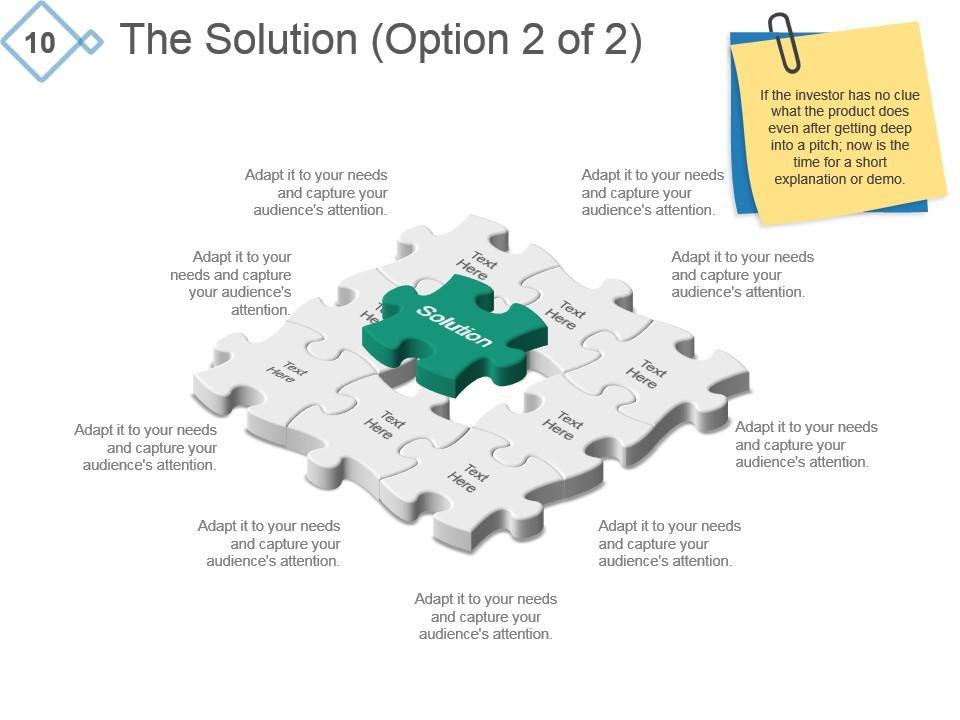
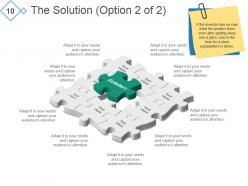
Slide 10: This slide also shows The Solution to be presented and implemented.
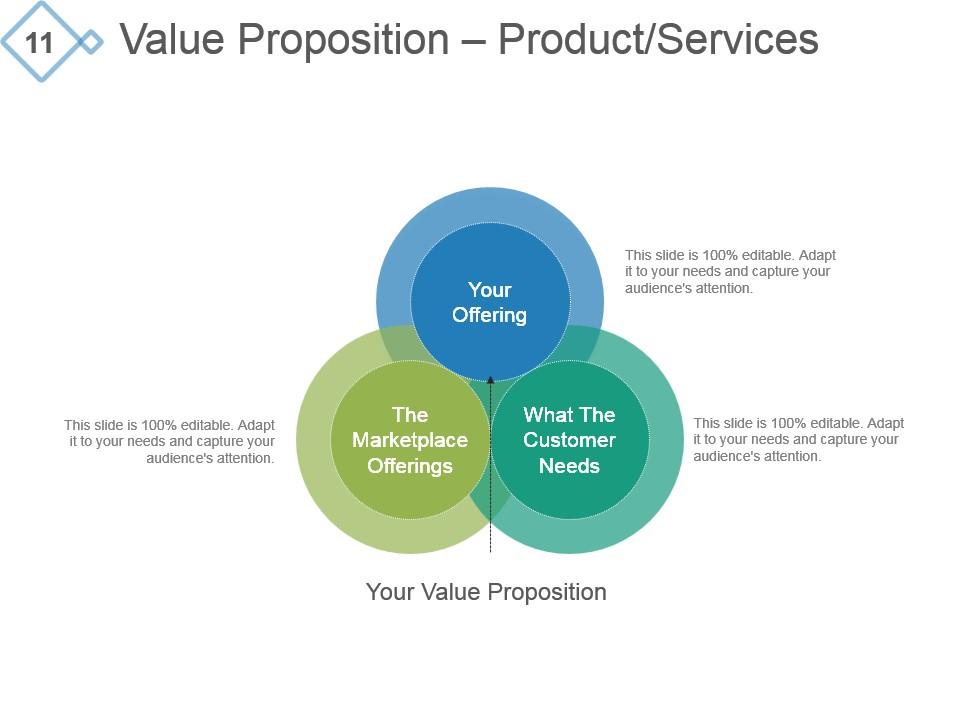
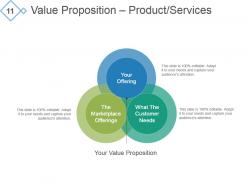
Slide 11: This slide shows the Value Proposition – Product/Services with- Your Offering, What The Customer Needs, The Marketplace Offerings, Your Value Proposition.
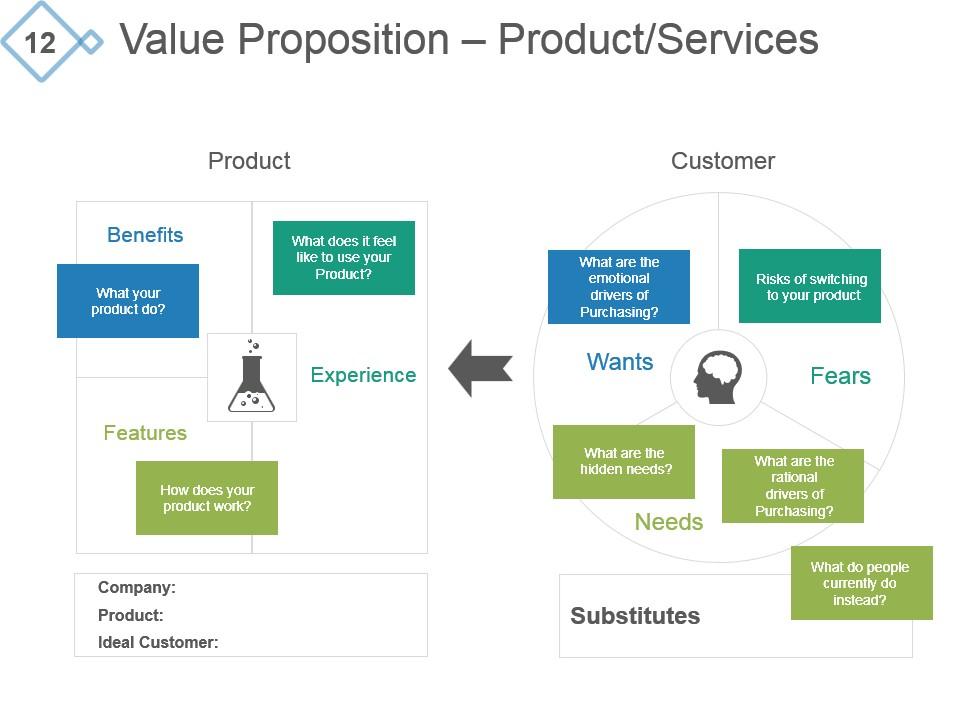
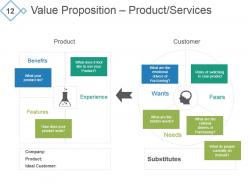
Slide 12: This slide shows Value Proposition – Product/Services displaying- Benefits, Features, Experience, Company of Product and Wants, Fears, Needs, Substitutes for Customer.
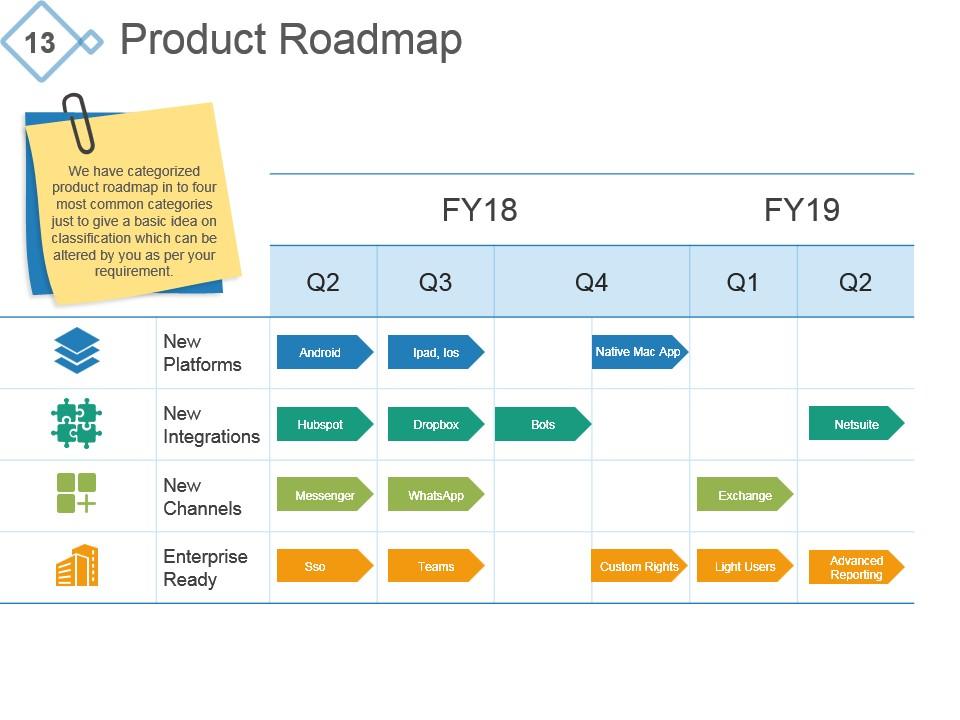
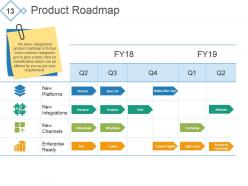
Slide 13: This slide showcases a Product Roadmap. We have categorized product roadmap in to four most common categories just to give a basic idea on classification which can be altered by you as per your requirement.
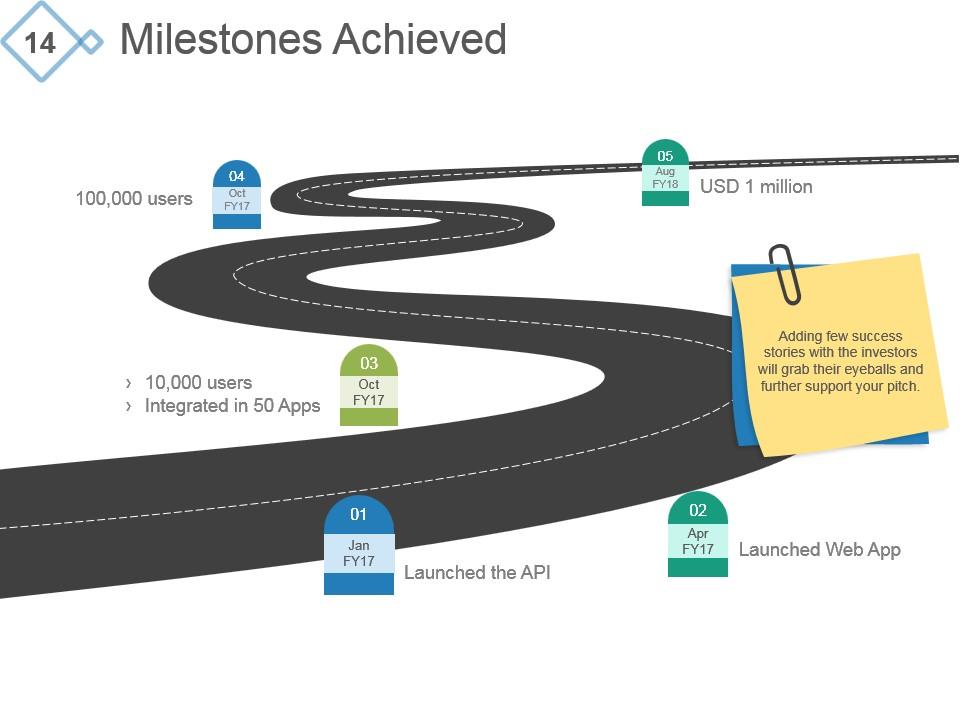
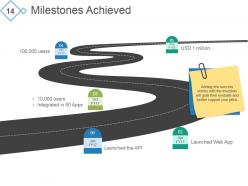
Slide 14: This slide shows Milestones Achieved (if any) to highlight fundraising aspects. Adding few success stories with the investors will grab their eyeballs and further support your pitch.
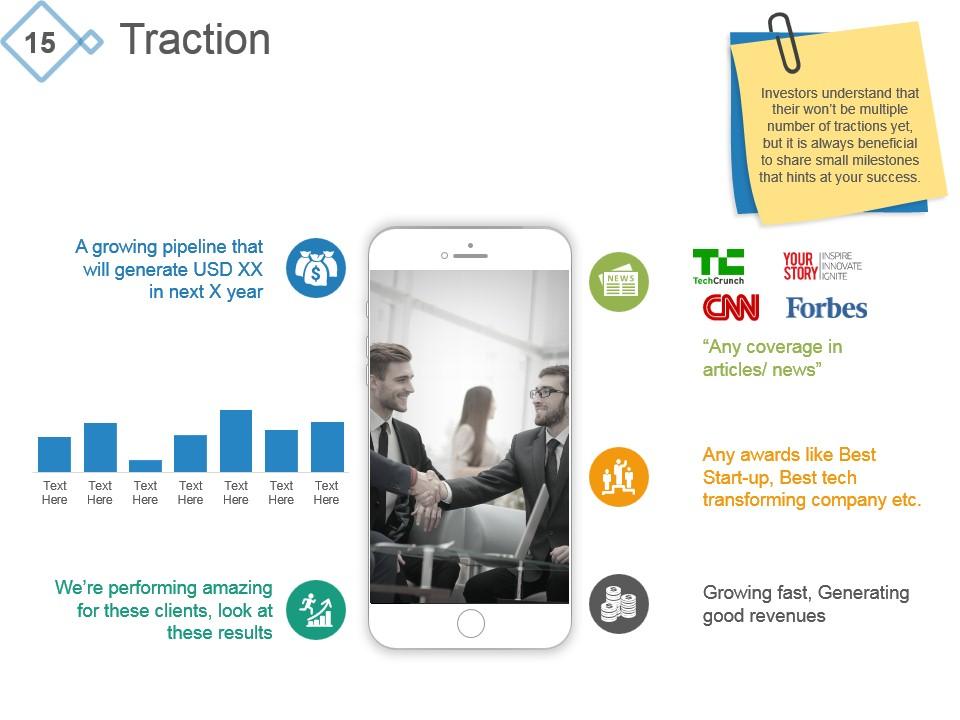
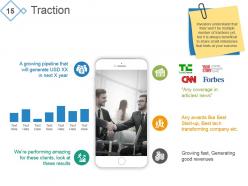
Slide 15: This slide shows Traction to present product market fit.
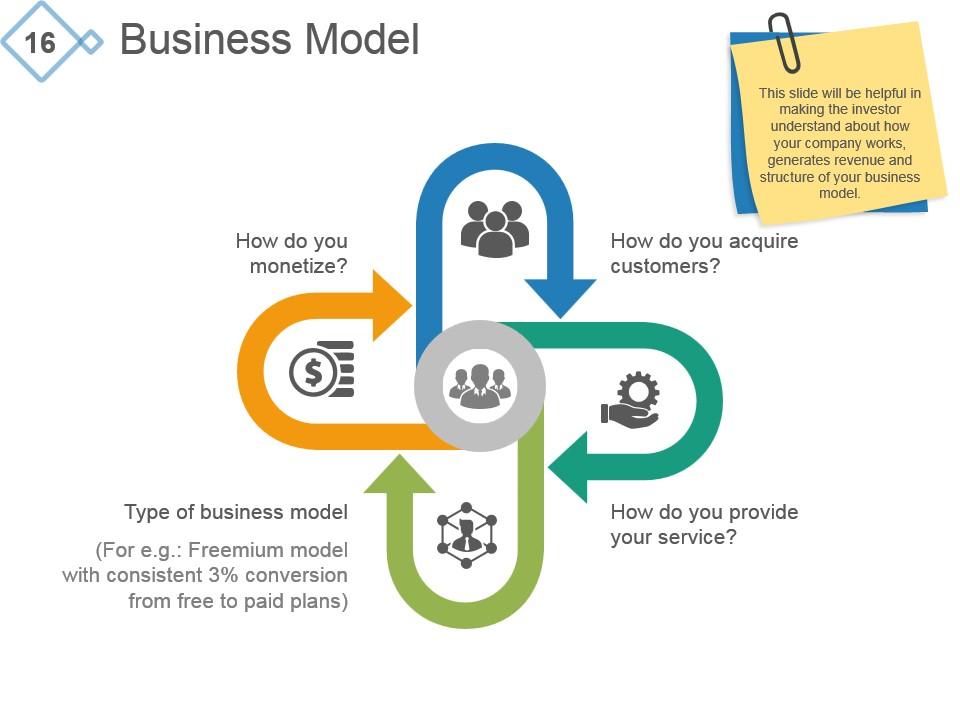
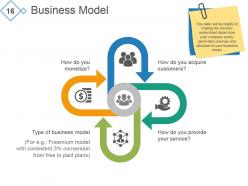
Slide 16: This slide presents a Business Model displaying- How do you provide your service? How do you acquire customers? How do you monetize? Type of business model as the main factors for understanding your business plan.
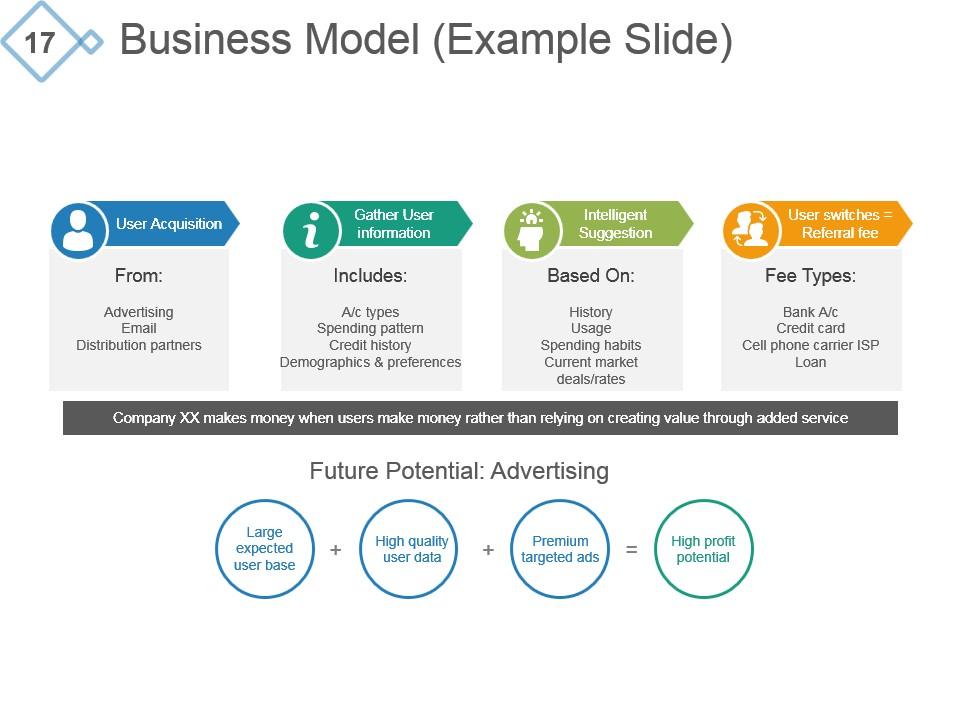
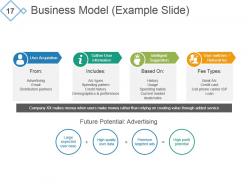
Slide 17: This slide showcases Business Model (Example Slide) displaying- From: Advertising, Email, Distribution partners, User Acquisition. Fee Types: Bank A/c, Credit card, Cell phone carrier ISP Loan, User switches = Referral fee. Includes: A/c types, Spending pattern, Credit history, Demographics & preferences, Gather User information. Based On: History, Usage, Spending habits, Current market deals/rates, Intelligent Suggestion. Future Potential: Advertising Large expected user base, High quality user data, Premium targeted ads, High profit potential.
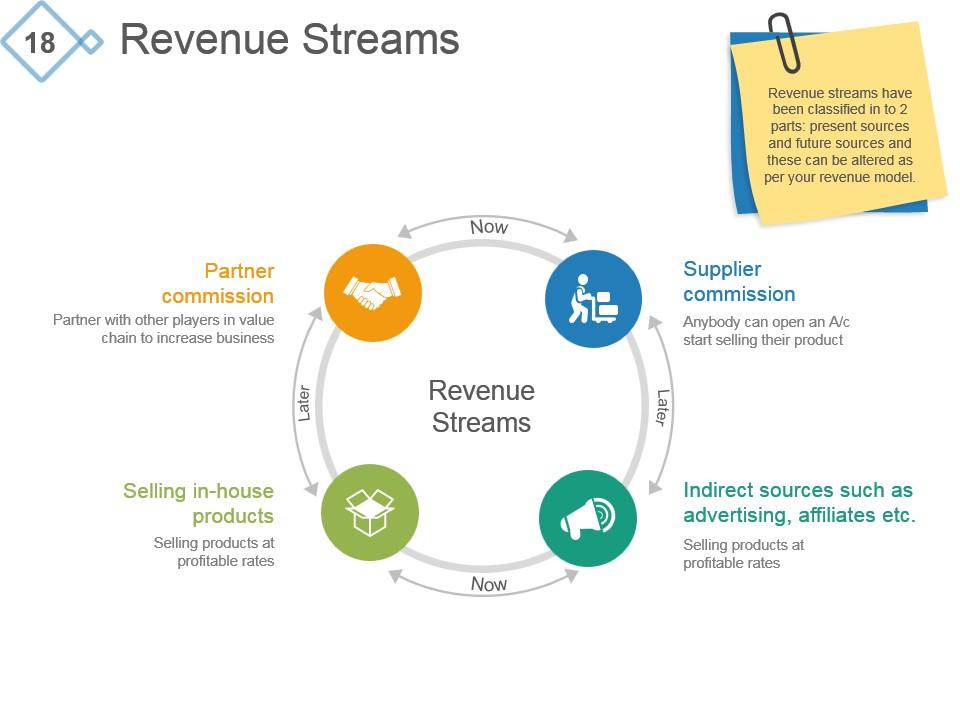
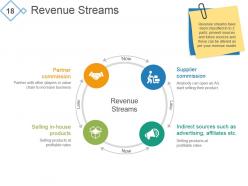
Slide 18: This slide presents Revenue Streams with the following subheadings- Partner commission, Supplier commission, Indirect sources such as advertising, affiliates etc. Selling in-house products, Revenue Streams. Revenue streams have been classified in to 2 parts: present sources and future sources and these can be altered as per your revenue model.
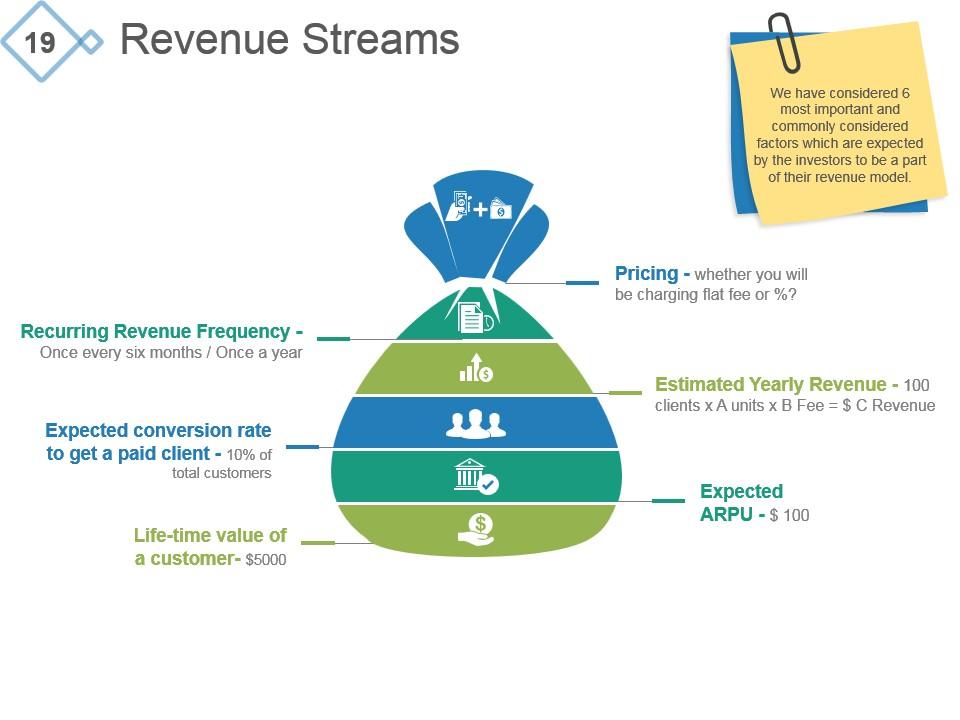
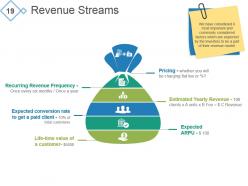
Slide 19: This slide shows Revenue Streams showing- Estimated Yearly Revenue, Pricing, Expected ARPU, Life-time value of a customer, Recurring Revenue Frequency, Expected conversion rate to get a paid client. We have considered 6 most important and commonly considered factors which are expected by the investors to be a part of their revenue model.
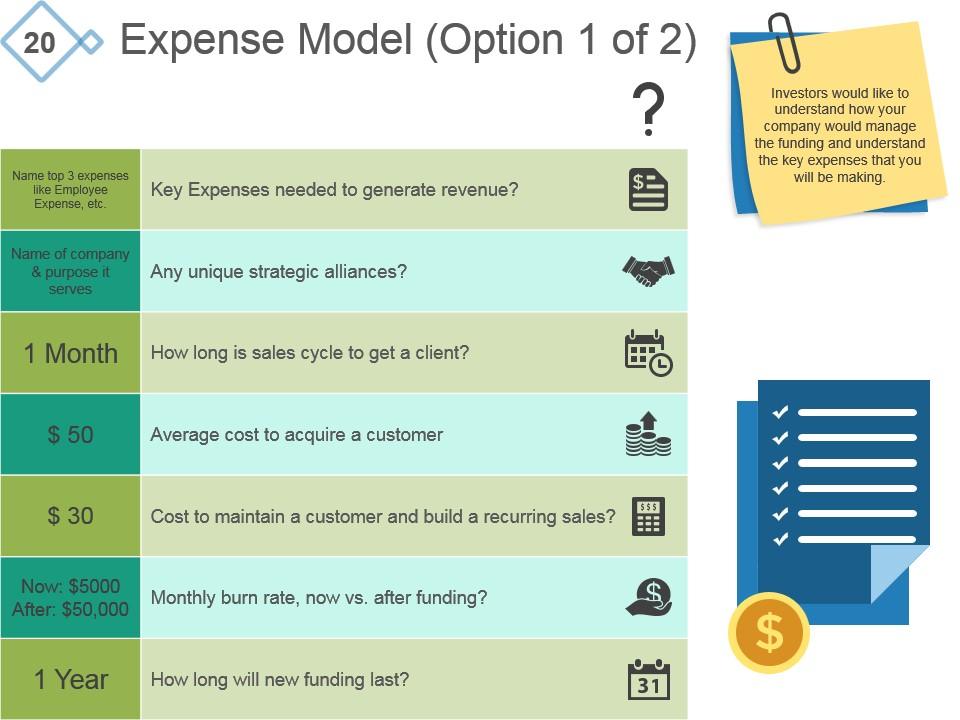
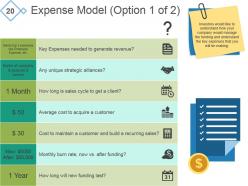
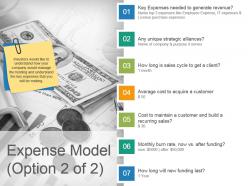
Slide 20: This slide presents an Expense Model. Investors would like to understand how your company would manage the funding and understand the key expenses that you will be making.
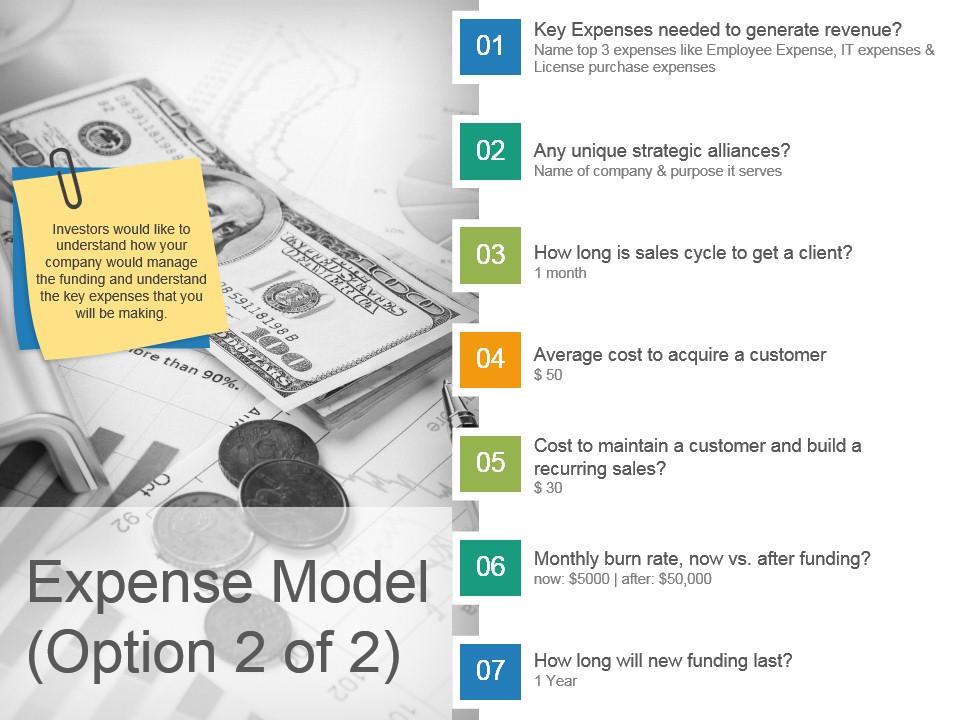
Slide 21: This slide also presents an Expense Model displaying- Key Expenses needed to generate revenue? Any unique strategic alliances? How long is sales cycle to get a client? Cost to maintain a customer and build a recurring sales? Monthly burn rate, now vs. after funding? How long will new funding last? Investors would like to understand how your company would manage the funding and understand the key expenses that you will be making.
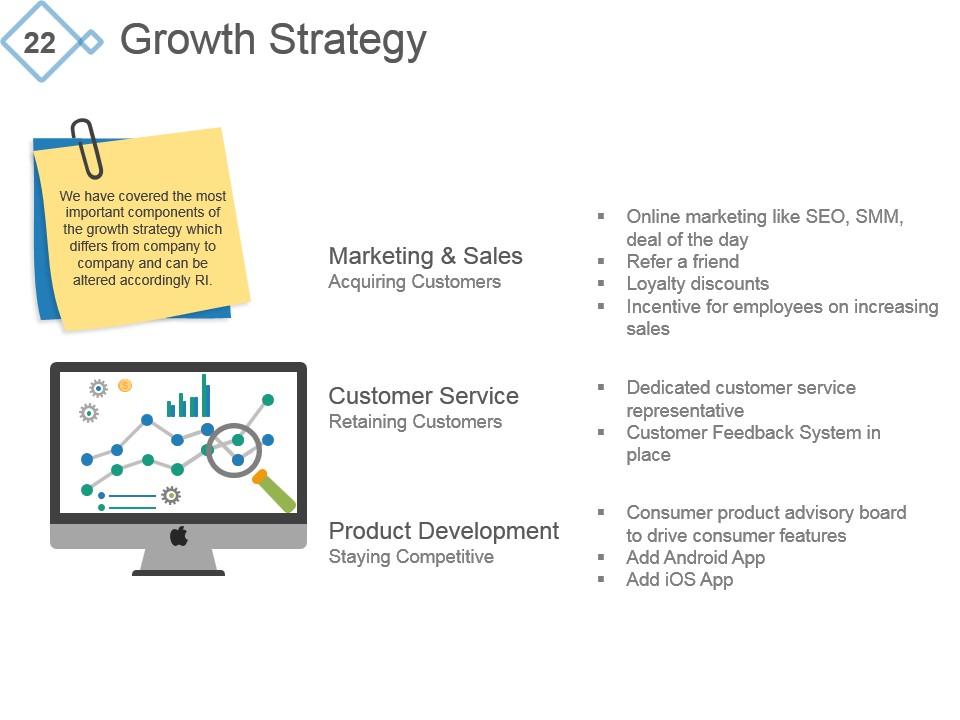
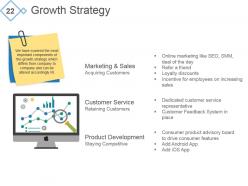
Slide 22: This slide presents Growth Strategy showing- Marketing & Sales, Customer Service, Product Development. We have covered the most important components of the growth strategy which differs from company to company and can be altered accordingly RI.
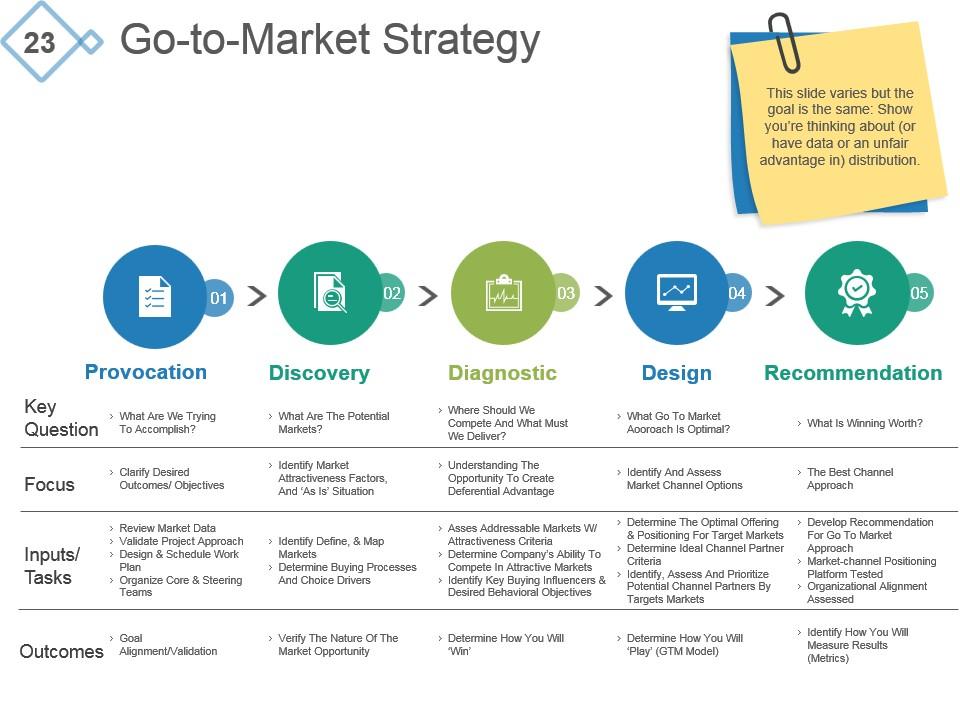
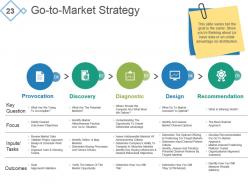
Slide 23: This slide presents Go-to-Market Strategy in tabular form.
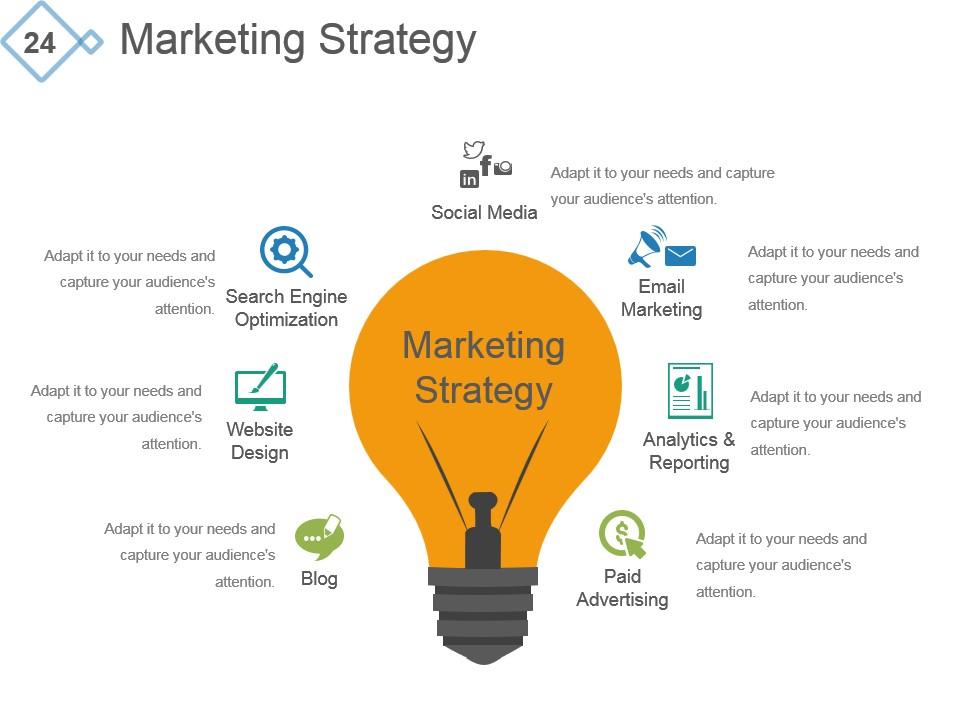
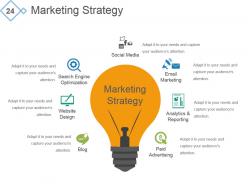
Slide 24: This slide showcases Marketing Strategy with the following subheadings- Email Marketing, Analytics & Reporting, Paid Advertising, Blog, Website Design, Search Engine Optimization.
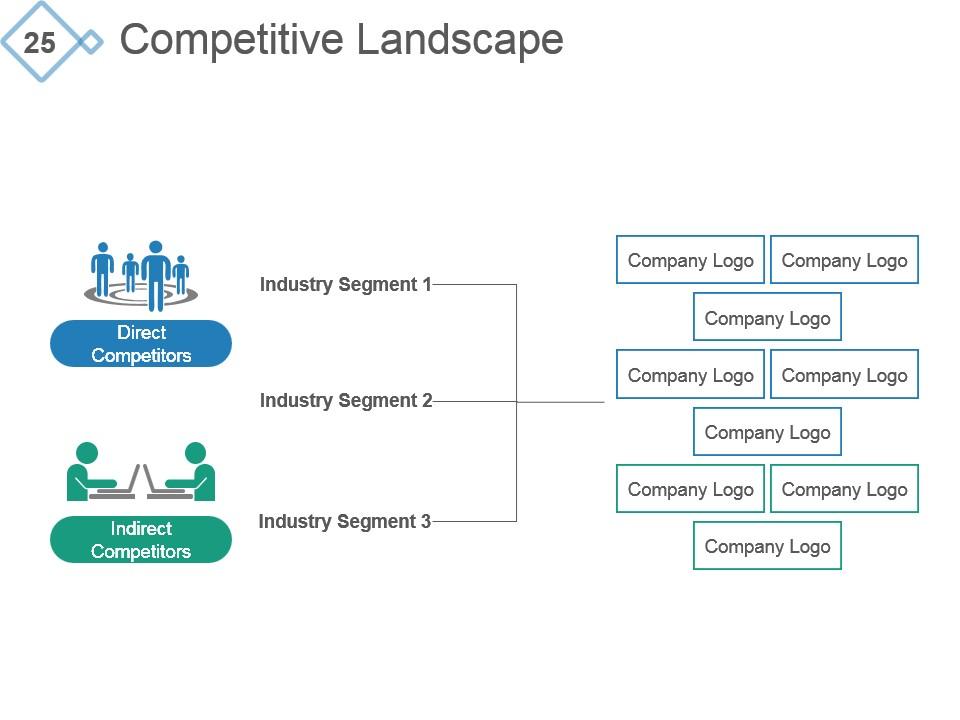
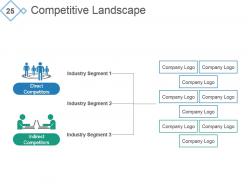
Slide 25: This slide shows Competitive Landscape showcasing- Industry Segment, Indirect Competitors, Direct Competitors.
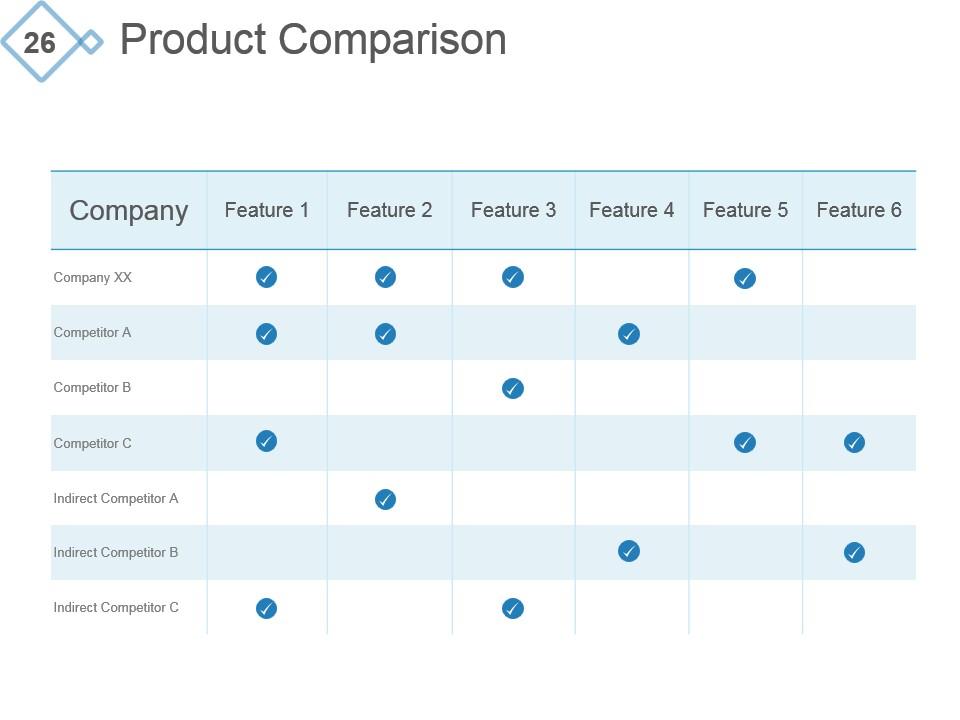
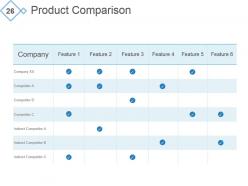
Slide 26: This slide shows Product Comparison in tabular form.
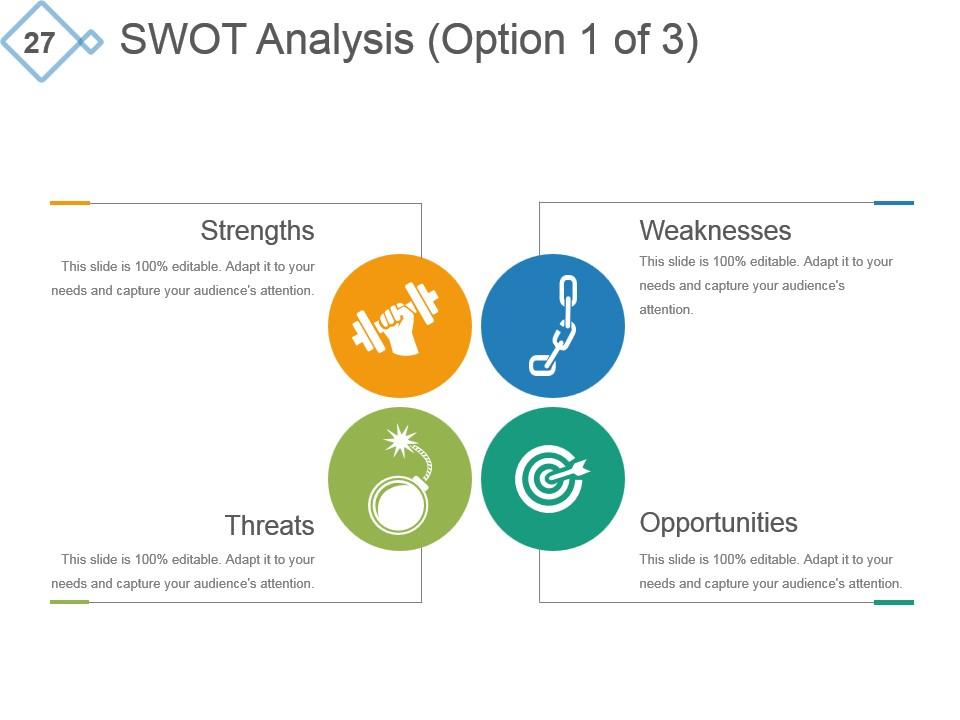
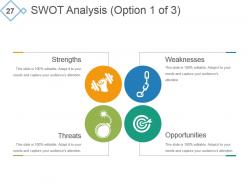
Slide 27: This is a SWOT Analysis slide in tabular form.
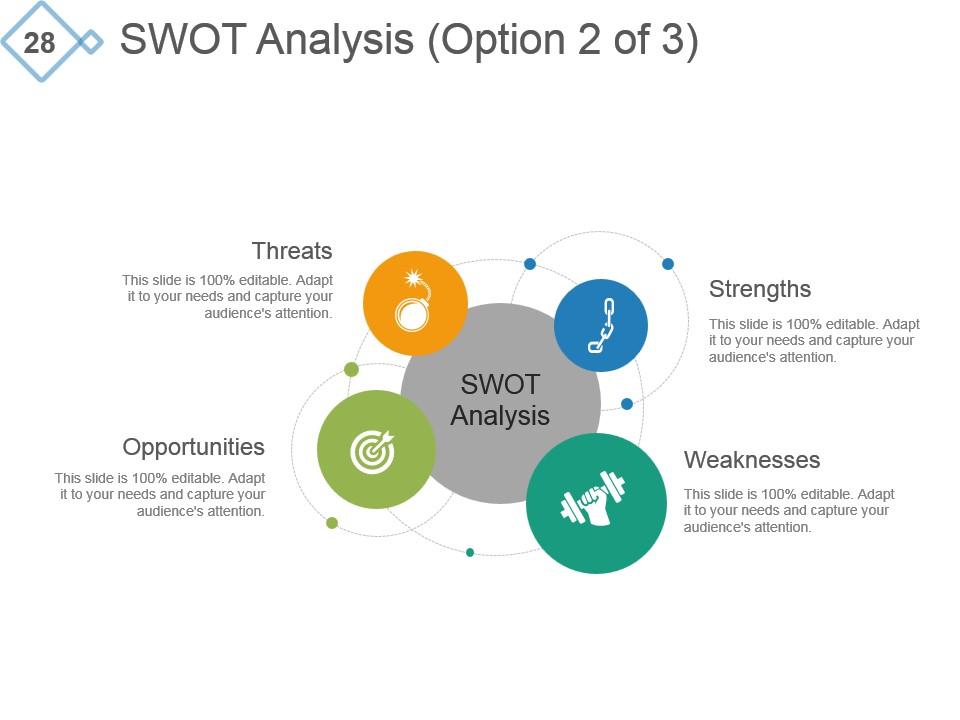
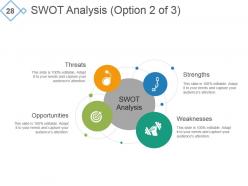
Slide 28: This is also a SWOT Analysis slide.
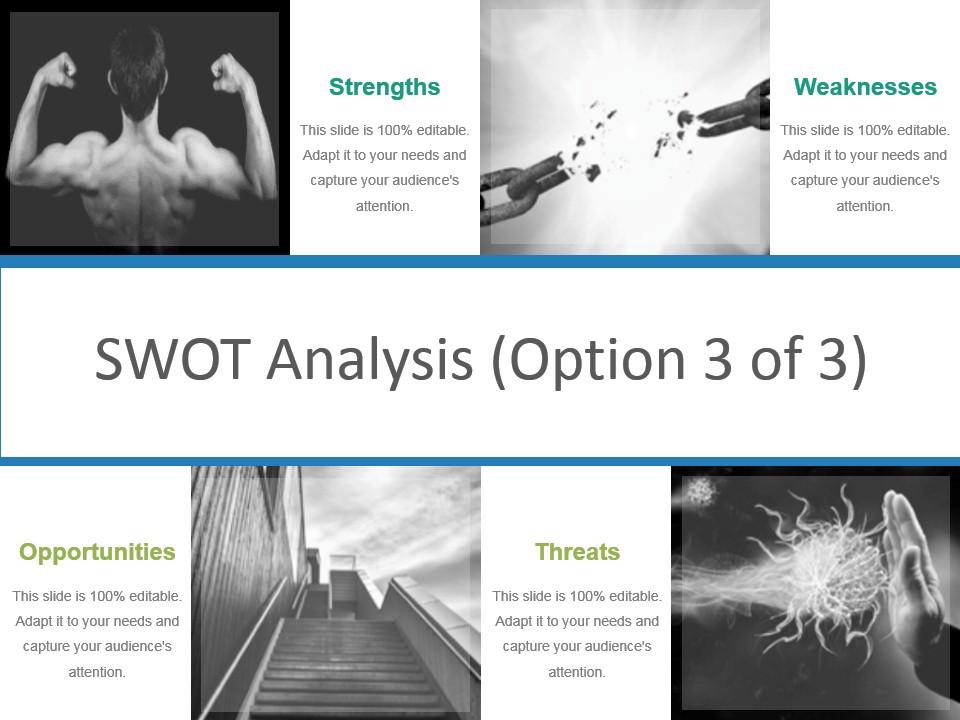
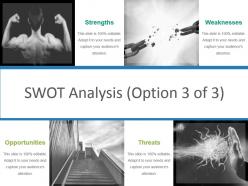
Slide 29: This slide too displays a SWOT Analysis.
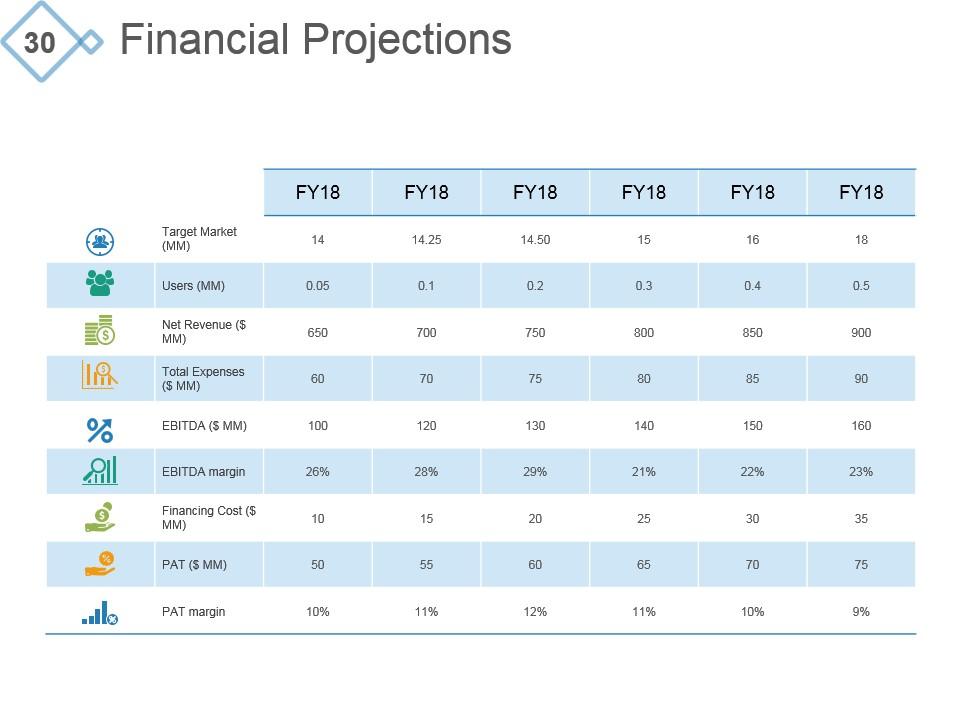
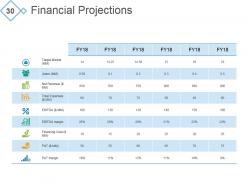
Slide 30: This slide showcases Financial Projections in tabular form.
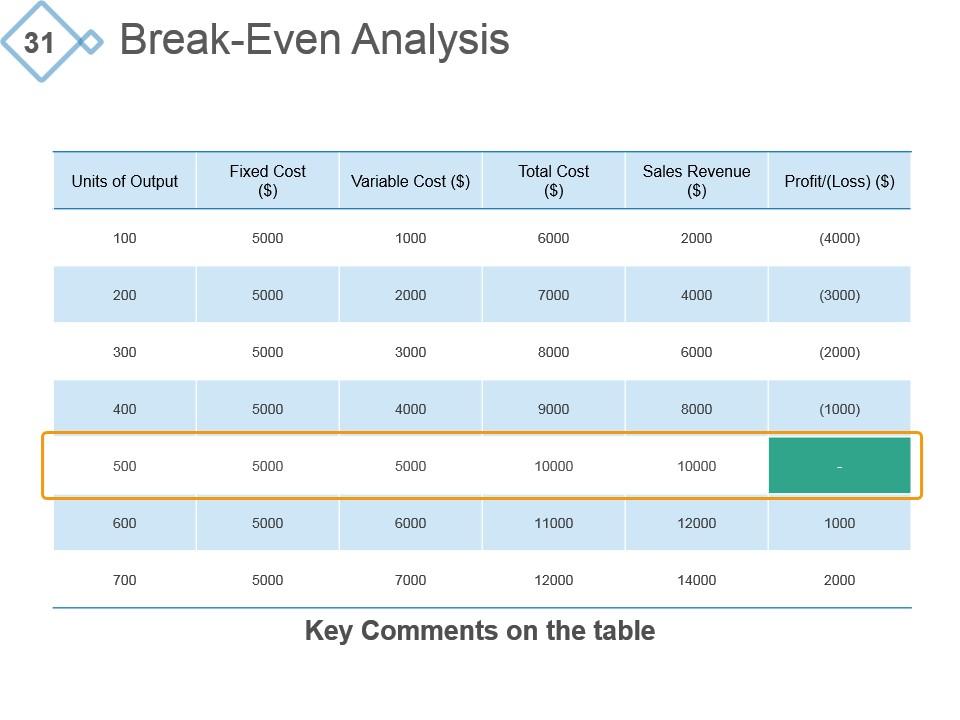
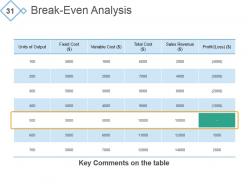
Slide 31: This slide shows a Break-Even Analysis in tabular form.
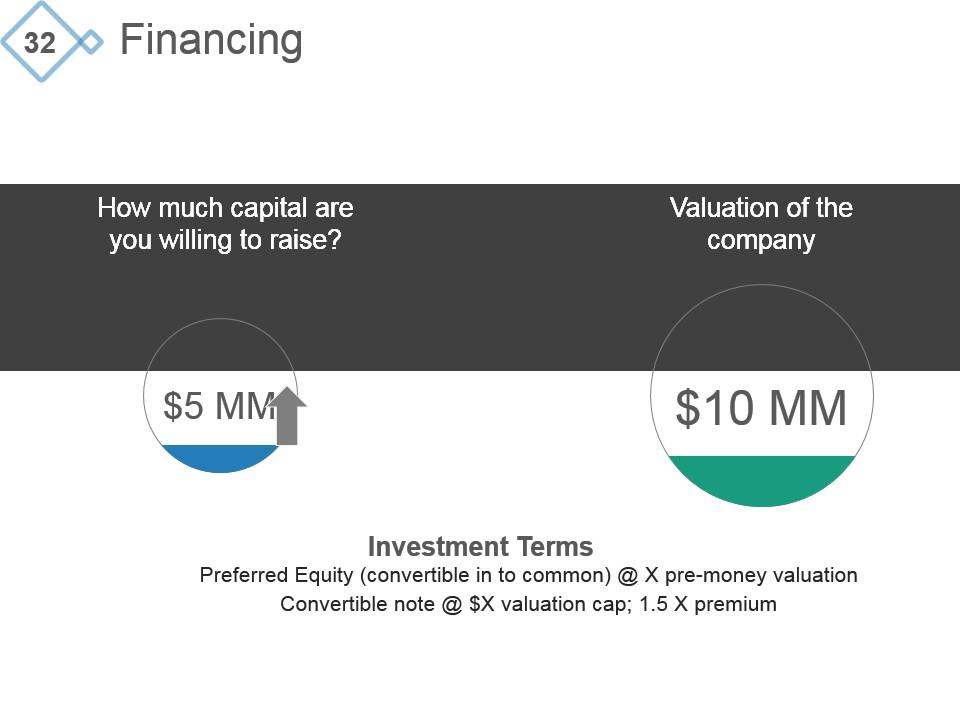
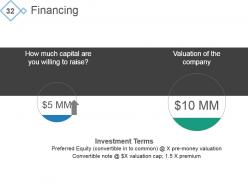
Slide 32: This slide shows Financing aspects to display how much are you willing to raise and what is valuation of the company.
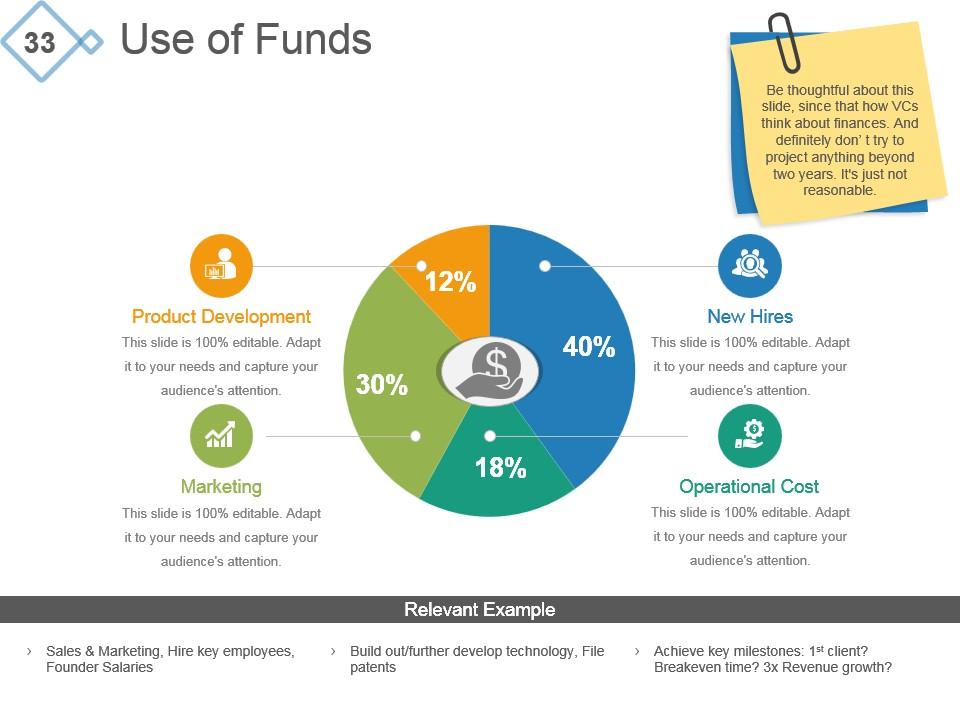
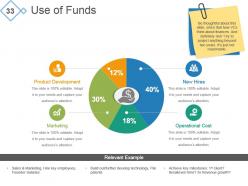
Slide 33: This slide shows Use of Funds with the following subheadings- New Hires Product Development Marketing Operational Cost Be thoughtful about this slide, since that how VCs think about finances. And definitely don’ t try to project anything beyond two years. It's just not reasonable.
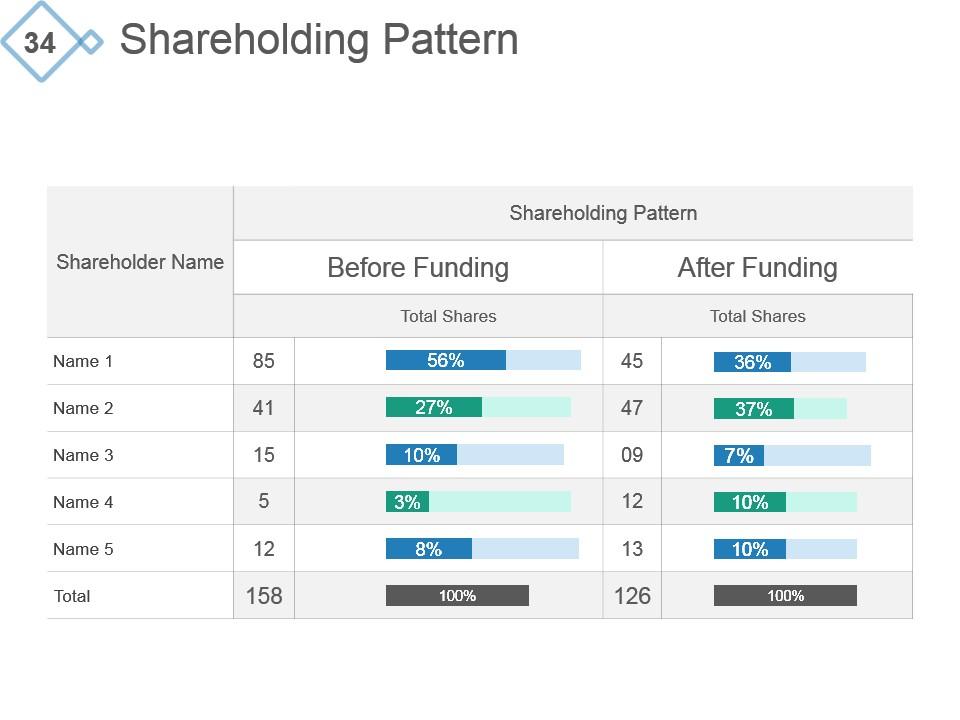
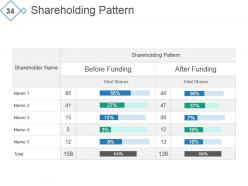
Slide 34: This slide presents Shareholding Pattern in tabular form.
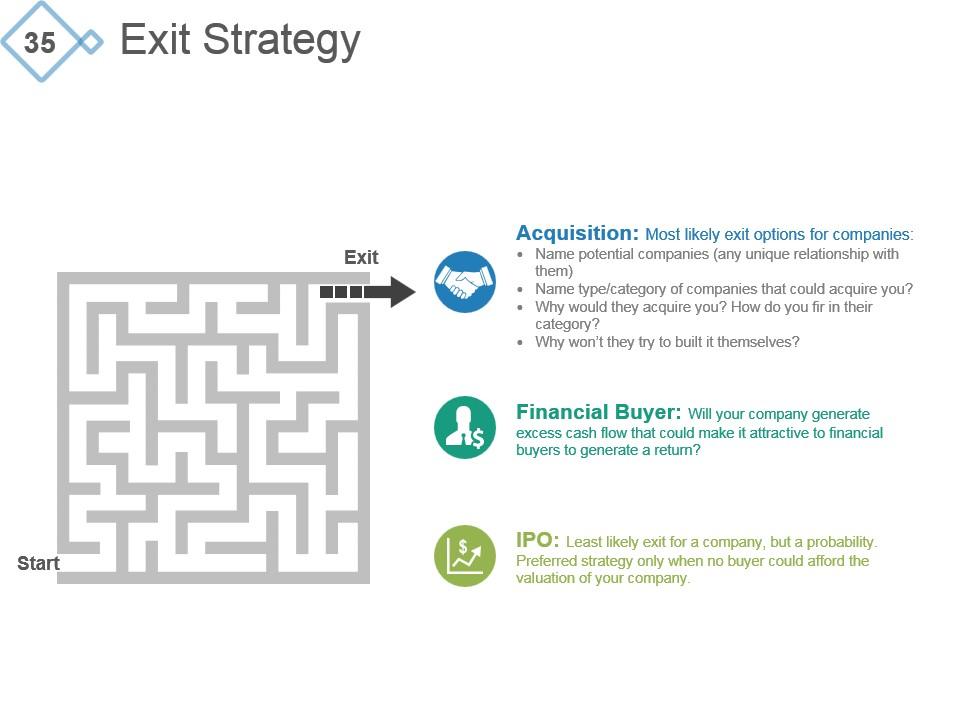
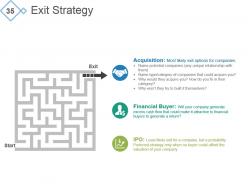
Slide 35: This slide shows Exit Strategy with- Acquisition, Financial Buyer, IPO as factors to present.
Slide 36: This is a Client Testimonials slide with name, designation and image boxes to fill information for.
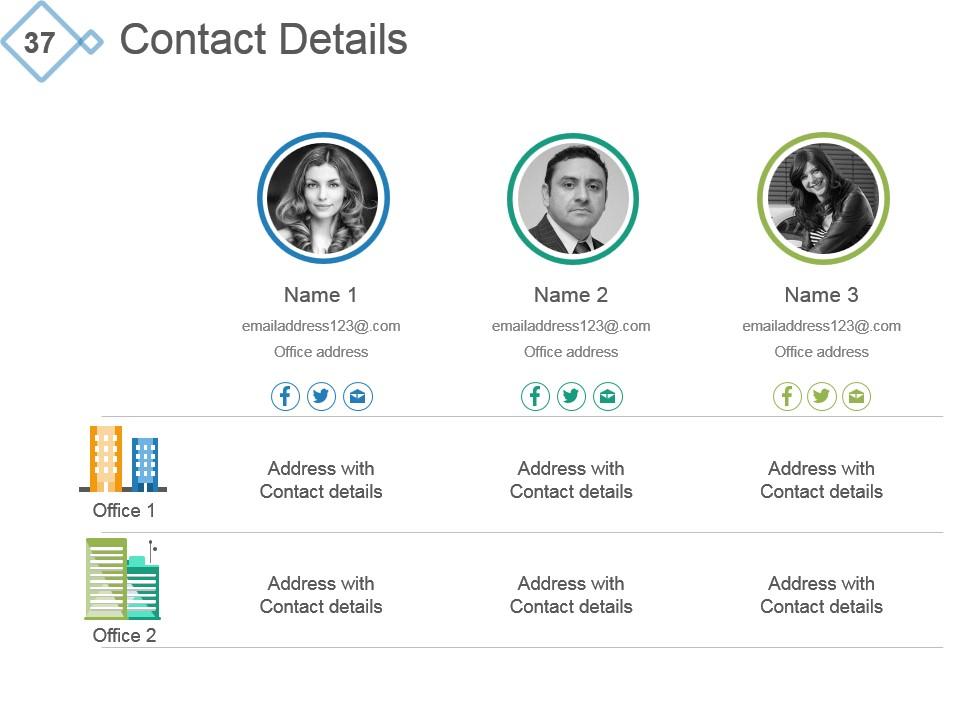
Slide 37: This is a Contact Details slide with Address# street number, city, state, Contact Numbers, Email Address.
Slide 38: This is a Coffee Break slide to halt. You can change the image as per requirement/need.
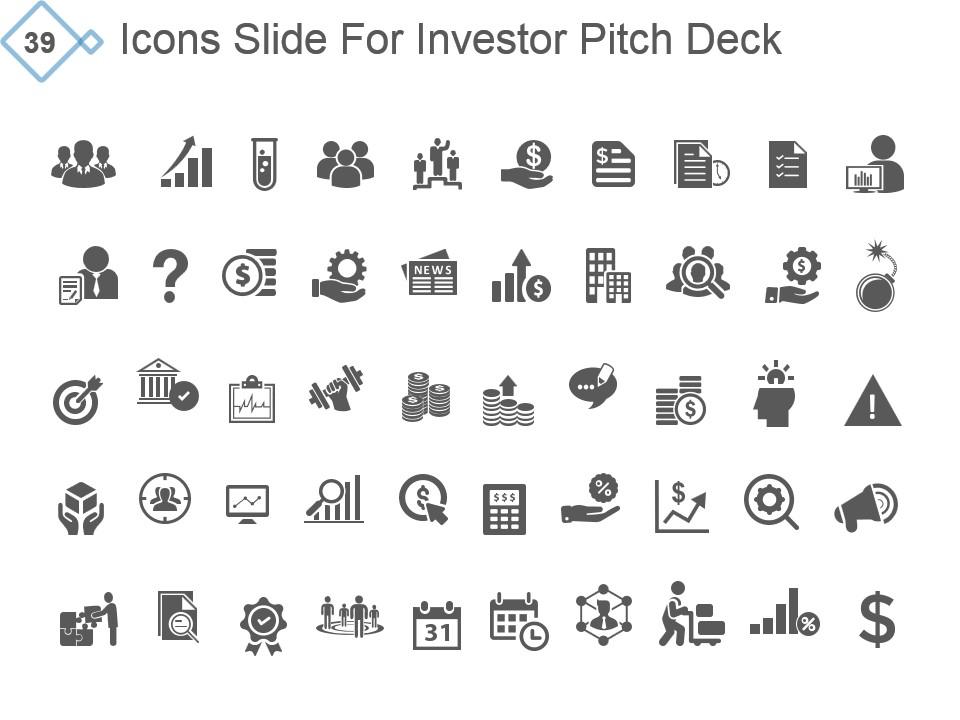
Slide 39: This is an Icons Slide For Investor Pitch Deck. Use them as per requirement.
Slide 40: This slide is titled Additional Slides to move forward. You may change the slide content as per need.
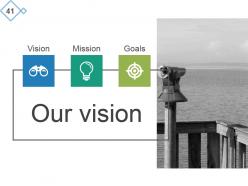
Slide 41: This is Our Vision slide with Mission and Goals and text boxes to go with. State them here.
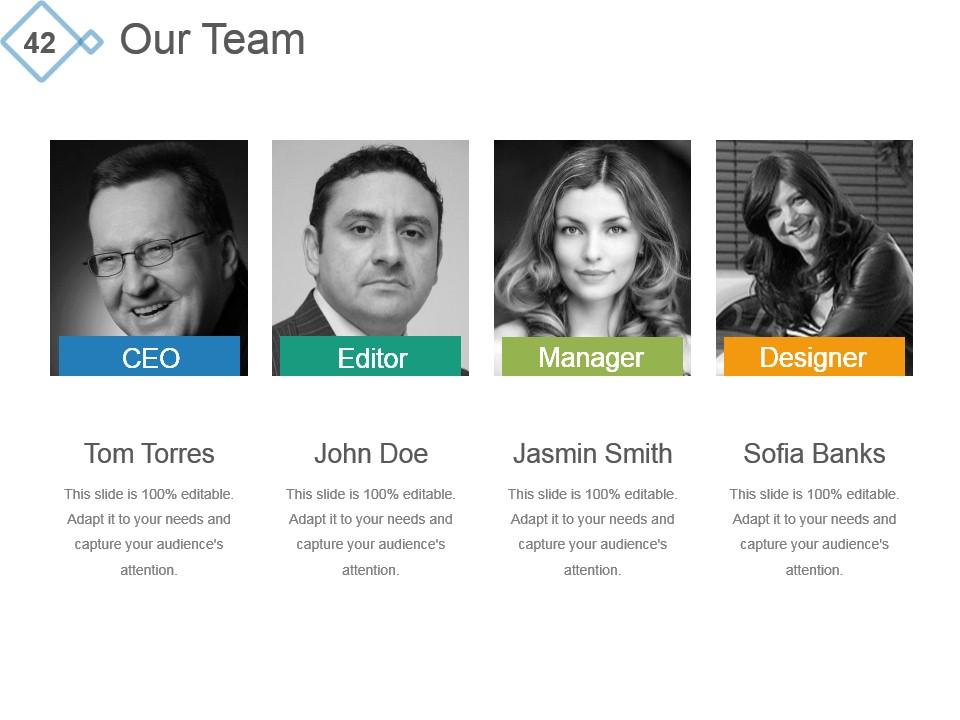
Slide 42: This is Our team slide with names and designation to fill information for.
Slide 43: This is an About us slide. State team/company specifications here.
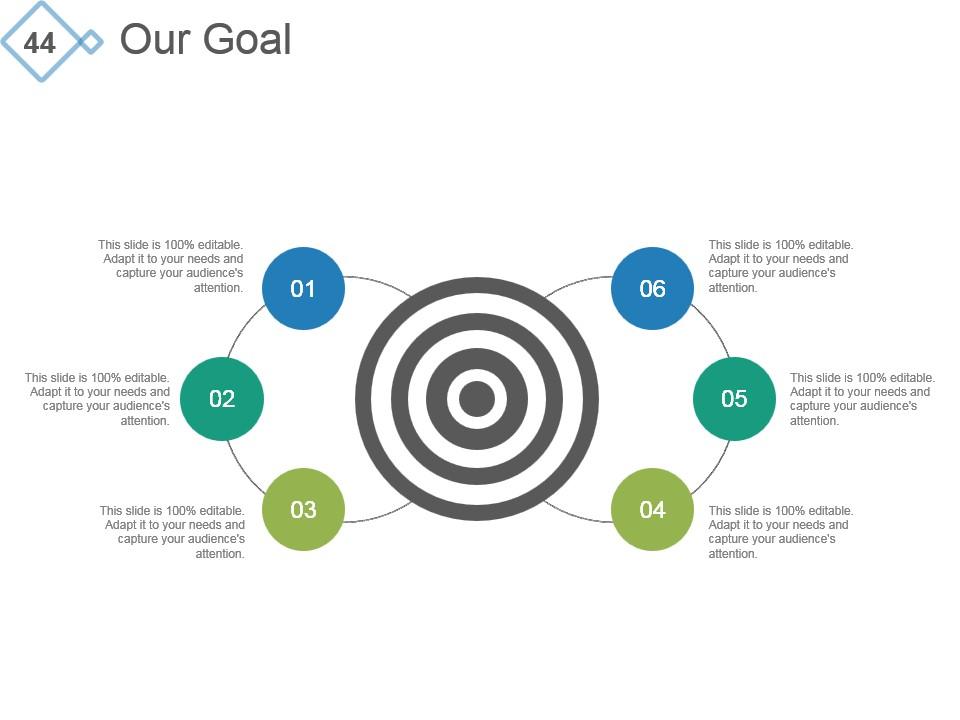
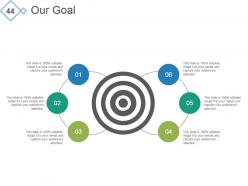
Slide 44: This is Our Goal slide. State goals, targets etc. here.
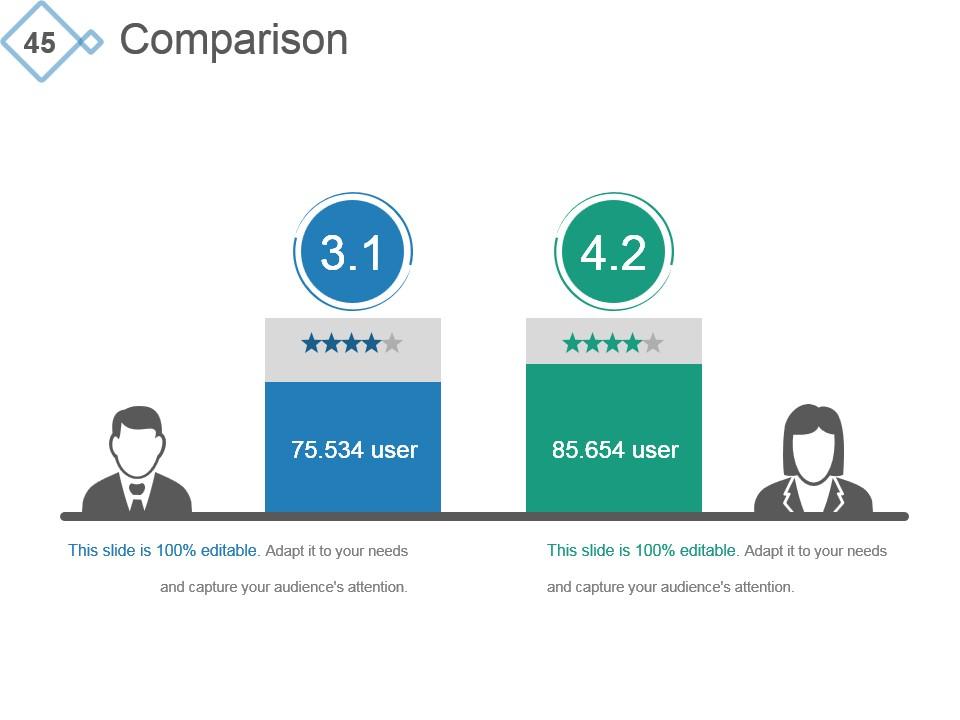
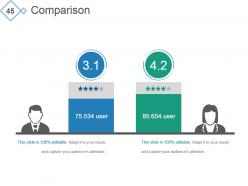
Slide 45: This is a Comparison slide to show comparison, information, specifications etc.
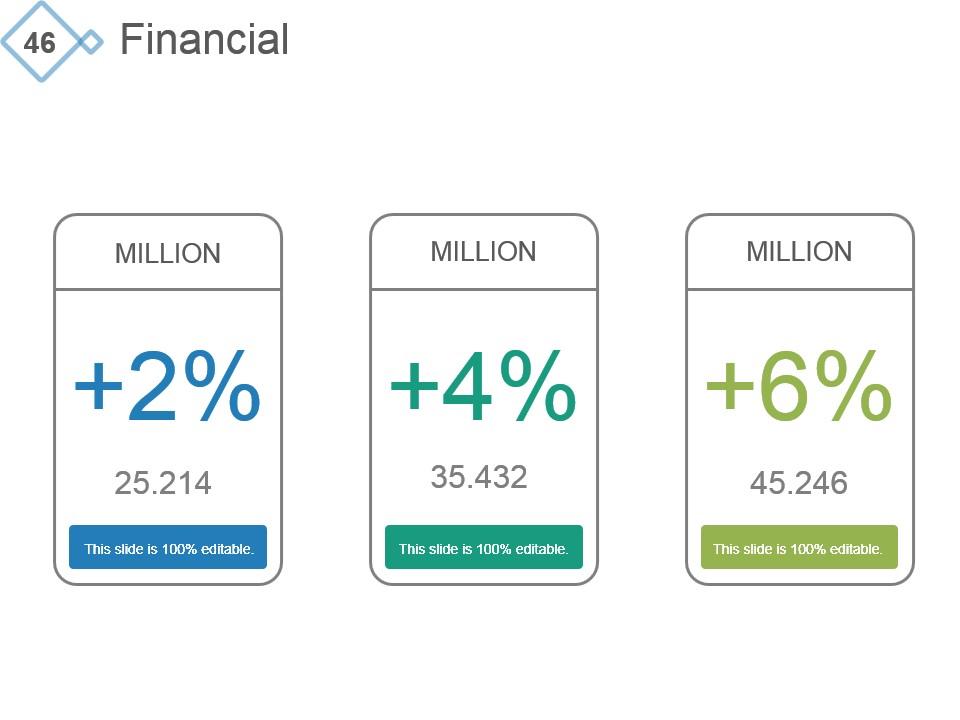
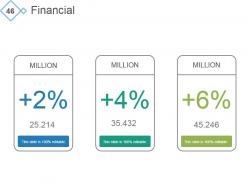
Slide 46: This is a Financial Score slide. State financial aspects etc. here.
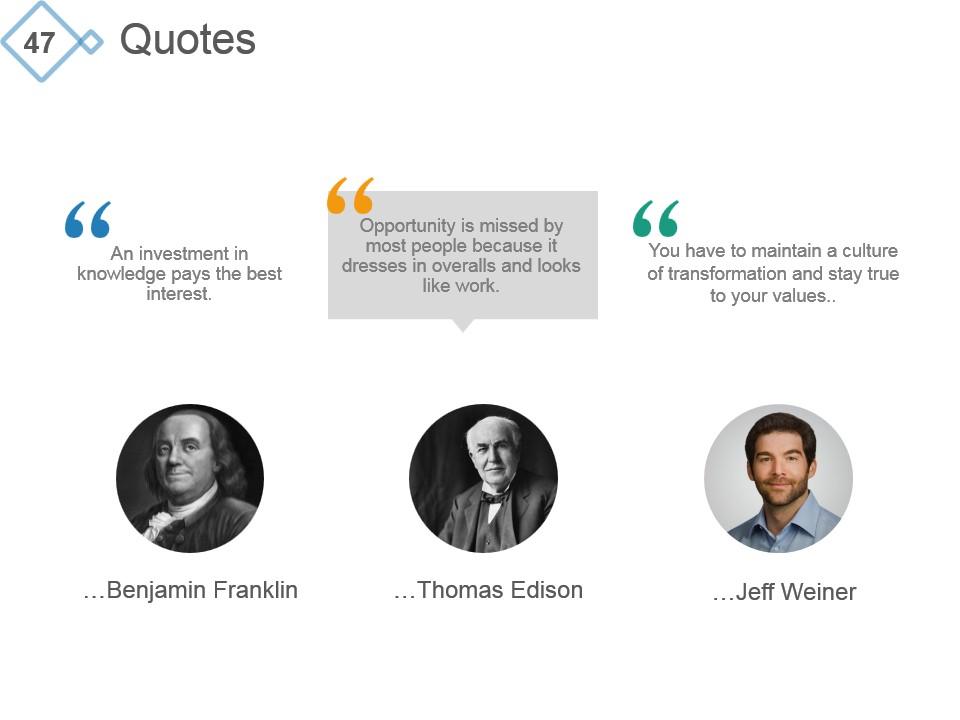
Slide 47: This is a Quotes slide. Convey message, beliefs etc. here.
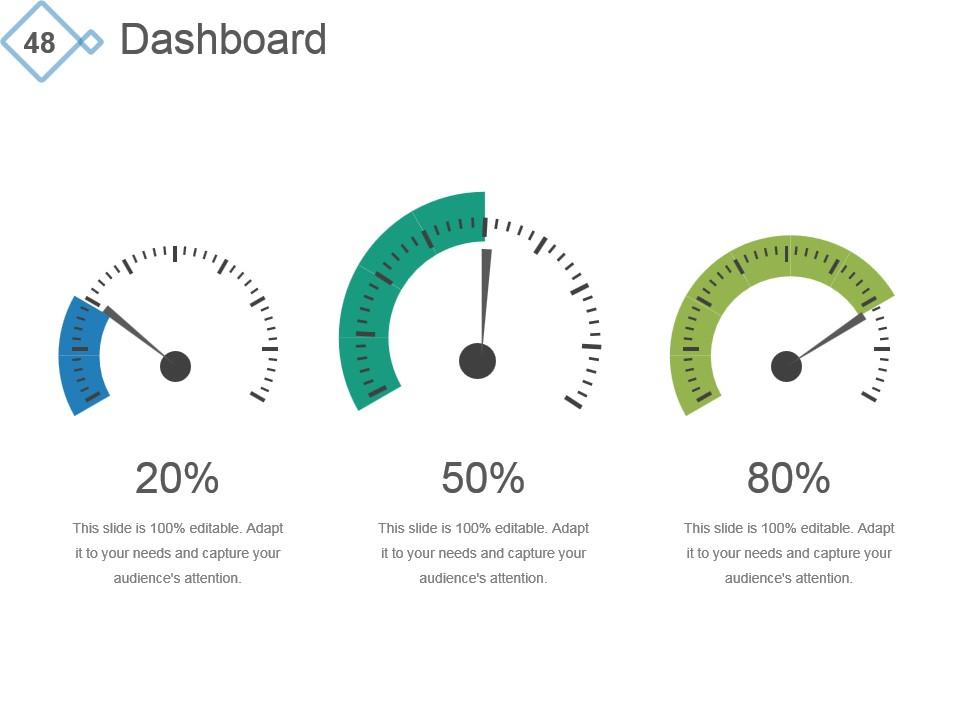
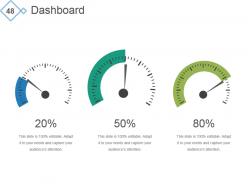
Slide 48: This is a Dashboard slide for showing information, specifications etc.
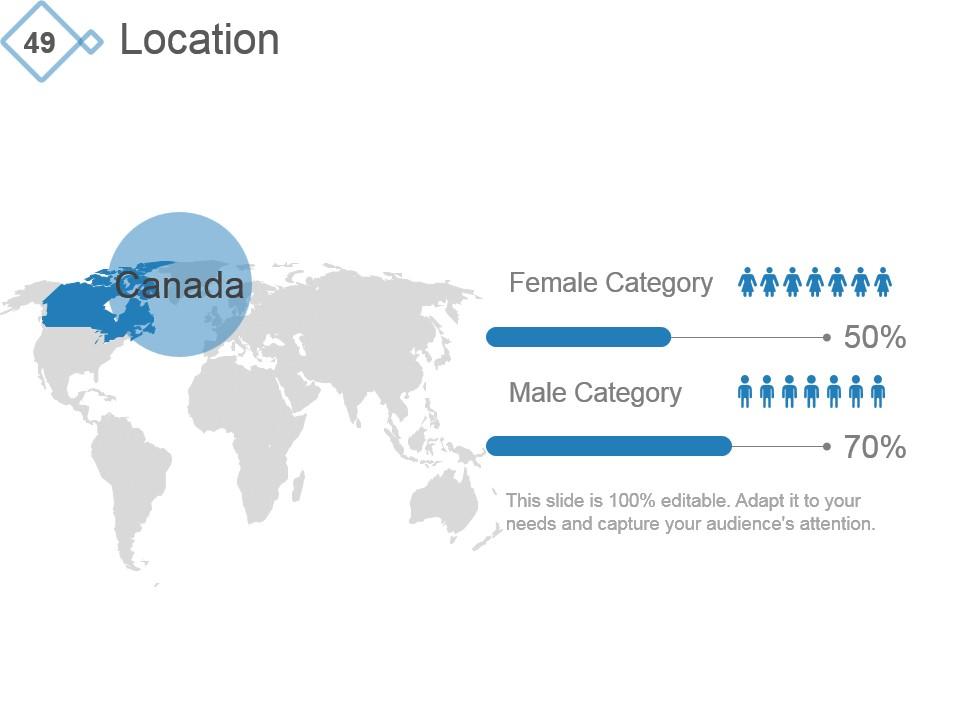
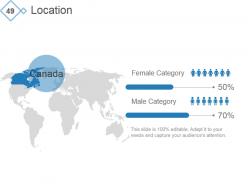
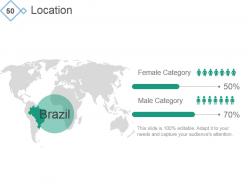
Slide 49: This is a Location slide of world map top show global marketing, growth, presence etc.
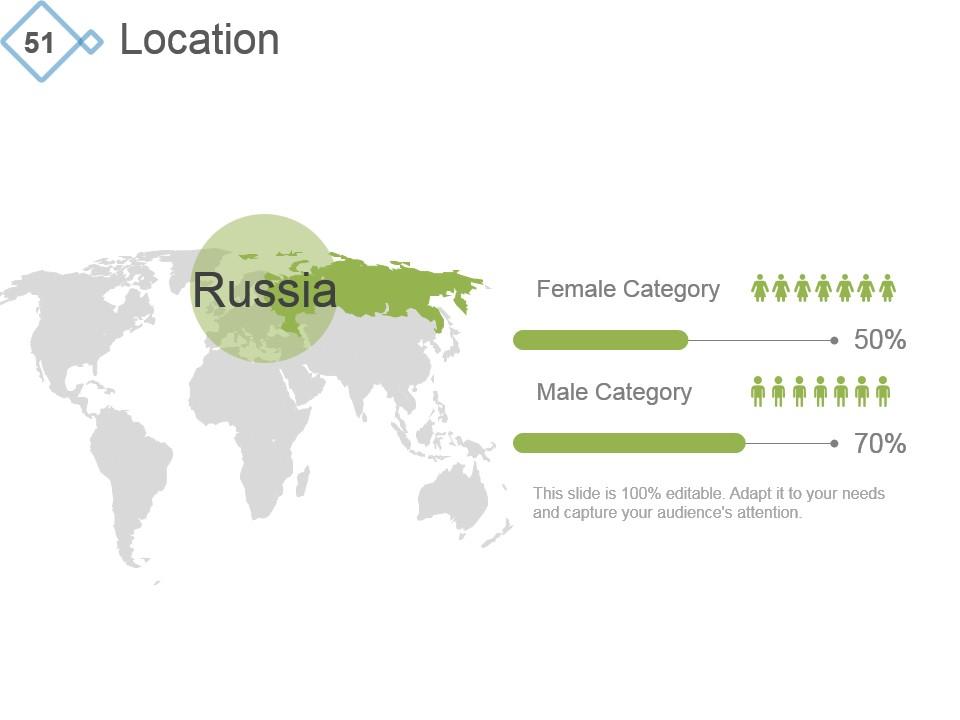
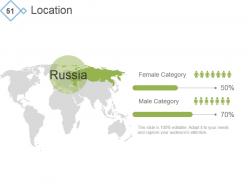
Slide 51: This is also a Location slide of world map top show global marketing, growth, presence etc.
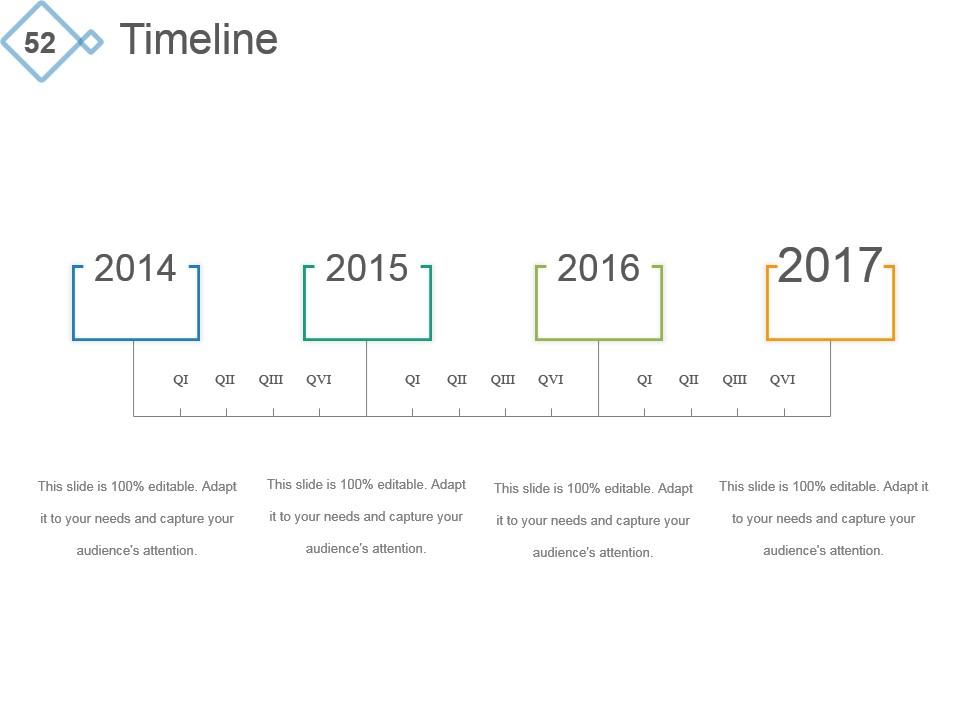
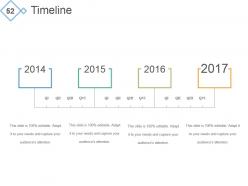
Slide 52: This is a Timeline slide to show milestones, evolution, growth highlights etc.
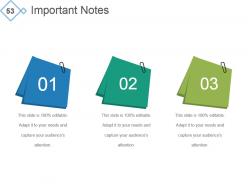
Slide 53: This is an Important Notes slide to mark reminders, events etc.
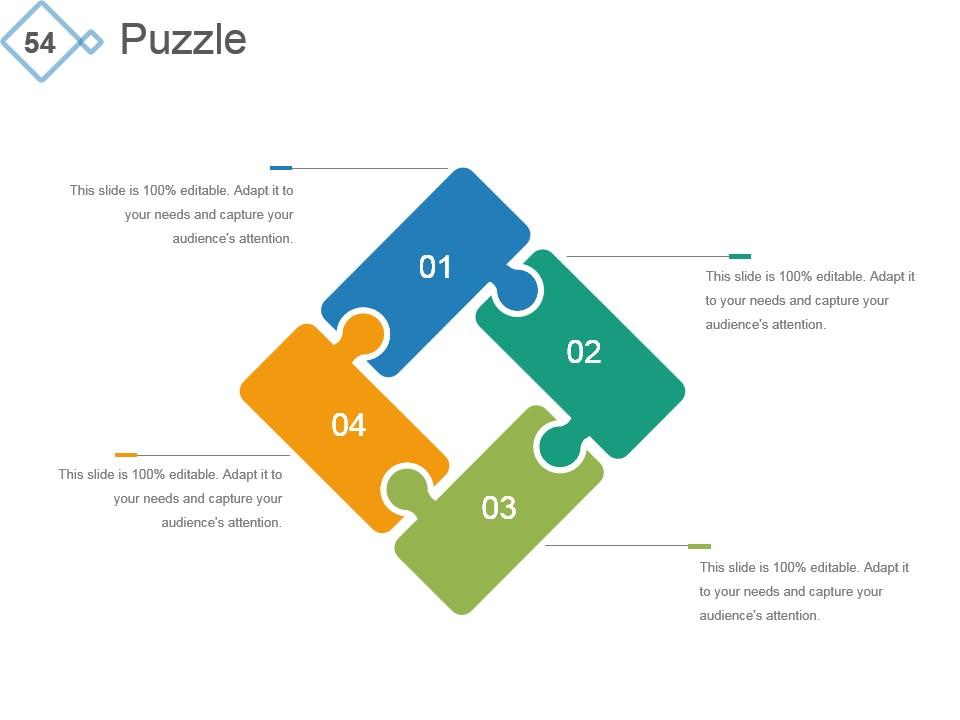
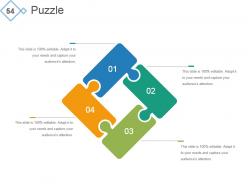
Slide 54: This is a Puzzle image slide. State information, specifications etc. here.
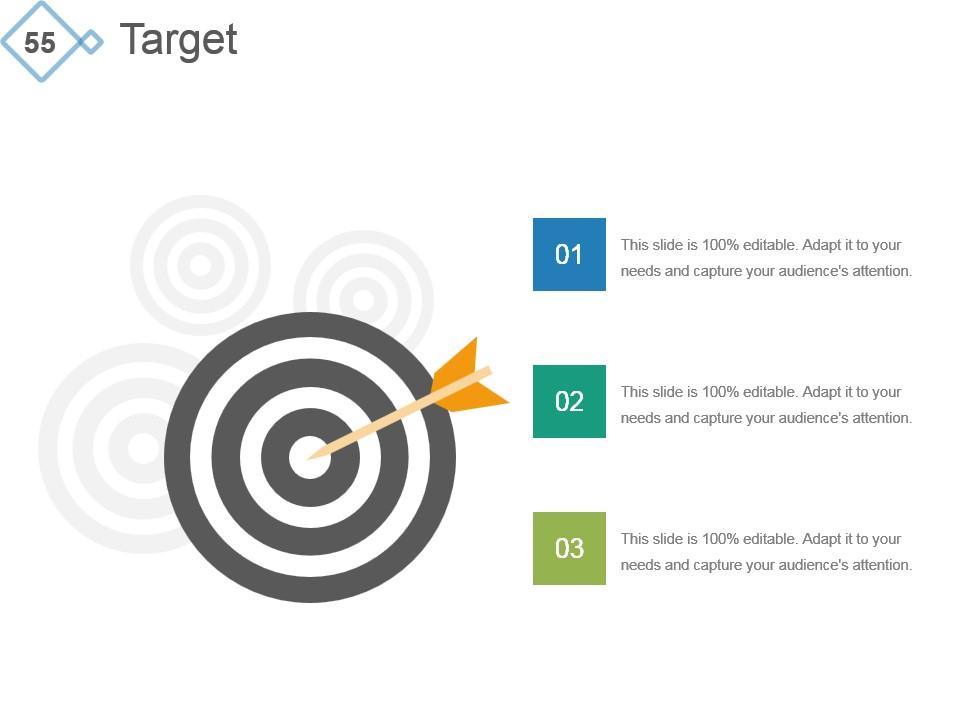
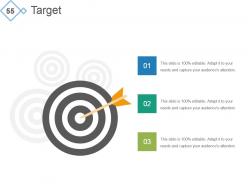
Slide 55: This is a Target image slide. State your targets, goals etc. here.
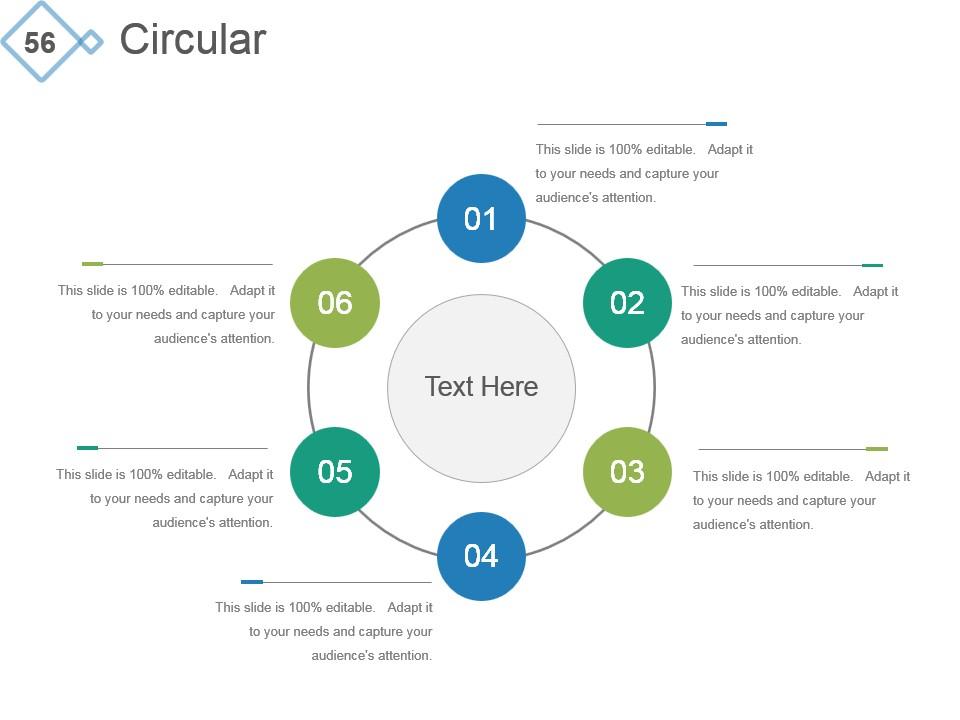
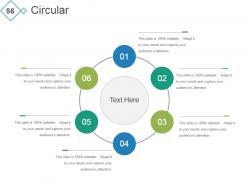
Slide 56: This is a Circular image slide with icons. State information, specifications etc. here.
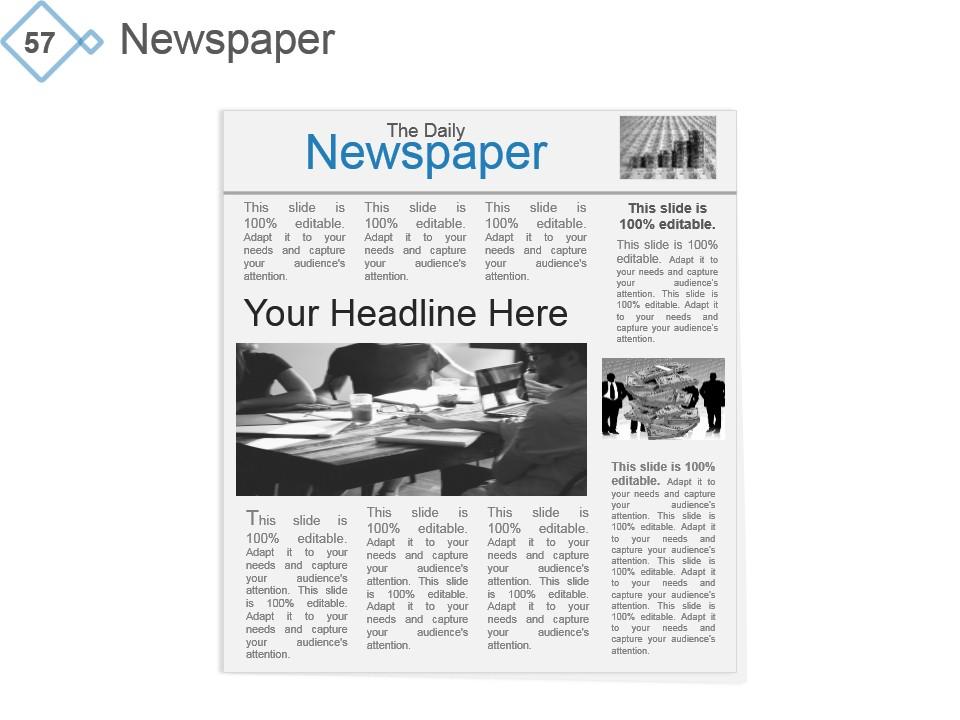
Slide 57: This is a Newspaper slide to show important information etc. You may alter the slide content as per need.
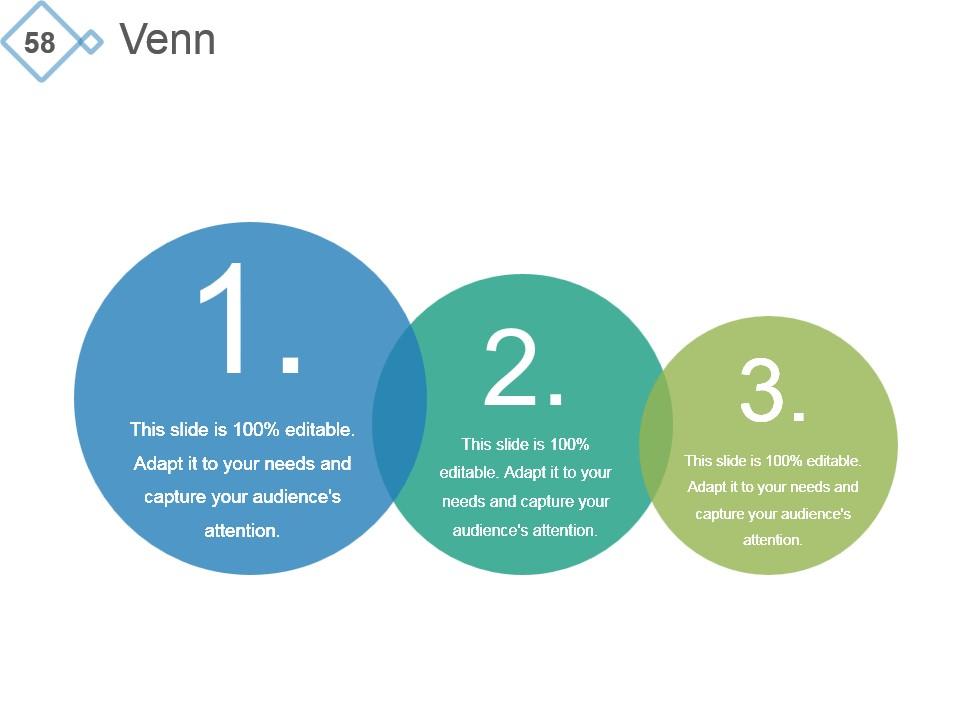
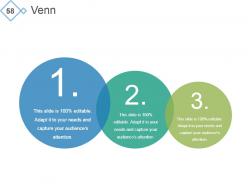
Slide 58: This is a Venn diagram image slide. State information, specifications etc. here.
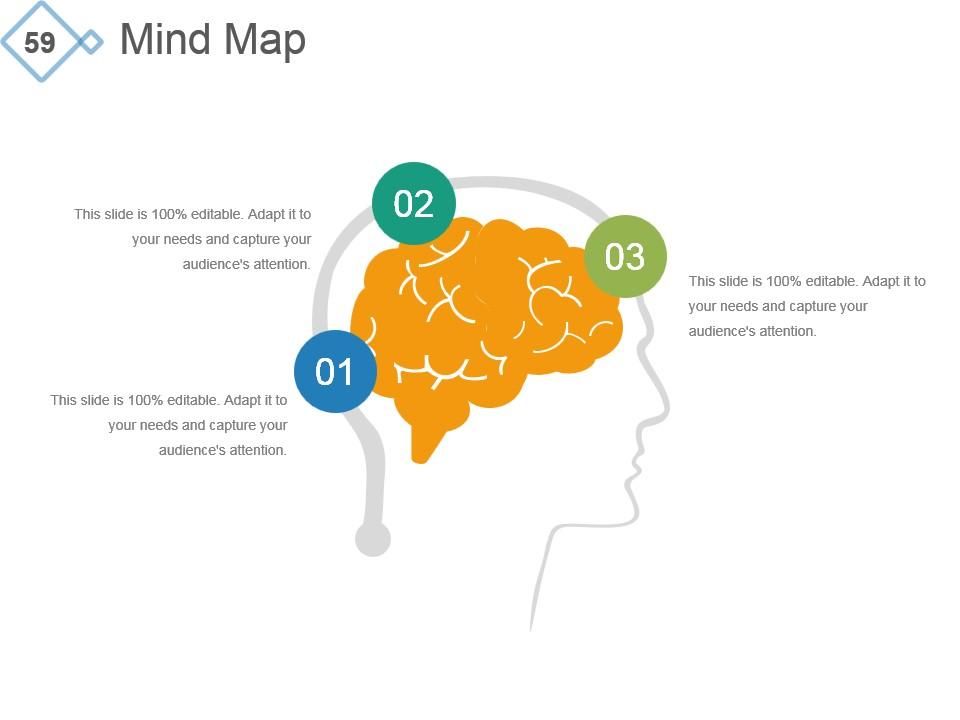
Slide 59: This is a Mind Map image slide to show information, specifications etc.
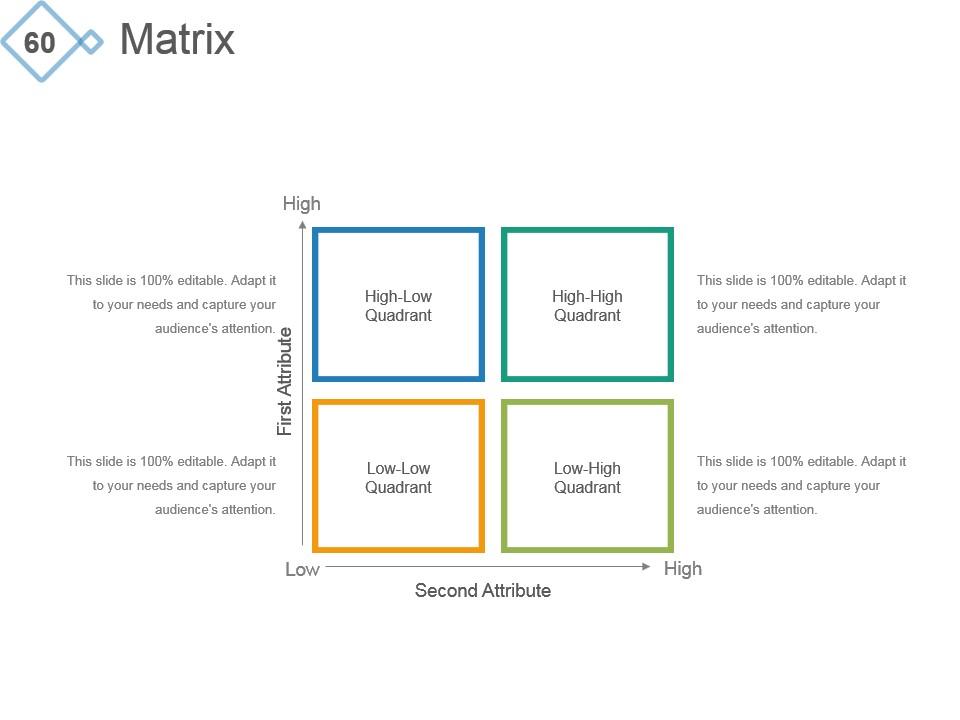
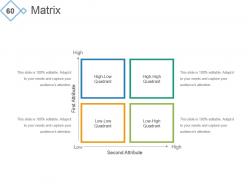
Slide 60: This slide presents a Low High Matrix for representing an information.
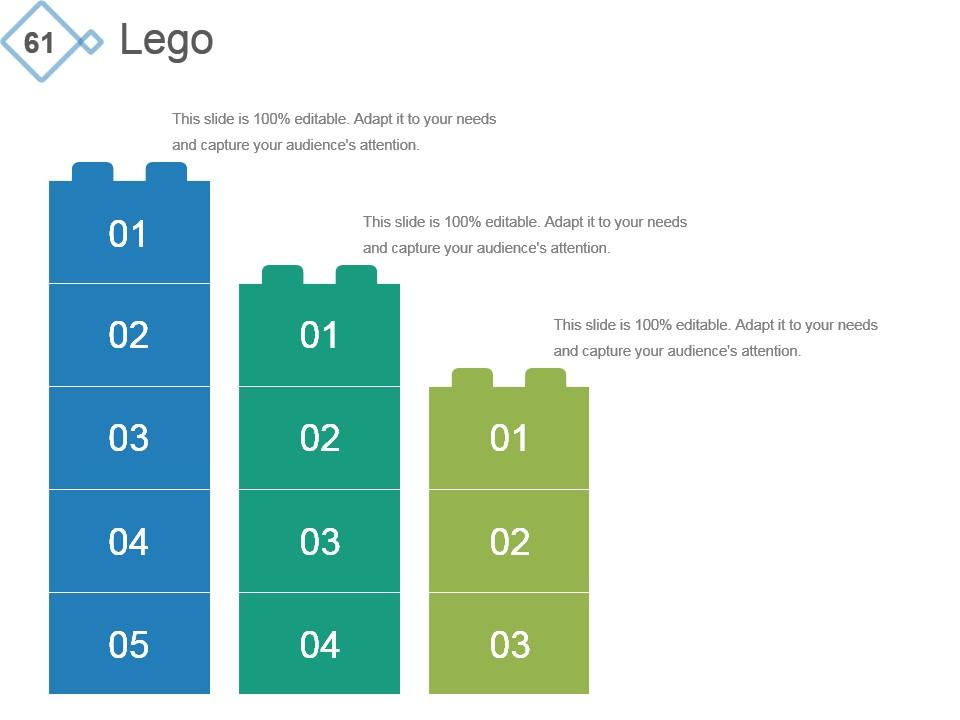
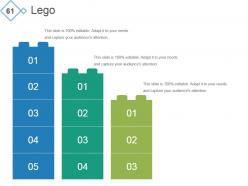
Slide 61: This is a LEGO slide with text boxes to show information, specifications etc.
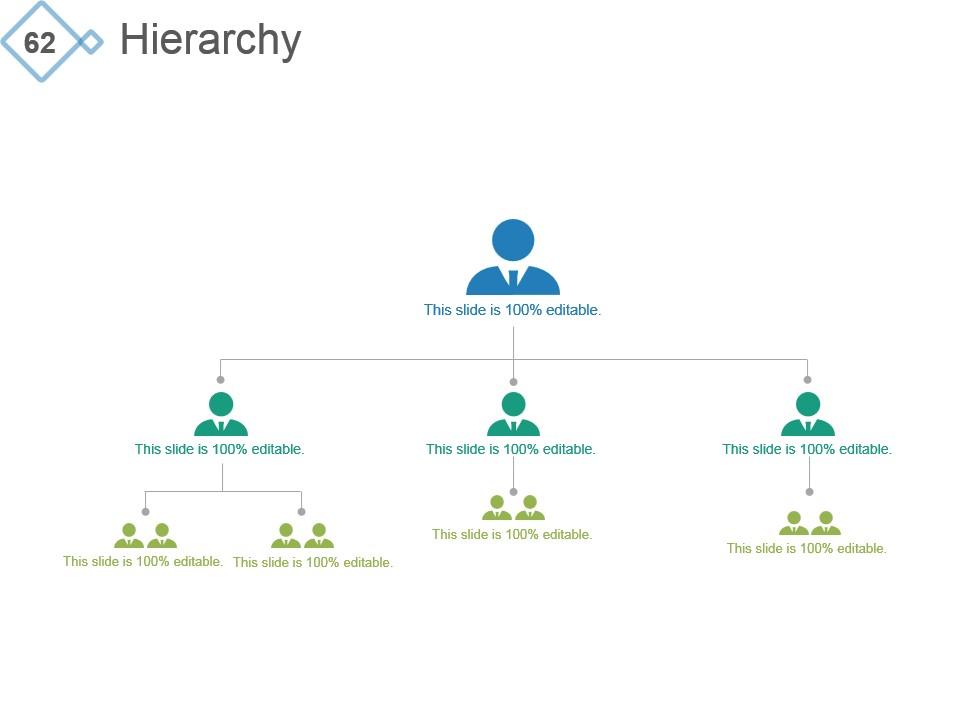
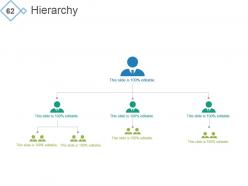
Slide 62: This is a Hierarchy slide with text boxes to show information, organization/team specifications etc.
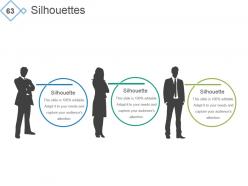
Slide 63: This slide shows Silhouettes with text boxes. State people related information, specifications etc. here.
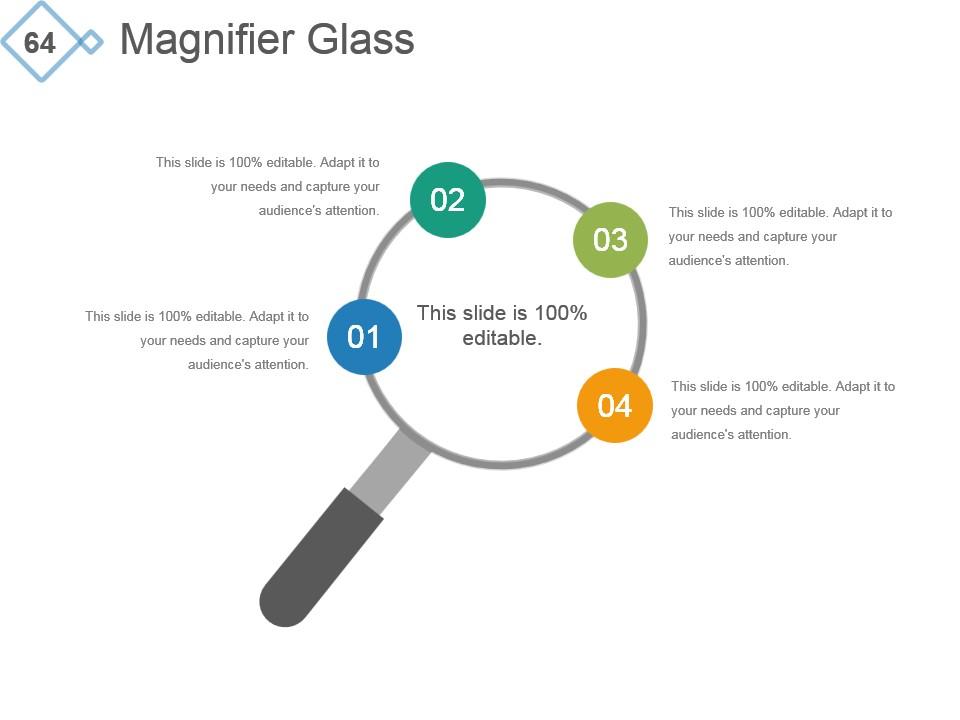
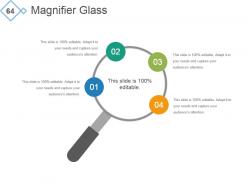
Slide 64: This is a Magnifier Glass image slide to show information, specifications etc.
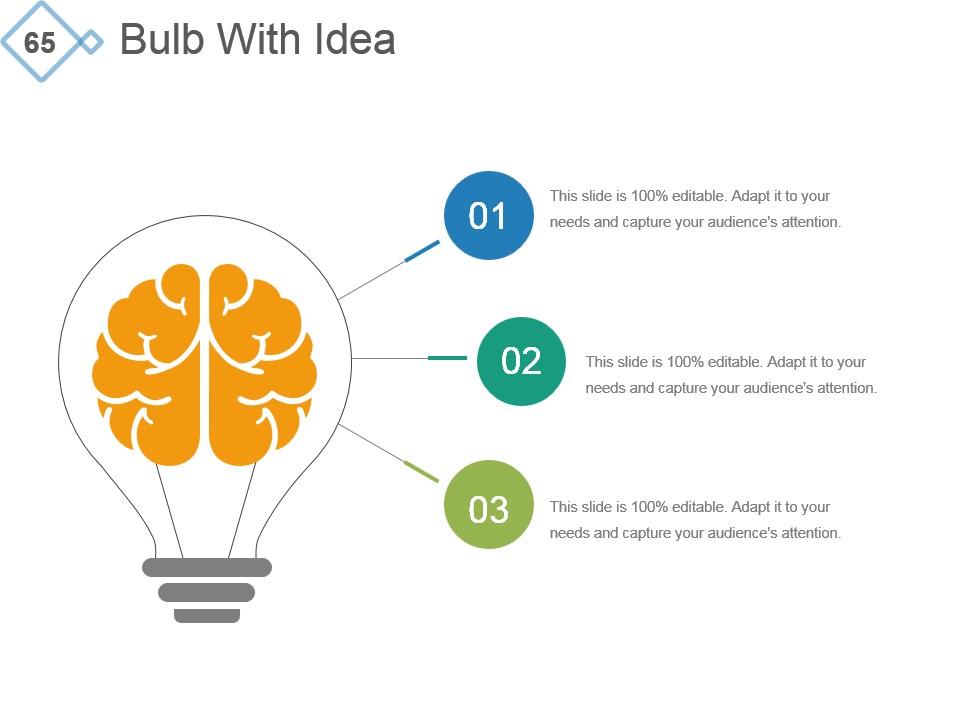
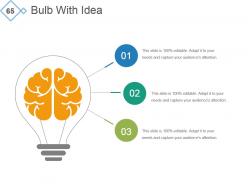
Slide 65: This is a Bulb with Idea slide to state a new idea or highlight innovative specifications/information etc.
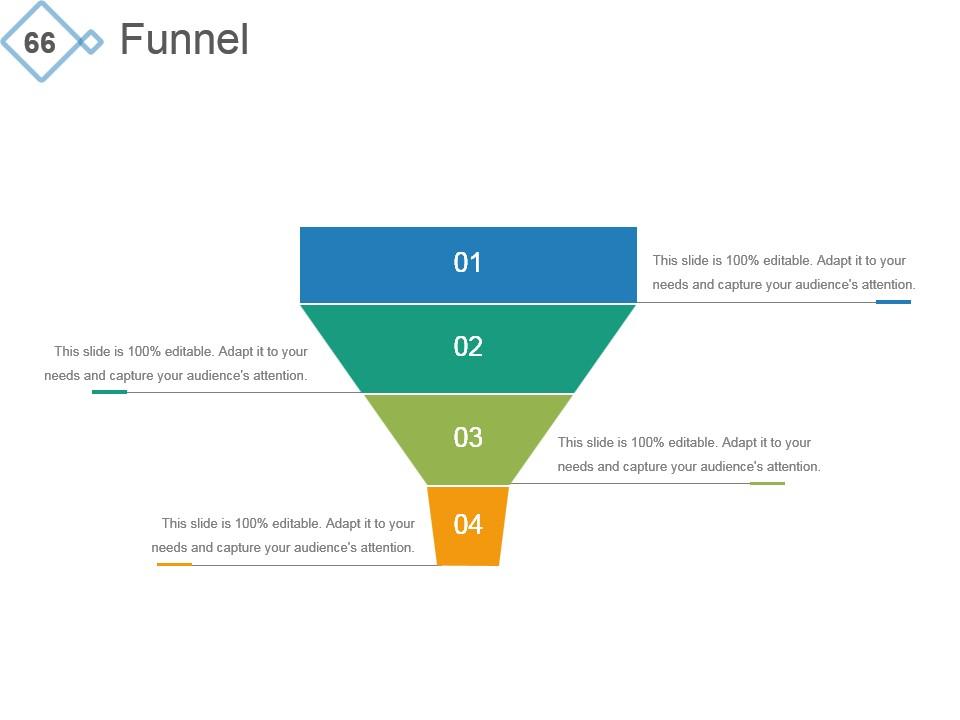
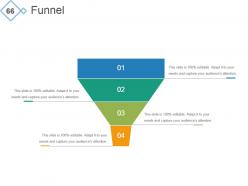
Slide 66: This is a Funnel slide. Showcase the funnel aspect of your team, company, product etc.
Slide 67: This slide is titled Charts & Graphs to move forward. You can change the slide content as per need.
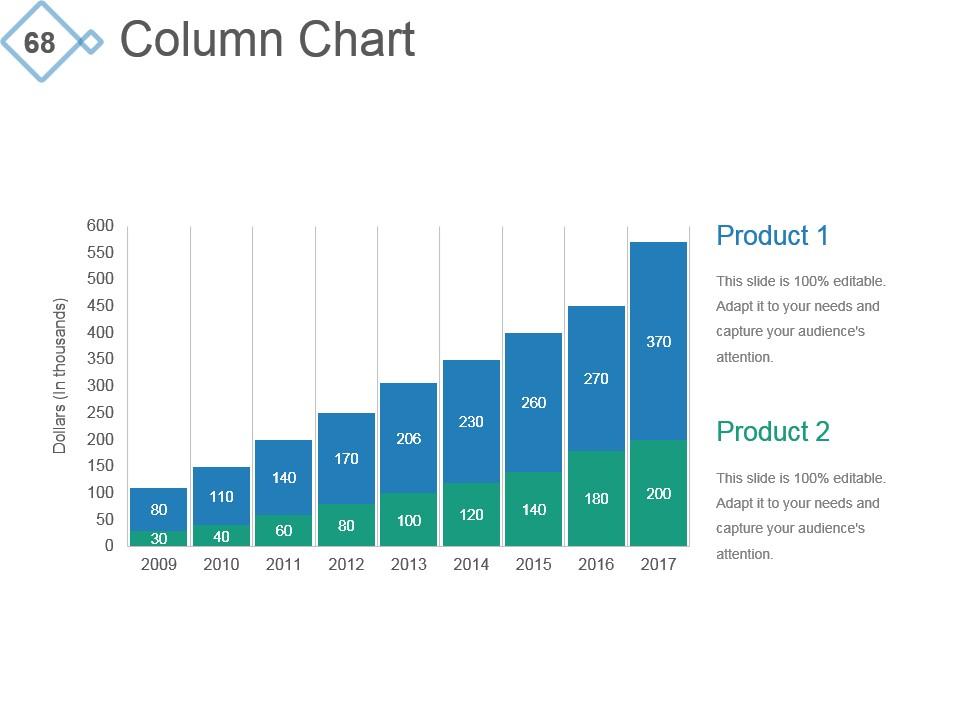
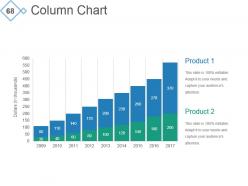
Slide 68: This is a Column chart slide to show product/entity comparison, specifications etc.
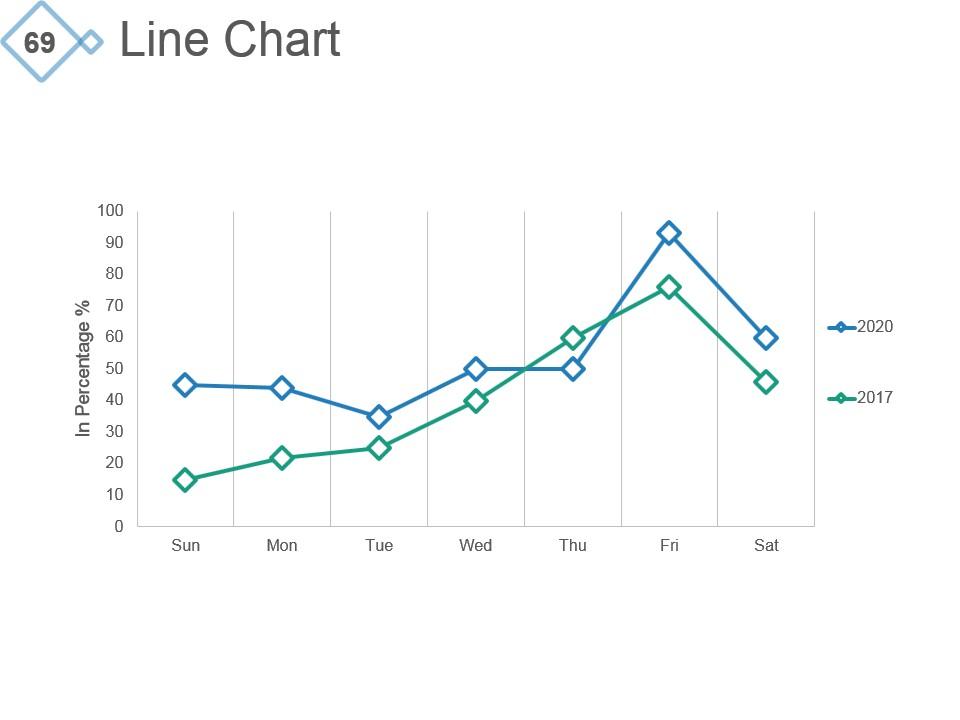
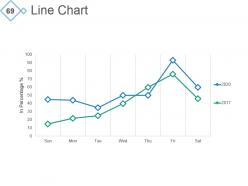
Slide 69: This is a Line chart slide to showcase product/entity comparison, specifications etc.
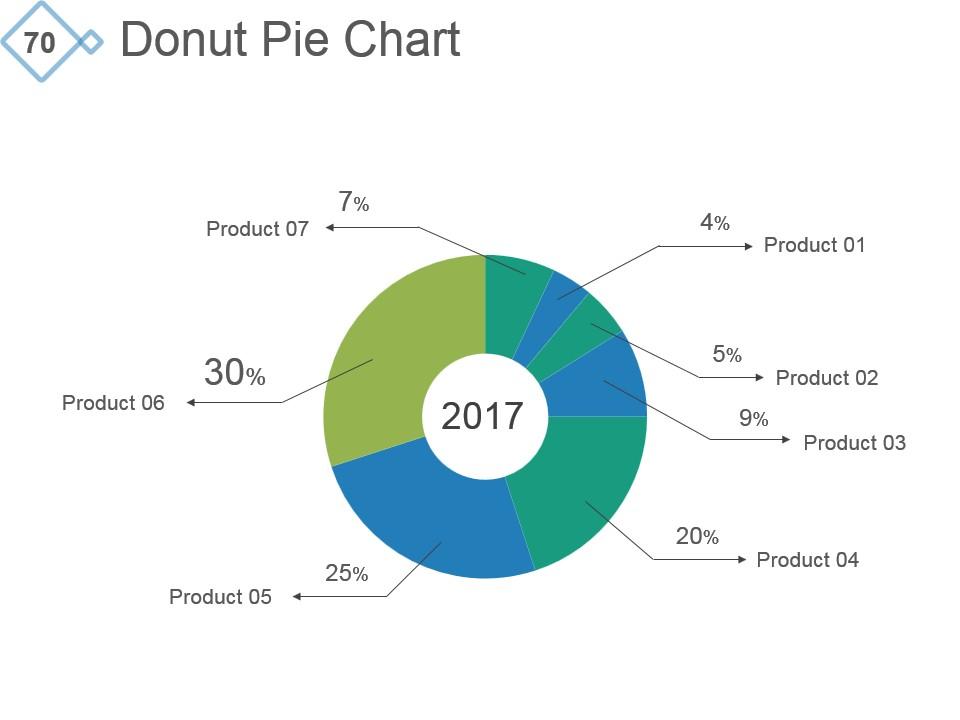
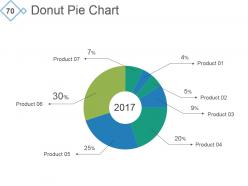
Slide 70: This is a Donut Pie chart slide to show product/entity comparison, specifications etc.
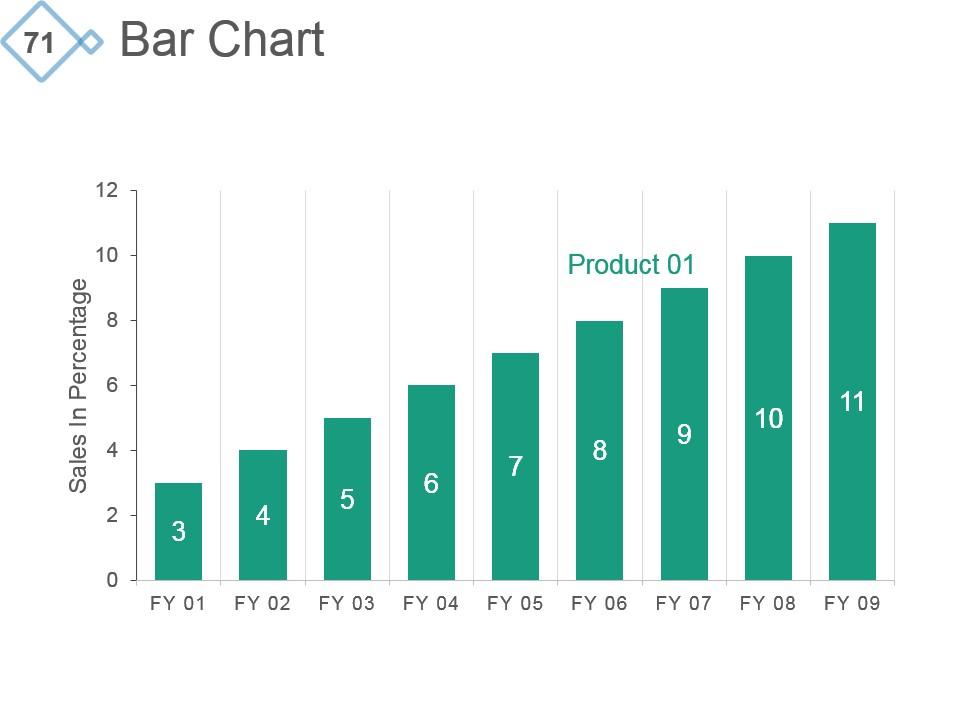
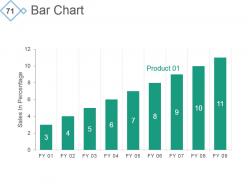
Slide 71: This is a Bar Chart slide to present product/entity comparison, specifications etc.
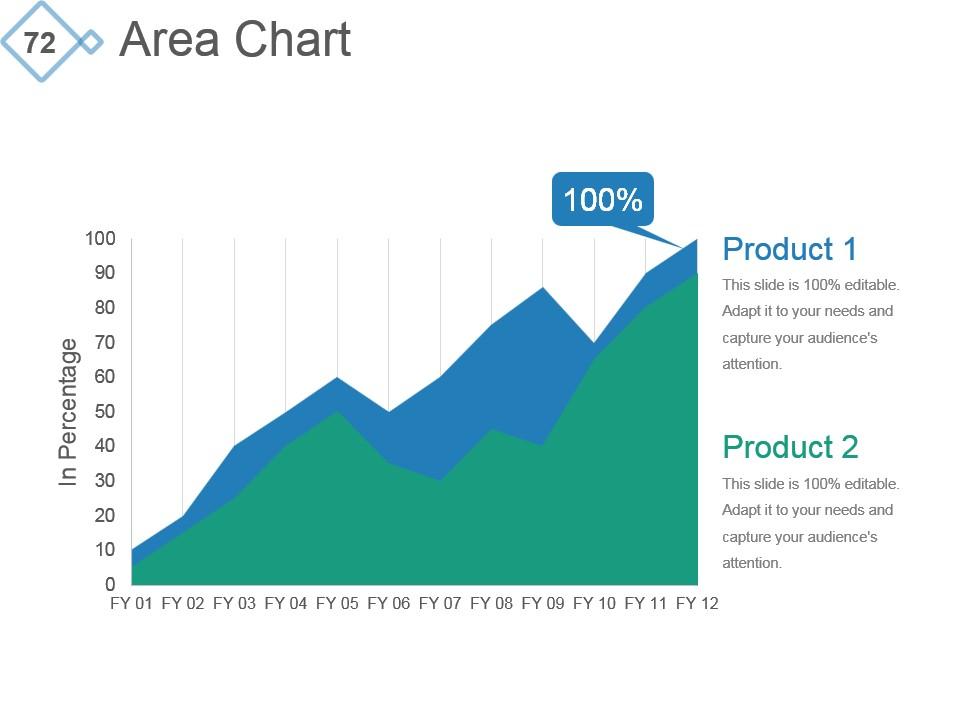
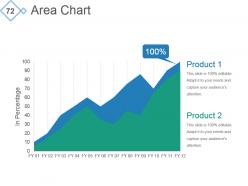
Slide 72: This is an Area Chart slide to show product/entity comparison, specifications etc.
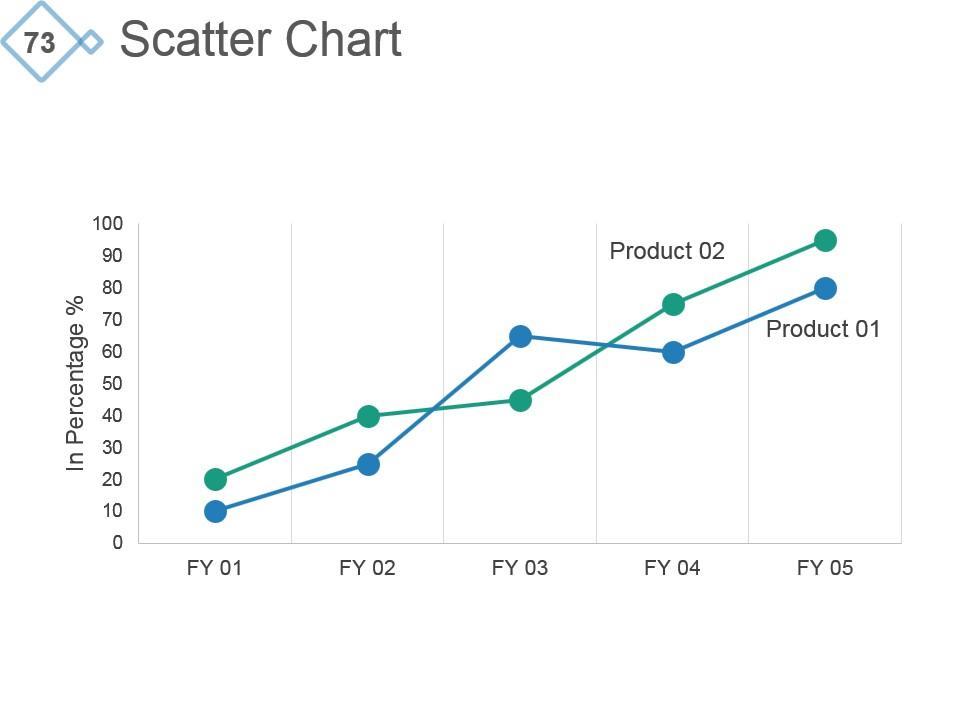
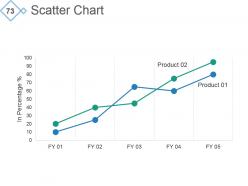
Slide 73: This is a Scatter Chart slide to show product/entity comparison, specifications etc.
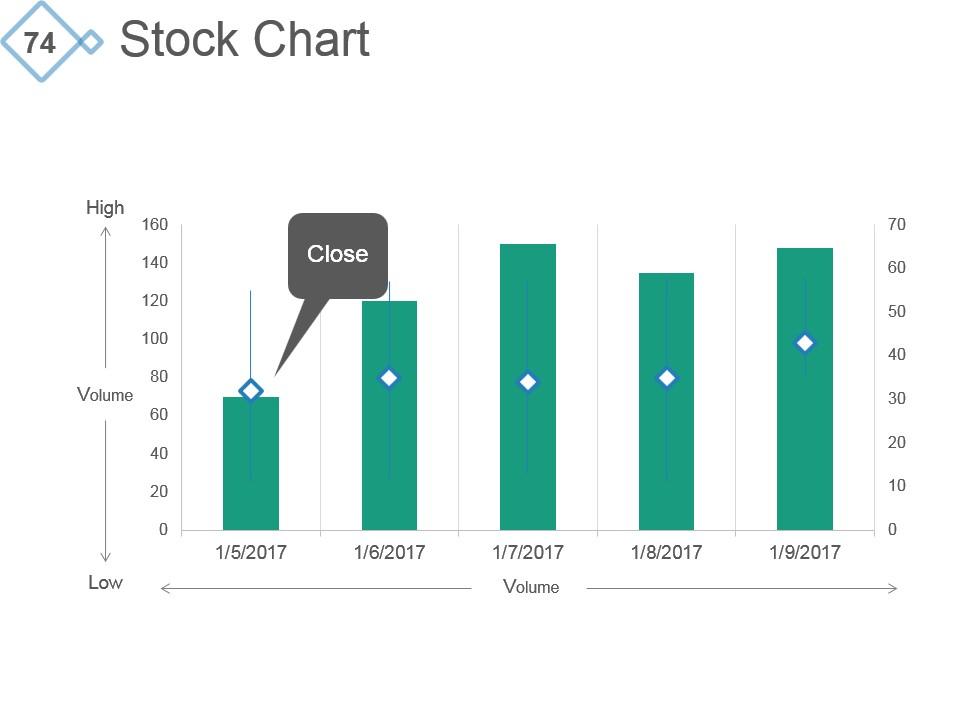
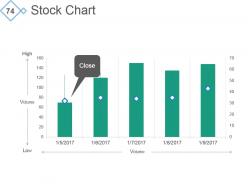
Slide 74: This is a Stock Chart slide to display product/entity comparison, specifications etc.
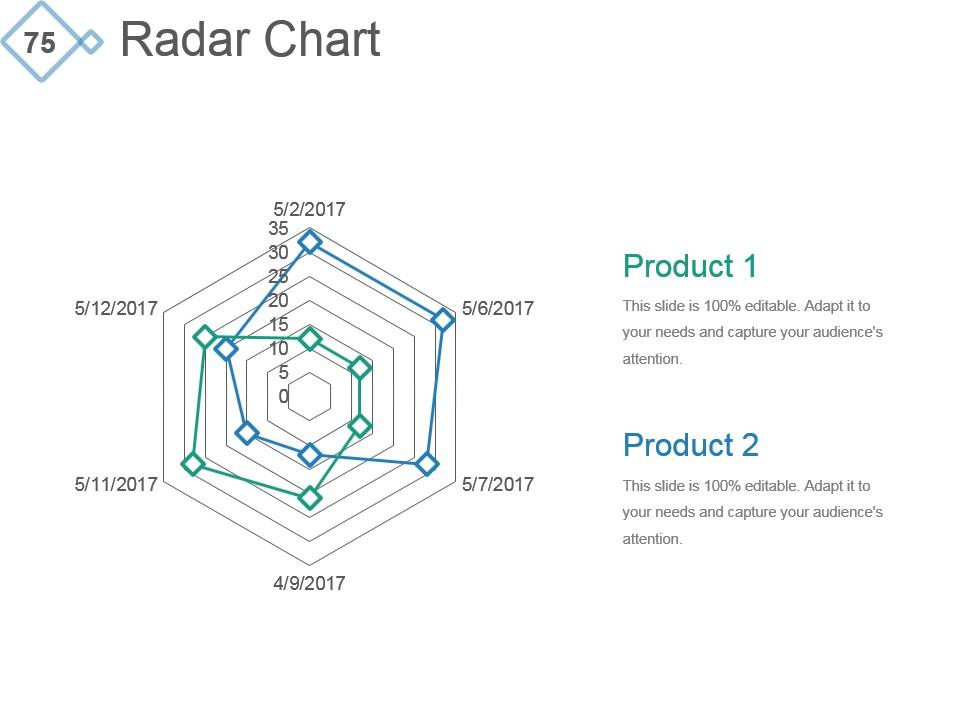
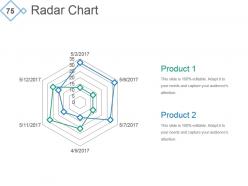
Slide 75: This is a Radar Chart slide to show product/entity comparison, specifications etc.
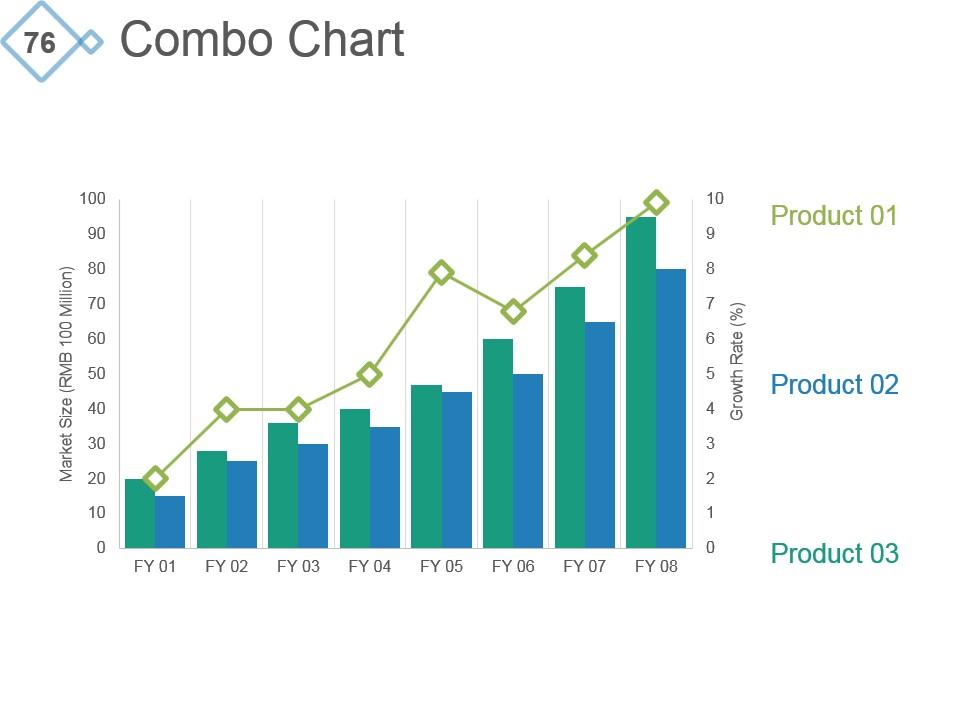
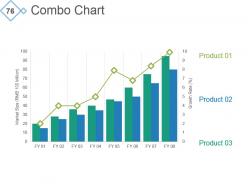
Slide 76: This is a Combo Chart slide to showcase product/entity comparison, specifications etc.
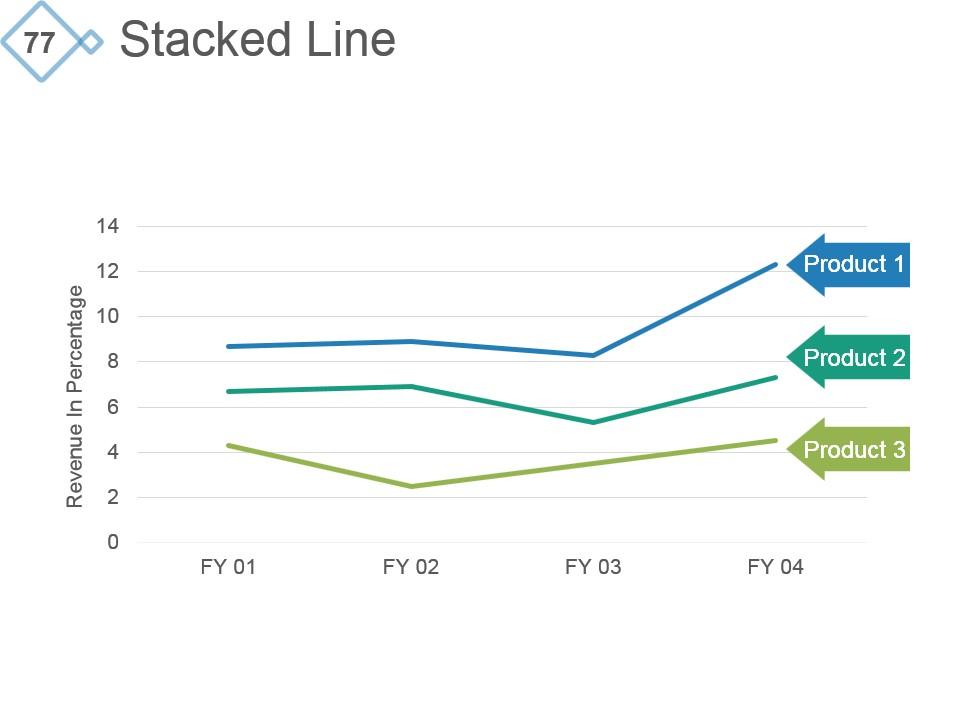
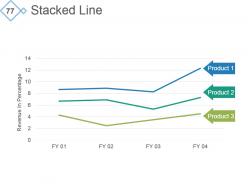
Slide 77: This is a Stacked Line chart slide to present product/entity comparison, specifications etc.
Slide 78: This is a Contact Us slide with Email Address, Address# street number, city, state, Contact Numbers.
Slide 79: This is a Thank You slide to end a presentation with acknowledgement.
Investor Pitch Deck For A Start Up Powerpoint Presentation Slides with all 79 slides:
Our Investor Pitch Deck For A Start Up Powerpoint Presentation Slides will be critical for your cause. They will make a decisive difference.
-
Visually stunning presentation, love the content.
-
Awesome use of colors and designs in product templates.
