

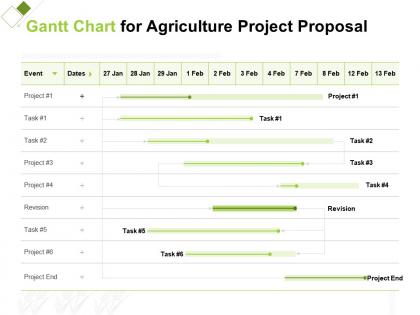
Gantt chart for agriculture project proposal ppt powerpoint presentation visual




Try Before you Buy Download Free Sample Product
 Impress Your
 Audience
 100%
100% Editable
 Save Hours
 of Time


Our Gantt Chart For Agriculture Project Proposal Ppt Powerpoint Presentation Visual are topically designed to provide an attractive backdrop to any subject. Use them to look like a presentation pro.
People who downloaded this PowerPoint presentation also viewed the following :
Gantt chart for agriculture project proposal ppt powerpoint presentation visual with all 2 slides:
Use our Gantt Chart For Agriculture Project Proposal Ppt Powerpoint Presentation Visual to effectively help you save your valuable time. They are readymade to fit into any presentation structure.
FAQs for Gantt chart for agriculture project proposal ppt
Break down your project into real tasks - soil prep, planting, fertilizing, harvesting. None of that vague "grow crops" nonsense. Weather delays are gonna happen, so build in buffer time from the start. Dependencies matter too since you can't exactly harvest before you plant (shocking, I know). Don't forget resource allocation for equipment and labor. Here's what actually works: start with your harvest date and work backwards. That way you're not living in fantasy land with your timeline. Oh, and mark those seasonal windows when you absolutely have to get stuff done.
Honestly, Gantt charts are perfect for this stuff. You can see your whole planting schedule laid out and catch problems early - like when you'd have three fields ready to harvest in the same week (been there, it sucks). Resource planning becomes way easier too. Equipment, labor, storage - you can actually coordinate it all instead of scrambling. Weather windows and soil prep time between cycles? You can build that right in. I'd start small though, maybe just 2-3 crops first. Once you see how much clearer everything gets, you'll want to expand it.
Microsoft Project or Smartsheet are your best bets - they actually get seasonal stuff and weird farming timelines. ProjectManager.io is decent too, especially for weather delays and managing crews across different fields. Regular project tools just don't cut it because farming is nothing like normal business schedules. You could try GanttPRO if you want something less complicated. Honestly though? Grab a free Smartsheet trial first and map out one growing season. You'll know pretty quick if it works for your crop rotations and labor juggling. Way better than committing to something expensive that might totally flop.
Weather basically runs the show when it comes to farm scheduling. You'll want to check historical data for your area and build in extra time for planting and harvesting windows. Late rains or unexpected dry spells can mess up your whole timeline - I've seen projects get pushed back weeks because of this stuff. Temperature swings are another thing that'll throw off your critical tasks. My cousin deals with this constantly on his operation. Short story: add like 10-15% buffer time to anything weather-dependent. Trust me, you don't want to be scrambling when Mother Nature decides to change plans.
Dude, communication makes or breaks everything with ag Gantt charts. Weather's gonna mess up your timeline - that's just farming life. But when it does, you need farmers, suppliers, and buyers all on the same page immediately. Your chart becomes everyone's go-to reference for dates and who's doing what. People start guessing about timing if you don't keep them updated, then boom - missed planting windows. Honestly, I've seen projects fall apart just because someone assumed equipment would show up on the original date. Set up regular check-ins and teach everyone how to actually read the chart.
So basically you'll want to mark all your major dates - planting, when stuff should sprout, flowering, harvest time. That way you can see if things are actually on track. I update mine weekly during the crazy busy periods because that's when everything can go sideways fast. Add your yield expectations at different stages too so you can compare reality vs what you hoped for. Like if my corn's looking short at week 8, I know we've got problems. Honestly though? There's something weirdly satisfying about checking off those little green bars as everything progresses.
Honestly, I always add like 10-15% buffer time to each major phase right from the start. When pests hit (because they definitely will), don't just push everything back - that's rookie mistake territory. Instead, look at what can run parallel while you're dealing with the mess. Shift your crew to clean areas and treat the problem spots simultaneously. Maybe prep equipment or order supplies while waiting for treatments to kick in. The trick is rearranging tasks instead of延迟ing everything. Oh, and definitely keep everyone updated with realistic timelines - nobody likes surprise delays.
Honestly, Gantt charts are game-changers for this stuff. Your planting crew can see exactly when irrigation needs to kick in, and fertilization knows their window is coming. No more of that annoying back-and-forth between teams trying to figure out timing. Weather delays planting? Everyone immediately sees how it shifts their schedules. The key is making it digital so all your department heads can jump in and update things. I've seen farms try to do this with whiteboards and sticky notes - total disaster. Real-time updates mean everyone's actually on the same page instead of just winging it and hoping for the best.
Yeah, there's actually some solid examples out there. California's Central Valley irrigation projects used them big time - same with Australia's Murray-Darling Basin stuff. Those were massive though, coordinating contractors and seasonal planting across thousands of acres. Total nightmare without proper scheduling, honestly. Greenhouse construction is another good one where timing's everything. Oh, and organic farm transitions - those have tons of dependencies. USDA's sustainable ag programs publish their project timelines sometimes, which is pretty helpful if you want real examples to look at.
Check your old records first - planting dates, harvest times, all that stuff. Weather delays too, because those always mess things up when you least expect it. Equipment breaks down at the absolute worst moments, so definitely build in extra time for that nonsense. I'd make templates from your best seasons and tweak them for whatever you're rotating this year. Past weather patterns are gold for timing decisions. Honestly, what actually happened versus what you planned tells you way more than guessing. Buffer time around critical tasks will save your sanity later.
Honestly, the weather thing gets everyone - you can't treat planting like a normal project when one week of rain screws your whole timeline. Work backwards from harvest date instead of planning forward, trust me on this. Don't forget your harvest affects everything downstream too - storage, processing, sales, the works. Good luck finding seasonal workers when literally everyone else is harvesting at the same time (learned that one the hard way). Buffer time is huge since crops basically laugh at your cute little spreadsheets. Oh, and map out those dependencies properly - they're way messier than they look.
Honestly, Gantt charts are a lifesaver for this stuff. Map out when you'll need equipment and crew first - like if you need that tractor for both planting and fertilizing the same week (been there, total headache). The visual timeline shows you exactly where things overlap. I'd start with your biggest tasks, then add in all your resource needs. You can spot idle time where equipment's just sitting around and move it to other jobs. Plus it's super helpful for planning maintenance windows and figuring out when you might need extra hands or rental equipment.
Honestly, you'll want to watch your task completion rates and see if planting/harvest dates are staying on schedule - because nature doesn't give you extensions, right? Check resource availability and how weather's messing with your timelines. Labor hours vs budget is huge too, plus equipment breakdowns always seem to happen at the worst times. Weekly reviews during busy season, monthly otherwise. Oh and set alerts when tasks hit like 80% of their time - way easier to fix things before they completely derail.
Honestly, Gantt charts are perfect for this stuff. You can map out when to do soil testing before planting, schedule cover crops during off-seasons, and time water conservation with your growing periods. Color-code the sustainability tasks so they don't get lost in all your other project mess. The visual timeline is clutch for spotting conflicts early - like if your organic certification deadline hits right when you're harvesting. I swear it makes everything so much clearer when you can actually see how the eco-friendly practices fit into your regular workflow.
Check your Gantt chart weekly during growing season, but honestly? During planting and harvest I'm looking at mine almost daily. Weather totally screws everything up - one storm and your whole schedule's toast. Winter's different though, monthly works fine since nothing's happening anyway. The trick is staying flexible for all the random stuff that comes up. Equipment breaks, soil's too muddy, you know how it goes. I actually put reminders in my phone now because I used to forget and then wonder why everything felt so chaotic. Way better to stay on top of it.
No Reviews