


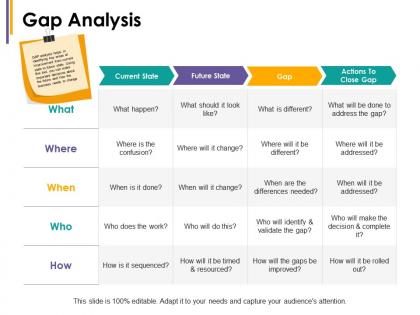
Gap analysis current state future state actions to close gap





Try Before you Buy Download Free Sample Product
 Impress Your
 Audience
 100%
100% Editable
 Save Hours
 of Time


Your great ideas need some data. Feed them with our Gap Analysis Current State Future State Actions To Close Gap.
People who downloaded this PowerPoint presentation also viewed the following :
Gap analysis current state future state actions to close gap with all 5 slides:
Get folks interested in changing with our Gap Analysis Current State Future State Actions To Close Gap. Introduce a different approach.
-
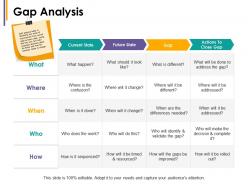
Gap analysis current state future state actions to close gap
-
Gap analysis current state future state actions to close gap
-

Gap analysis current state future state actions to close gap
-
Gap analysis current state future state actions to close gap
-

Gap analysis current state future state actions to close gap
FAQs for Gap analysis current state future state actions
Gap analysis is basically figuring out where you are now vs where you want to be. Pretty straightforward concept but people skip it all the time for some reason. You document your current situation first. Then nail down exactly what your end goal looks like. The gap part is just listing everything that needs to happen between those two points. It's like using GPS but for projects - shows you the actual route instead of just hoping you'll magically arrive. Helps you catch stuff like missing resources, skill shortages, or timeline problems before they blow up your whole plan. Honestly saved my butt more times than I can count.
Okay so first thing - grab a spreadsheet and list out what skills you actually need vs what your team has right now. I'm weirdly obsessed with spreadsheets for this kind of thing, don't judge me. Rate everyone's skills like 1-5 so you can see the gaps super clearly. The real trick is looking for patterns though. Like if your whole team sucks at data analysis, that's way more telling than one person being bad at presentations. Once you've got your biggest gaps mapped out, you can figure out whether you need training, new hires, or just shuffling responsibilities around.
So first thing - figure out exactly where you stand right now. Be brutally honest about it. Then get super specific about where you want to be. Most people mess this up by being way too vague (honestly drives me crazy). Once you've got that, look for the actual gaps between point A and point B. Rank which ones are gonna hurt you most if you ignore them. Build action plans around those priorities. Oh, and definitely track your progress with real numbers, not just gut feelings. One more thing - get other people's input throughout this whole thing because you'll miss stuff otherwise.
So performance gaps are basically you screwing up stuff you should already be nailing - missing your current targets, not hitting the standards that are already set. Opportunity gaps? Totally different beast. Those are about potential you could chase but don't have to. Performance gaps feel like "oh crap, fix this yesterday" while opportunities are more like "hmm, maybe we could expand here someday." The performance stuff usually has real consequences if you ignore it. I'd personally always handle the performance fires first - you can't really explore cool new opportunities when your house is burning down, you know?
Pick metrics that show the gap between where you are and where you wanna be. Revenue, customer satisfaction, turnover rates - stuff with actual numbers works great. But qualitative things matter too, like skill gaps or how your processes are actually working. I'd say stick to 3-5 that you can realistically track and influence. There's no point measuring everything if half of it doesn't connect to your goals. Oh, and make sure you can measure them consistently - I've seen people pick metrics they can only check once a year, which is pretty useless.
So gap analysis is basically your strategic reality check - shows you where you're at vs where you wanna be. First, map out your dream scenario, then work backwards to spot what's blocking you. Missing skills? Resources? Whatever it is, you'll see it clearly. Honestly, most people skip this step and wonder why they're spinning their wheels. The trick is being brutally honest about your current situation, then ranking which gaps to fix first. Some will have huge impact, others are just easy wins. It's like... well, GPS for strategy but less annoying than Siri interrupting you.
Honestly? Just start with Excel or Google Sheets - most people never even need to upgrade from there. You can map out your current situation vs where you want to be pretty easily. Lucidchart's solid if you're more of a visual person and want flowcharts and stuff. There's fancier options like Minitab for stats work, or IBM SPSS if you're dealing with enterprise-level complexity. I mean, you could also go with SmartDraw or those consulting frameworks, but that's probably overkill. My advice? Don't overthink it initially. Spreadsheets handle gap analysis just fine, then you can always level up later if needed.
So gap analysis basically shows you where your customer experience sucks compared to what people actually expect. Instead of guessing what's wrong, you get real data on stuff like slow response times or missing features that customers care about. I've watched teams waste months fixing things nobody complained about while ignoring the actual problems! Short bursts of insight like this help you figure out which fixes will actually move the needle on satisfaction. Once you know the specific disconnects between what you're delivering vs. what customers want, you can tackle the stuff that'll make them happiest first.
So industry standards are basically what you measure your gaps against - they show you what "good" actually looks like in your field. You compare your current stuff (processes, compliance, whatever) to these established benchmarks and boom, you can see where you're lacking. ISO certs, regulations, best practices that your competitors probably follow. Honestly, without these reference points you're just shooting in the dark about what needs fixing. Oh and here's the thing - figure out which standards actually matter for your specific situation first. Don't waste time on irrelevant ones. That's where I'd start before getting into the actual analysis part.
Honestly, the trickiest parts are usually bad data, people pushing back, and projects that keep growing. Stakeholders either downplay what they can do or way oversell their needs - go figure. Get them involved early though, so they don't feel like you're judging them. I'd pull data from multiple places to double-check everything. Also be super upfront about what you're actually analyzing, then document like crazy because scope creep is real. Oh, and if possible? Start with just one area first. Way better to mess up small than tackle everything at once and have it blow up in your face.
Think of gap analysis as your improvement engine - you're constantly checking where you are vs where you wanna be, then figuring out what to tackle first. I'd build it into quarterly reviews or after big project milestones. Don't just do it when stuff breaks, make it routine. Template the whole thing so teams know exactly what gaps to hunt for and how to measure them. Honestly, the biggest mistake I see is people doing the analysis but never connecting it to actual action. Feed those findings straight into your roadmap so there's always a clear line from discovery to doing something about it.
You definitely need stakeholder feedback for gap analysis - it's like your sanity check. People at different levels see stuff you'll totally miss. Frontline workers know where things actually fall apart (not just where the manual says they should work). Executives have the big picture view. Cast a wide net when you're collecting input because honestly, the person doing the job daily probably spots more real issues than someone three levels up. Their feedback helps you figure out which gaps matter most and whether your fixes will actually work in the real world instead of just looking good on paper.
I'd go with annual gap analyses for most companies, but if you're in something fast-moving like tech or retail, maybe every 6 months? Honestly depends on how quickly your industry changes. Don't wait a full year if things are shifting constantly - you'll be playing catch-up forever. Start with once a year and see what happens. If you keep finding huge gaps, do them more often. Oh, and actually put it in your calendar now with a reminder, because otherwise you'll totally forget (speaking from experience here). For stable industries though, yearly works fine.
Oh totally! Netflix is probably the best example - they saw the writing on the wall with streaming vs DVDs and made that huge pivot. Toyota does it constantly with their manufacturing, always comparing how things are running versus how they should be. My old IT team used gap analysis all the time for security stuff, figuring out what we were missing compared to what compliance needed. Honestly, the hardest part is being real with yourself about where you actually stand. Like, brutally honest. Then you can map out how to get where you want to be.
Oh man, cultural stuff can totally mess with your gap analysis if you don't watch out. Some teams will interpret standards completely differently than others. Plus people from certain backgrounds won't openly call out problems in interviews - I've watched this derail whole projects honestly. Hierarchy attitudes matter too since they affect who actually speaks up. Communication styles are all over the place - some cultures are super direct, others just hint at issues. You'll need to adjust how you collect data and read the results, or you're gonna miss the real gaps hiding underneath.
-
Use of different colors is good. It's simple and attractive.
-
Very unique, user-friendly presentation interface.