


Global Ready To Eat Food Market Part 1 Powerpoint Presentation Slides




Try Before you Buy Download Free Sample Product
 Impress Your
 Audience
 100%
100% Editable
 Save Hours
 of Time


The global ready to eat food industry is experiencing a surge in demand, driven by its widespread availability, convenience, and extensive global supply. Explore our efficiently designed Global Ready to Eat Food Market template. This Vacuum packed food presentation covers essential details about international players in the industry, pricing, growth strategies, and everything you need to know. Moreover, the Frozen food deck offers an overview of the ready to eat industry, presenting global statistics, market size in European countries, and market segmentation. Also, the Departmental stores PPT highlights market share, drivers, challenges, and future growth opportunities in the ready to eat industry. Additionally, the Food Manufacturing Powerpoint further showcases Porters five forces model, SWOT analysis, consumer behavior towards ready to eat food, go to market strategy, market strategy based on customer demographics, and more. Lastly, the Packaged food products module includes insights into promotional activities, pricing, growth strategies, business models, risk mitigation strategies, and other pertinent aspects. Download this comprehensive ready to eat industry report now to stay informed about the vacuum packed food, frozen food, departmental stores, food manufacturing, and packaged food products segments.
People who downloaded this PowerPoint presentation also viewed the following :
Content of this Powerpoint Presentation
Slide 1: This slide displays the title Global Ready to Eat Food Market.
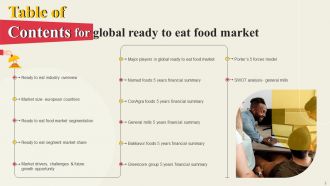
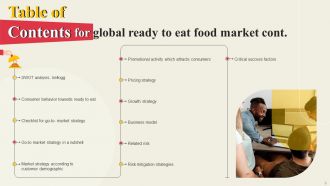
Slide 2: This slide exhibit table of content.
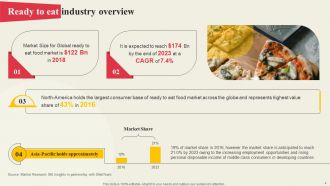
Slide 3: This slide exhibit table of content- INDUSTRY OVERVIEW.
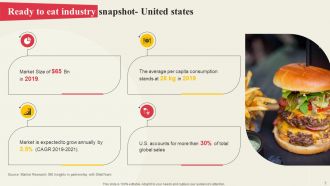
Slide 4: This slide display the INDUSTRY SNAPSHOT - UNITED STATES.
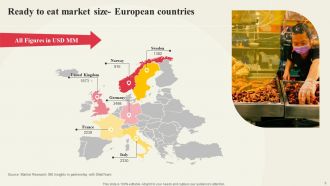
Slide 5: This slide display MARKET SIZE - EUROPEAN COUNTRIES.
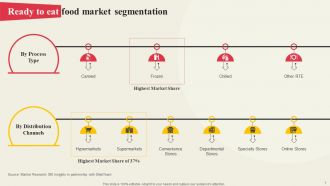
Slide 6: This slide display FOOD MARKET SEGMENTATION.
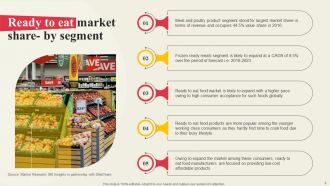
Slide 7: This slide display SHARE - BY SEGMENT.
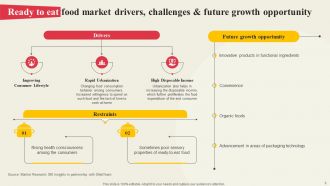
Slide 8: This slide display FOOD MARKET DRIVERS, CHALLENGES & FUTURE GROWTH OPPORTUNITY
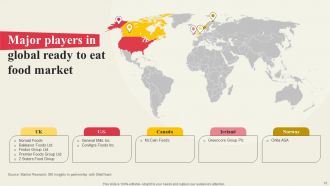
Slide 9: This slide display MAJOR PLAYERS IN GLOBAL READY TO EAT FOOD MARKET.
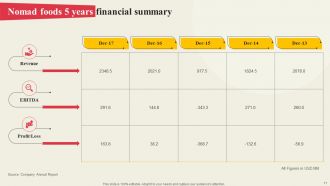
Slide 10: This slide display normad food 5 YEARS FINANCIAL SUMMARY.
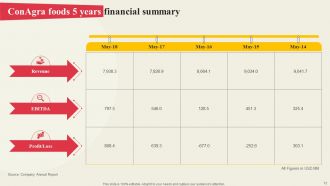
Slide 11: This slide display conAgra food 5 YEARS FINANCIAL SUMMARY.
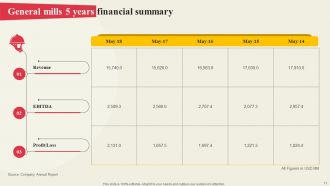
Slide 12: This slide display General mill 5 YEARS FINANCIAL SUMMARY.
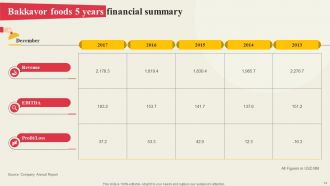
Slide 13: This slide display Bakkavor Foods 5 YEARS FINANCIAL SUMMARY.
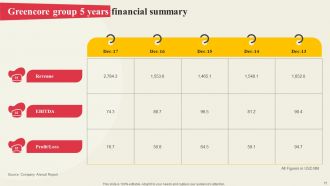
Slide 14: This slide display Greencore group 5 YEARS FINANCIAL SUMMARY.
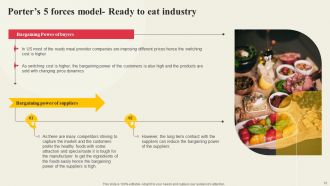
Slide 15: This slide display Porter’s 5 Forces Model
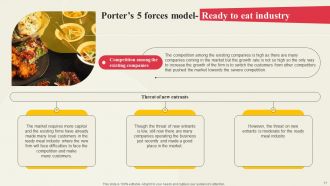
Slide 16: This slide further display Porter’s 5 Forces Model.
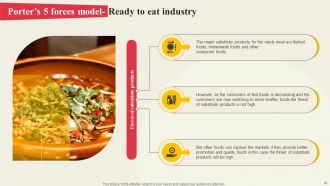
Slide 17: This slide display Porter’s 5 Forces Model- Threat of Substitute Products.
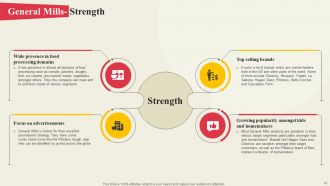
Slide 18: This slide display General Mills- STRENGTH
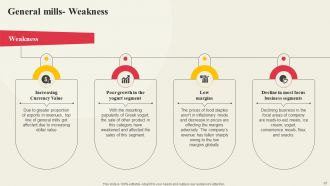
Slide 19: This slide display General Mills- WEAKNESS
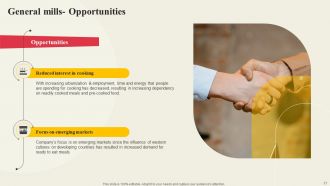
Slide 20: This slide display General Mills- OPPORTUNITIES
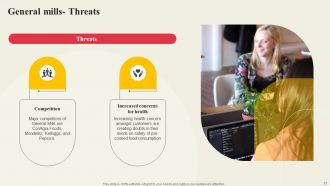
Slide 21: This slide display General Mills- THREATS
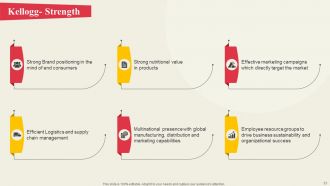
Slide 22: This slide display Kellogg- STRENGTH
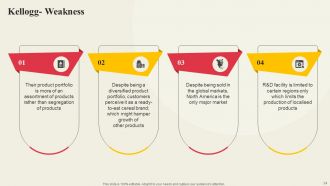
Slide 23: This slide display Kellogg- WEAKNESS
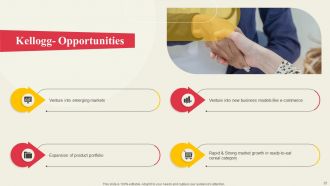
Slide 24: This slide display Kellogg- OPPORTUNITIES.
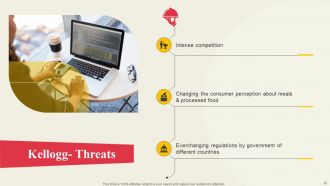
Slide 25: This slide display Kellogg- THREATS
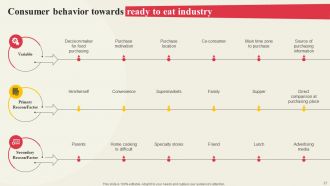
Slide 26: This slide to display CONSUMER BEHAVIOR TOWARDS READY TO EAT INDUSTRY.
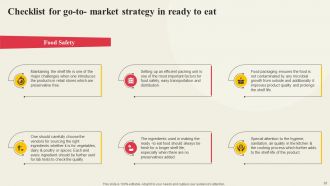
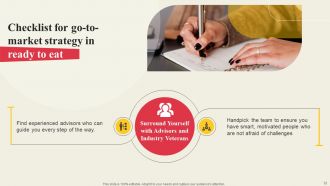
Slide 27: This slide display the Checklist for GO-TO- MARKET STRATEGY IN READY TO EAT.
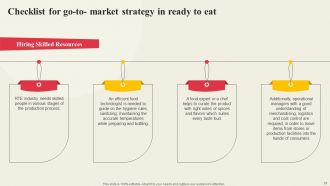
Slide 28: This slide display the Checklist for GO-TO- MARKET STRATEGY IN READY TO EAT.
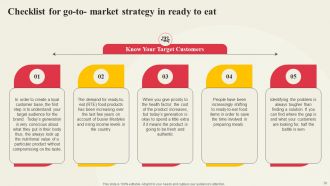
Slide 29: This slide also display the Checklist for GO-TO- MARKET STRATEGY IN READY TO EAT.
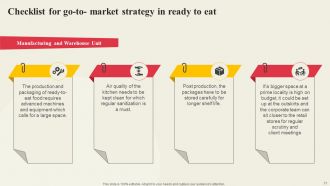
Slide 30: This slide also display the Checklist for GO-TO- MARKET STRATEGY IN READY TO EAT.
Slide 31: This slide also display the Checklist for GO-TO- MARKET STRATEGY IN READY TO EAT.
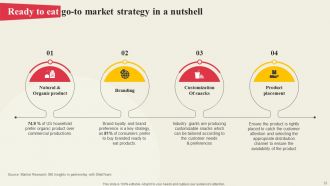
Slide 32: This slide also display GO-TO MARKET STRATEGY IN A NUTSHELL.
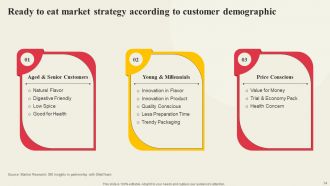
Slide 33: This slide also display MARKET STRATEGY ACCORDING TO CUSTOMER DEMOGRAPHIC.
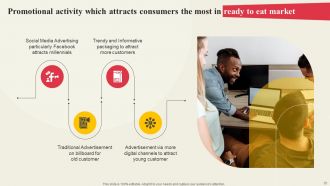
Slide 34: Promotional Activity which attracts consumer the most in ready to eat market.
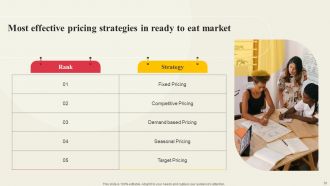
Slide 35: This slide display Most Effective PRICING STRATEGIES IN READY TO EAT MARKET.
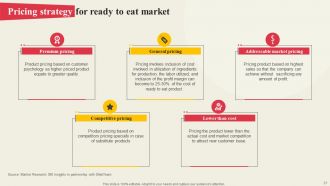
Slide 36: This slide display Pricing Strategy for READY TO EAT MARKET.
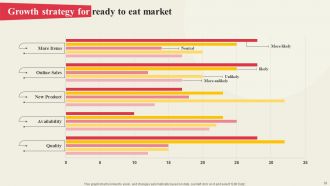
Slide 37: This slide display Growth Strategy for READY TO EAT MARKET
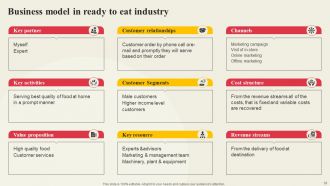
Slide 38: This slide display Business Model in READY TO EAT INDUSTRY.
Slide 39: This slide display the title RISK & RISK MITIGATION.
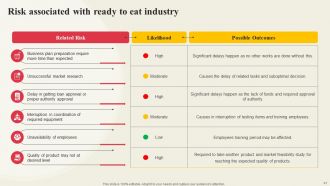
Slide 40: This slide display Risk Associated with READY TO EAT INDUSTRY.
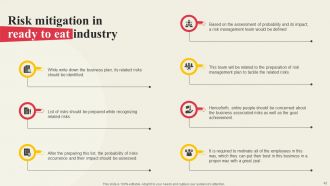
Slide 41: This slide display Risk Mitigation in ready to eat industry.
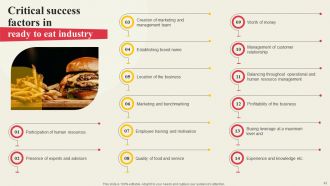
Slide 42: This slide display Critical Success Factors in READY TO EAT INDUSTRY.
Global Ready To Eat Food Market Part 1 Powerpoint Presentation Slides with all 48 slides:
Use our Global Ready To Eat Food Market Part 1 Powerpoint Presentation Slides to effectively help you save your valuable time. They are readymade to fit into any presentation structure.






FAQs for Global Ready To Eat Food Market Part 1
Hey! So it's basically all about how crazy busy everyone is these days. People want quick meals but don't want garbage food, you know? Plus with more couples both working and living in cities, nobody has time to cook from scratch anymore. COVID was actually huge for this - suddenly everyone was cool with just grabbing ready-made stuff. Online shopping made it way easier to get these meals delivered too. Oh and companies are finally making healthier versions that don't taste like cardboard. Honestly, if you're thinking about this space, the health-focused angle is where the money is right now.
Yeah, convenience food is totally taking off everywhere, but for different reasons. North America and Europe? It's all those crazy busy professionals who don't have time to cook. Asia-Pacific is more about cities getting packed and people living alone or in smaller families. Latin America's kind of cool though - they want the convenience but still crave their local flavors mixed in. Health stuff is becoming huge across the board too. Companies killing it right now are the ones nailing both convenience AND nutrition. Oh, and definitely pay attention to what flavors work in each region when you're looking at opportunities.
Dude, the tech stuff happening with ready-to-eat foods is wild right now. They're using high-pressure processing to kill bacteria without cooking everything to death. Smart packaging tells you if stuff's actually fresh. Some companies are doing precision fermentation to make new proteins - honestly didn't even know that was a thing until recently. Advanced freeze-drying keeps nutrients locked in better. AI's optimizing recipes for taste and nutrition, which sounds crazy but apparently works. Microencapsulation protects vitamins during processing. If you're investing in this space, look for brands dumping money into food tech R&D. That's where the real competitive edge is.
So basically everything revolves around health trends now. Companies are slashing sodium, boosting protein, going plant-based - whatever people want. The packaging tells the whole story too. "Clean label" and "superfood" claims are front and center instead of hidden somewhere. I swear half the grocery store is just "better-for-you" products now. Oh, and here's a random tip - follow wellness influencers if you're tracking this stuff. They're always ahead of what's coming next in terms of product launches.
Yeah, it's definitely young professionals in their 20s-30s who are crushing this market. Millennials and Gen Z basically live on these services because who has time to cook anymore? College kids too obviously. Single people across all ages are big buyers, but honestly dual-income households might be even bigger - like when both partners work crazy hours, meal kits are a lifesaver. Oh and older adults are getting into it more now, especially the healthier options. Time-saving is really what sells these people. I mean, convenience trumps everything when you're working 50+ hour weeks, right?
Oh man, the profit margins are brutal - literally pennies on the dollar. Supply chain issues will drive you crazy, and don't even get me started on food safety regulations. Your products are basically losing money every day they sit there expiring. Cold storage costs are insane too. Consumer trends change so fast it'll give you whiplash - keto one month, then suddenly everyone's obsessed with oat milk or whatever. Competition is fierce with all these new brands popping up constantly. My advice? Get your supply chain sorted first and become obsessed with food safety compliance. Those two things will save your sanity later.
So RTE companies are actually doing some cool stuff with sustainability now. Plant-based packaging is everywhere, and they're cutting food waste with smarter supply chains. Big names like Nestlé and Unilever are pouring money into eco-friendly production - honestly because Gen Z won't shut up about it (which is good!). They're also sourcing locally to reduce shipping emissions. Oh, and lots of water-saving tech in their facilities. If you're looking at suppliers, definitely check their sustainability certs. It's become a huge factor in procurement decisions these days.
Dude, the global food scene has totally exploded in grocery stores lately. Korean kimchi bowls are literally sitting next to Indian curry packets and Mexican street tacos - all on the same shelf as regular stuff. It's crazy how much variety there is now compared to like 10 years ago. Supply chains make it way easier to get ingredients from anywhere, plus people actually want authentic ethnic flavors now. Oh, and if you're working in food - definitely watch emerging trends from different countries. They usually tell you what's gonna blow up here next.
Honestly? Convenience and health messaging is everything right now. Busy families and professionals are your goldmine - they're desperate for nutritious stuff that doesn't require tons of prep. Instagram and TikTok crush it for this, especially if you show real meal prep situations. Don't do those fake influencer posts either - find people who genuinely use your products daily. Your packaging better pop on shelves too, obviously. But here's the thing that actually works: samples. Get people tasting your stuff because that converts way better than any fancy marketing campaign. Trust me on this one.
Honestly, packaging makes or breaks RTE foods. Think about it - resealable pouches keep stuff fresh way longer, and microwave-safe containers mean you don't have to dirty another dish (which I love). Portion control packaging is everywhere now since everyone's health-obsessed. The really cool stuff is smart packaging that actually tells you if food's still good. Better packaging just makes eating easier, so people buy more. Oh, and shelf appeal matters too - pretty packaging catches your eye first. When you're shopping, notice how the packaging either helps or annoys you during eating.
So basically every region has totally different rules for ready-to-eat stuff. The US is all about FDA requirements - HACCP protocols and nutrition labels. Europe's way pickier about additives though, like they really don't mess around with preservatives. Japan has these specific shelf-life rules and they're cool with traditional preservation methods that might not fly elsewhere. What's annoying is something that works in one place might totally bomb in another because of weird ingredient restrictions. Honestly, I'd figure out which markets you actually want to hit first. Then build that compliance stuff right into your product from the start - way easier than trying to fix it later.
So basically these e-commerce platforms let RTE brands skip grocery stores entirely and sell directly to you. Way faster to test new products too since they don't need some buyer's approval for shelf space. COVID really sped this whole thing up - honestly feels like it happened overnight. The crazy part is how much data they're collecting on your ordering habits. Brands can actually predict what you'll want before you know it yourself. Short sentences work. What I'm really curious about is how this messes with the power dynamic between brands and regular retailers down the line.
Dude, the plant-based ready-to-eat stuff is going crazy right now. You've got jackfruit, mushroom proteins, even lab-grown meat hitting stores - way beyond the old tofu days. Some of it actually tastes legit now, which is wild. Brands are nailing the convenience factor and getting really good at copying comfort foods like burgers and pizza. Oh, and frozen meals too - that whole segment is blowing up. Honestly, if you're thinking about investing or whatever, I'd watch the premium frozen stuff. That's where the real money seems to be moving.
Oh totally, COVID changed everything with ready-to-eat stuff. People got used to convenience during lockdowns and honestly never looked back. Now everyone wants foods that last longer - who has time for daily grocery trips anymore? The health thing is huge too. Like, people still want convenient but they're way pickier about organic and nutritionally good options now. It's wild how much the market shifted. If you're thinking about this space, definitely focus on that sweet spot where healthy meets easy - that's where all the money is right now.
Honestly, the ready-to-eat market is looking pretty solid for the next decade. Busy lifestyles and more people moving to cities are driving steady growth worldwide. Asia-Pacific is where it's at - massive opportunity there. Health trends are pushing companies to actually make decent organic and plant-based options (thank god, because the old stuff was terrible). E-commerce is making distribution way easier too. My take? Focus on emerging markets and healthier products if you're thinking about jumping in. That's where the money is. Rising incomes globally don't hurt either.
-
The ease of modifying templates is just superb! Also, the vast collection offers plenty of options to choose from.
-
Amazing slides! Unique, attractive, and easy to understand.