


Launching New Food Product To Maximize Sales And Profit Powerpoint Presentation Slides




Try Before you Buy Download Free Sample Product
 Impress Your
 Audience
 100%
100% Editable
 Save Hours
 of Time


A product launch can generate new partnerships or business relationships. Grab our Launching New Food Product to Maximize Sales and Profit template. It can help people and businesses introduce a new product effectively to an untapped market. Our New Launch deck opens with a section on the food industry to emphasize the most recent trends and the amount of money that various food categories generate globally. It also includes a part for competitive analysis, which helps companies identify the main rivals in their sector. The key topics this deck covers include the target audiences key demographics, product launch objectives, launch risks, and various launch phases. Our Innovative Food and Drink Presentation contains online, and offline marketing segments businesses can effectively market the product to the target audience and draw their attention to the new product. Finally, a few slides detail the survey form and KPI dashboard, helping the managers gauge the success of introducing the new product. Access this modifiable template right away.
People who downloaded this PowerPoint presentation also viewed the following :
Content of this Powerpoint Presentation
Slide 1: This slide introduces Launching New Food Product to Maximize Sales and Profit. Commence by stating Your Company Name.
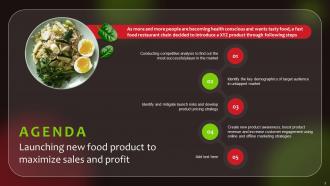
Slide 2: This slide depicts the Agenda of the presentation.
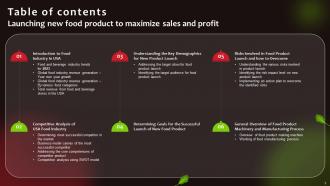
Slide 3: This slide incorporates the Table of contents.
Slide 4: This is yet another slide continuing the Table of contents.
Slide 5: This slide shows the Title for the Topic to be covered next.
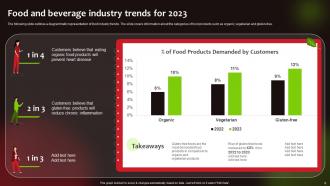
Slide 6: The following slide outlines a diagrammatic representation of food industry trends.
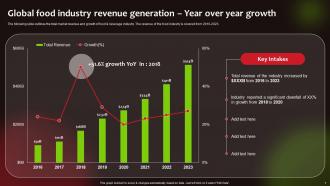
Slide 7: This slide displays the total market revenue and growth of food & beverage industry.
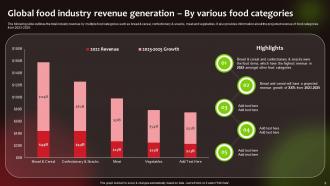
Slide 8: This slide talks about the total industry revenue by multiple food categories.
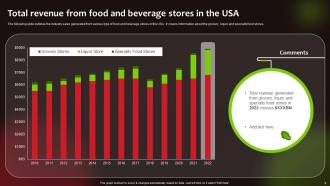
Slide 9: This slide mentions the industry sales generated from various type of food and beverage stores.
Slide 10: This slide elucidates the Heading for the Components to be discussed further.
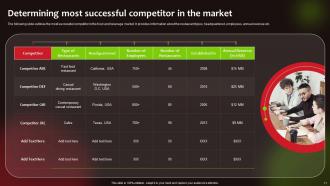
Slide 11: This slide deals with Determining most successful competitor in the market.
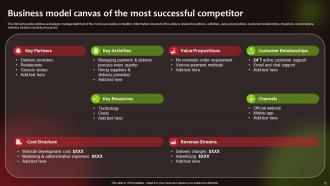
Slide 12: This slide showcases a strategic management tool of the most successful competitor.
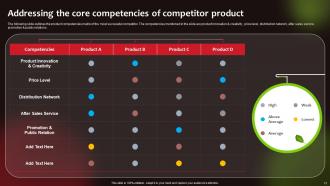
Slide 13: The following slide outlines the product competencies matrix of the most successful competitor.
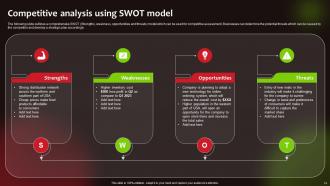
Slide 14: This slide presents the Competitive analysis using SWOT model.
Slide 15: This slide highlights the Title for the Ideas to be covered in the forth-coming template.
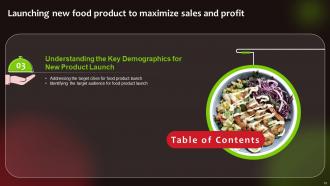
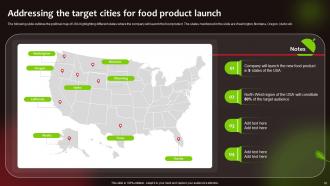
Slide 16: This slide Addresses the target cities for food product launch.
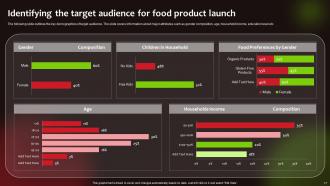
Slide 17: This slide deals with Identifying the target audience for food product launch.
Slide 18: This slide includes the Heading for the Ideas to be further discussed.
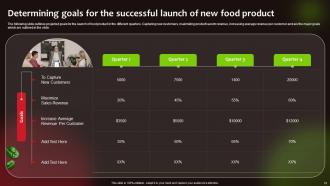
Slide 19: The following slide outlines projected goals for the launch of food product in the different quarters.
Slide 20: This slide depicts the Title for the Components to be covered next.
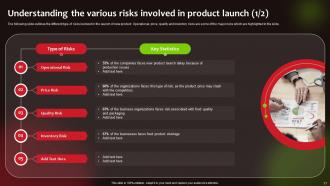
Slide 21: This slide deals with Understanding the various risks involved in product launch.
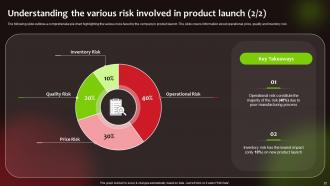
Slide 22: This slide continues Understanding the various risk involved in product launch.
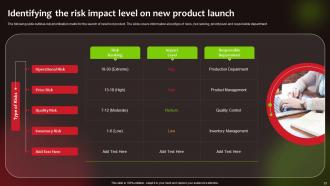
Slide 23: This slide focuses on Identifying the risk impact level on new product launch.
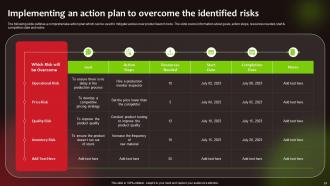
Slide 24: This slide indicates Implementing an action plan to overcome the identified risks.
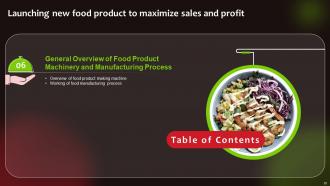
Slide 25: This slide highlights the Heading for the Topics to be further discussed.
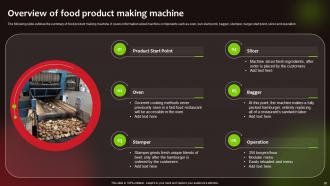
Slide 26: The following slide outlines the summary of food product making machine.
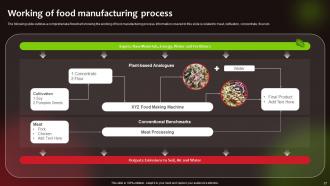
Slide 27: This slide presents a comprehensive flowchart showing the working of food manufacturing process.
Slide 28: This slide portrays the Title for the Ideas to be covered next.
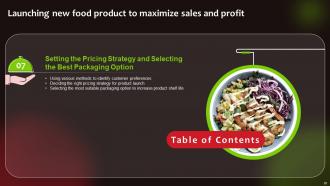
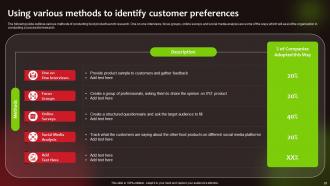
Slide 29: This slide displays Using various methods to identify customer preferences.
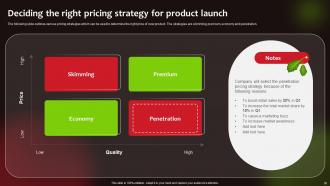
Slide 30: The following slide outlines various pricing strategies which can be used to determine the right price of new product.
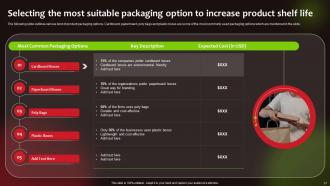
Slide 31: This slide emphasizes on Selecting the most suitable packaging option to increase product shelf life.
Slide 32: This slide depicts the Heading for the Ideas to be discussed further.
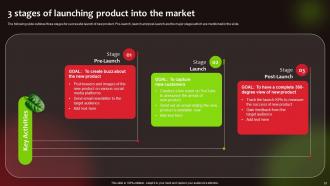
Slide 33: This slide reveals the 3 stages of launching product into the market.
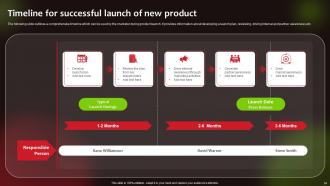
Slide 34: The following slide shows a comprehensive timeline which can be used by the marketer during product launch.
Slide 35: This slide showcases the Title for the Components to be covered in the following template.
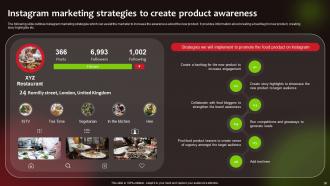
Slide 36: This slide elucidates the Instagram marketing strategies to create product awareness.
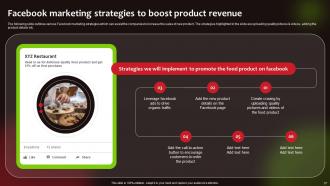
Slide 37: The following slide exhibits various Facebook marketing strategies which can assist the companies to increase the sales of new product.
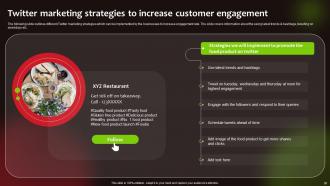
Slide 38: This slide states different Twitter marketing strategies which can be implemented by the businesses to increase engagement rate.
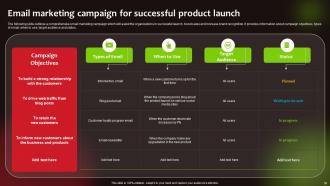
Slide 39: This slide indicates Email marketing campaign for successful product launch.
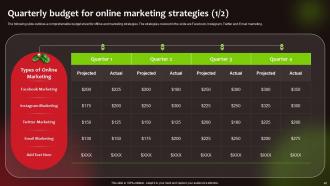
Slide 40: This slide presents Quarterly budget for online marketing strategies.
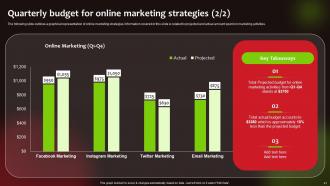
Slide 41: This slide continues the Quarterly budget for online marketing strategies.
Slide 42: This slide reveals the Heading for the Topics to be discussed further.
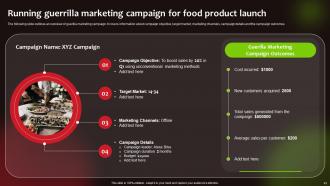
Slide 43: The following slide outlines an overview of guerilla marketing campaign.
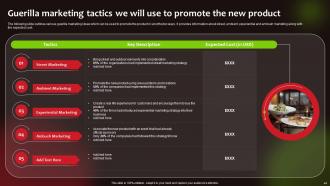
Slide 44: This slide displays the Guerilla marketing tactics we will use to promote the new product.
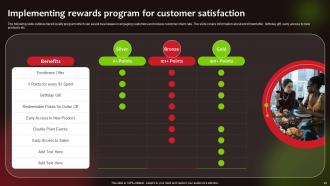
Slide 45: This slide focuses on Implementing rewards program for customer satisfaction.
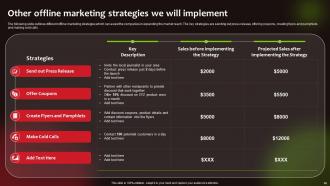
Slide 46: This slide deals with Other offline marketing strategies to be implemented.
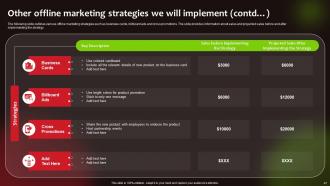
Slide 47: This slide talks about the Other offline marketing strategies to be implemented.
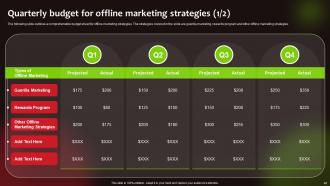
Slide 48: This slide shows the Quarterly budget for offline marketing strategies.
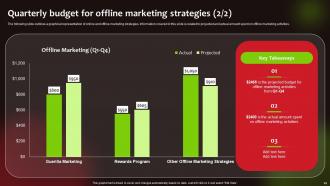
Slide 49: This slide continues the Quarterly budget for offline marketing strategies.
Slide 50: This slide mentions the Title for the Ideas to be further covered.
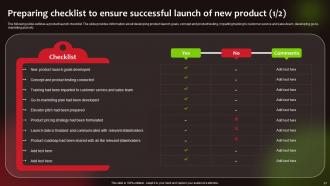
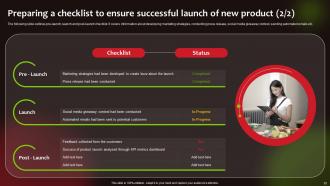
Slide 51: This slide talks about Preparing checklist to ensure successful launch of new product.
Slide 52: This slide continues the checklist preparation.
Slide 53: This slide highlights the Heading for the Ideas to be discussed in the following template.
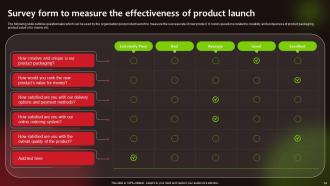
Slide 54: This slide presents the Survey form to measure the effectiveness of product launch.
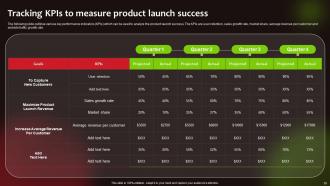
Slide 55: The following slide outlines various key performance indicators (KPIs) which can be used to analyze the product launch success.
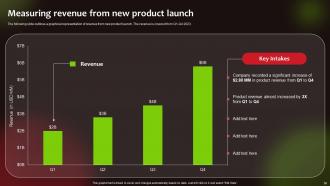
Slide 56: This slide emphasizes on Measuring revenue from new product launch.
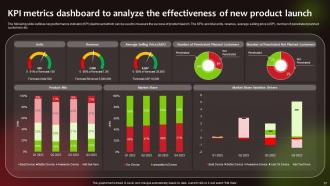
Slide 57: This slide illustrates the KPI metrics dashboard to analyze the effectiveness of new product launch.
Slide 58: This is the Icons slide containing all the Icons used in the plan.
Slide 59: This slide is used to depict Additional information.
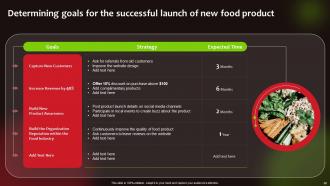
Slide 60: This slide deals with Determining goals for the successful launch of new food product.
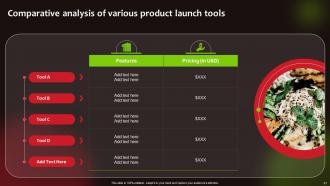
Slide 61: This slide presents the Comparative analysis of various product launch tools.
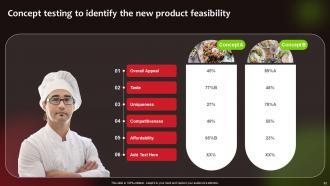
Slide 62: This slide talks about Concept testing to identify the new product feasibility.
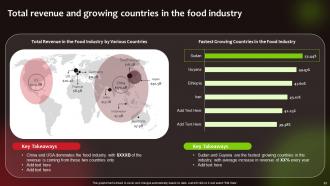
Slide 63: This slide exhibits Total revenue and growing countries in the food industry.
Slide 64: This is the About us slide for showcasing the comapny-related information.
Slide 65: This slide reveals the firm's mission, vision, and values.
Slide 66: This is Our team slide. State your team-related information here.
Slide 67: This slide contains the Post it notes for reminders and deadlines.
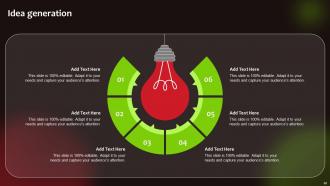
Slide 68: This is the Idea generation slide for encouraging fresh ideas.
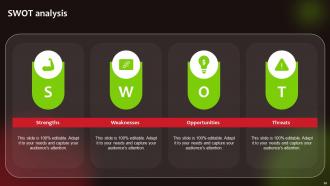
Slide 69: This slide displays the SWOT analysis.
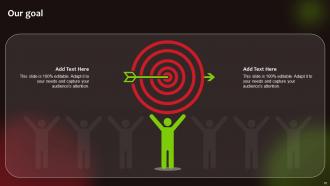
Slide 70: This is Our goal slide for depicting the company goals.
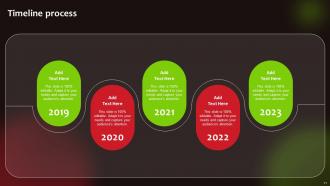
Slide 71: This slide illustrates the Timeline process.
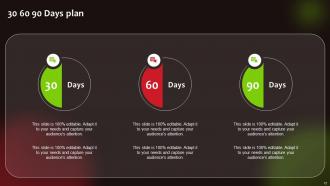
Slide 72: This is the 30 60 90 Days plan slide for effective planning.
Slide 73: This is the Thank You slide for acknowledgement.
Launching New Food Product To Maximize Sales And Profit Powerpoint Presentation Slides with all 78 slides:
Use our Launching New Food Product To Maximize Sales And Profit Powerpoint Presentation Slides to effectively help you save your valuable time. They are readymade to fit into any presentation structure.





FAQs for Launching New Food Product To Maximize Sales And Profit
Honestly, start with really understanding who's gonna buy this thing - like what problems they have, where they actually shop. Figure out what makes your product different before you do anything else. I've watched so many decent products bomb because they rushed past this step! Build your launch plan around retail partnerships and marketing channels. Pricing matters more than people think. Oh, and if you're dealing with regulated stuff, get that compliance sorted early - such a headache later. Start schmoozing retailers and influencers now though. Those relationships are slow to build but you'll need them for shelf space.
Honestly, market research is your best friend here - it stops you from launching blind. Focus groups and customer surveys will show you what people actually want, not what you think they want. You can test your messaging, figure out pricing, and find the right places to sell. I've watched too many good products die because they ended up in the wrong stores. The data also reveals when to launch and where your competitors are screwing up. Yeah, it costs money upfront, but it's nothing compared to bombing after you've spent everything. Trust me on this one.
Look, branding is everything when launching a food product. You need something that makes people grab YOUR jar of salsa instead of the dozen others right there. Think about it - you can spot certain brands from like three aisles away, right? That's what you're going for. Figure out what actually makes your product different first. Then build everything around that - your colors, logo, messaging, all of it. The emotional connection matters more than you'd think. People don't just buy food, they buy into the story you're telling them about why yours is worth trying.
Dude, start posting countdown content everywhere - teasers, behind-the-scenes production shots, ingredient close-ups. TikTok is honestly ridiculous for food stuff right now, like weirdly good engagement. Instagram Stories too. Get some food influencers to do early taste tests and unboxing videos. Make a hashtag and push for user content. Here's the thing though - you gotta be consistent. Post something launch-related every single day for like 2-3 weeks minimum. Seriously, batch-create everything now so you're not losing your mind scrambling later. Oh and definitely create a content calendar first or you'll forget half this stuff.
Honestly? Three things matter most - clear branding, shelf appeal, and making it actually functional. People need to instantly get what you're selling and why yours beats the competition. Bold colors and clean fonts are your friend here. I've literally watched products tank because their packaging looked like someone threw up a crayon box on it lol. Your main benefits should be readable from 3 feet away since that's how most folks browse. The unboxing thing matters too, plus whether it stores well after. Oh, and definitely test with real people first - you'd be surprised what doesn't translate.
Definitely start with real market research - surveys, focus groups, checking out who buys from competitors. But don't stop at basic demographics. Dig into the psychology stuff too: what drives people's food choices, their values, lifestyle things. Social media listening is honestly a goldmine - see what people already say about similar products. Once you know your segments, meet them where they're at. Food bloggers, cooking groups, farmers markets. Oh, and test your messaging with small groups first! Way better to start narrow than try appealing to literally everyone at once.
Match your grocery stores to your vibe first - Whole Foods if you're going premium, regional chains for mass market stuff. Amazon Fresh is basically required these days, plus your own website for direct sales. Specialty stores are gold though - they'll take chances on new products way easier than the big chains. Honestly, I'd rather prove myself there first before dealing with Kroger's bureaucracy. Keep it simple initially, maybe 2-3 channels tops. You can't support like ten different retailers when you're just starting out.
Honestly, working with food influencers is probably your best bet for launching. Their followers are weirdly loyal compared to other niches - like they actually buy stuff based on recommendations. You'll get way better reach than regular ads, plus real content you don't have to create yourself. Don't chase huge follower counts though. Find 3-5 smaller influencers whose audience matches who you're targeting. I'd start by sending free samples first - way less awkward than jumping straight into paid partnerships, you know?
Honestly, you need both the hard data and the fuzzy stuff to really know what's happening. Track your sales velocity and how fast you're getting into stores - that's the bread and butter. Customer acquisition costs vs lifetime value will make or break you financially. But here's the thing - don't ignore repeat purchases and what people are saying on social. That tells you if this thing has legs or if it's just a flash in the pan. I'd check everything weekly for three months, then maybe dial it back to monthly. Oh, and definitely get a simple dashboard set up so you're not drowning in spreadsheets.
Honestly, timing can totally make or break everything. You don't want to chase trends that are already everywhere - like plant-based stuff now where literally every brand has something. The trick is catching it while it's building momentum but before everyone else floods in. Also think about seasons - comfort food before fall, health kicks around New Year, that kind of thing. I'd start watching food trend reports and what's buzzing on social media way ahead of time. Maybe 6-12 months out? Gives you a real advantage over people scrambling last minute.
Dude, sampling is absolutely everything with food - people need to taste it first. Get some in-store demos going or throw free samples in online orders. Maybe hit up meal kit companies too? For getting people to buy again, your packaging better scream why it's worth it. Subscription discounts help loads. Oh and definitely push for reviews - nothing beats seeing real people actually eating your stuff on social media. Don't go crazy trying every channel at once though. Pick like two max and obsess over your conversion numbers so you actually know what's working vs what's just burning cash.
Start collecting feedback right at launch through surveys, focus groups, and watching social media. Sales data matters just as much as what people say - sometimes more, honestly. You're gonna get tons of random complaints mixed with actual useful stuff. Sort everything into quick fixes versus big changes, then focus on issues multiple people bring up. Here's something most people miss: always circle back to your early customers and tell them what you changed based on their feedback. Makes them feel heard and they'll stick around way longer.
Oh man, food law is a maze! FDA stuff comes first - labels, nutrition facts, ingredient lists, allergen warnings. All that boring but super important paperwork. Get your manufacturing permits sorted too. Definitely trademark your brand name, and if you've invented something cool, maybe look into patents. Product liability insurance is a must because people are lawsuit-happy these days, especially with food. Your marketing can't make bogus health claims either - they actually check that stuff. Honestly? Find a food attorney right away, even though they're pricey. Trust me on this one.
Honestly, start with something real - maybe your grandma's recipe or the actual farm where you get ingredients. People don't just taste food, they feel it, so those stories actually matter. Behind-the-scenes stuff works great too. Show your process, share customer stories about how they use your product. Some brands create mascots which... can be hit or miss but worth trying. Oh, and "journey" content does really well - like documenting how you built the business. Pick one story that's genuinely yours first. See how people react before you go crazy with it.
Honestly, the biggest mistakes I see are skipping consumer testing and launching without knowing who you're actually selling to. Your supply chain better be bulletproof too - ran out of stock in week two once and it was brutal. Don't expect retailers to just hand you shelf space either, you've got to build those relationships first. Most people dump their whole marketing budget on day one instead of spreading it out. Oh, and test in a smaller market first! Work out all the weird issues before going big. Trust me on that one.
-
“Detailed and great to save your time.”
-
Awesomely designed templates, Easy to understand.