


Goal gap analysis steps powerpoint graphics





Try Before you Buy Download Free Sample Product
 Impress Your
 Audience
 100%
100% Editable
 Save Hours
 of Time


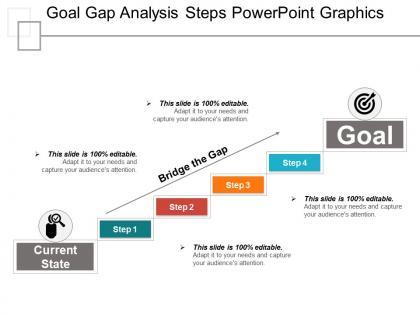
This template displays the steps to illustrate the gap analysis concepts. There are two sides with current state and goal respectively, and then there are four stages in between which need to be covered to achieve that goal. This goal gap analysis PPT presentation infographic can be used to explain to your team how to bridge the market gap with certain strategies. This gap analysis steps PPT presentation diagram is a modern approach to discuss the marketing analysis of the company with the audience at large by comparing its current and future position. In other words, the gap analysis PPT PowerPoint model helps understand how a competitive edge in the market helps in redefining the resources and efficiency. The performance-based evaluation and management PowerPoint model helps the management team to develop an action plan that will fill in the gaps in performance. This simple slide layout is appropriate for explaining the complex marketing concept. Its visuals help the audience instantly grasp the basic idea of the presentation without going into details. Give them a feel of the exotic with our Goal Gap Analysis Steps Powerpoint Graphics. They will evoke desires in them.
People who downloaded this PowerPoint presentation also viewed the following :
Goal gap analysis steps powerpoint graphics with all 5 slides:
Foster harmony with our Goal Gap Analysis Steps Powerpoint Graphics. Convince them of the benefits of cohesive action.


FAQs for Goal gap analysis
So basically you need three things: where you are now, where you want to be, and what's standing in your way. Start by getting real data on your current situation - actual numbers, resources, skills, whatever applies. Then get super specific about your end goal and timeline. People always mess this up by being too wishy-washy about what they actually want. Figure out the gaps between point A and point B. What's missing? What needs fixing? I'd prioritize the gaps that'll move the needle most. Oh, and don't try to tackle everything at once - that never works. Focus on the high-impact stuff first.
Honestly, start by figuring out what's actually happening now versus what you think should be happening. Ask everyone - your boss, middle managers, the people doing the work. They'll all give you totally different answers, which is kinda the point. Then get super specific about where you want to end up. Not "make more money" but like "15% revenue boost in 12 months from new customers." I learned this the hard way - vague goals are useless goals. Once everyone's on the same page about current reality and future targets, then you can figure out how to get there.
Honestly, SWOT analysis is your best bet if you're just starting out - super easy to wrap your head around and covers all the basics. Gap Analysis Matrix works great too for mapping where you are vs where you wanna be. The 5 Whys thing might sound dumb but I swear it actually works for getting to the real problem. Fishbone diagrams are clutch when things get messy and complicated. You could also try benchmarking tools if you want to see how you stack up against competitors or whatever. But yeah, definitely go with SWOT first - it'll give you that bird's eye view you need.
Honestly, just focus on 2-3 metrics that actually connect to what you're trying to achieve. Conversion rates if you're selling stuff, customer satisfaction for service goals - you get it. Here's the thing though: mix leading indicators (stuff that predicts success) with lagging ones (your final results). Don't get caught up in vanity metrics that look cool but mean nothing. I made that mistake early on. Whatever you pick needs to be measurable and something you can actually control through your actions. Track them consistently instead of drowning yourself in spreadsheets with like 20 different data points.
You really need other people's eyes on this stuff - they'll catch things you totally missed. Different stakeholders know the actual day-to-day problems, not just what looks wrong on paper. And honestly? People are way more likely to get behind solutions when they helped build them. It's just human nature. Figure out who's impacted by each goal first, then bring them in early. They'll help you prioritize which gaps actually matter versus the ones that just seem important. Plus you get way better data quality since they live this stuff every day. The buy-in alone makes it worth the extra coordination headache.
Honestly, the worst part is when people set completely bonkers goals - either shooting for the moon or selling themselves way short. Your team's gonna pushback too, trust me on that one. Get everyone involved from day one so they actually care about what you're doing. Oh, and don't even think about starting without solid baseline data first. That's like trying to navigate without a map. Set up those regular check-ins to see how things are going. Most important thing? Don't treat your first draft like it's written in stone - you'll need to tweak it as you go.
Honestly, quarterly is probably your best bet - maybe monthly if you're in something super fast-paced. Most companies I know do it every 3-6 months depending on their industry. Don't be like those places that only review annually though, that's way too slow when everything changes constantly. Try syncing it with your business review cycles if possible. The main thing is just being consistent about it (I always forget these things without calendar reminders). Otherwise it becomes one of those tasks you keep putting off forever.
Your team is gonna give you the best reality check on your goals, honestly. They see the actual bottlenecks and know what resources are missing - stuff you might totally miss from your level. When people help shape the goals, they're way more invested in hitting them (go figure). During gap analysis, their input reveals blind spots in your assumptions. You'll learn what's really blocking progress vs. what you think the problem is. Ask specific questions about obstacles though, not vague "how are things?" Otherwise you'll just get polite non-answers that don't help anyone.
Honestly, dashboards are a game changer for tracking goals. I've been using Tableau lately and it beats the hell out of updating spreadsheets manually - like who has time for that? Tools like Asana show progress bars automatically too. The trick is connecting your data sources so everything updates on its own. Figure out which metrics actually matter first (not everything needs tracking tbh). Then grab a tool that pulls your data and makes it look decent. Monday's pretty solid if you want something simpler than Power BI.
Break it into three parts: where you are now, where you want to be, and what's missing. Put real numbers on everything - like "customer satisfaction is 60% but we need 85%" instead of vague stuff. Honestly, executives eat up charts and tables, so throw one in there. Don't just list problems though. Dig into why things are broken, not just that they're broken. Rank everything by what'll actually move the needle and what's doable. Oh, and make sure you've got names attached to who owns what, plus realistic deadlines. Keep it short or nobody will read the damn thing.
So basically, gap analysis shows you the difference between where you're at now and where you want to be. Most teams totally skip this part (which is wild to me) and then wonder why everything feels all over the place. You can use those gaps to figure out what to tackle first - like if your revenue is way off but customers are pretty happy, you know what needs attention. The trick is turning each gap into actual goals with real numbers. Otherwise you're just making a wish list instead of a strategy. It's one of those simple things that actually works.
Oh man, the biggest mistake is being super vague about where you're starting from. Like, get actual data instead of guessing - I've watched so many teams completely derail because they thought they knew their baseline but were way off. Don't set crazy unrealistic timelines either. Also this isn't a one-and-done thing, you gotta revisit it regularly since stuff changes. When you're brainstorming solutions, actually think about what resources you have available. And here's the thing - resist going after everything at once (I know, easier said than done). Pick maybe 2-3 top priority gaps and focus there first.
So the basic process is pretty much the same across industries, but everything else changes big time. Tech companies obsess over user data and iterate crazy fast. Manufacturing? They're all about production numbers and safety over much longer timeframes. Healthcare has these insane regulatory hoops that creative fields don't even think about - seriously, the paperwork alone would kill you. Finance zeroes in on risk management while retail's constantly chasing customer numbers and seasonal trends. Honestly, you've got to figure out what actually matters in your industry first, then build your whole analysis around those specific benchmarks. Otherwise you're just shooting in the dark.
So after your gap analysis, you've got a few different routes depending on what you found. Skills missing? Time for training programs or bringing in new people who actually know their stuff. Short on resources? Draft up those budget requests or shuffle what you already have around. Process issues are trickier - usually means redesigning workflows or implementing new systems (ugh, I know). Tight timelines? Either push back deadlines or throw more people at the critical stuff. Honestly, just match each gap with the most obvious fix. Don't overthink it. Start with whatever's gonna move the needle most toward your goal.
So basically you take those gap analysis results and tackle the biggest problems first - whatever's hitting your main goals hardest. Honestly, seeing it all mapped out like that is kind of a reality check. From there, figure out if you need more training, better tech, or just more people to fix things. Oh and don't be afraid to adjust your original goals if they're totally unrealistic - happens more than you'd think. Create action plans for each gap with clear owners and deadlines. Focus your team's energy on high-impact stuff instead of spreading too thin.
-
Easily Understandable slides.
-
Great quality slides in rapid time.