


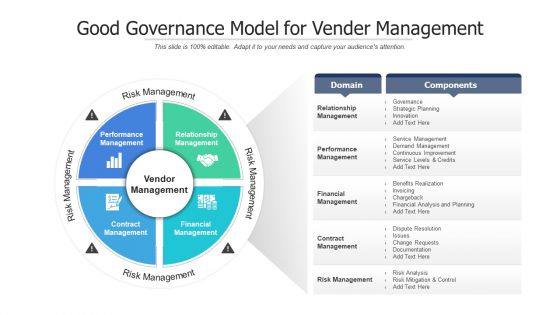
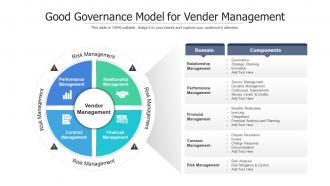
Good governance model for vender management




Try Before you Buy Download Free Sample Product
 Impress Your
 Audience
 100%
100% Editable
 Save Hours
 of Time


Our Good Governance Model For Vender Management are topically designed to provide an attractive backdrop to any subject. Use them to look like a presentation pro.
People who downloaded this PowerPoint presentation also viewed the following :
Good governance model for vender management with all 2 slides:
Use our Good Governance Model For Vender Management to effectively help you save your valuable time. They are readymade to fit into any presentation structure.
FAQs for Good governance model
Okay so you need four main things: clear roles (who decides what), solid onboarding/monitoring processes, risk frameworks with regular check-ins, and performance metrics that actually tie to business results. Most people totally bomb the metrics part - they measure random stuff instead of what drives real outcomes. Map out your current vendors first and see where the biggest gaps are. Oh and definitely build in escalation procedures because vendors will screw up at some point, it's inevitable. The risk assessment piece is probably where I'd start if I were you.
Honestly, good vendor governance is like your early warning system for supply chain disasters. You're constantly checking on your suppliers' performance and financial health instead of crossing your fingers and hoping for the best. Think of it as regular health checkups for your vendors - way better than waiting until they're already tanking, right? This gives you way better visibility into potential problems. You can diversify your supplier base smartly and actually have backup plans ready. The trick is being proactive about it. Set up those vendor scorecards and risk assessments now before you need them.
Honestly, I'd focus on the basics first - contract compliance, SLA performance, cost savings, response times. That stuff matters day-to-day. But relationship metrics are where things get interesting: how often are you escalating issues? What are renewal rates looking like? Those tell you if vendors actually want to work with you long-term. Don't sleep on risk either - audit findings, security incidents, business continuity tests. Here's the thing though: pick maybe 5-7 metrics max and actually use them. I've seen too many teams track everything under the sun then never look at half the data.
Honestly, a good vendor management system will change your life. It handles everything - onboarding, contracts, performance tracking, risk stuff. Real-time dashboards show you KPIs and compliance across all your vendors at once. The AI features are getting crazy good at predicting issues before they hit (like flagging contract renewals early). No more nightmare spreadsheets everywhere or endless email chains. Pick something that plays nice with your current procurement and finance tools. Trust me, you'll wonder how you managed without it once you get it running.
Look, compliance might sound super dry, but it's what keeps your vendor relationships from blowing up in your face. Map out all your regulatory requirements for each vendor first - that's your foundation. Build checkpoints into every stage: selection, monitoring, contract renewals, the whole thing. Honestly, I've seen companies get absolutely wrecked during audits because they skipped this step. You'll want compliance baked into your governance processes from day one. Without it, you're just asking for penalties or breaches. Trust me, it's way less painful to set up properly than deal with the aftermath later.
Oh man, cultural stuff makes such a huge difference with vendors. Asia's all about building relationships first - tons of face-to-face time before you even think about contracts. Europeans want everything documented and super structured. Latin America? Way more flexible and relationship-focused. I totally bombed some negotiations in Japan by rushing things like an idiot. You've got to adjust your whole approach - how people communicate, make decisions, even negotiate varies wildly. Honestly, it's worth building cultural training into your onboarding. Also tweak how often you check in based on what works for each region.
Three things really matter: talk to them regularly, be transparent, and treat them like actual partners instead of just vendors. Don't only reach out when something's broken - do quarterly check-ins or whatever works. Be honest about what you expect and what's challenging you, then actually listen to their side too. The ones who feel valued will seriously save your butt when things go sideways. Pay them on time (obviously) and call out good work publicly. I'd start with your top 3-5 most important vendors first rather than trying to overhaul everything at once.
Honestly, data analytics is a total game-changer for vendor stuff. Instead of guessing who's screwing you over, you'll actually know. Track delivery times, costs, quality scores - the usual suspects. What's cool is you can spot patterns, like which vendors always come through vs the ones giving you constant headaches. Plus it helps predict problems before they hit - maybe a vendor's finances are tanking or you're getting too dependent on each other. I'd start simple though. Just collect consistent data on the basics first. Then benchmark against industry standards and your own history. The numbers don't lie, and they'll show you exactly which relationships need work.
Honestly, the hardest part is getting everyone to play nice together. IT wants to control all the tech stuff, procurement's obsessing over costs, and legal needs to approve everything - total nightmare. Different departments do their own thing with zero consistency. Oh, and good luck getting executives excited about "standardized processes" (snooze). People hate changing how they work, especially when they already have vendor buddies they trust. Here's what actually works though: pick one small vendor category and nail that first. Get some quick wins, then slowly take over the world from there.
For most vendors, quarterly reviews work great - but bump critical ones to monthly. Trust me, I made the mistake of doing monthly reviews for EVERYONE and we basically lived in spreadsheets. Not fun. Match your review schedule to how much the vendor actually matters to your business. Monthly attention for high-risk or big-spend vendors makes sense. Everyone else? Quarterly is plenty. Oh, and actually put these in your calendar with alerts or you'll blink and realize it's been half a year since you checked on anyone. Happens more than you'd think!
Build alignment right into how you pick and manage vendors from day one. Make sure they actually get your strategic priorities - like, really understand how their work connects to your bigger goals. Don't just do operational check-ins either. Have real strategic conversations during business reviews. I've watched so many companies skip this part then act shocked when everything falls apart later. Tie their performance metrics to your actual outcomes, not just whether they delivered stuff on time. Oh, and review this alignment quarterly minimum - things drift way faster than you'd think.
Honestly, you've gotta nail down who talks to who first - mixed messages will torpedo any vendor relationship faster than anything else. Monthly business reviews are your bread and butter, then quarterly strategic stuff for the bigger picture. Document everything in one place both teams can see, because memories get fuzzy real quick. When things blow up (not if, when), have those emergency calls ready to go. I'd map out your whole communication schedule upfront and actually stick to it. Share the real numbers - performance data, what's changing, problems brewing. Transparency beats politics every time. Also figure out clear escalation paths so people know exactly where to go when stuff hits the fan.
Look, set up scoring criteria that weighs quality stuff against price. I learned this the hard way – cheap vendors will absolutely screw you over with garbage work. Check their track record, financials, service promises, whatever matters for your thing. Weight it based on your priorities. Honestly, paying 15% more for someone reliable usually saves your ass later. Oh and do this backwards – figure out your must-haves for quality first, then compare costs only between vendors who actually meet those standards. Don't even look at the others.
Definitely go with CIPS or ISM certifications first - they cover all the basics like contracts and risk stuff. Risk management modules are clutch since that's where most teams mess up honestly. Get your people trained with legal, finance, and IT too so you're not constantly translating between departments. Oh and don't skip the soft skills training - those negotiation workshops actually work way better than you'd think. Communication seminars help too. I'd pick one cert program to start with and see how it goes before adding more.
Honestly, stakeholder buy-in is what separates good vendor governance from total chaos. Get procurement, legal, IT, finance, and the actual business users involved from day one - don't just hand them a finished framework to sign off on. Map out everyone who actually deals with vendors (there's always more people than you think) and get them talking to each other. Each group needs clear ownership of their piece, plus regular check-ins on how vendors are performing. Without this, you'll just end up with another binder collecting dust while everyone points fingers when things go wrong.
-
Awesome presentation, really professional and easy to edit.
-
Nice and innovative design.
-
It saves your time and decrease your efforts in half.
-
Excellent work done on template design and graphics.
-
Attractive design and informative presentation.
-
Presentation Design is very nice, good work with the content as well.
-
Easy to edit slides with easy to understand instructions.
-
Best Representation of topics, really appreciable.
-
Informative design.
-
Great experience, I would definitely use your services further.