


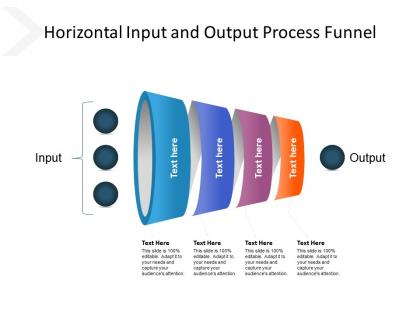
Horizontal input and output process funnel




Try Before you Buy Download Free Sample Product
 Impress Your
 Audience
 100%
100% Editable
 Save Hours
 of Time


Our Horizontal Input And Output Process Funnel are topically designed to provide an attractive backdrop to any subject. Use them to look like a presentation pro.
People who downloaded this PowerPoint presentation also viewed the following :
Horizontal input and output process funnel with all 2 slides:
Use our Horizontal Input And Output Process Funnel to effectively help you save your valuable time. They are readymade to fit into any presentation structure.
FAQs for Horizontal input and
Okay so it's basically Awareness, Interest, Consideration, Intent, Purchase - moving people from "who are you?" to actually buying your stuff. First, get on their radar with content or ads. Then keep them hooked with useful info during the interest phase. Consideration is honestly the worst part because they're shopping around and comparing you to everyone else. Intent means they're almost there - like, cart loaded but haven't clicked buy yet. Finally purchase happens. The cool thing? You can see exactly where people bail out between stages. I'd start by mapping where your customers currently drop off the most.
Honestly, the funnel thing is pretty solid for figuring out conversion rates. Map out your stages - awareness, interest, consideration, purchase - then see where people actually drop off. Way better than just guessing what's wrong. Like you might notice 60% of leads disappear after requesting a demo, then you know exactly what to fix. Track your current numbers first though, that's key. Oh and you can customize messaging for each stage instead of sending the same stuff to everyone. Sounds boring but it actually works once you get into the data patterns.
At the funnel's top, you're looking at awareness stuff - impressions, reach, site traffic. Email signups and content downloads matter more in the middle, plus demo requests. Bottom funnel? That's where conversion rates and deal size actually count. Most teams get obsessed with vanity metrics that look impressive in reports but don't move the needle. I learned this the hard way tbh. You'll save yourself tons of headaches by picking just 2-3 metrics per stage that tie back to revenue. Make sure they're things you can actually improve through your campaigns and outreach efforts.
So your customers are literally driving your whole funnel, right? Track where people actually drop off instead of guessing. Some folks will skip steps completely, others get weirdly stuck at random spots. Honestly, the data usually proves your assumptions wrong - happens to me all the time. Focus on those big drop-off points first since that's where you'll see real improvements. Don't waste time on stages that are already converting well. Watch how they actually move through your touchpoints, not how you think they should.
So content marketing works differently depending on where people are in your funnel. Top of funnel? Blog posts, social stuff, educational content - you're just trying to get noticed. Then it gets more targeted. Case studies and webinars work great for the middle when they're actually considering you. Bottom funnel is all about closing - demos, trials, testimonials. I always forget how much testimonials actually move the needle, but they really do. You'll want to map your content to each stage. Start by figuring out what gaps you have first.
Check your conversion rates at every funnel step - that's how you'll spot where people are bailing. Pull up your analytics and see which transition kills the most users. Could be checkout, could be some annoying signup form (honestly, why do companies make those so painful?). The step with the worst conversion rate? That's your culprit. Once you find it, dive into the behavior data for that exact spot. Heatmaps work great. Session recordings too. Then you can actually fix whatever's making people leave instead of just guessing what's wrong.
Honestly, start with a solid CRM - HubSpot's free tier is pretty decent, or go with Salesforce if you've got budget. Pipedrive's nice too. Google Analytics will show you exactly where people are bailing out (which is weirdly the most useful data you'll get). If you want to get fancy later, throw in some marketing automation like Marketo or Pardot to nurture leads automatically. Tableau makes everything look professional, but your CRM's basic dashboard might be enough at first. Don't overthink it - pick one tool and actually use it consistently.
Look, it's all about meeting people where they are in the buying process. Top of funnel? Hit them with blogs and social content to get on their radar. Once they're interested, that's when you bring out the good stuff - demos, case studies, emails that actually matter. Honestly, this middle stage is make-or-break for most deals. Don't mess it up by being pushy too early (I see this mistake constantly). Bottom funnel is proposal time - they want pricing and real talk about moving forward. Track where people bail out of your process so you can fix those spots. The whole thing falls apart if you're trying to close someone who barely knows you exist.
Dude, the worst thing you can do is try fixing everything at once. Pick your biggest bottleneck first. Also, tons of companies don't even define what moves someone from "prospect" to "qualified lead" - drives everyone crazy trying to figure it out. I see teams getting obsessed with vanity metrics at the top while completely ignoring conversion rates further down the funnel. Most people also suck at tracking where users actually drop off, so they're basically guessing. Oh, and map out your current process with real data first - sounds boring but you'll thank me later. Then just tackle one stage at a time.
Yeah, so companies totally adjust their funnel stages based on how their customers actually buy stuff. Tech companies drag out the consideration phase forever - like multiple demos and all that. Retail's more about nailing that conversion moment since people buy way faster. Healthcare? Don't even get me started on all their compliance checkboxes lol. B2B splits things into lead qual and nurturing phases. Manufacturing throws in spec reviews and procurement approvals - basically whatever hoops their buyers jump through. Just map what your customers actually do instead of cramming them into some cookie-cutter template, you know?
Honestly, visualizing your funnel is a game changer. You'll spot drop-offs instantly instead of getting lost in boring spreadsheets. Bar charts and funnel diagrams show conversion rates super clearly. Your executives will actually pay attention too - they hate data tables but love pretty charts. Quick identification of problem stages becomes so much easier. I always tell people to start simple, even basic visuals beat raw numbers every time. Oh, and your team will thank you when you can point to specific bottlenecks instead of rambling about percentages. Makes everything way more actionable.
Honestly, customer feedback is like gold for fixing your funnel. People will straight up tell you where things suck - maybe your checkout's confusing or they can't find the buy button. I've watched entire funnels get flipped around just from talking to a handful of customers (it's pretty wild). Grab feedback everywhere you can - surveys, quick interviews when people bounce, user testing sessions. Oh, and actually do something with what they tell you! If three people say the same thing's broken, that's your next fix right there. Keep asking regularly so you're always tweaking based on real experiences.
So automation tools basically jump into your funnel and handle all the boring repetitive stuff. Email sequences for nurturing leads, chatbots that do the first round of qualifying people, follow-ups that trigger when someone does something specific - it's pretty sweet actually. Here's the thing though: don't just automate random crap. Map it out so it matches each stage of your funnel. I'd start with whatever's your biggest pain point first. Maybe that's follow-ups, maybe it's lead scoring, whatever. Once you get the flow right, conversions get way better since everything connects properly.
Three big things to focus on when building funnels: don't overwhelm people with too many choices, use social proof everywhere (seriously, most people ignore this goldmine), and frame offers around what they'll lose instead of gain. Keep each step dead simple - I've seen too many funnels crash because someone tried cramming everything into one page. Testimonials and user counts work way better than you'd think. Map out where people currently drop off first, then add some urgency without being weird about it. Oh, and that whole "limited time" thing? It actually works if you're not constantly crying wolf.
So the funnel model is like your foundation - it gives you those key stages (awareness, consideration, conversion, retention) to work with. Then you build your customer journey mapping on top of that structure. Journey mapping is where you get into the weedy stuff - what people are actually feeling, their pain points, all the touchpoints they hit. Short sentences work better here. Without that funnel framework first, your maps just become this sprawling mess that doesn't really help anyone. I learned this the hard way, honestly. Start with your funnel stages, then layer in all the detailed experience stuff after.
No Reviews