


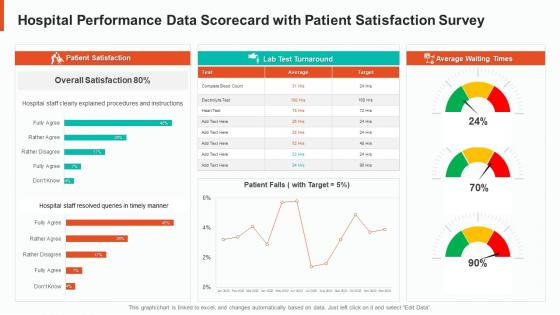
Hospital performance data scorecard with patient satisfaction survey




Try Before you Buy Download Free Sample Product
 Impress Your
 Audience
 100%
100% Editable
 Save Hours
 of Time


Our Hospital Performance Data Scorecard With Patient Satisfaction Survey are topically designed to provide an attractive backdrop to any subject. Use them to look like a presentation pro.
People who downloaded this PowerPoint presentation also viewed the following :
Hospital performance data scorecard with patient satisfaction survey with all 7 slides:
Use our Hospital Performance Data Scorecard With Patient Satisfaction Survey to effectively help you save your valuable time. They are readymade to fit into any presentation structure.





FAQs for Hospital performance data scorecard with
Honestly, I'd start simple with maybe 8-10 metrics max - you don't want to drown in data right away. Patient flow stuff is huge: bed turnover, length of stay, ED wait times. Those nurse-to-patient ratios matter too, plus keep an eye on overtime hours because that'll kill your budget fast. Financial side obviously matters - cost per case and revenue cycle metrics. OR utilization rates are pretty telling too, along with equipment downtime (nothing worse than a broken MRI backing everything up). Build from there once you get the hang of tracking this stuff regularly.
Here's how I'd approach it: Talk to each department head first and figure out what's actually stressing them out day-to-day. Your ER will probably say wait times and patient flow, surgery wants infection rates and OR efficiency. Finance is gonna want the usual suspects - costs and revenue stuff. Pick maybe 3-5 metrics per department, but here's the thing - they need to be things people can actually do something about. Don't just dump random data on them. I've seen too many dashboards that look impressive but nobody uses because the metrics don't connect to what they're dealing with every shift.
Patient satisfaction is huge - usually 15-25% of your scorecard. HCAHPS surveys track stuff like nurse communication, pain management, discharge planning. Basically the "would you recommend us" question that actually matters to patients. Here's the annoying part though: satisfaction scores lag way behind clinical improvements, sometimes by months. So don't freak out if your new initiatives don't show results right away. Track both overall scores and individual domains so you can figure out what's broken. Oh, and honestly? The discharge planning scores are usually the worst performers from what I've seen.
Your scorecard doesn't have to just sit there showing last month's numbers. Analytics can actually help you spot trends and predict problems before they blow up - which honestly is the best part. You'll catch patterns you'd never see otherwise, like performance differences between departments or patient groups. Predictive modeling is where it gets interesting because it flags issues early. Instead of always playing catch-up, you can see where you're actually improving versus just spinning your wheels. My advice? Get your data collection automated first, then worry about the fancy analytics stuff later.
Honestly, most places mess up by trying to measure everything at once. Your teams will hate you for it. Pick metrics that actually matter - not just ones that sound good in meetings. Bad data quality? Kiss your credibility goodbye. I've seen hospitals choose impressive-looking numbers that don't improve patient care one bit. Frontline staff need to help pick what you're tracking, otherwise they'll completely ignore whatever dashboard you build. Start small - maybe 5-7 things your department heads genuinely care about. Get that right first, then expand once people trust the system actually works.
Track stuff that actually moves the needle on both fronts - readmission rates, discharge times, staffing ratios. Length of stay is huge. So is medication error tracking. Both save money AND make patients happier, which is perfect. Honestly, I've watched places get way too obsessed with just the financial numbers and it totally backfires on them. Focus on maybe 3-4 metrics where better patient outcomes genuinely save costs too. Then just watch those like a hawk. The trick is finding those sweet spot improvements that create actual win-wins instead of forcing trade-offs.
So the Balanced Scorecard is probably your best bet - covers financials, patient stuff, internal processes, and learning/growth. Most hospitals love the Triple Aim model too (patient experience, population health, costs). Some are doing Quadruple Aim now with provider well-being thrown in, which honestly makes sense given how burnt out everyone is. Real talk though? The hospitals doing well usually mix and match from both frameworks instead of picking just one. I'd map out what your leadership actually wants to track first, then figure out which approach fits. Don't overthink it - the "perfect" scorecard that nobody uses is way worse than a decent one people actually pay attention to.
Honestly, automated integration tools are a game changer here. They'll pull metrics straight from your EHR, financials, and quality databases into one dashboard - no more spreadsheet hell! Set up APIs and mapping rules so everyone's tracking the same stuff consistently. Tableau or Power BI are solid choices for visualization. Here's the thing though - nail down your data definitions first. "Readmission rate" needs to mean the exact same thing to everyone or you're screwed. Start by figuring out your main KPIs and where that data actually sits in your current systems. Trust me on this one.
So benchmarking is basically seeing if your hospital's numbers are actually decent or just average compared to similar places. Look at stuff like readmission rates, patient satisfaction, length of stay - whatever matters most. Compare against hospitals your size or in your area. Honestly, it's the only way to know if that 15% readmission rate is terrible or pretty solid for your situation. You'll spot where you're doing well versus where you're clearly behind. Plus it shows what's realistic since other places are already hitting those numbers. Then just focus your improvement efforts on the biggest gaps first.
Think of clinical outcomes as the "did we actually help people get better" scorecard - stuff like infection rates, how many patients come back, mortality stats. Without these, you're just looking at speed and efficiency. Honestly, it's like judging a restaurant only by how fast they serve you (doesn't matter if the food's terrible, right?). These numbers show you the real deal about care quality and safety. When you're checking out hospital performance, start with clinical outcomes first. They'll tell you if all those other fancy metrics actually mean patients are getting better care.
Check your scorecard monthly for the big stuff, then do a full review every quarter. Monthly lets you spot problems fast. The quarterly reviews? That's where you dig into trends and update benchmarks. Honestly, I've watched too many hospitals get lazy and review the same useless metrics for like three years straight - such a waste. Healthcare moves way too fast for that. Set those calendar reminders now (trust me, you'll forget otherwise) and make sure someone owns each metric. Otherwise nothing gets done.
So you've got a few options here. Executive dashboards work great for leadership, obviously. Then break it down by department so each team sees their piece of the puzzle. Staff meetings and email updates are your bread and butter for regular check-ins. Those digital displays in common areas? People actually stop and read them way more than you'd expect. Quarterly town halls let you dig into the bigger trends and - this part's important - celebrate the wins. Oh, and make sure whatever format you pick actually connects to what people do every day. Otherwise they'll just tune it out.
Honestly? Your executives need to be all-in on this scorecard thing or it'll just die. I've seen it happen so many times - leadership says they want metrics but then never actually look at them. You need your C-suite showing up to monthly reviews, asking tough questions about why numbers are off, and celebrating when teams hit targets. Staff can smell fake support from a mile away. When bosses actually dig into the data and connect it to real business goals, suddenly everyone cares. Make them commit to those monthly meetings upfront - and I mean religiously stick to the schedule, even when they're "too busy."
Make your scorecard the backbone of planning, not something you slap together later. Connect your KPIs directly to what you're actually trying to achieve - patient satisfaction matters? Put those numbers up front. Too many hospitals build fancy dashboards that just collect dust. Department heads need easy access to their numbers, plus quarterly targets that actually tie back to your annual plan. Build scorecard reviews into regular meetings and use that data to spot where you're falling short. That way everyone sees how their day-to-day work fits the bigger picture. Honestly, half the battle is just getting people to actually look at the thing.
Honestly, a good scorecard is like having a dashboard that shows your whole team exactly what's working and what isn't. People actually start caring more when they can see how their daily work connects to patient outcomes - it's pretty cool to watch that shift happen. You'll catch problems way earlier instead of scrambling when things go sideways. Plus everyone stays on the same page across departments. The trick is picking maybe 5-7 metrics that actually mean something to your patients and staff, not just fancy numbers that look good on paper. Mix clinical stuff with patient satisfaction and how smoothly operations run.
-
Out of the box and creative design.
-
Design layout is very impressive.