

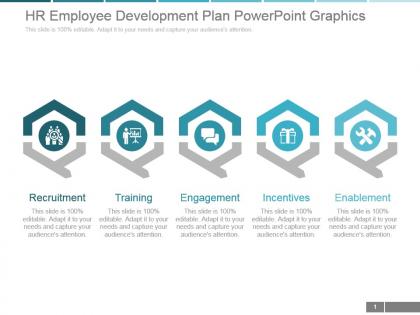
Hr Employee Development Plan Powerpoint Graphics
You must be logged in to download this presentation.




Try Before you Buy Download Free Sample Product
 Impress Your
 Audience
 100%
100% Editable
 Save Hours
 of Time


Our Hr Employee Development Plan Powerpoint Graphics ensure there is no dearth of facilities. They absolutely abound with them.
People who downloaded this PowerPoint presentation also viewed the following :
Hr Employee Development Plan Powerpoint Graphics with all 5 slides:
Institute fresh avenues for employment with our Hr Employee Development Plan Powerpoint Graphics. It will create jobs.
FAQs for Hr Employee Development
Okay so there are basically five things you need to nail. First, set learning goals that actually match what they want AND what you need from them. Map out how they'll learn - formal training, mentoring, stretch projects (honestly those stretch assignments are where the magic happens). Regular check-ins are crucial so you're not just hoping for the best. Oh, and build in some way to measure progress - otherwise you're flying blind. The biggest thing though? Make it personal. Those generic development plans everyone gets are pretty much useless. Each person's different so their plan should be too.
So a few ways to figure this out. Performance reviews are obvious - managers usually spot gaps fast. Employee surveys work well since people know what they're tripping up on. Skills assessments are clutch too, just match what they need for their role against what they actually have. Oh and think about where the company's heading - new markets mean new skills, right? Honestly the best approach is mixing all these together. Then just rank everything by what'll move the needle most. Sometimes the urgent stuff isn't actually the most important, which is annoying but true.
Honestly, you can't build a decent development plan without asking your team what they actually need. Most managers just guess wrong about skill gaps and career goals. Do quick surveys or one-on-ones to get the real story - I've seen so many companies waste money on training nobody asked for. Your people will tell you exactly what's blocking their growth (usually something totally different than what leadership thinks). Short sentences work too. Just start by asking what they want to learn next. The answers always surprise you, and then you're not throwing budget at random workshops that sit empty.
Honestly, tech can totally transform how you do employee development. Learning management systems are great for personalized paths, and mobile apps work well for quick microlearning sessions. Analytics dashboards help you track who's actually progressing. AI course recommendations based on skill gaps? Game changer. VR training is blowing up too - especially if you've got hands-on roles. Oh, and definitely pick something that plays nice with your current HR setup or you'll hate yourself later. My advice? Start with one tool first, then build from there once you see what works.
Track the obvious stuff first - skill scores, training completion rates, promotion timelines. But honestly, the soft metrics tell you way more about what's actually working. Look at engagement surveys, who's sticking around, 360 feedback results. Most people focus on whether someone finished a course instead of asking if they're using those skills day-to-day. That's backwards if you ask me. Set up quarterly reviews with your team to go through all this together - way easier to pivot when something's not landing right.
Honestly, the best employee development plans just connect personal growth to whatever your company's actually trying to do. New markets on the horizon? Focus training on market analysis or cultural skills. Innovation push? Creative problem-solving becomes priority one. Here's the thing though - people get way more excited about development when they can see how it helps the bigger picture. That leadership training suddenly matters when there's a team restructure coming up. Start with your top 3 company goals, then figure out what skills you'll need to hit them. Works every time.
Ugh, money's always the first problem - leadership thinks training is a luxury. Then there's the whole "when do people even have time for this" thing since everyone's already drowning. Honestly, the hardest part might be proving it actually works because you can't really measure soft skills improvements right away. Generic programs are useless too - people need stuff that actually applies to their job. Without strong support from the top, it just becomes another forgotten initiative. I'd say try a small pilot first, get some quick wins, then use those to convince everyone else it's worth expanding.
Honestly, pair people with senior folks who actually match their goals - don't just throw random people together. Make it structured though, like real expectations and timelines. I've watched too many of these turn into pointless coffee meetups that go nowhere. Train your mentors on coaching basics (most people are terrible at this naturally). Match based on actual skill gaps, not whoever's free. Start with maybe 5-10 people first to figure out what works. Oh, and do regular check-ins or people will just forget about it entirely.
Look, you gotta keep learning new stuff or you'll get left behind - everything changes so fast now. I spend maybe 30 minutes a week just reading about trends in my field, watching random YouTube tutorials, whatever. It's actually pretty fun once you get into it, way better than doing the same tasks over and over. Your boss will notice too when you start bringing fresh ideas to meetings. Don't wait around for them to send you to some boring training seminar though. Just pick something that connects to what you're already doing and go for it. Honestly makes work way less repetitive.
Honestly, most companies are terrible at this. Managers need to actually ask "what do you want to learn?" instead of just piling on more work. Show people clear paths forward - like, where can they realistically go in 1-2 years? Then you've gotta back it up with real stuff: training budgets, mentorship, actual time to learn. The biggest thing though? Celebrate when people grow and get promoted, not just when they crush their sales targets. People need to see that developing themselves actually leads somewhere. Otherwise it's just empty talk.
Skip the one-size-fits-all thing - you gotta map out what each role actually needs. Individual contributors? Technical skills and some cross-team exposure. Managers need the leadership stuff and strategic thinking. Senior people require succession planning (seriously, most companies totally bomb this part). Also figure out how people actually like to learn. Some want mentors, others just want online courses they can bang through. Regular check-ins are clutch for tweaking things based on reviews and whatever changes pop up. I'd start by auditing your current setup and picking the top 3 priorities for each level.
Dude, development programs are game-changers for keeping people around. Companies that actually invest in their employees see retention rates jump by like 40-50% - which is pretty wild when you think about it. Training, mentorship, career paths... all that stuff makes people feel like you actually give a damn about their future. Nobody wants to feel stuck doing the exact same thing forever, you know? The trick is making it real though, not just some boring corporate training nobody cares about. Connect it to what they actually want to do with their careers.
Figure out what you're spending per person right now - that's your starting point. Most companies do 2-5% of total payroll, but honestly I like the 70-20-10 breakdown better. Put 70% toward learning on the job, 20% for mentoring stuff, and just 10% for those pricey formal courses. Otherwise you'll burn through cash on external training that might not even stick. Check in every quarter to see what's actually moving the needle. You can always shuffle money around if something isn't working. Oh, and track if people are actually getting better at their jobs - that's your real ROI right there.
Start by checking who's actually showing up to your current programs - that'll tell you a lot. Don't just do the usual "leadership pipeline" thing that honestly tends to work better for some people than others. Mix it up with mentorship, sideways moves, online stuff, those casual lunch sessions. Ask people from different backgrounds what's actually getting in their way - they'll spot barriers you totally missed. Some folks learn better in flexible formats, others need hands-on experience. The whole point is creating different ways to grow instead of forcing everyone through the same funnel.
Honestly, start with equal access stuff - that's where companies usually mess up big time. Don't accidentally create programs that favor certain groups over others. Physical requirements are tricky too if they're not actually needed for the job. My old company learned that lesson the expensive way lol. Document why you picked people clearly. Oh and make sure everyone who's eligible can actually participate, regardless of the usual protected stuff. Run it past legal first though - trust me on that one. Better safe than dealing with lawsuits later.
-
Use of different colors is good. It's simple and attractive.
-
Very well designed and informative templates.