


Slides de apresentação de PowerPoint de modelo de RH





Try Before you Buy Download Free Sample Product
 Impress Your
 Audience
 100%
100% Editable
 Save Hours
 of Time


Selecione Slides de apresentação de PowerPoint de modelo de RH para definir recursos de HRM. Esta apresentação abrangente mostra os componentes essenciais da gestão de recursos humanos. A apresentação completa do HR Framework PowerPoint inclui slides de conteúdo pronto, como estrutura de ciclo de vida do funcionário, aquisição de talentos, vagas atuais, descrições de cargos, avaliação de candidatos, gestão de funcionários, rastreador de presença, modelo de folha de pagamento, matriz de habilidades, avaliação de desempenho, revisão e feedback de funcionários, formalidade de saída , formulário de demissão de funcionários, declaração completa e final, etc. Apresente as estratégias de recursos humanos usando os slides PPT do ciclo de vida de RH. Esses modelos de PowerPoint de gerenciamento de funcionários prontos para usar são projetados por nossa equipe de especialistas após um estudo aprofundado do tópico. Todos os slides da apresentação do ciclo de vida dos recursos humanos são fáceis de personalizar de acordo com as especificações dos usuários. Os usuários podem combinar texto e gráficos para criar apresentações profissionais. Baixe slides de apresentação da estrutura de gerenciamento da força de trabalho para ilustrar sua mensagem e envolver o público. Nossos slides de apresentação de PowerPoint de modelo de RH são um aliado confiável. Eles virão em sua ajuda em qualquer situação.
People who downloaded this PowerPoint presentation also viewed the following :
Conteúdo desta apresentação em PowerPoint
Slide 1 : Este slide apresenta o Modelo de RH. Indique o nome da sua empresa aqui e prossiga.
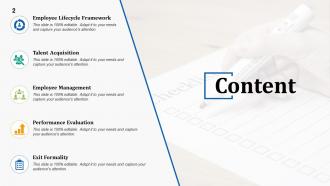
Slide 2 : Este slide tem o título de Conteúdo para apresentar o seguinte - Estrutura do Ciclo de Vida do Funcionário, Avaliação de Desempenho, Gestão de Funcionários, Formalidade de Saída, Aquisição de Talento.
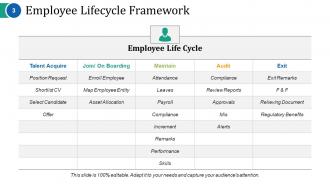
Slide 3 : Este slide mostra a Estrutura do Ciclo de Vida do Funcionário em uma forma tabular.
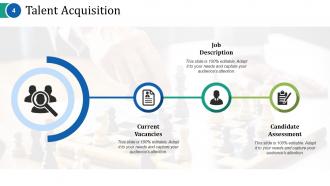
Slide 4 : Este slide mostra Aquisição de Talento com relação a - Vagas Atuais, Descrição do Trabalho, Avaliação do Candidato.
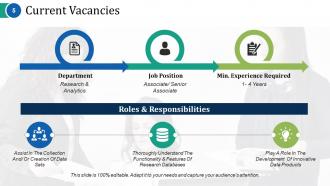
Slide 5 : este é o slide Vagas atuais com ícones e imagens de setas. Ele mostra- Departamento, Cargo, Min. Experiência necessária, também mostra as funções e responsabilidades.
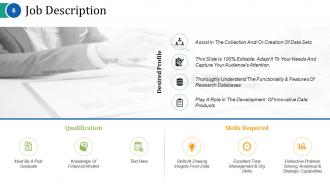
Slide 6 : Este é o slide de Descrição de Cargo com - Qualificação, Habilidades necessárias, Perfil Desied.
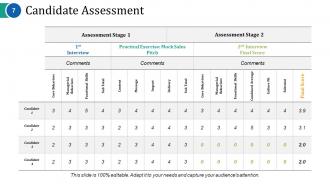
Slide 7 : Este é o slide de Avaliação do Candidato.
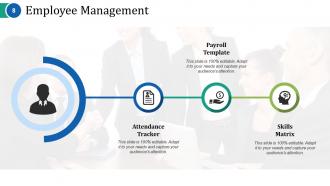
Slide 8 : Este slide mostra o gerenciamento de funcionários com rastreador de frequência, modelo de folha de pagamento e matriz de habilidades.
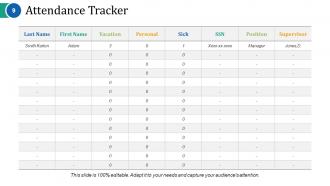
Slide 9 : Este slide mostra o Rastreador de Presença em uma forma tabular.
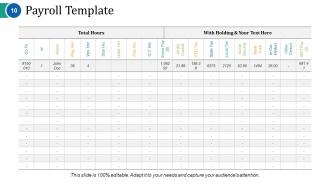
Slide 10 : Este slide apresenta o modelo de folha de pagamento.
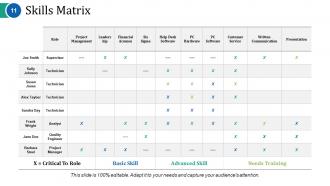
Slide 11 : Este é o slide Matriz de habilidades. Apresente suas habilidades aqui em forma de matriz.
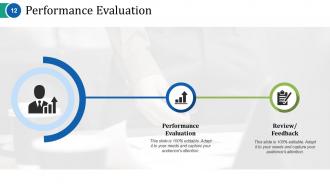
Slide 12 : Este é o slide de Avaliação de Desempenho mostrando - Revisão / Feedback, Avaliação de Desempenho.
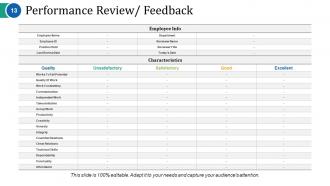
Slide 13 : Este é o slide de Avaliação de Desempenho / Feedback. Informações e características dos funcionários estaduais aqui.
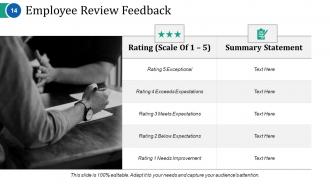
Slide 14 : Este slide apresenta o feedback da avaliação do funcionário.
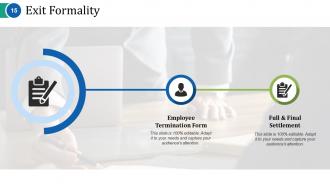
Slide 15 : Este slide mostra a formalidade de saída com - Formulário de rescisão de funcionário, liquidação total e final.
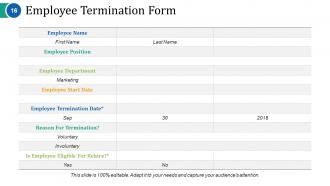
Slide 16 : Este slide exibe o formulário de rescisão de funcionário com detalhes.
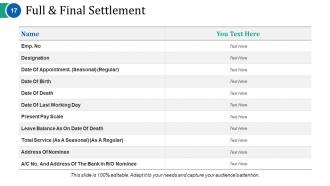
Slide 17 : Este slide mostra o Acordo Completo e Final em uma forma tabular.
Slide 18 : Este é o slide de ícones de modelo de RH. Use / altere os ícones de acordo com suas necessidades de negócios.
Slide 19 : Este slide é intitulado Slides adicionais para avançar. Você pode alterar o conteúdo do slide conforme a necessidade.
Slide 20 : Este slide é uma imagem de uma pausa para o café. Você pode alterar / alterar a imagem com base em suas necessidades.
Slide 21 : Este é o slide de Visão e Missão. Missão estatal, visão etc. aqui.
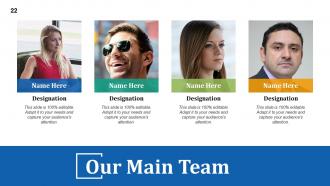
Slide 22 : Este slide mostra Nossa Equipe Principal com nome e designação.
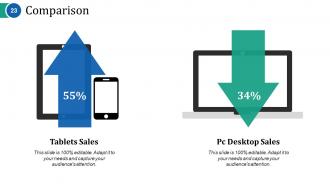
Slide 23 : Este é um slide de comparação para comparar dois produtos / entidades, etc.
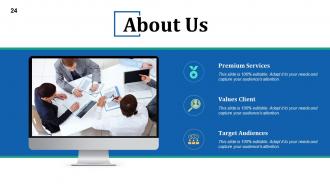
Slide 24 : Este é um slide Sobre nós, mostrando Nossa Empresa, Cliente de Valor e Serviços Premium como exemplos.
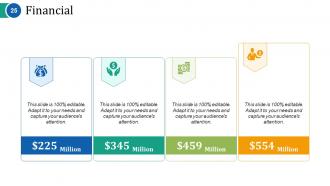
Slide 25 : Este é um slide de Pontuação Financeira para mostrar os aspectos financeiros aqui.
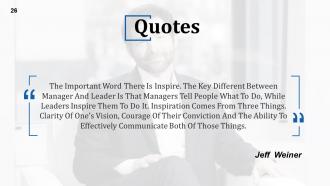
Slide 26 : Este é um slide de cotações para transmitir mensagens, crenças, etc.
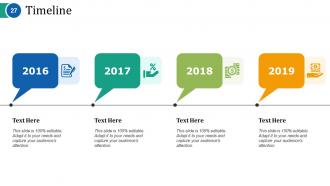
Slide 27 : Este slide apresenta uma linha do tempo para mostrar o crescimento, marcos etc.
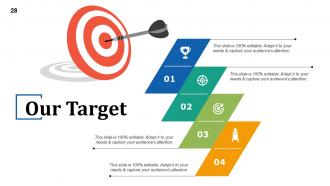
Slide 28 : Este é o slide Nosso alvo com imagens. Declare suas metas, objetivos etc. aqui.
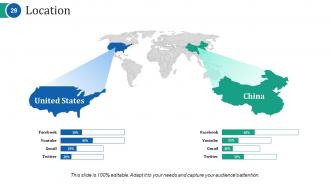
Slide 29 : Este é um slide de Localização em uma imagem de mapa mundial para mostrar a presença global, crescimento etc.
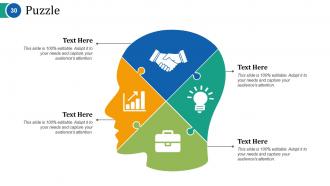
Slide 30 : Este é um slide de quebra-cabeça com imagens criativas para mostrar informações, especificações etc.
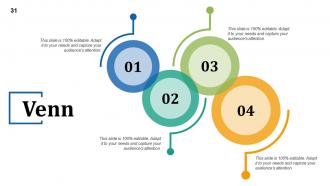
Slide 31 : Este é um slide de diagrama de Venn para mostrar informações, etc.
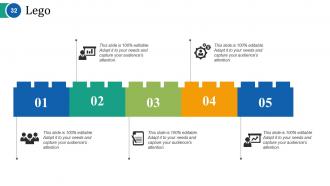
Slide 32 : Este é um slide LEGO com caixas de texto para mostrar informações, especificações, etc.
Slide 33 : Este é o slide de Silhouttes para indicar informações específicas das pessoas, etc.
Slide 34 : Este é um slide de imagem de mapa mental para mostrar informações, especificações, etc.
Slide 35 : Este é um slide de Ideia ou Imagem Bulbo para mostrar informações, aspectos inovadores, etc.
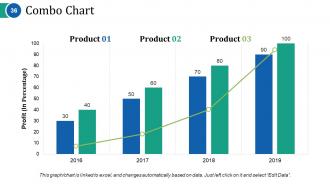
Slide 36 : Este é um gráfico de combinação para apresentar comparação de produto / entidade, especificações, etc.
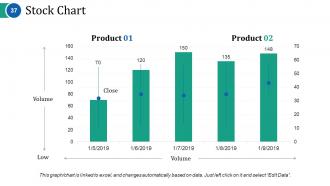
Slide 37 : Este slide mostra um Gráfico de Estoque para apresentar comparação de produto / entidade, especificações, etc.
Slide 38 : Este é um slide de agradecimento com endereço #, rua, cidade, estado, números de contato, endereço de e-mail.
Hr Model Powerpoint Presentation Slides com todos os 38 slides:
Destaque a contribuição de elementos importantes com nossos slides de apresentação de PowerPoint de modelo de RH. Identifique os elementos integrais.

FAQs for Hr Model
Honestly, you need the basics first - talent acquisition, performance management, learning stuff, and keeping people engaged. Cover the whole employee journey, you know? HR analytics are huge too because numbers don't lie like our hunches do. Obviously compensation and benefits matter, plus culture and diversity work. But here's what I've noticed - the companies killing it focus on what employees actually want instead of just following some rigid process playbook. I'd start by figuring out what you're already doing right versus what you're just doing to say you did it.
Okay so here's the thing - your HR stuff has to actually match what the business wants to do. Growth mode? Go hard on recruiting and keeping people around. Cutting costs? Focus on making things more efficient. Most HR teams honestly just do their own thing and then get confused when executives don't care about their initiatives. It's kinda obvious when you think about it. Talk to your business leaders first. Figure out their top priorities - like maybe 3 to 5 things they're really focused on. Then rebuild your whole HR plan around those goals instead.
Dude, HR tech has completely exploded lately. AI tools now screen resumes automatically, and there's software that can actually predict which employees might quit. Most companies use HRIS platforms for payroll and benefits stuff, plus chatbots handle basic questions around the clock. Learning management systems are huge for training too. Oh, and those employee engagement apps that constantly survey people about their feelings? Those are everywhere now - though honestly some feel a bit much. The trick isn't grabbing every new shiny tool. Focus on what'll actually fix your real problems first.
Your company culture is basically the blueprint for everything HR does. Hierarchical places? They'll have tons of approval layers and rigid policies. Startups usually go the opposite way - loose and fast, though honestly that sometimes comes back to haunt them later. Team-focused cultures do group performance reviews and let people bounce between departments. Competitive environments are all about individual numbers and rankings. The trick is matching your HR stuff to what your culture actually rewards. Otherwise you're just fighting yourself, which is exhausting for everyone.
So you'll need both people stuff and business impact numbers to really see what's working. Employee retention, how long it takes to fill roles, satisfaction surveys - that kind of thing. Then track revenue per employee and productivity too. Honestly though, it totally depends what you're actually trying to fix. Scaling issues? Retention problems? Pick like 3-4 metrics that match your biggest headaches and stick with those. I'd probably start with retention since that's usually where the money bleeds out first, but you know your situation better than I do.
Honestly, just weave D&I straight into your existing HR processes instead of treating it as some separate thing. Build diverse sourcing and bias training right into hiring. Do the same for performance reviews and promotions - make it automatic. Way better than crossing your fingers that managers will remember to be inclusive (spoiler: they won't). Track metrics at every step so you can spot problems early. The whole point is making it systematic rather than relying on good vibes. It actually works when it's built into the foundation instead of slapped on top.
Honestly, getting people to actually use the new system is the hardest part. Everyone says they want change until it messes with their daily routine - then suddenly they're "too busy" to learn it. Leadership buy-in is huge too, because without it you're basically screwed from day one. Data migration always takes twice as long as planned (learned that the hard way), and training? Forget whatever timeline you had in mind. Oh, and if you don't explain the "why" really well, people will find creative ways to work around your shiny new process. Start small with a pilot group and celebrate the early wins loudly.
Look, feedback is literally your cheat sheet for fixing whatever's busted in HR. Run surveys, do exit interviews, just chat with people - you'll start seeing patterns everywhere. Like when everyone keeps griping about the same terrible performance review process or new people getting lost trying to figure out benefits (seriously, why is benefits enrollment always so confusing?). The trick isn't collecting feedback though. It's actually doing something with it. Pick one thing that comes up over and over, then rebuild that whole piece around what people told you they need. Don't just gather input to check a box.
Look, your HR setup basically controls whether people give a damn about their jobs or not. It touches everything - hiring, promotions, pay, feedback, the whole nine yards. Good HR creates clear paths forward and fair systems that actually make sense. Bad HR? People mentally check out faster than you'd think. I've watched companies with garbage HR practices scratch their heads wondering why morale sucks. The trick is figuring out what your people actually want, not just copying what sounds impressive. Take a hard look at your current stuff - is it motivating people or slowly crushing their souls?
Honestly, it depends what you're measuring efficiency against. Centralized HR rocks for stuff like payroll and compliance - way more consistent and uses fewer people. Decentralized works better locally though. Those HR folks actually know what each department needs, so they don't have to ask permission for every little thing. I always think of it like... centralized is this smooth machine, but decentralized is more like having a bunch of quick boats that can pivot fast. Company size matters a ton here. How different are your teams from each other? That'll tell you which way to go.
Honestly, three big things are changing everything: AI doing the grunt work, hybrid setups being the new normal, and companies finally caring more about skills than fancy degrees. Most places I know are already using bots for first-round interviews - saves so much time. What's wild is how employee experience is suddenly getting the same attention as customer stuff. HR departments are going crazy with feedback tools and personalized learning paths. Oh, and internal mobility is massive now. People want to grow within companies instead of job-hopping constantly. You should probably look at what you're already doing versus what you're missing.
So basically, HR models help you stop panicking every time someone good leaves. You can actually plan ahead - map out who's ready for what role, figure out skill gaps before they bite you. Instead of scrambling when your best person quits (ugh, the worst), you'll have people in the pipeline already. Start by looking at what talent you've got now and which positions absolutely can't be empty. Then build development programs around your high-potential folks. Honestly, it beats the whole "promote whoever's left standing" approach most places use. Career pathing becomes way less of a guessing game too.
Honestly, remote work flips HR on its head. Forget about those casual coffee machine chats - you're building culture through screens now. The upside? You can hire talent from anywhere. Downside? Onboarding gets weird when everyone's in different time zones. Performance reviews need a complete overhaul since you can't just pop by someone's desk. Communication strategies have to be way more intentional. Oh, and don't get me started on compliance issues when your team spans multiple states. My advice? Look at what you're doing now and figure out what actually needs people in the same room. Spoiler: it's less than you think.
Honestly, you've gotta bake flexibility into your HR setup from day one. Make job roles that can stretch and shift when business changes - and cross-train people so they're not stuck in one box. Rigid hierarchies are the worst, I've watched companies completely freeze up because they can't adapt fast enough. Remote work policies, performance reviews, pay structures - all of it needs room to evolve. Oh, and set up regular check-ins with both employees and leadership to catch changes early. Start by looking at your current processes. What's creating the biggest slowdowns when you try to pivot?
Honestly, start by telling people WHY you're doing this - nobody likes surprises at work. Get your managers on board early since they'll be the ones selling it to their teams. I'd definitely test it with a small group first because trust me, you'll find problems you never saw coming. The training part is huge - don't skimp on support during the switch. Oh, and whatever timeline you think it'll take? Add like 30% more time lol. Set up regular feedback sessions too. Your original plan will probably need tweaks once reality hits.
No Reviews