

Hr strategic plan roadmap ppt sample download





Try Before you Buy Download Free Sample Product
 Impress Your
 Audience
 100%
100% Editable
 Save Hours
 of Time


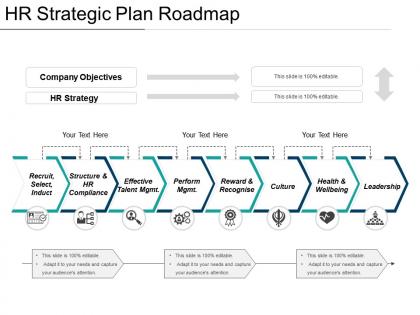
Teach your audience about the strategic human resource framework using this thoroughly editable predesigned HR strategic plan roadmap PPT sample download. This impressive human resource roadmap PPT model, being a pre-designed template is sure to save a lot of our time and efforts and still bring out a remarkable presentation overall. This strategic human resource planning roadmap PowerPoint PPT graphic covers the company objectives. HR strategies and the entire journey of the employee from recruitment to leadership. A well spread out slide visual makes it very easy for the presenter to present the content and make it equally easy for the audience to comprehend even the most complex information very smoothly. As the name suggests, the HR roadmap strategies concept forms the core of the HR department and management. Therefore, professionals belonging to HR can use this slide and also educate their audience about this subject. It can also be used by subject matter experts, HR consultants to educate others regarding this strategic framework. Additionally, educators can teach this topic to their students in an interactive manner with the visually appealing PowerPoint slides. Our Hr Strategic Plan Roadmap Ppt Sample Download enhance core capacity. They facilitate growth development.
People who downloaded this PowerPoint presentation also viewed the following :
Hr strategic plan roadmap ppt sample download with all 5 slides:
Get elected to the helm of affairs with our Hr Strategic Plan Roadmap Ppt Sample Download. Folks will consider you an excellent choice.

FAQs for Hr strategic plan roadmap
Start by figuring out where your HR function actually stands today - what's working, what isn't. Then map out where you want to be in 3 years. Honestly, the visual piece is huge because nobody reads dense strategy docs anymore. Break it into quarterly chunks and assign real deadlines and budgets to each initiative. Don't forget to loop in your key stakeholders early or you'll be fighting uphill battles later. Think of success metrics that actually matter to the business. Oh, and definitely include some risk planning - things will go sideways, they always do. Work backwards from your big vision to create those smaller milestones.
Honestly, most HR teams just do their own thing without knowing what the company actually needs. Start by figuring out your business goals for the year, then think backwards - what kind of people or culture changes do you need to hit those targets? Like if sales is the big focus, your hiring and training should obviously support that. I'd set up quarterly check-ins with leadership too, those help a ton. The key test: can you explain how each HR thing you're doing actually moves the needle? If not, probably skip it.
Think of workforce analytics like GPS for your HR decisions - shows you exactly where you stand and the smartest path forward. Look at turnover rates, performance data, skills gaps, that kind of stuff. Way better than just winging it (though honestly, gut feelings aren't always wrong). The cool thing is numbers catch patterns you'd totally miss - like which teams are losing people left and right or where training's desperately needed. I'd start simple though. Pick maybe 3-4 metrics that actually matter for your goals, then build from there.
Look, don't make D&I some separate thing - weave it through your whole HR process. First step? Audit your hiring and promotion data, even if it's ugly. The numbers will tell you exactly where you're screwing up. Set real goals like boosting diverse candidate pools by X% or hitting better scores on belonging surveys. Fair warning though - this takes forever to actually work. I've seen too many companies give up after six months. Track your progress quarterly and pivot when something isn't working. Consistency beats being perfect every time.
Honestly, figure out who matters first - leadership, department heads, union folks if you have them. Don't just show them a finished plan and expect applause. That never goes well. Get them in working sessions where they can actually hash things out with you. I've seen too many strategies die because people felt left out of the process. Keep checking in regularly so nobody feels blindsided later. Document what they say and show how their ideas made it into the final thing. People want to see their input actually mattered, you know?
Honestly, just start with the tedious stuff - automate onboarding, performance reviews, benefits enrollment. That alone will give your team breathing room for actual strategy work. AI analytics are pretty solid for spotting turnover risks and engagement patterns without waiting months for survey results. Modern HRIS systems tie everything together nicely too, from hiring through exit interviews. I'd say pick your most annoying manual process first and digitize that. Don't try to overhaul everything at once though - that's how projects die.
Honestly, just pick metrics that actually matter to your business - don't get caught up in fancy numbers that look impressive but mean nothing. Employee retention and time-to-fill are solid basics. Revenue per employee is my personal favorite because it shows if your people stuff is working or not. Track engagement scores too, but only if you'll act on the results (otherwise what's the point?). Internal promotions and training completion tell you if you're developing people right. Keep it simple - maybe 5 metrics tops that you can influence. Review quarterly and adjust.
Start with shorter planning cycles - quarterly beats annual every time. Track metrics that actually tell you something useful, not just vanity numbers. Most companies fall in love with their first draft and ignore red flags everywhere. Cross-functional teams help you dodge the approval nightmare. Keep training your people constantly so they're not scrambling when stuff changes. Oh, and don't treat your strategy like it's written in permanent ink - that's how you end up completely out of touch. Think of it more like a Google doc everyone can edit when reality hits.
Honestly, employer branding is huge - it affects everything from who applies to whether people actually stick around. Think about it: when your company has a solid reputation, candidates want to work there beyond just the paycheck. Your current team starts bragging about the job to their friends, which brings in better hires for way less recruiting spend. People don't quit as much either when they're genuinely proud of their workplace. I'd start by figuring out what people actually think of you as an employer right now - might be eye-opening. Then weave some targeted stuff into your HR plan from there.
Don't treat talent management like some separate thing you tack on later - weave it right into every part of your HR plan. Map out where you're missing people vs what the business actually needs. Then build your hiring, training, and keeping-people-happy strategies into each quarter's goals. Most roadmaps crash and burn here because they get way too academic, honestly. Connect real talent wins to business numbers at every step. Oh, and build in those talent reviews and succession planning stuff regularly - not just once a year when someone remembers. It's gotta be the thread running through everything you do.
Honestly, the resistance is brutal - employees AND managers will push back on everything. Leadership loves to say "great idea!" then somehow never finds the budget for it. HR stuff always gets cut first when money's tight, which is so frustrating. Measuring success is a nightmare too since most HR wins take forever to show up in numbers. Different departments will completely ignore new processes or implement them totally wrong. My take? Run small pilot programs first. Get a few quick wins, then use those to convince people the bigger changes are worth it. Much easier than trying to overhaul everything at once.
Look, first figure out where your business is actually heading, then work backwards to see what skills you need. Say you're expanding into new markets - your sales folks might need cultural training or whatever. I've seen too many companies just throw random training at people without connecting it to real goals. Map out the competencies for each objective you have. Treat it like an investment, not just something you have to do. Build learning paths that actually support what matters, track if it's working, and don't be afraid to pivot if programs aren't hitting. Start with a skills gap audit against your strategy.
Employee feedback is basically your reality check - without it, you're just guessing if your HR plan actually works. Do surveys, focus groups, one-on-ones, whatever gets people talking. Too many companies skip this step and wonder why their initiatives flop. Honestly, I've watched so many "perfect" strategies crash because nobody bothered asking what employees actually wanted. Set up quarterly pulse checks and actually listen to what comes back. That's how you catch problems early and tweak things before they go completely sideways. Make it part of your regular process.
Honestly? Once a year is cutting it way too close. I'd go with quarterly reviews - way more realistic given how crazy things get. The business world doesn't wait around, you know? Plus if something major hits (like a merger or the economy tanks), you'll want to pivot immediately anyway. Short bursts work better than these massive annual overhauls that everyone dreads. Just block out time every three months and actually stick to it. Trust me, your future self will thank you when you're not scrambling to catch up on a year's worth of changes.
Honestly, you've gotta weave legal stuff into your HR plan right from the start - like employment law, wage rules, anti-discrimination policies, data privacy. Union stuff too if that applies. Every hiring decision, pay structure, and performance review you do has legal strings attached. Trust me, ignoring this early on will cost you way more later. Get your legal team involved during planning, not after something goes wrong. They're actually pretty good at catching issues before they turn into lawsuits or fines. Industry-specific compliance is another thing to watch for depending on your business.
-
The Designed Graphic are very professional and classic.
-
Appreciate the research and its presentable format.