


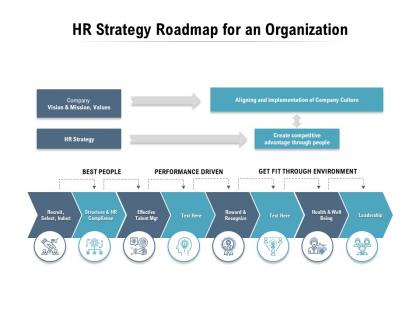
Hr strategy roadmap for an organization




Try Before you Buy Download Free Sample Product
 Impress Your
 Audience
 100%
100% Editable
 Save Hours
 of Time


Fulfillment is guaranteed with our HR Strategy Roadmap For An Organization. You will happen to feel enriched.
People who downloaded this PowerPoint presentation also viewed the following :
Hr strategy roadmap for an organization with all 5 slides:
Enrichment happens with our HR Strategy Roadmap For An Organization. You are bound to feel fulfilled.



FAQs for Hr strategy roadmap
Honestly, start by figuring out where your biggest talent gaps are - that's your roadmap right there. You'll need solid hiring and retention strategies, performance management that actually works, and compensation structures that make sense. Don't sleep on learning and development plans either. Succession planning is clutch too, though everyone seems to put that off until it's too late. Culture stuff is massive these days - like, people really care about engagement now. Set up metrics to track how you're doing and review everything regularly. The real trick? Making sure it all connects to your actual business strategy instead of just checking boxes.
Okay so first thing - actually figure out what your company's trying to do long-term. I know it sounds dumb but most HR people totally skip this part! Get with leadership and map out their 3-5 year plan, then work backwards from there. Everything you do should connect to those goals somehow. Like if they want to expand internationally, maybe you focus on hiring bilingual people or cultural training stuff. The trick is being able to explain how each program helps the business win. Oh and definitely do quarterly check-ins with department heads - keeps everyone on the same page.
Focus on turnover rates, time-to-fill, and engagement scores first - those three tell you the most. Revenue per employee and training ROI show if it's actually helping the business. Yeah, engagement surveys are annoying to run but catch problems before they explode. Track cost-per-hire and internal mobility too. Honestly though, don't go crazy with metrics. Pick maybe 5-7 that your leadership actually cares about instead of measuring everything. I'd start with whatever keeps your boss up at night.
Don't treat tech like some separate project - build it right into your HR plan from the start. Look at what's driving you crazy right now (manual onboarding is the worst, honestly) and find specific tools to fix those headaches. AI can speed up recruiting, HRIS keeps all your employee stuff in one place, analytics help track your goals. Just don't go overboard and roll out everything at once - that's a recipe for chaos. Pick one system, get it working properly, then move to the next. Make sure whatever you choose actually solves real problems instead of just making your current mess digital.
Honestly, measuring engagement is like having a cheat sheet for your entire HR strategy. You'll know what's actually working instead of just hoping your initiatives land well. Survey your people regularly - their feedback shows you where to focus your energy and budget. High engagement? Your retention and culture are probably solid. Low scores? Time to rethink your approach. I've seen too many companies throw money at random perks without checking if employees actually care. Let the data guide your priorities rather than guessing what people want.
Map out your initiatives by business impact and urgency first. Go for the high-impact, low-effort stuff. Handle boring foundational things like compliance before jumping into flashy engagement programs - I've literally watched that blow up in people's faces. Are your managers buried in paperwork while you're planning yoga classes? That's backwards. Focus on what actually supports your company's goals and brings in money. Some projects depend on others too, so factor that in. Honestly, just make a simple scoring system for impact, effort, and how well it aligns strategically. Way better than picking whatever sounds cool.
Don't just copy what worked at your old job - that's the biggest mistake I see. Every company is different, so you've got to tailor your approach. Keep things simple too. I've watched people create these insanely complicated roadmaps that nobody can follow (honestly, some look like NASA launch plans). Also skip the stakeholder input at your own peril - you'll regret it later. Unrealistic timelines are another killer. Start by figuring out where you actually stand now, then pick maybe 2-3 main priorities. That's it. Build in regular check-ins so you can pivot when things go sideways.
Don't treat D&I like some side project - weave it into everything HR does. Fix your job postings first, find new places to recruit, and structure interviews so bias doesn't creep in. Performance reviews and promotions need the same treatment. Honestly, getting leadership to actually spend money on this (not just talk about it) is the hardest part. Track stuff that matters: retention rates by group, who's getting promoted internally, how people actually feel about belonging here. Set real targets and connect them to business results. Otherwise it just becomes another initiative that fades away.
Honestly, focus on three things: employer branding, competitive pay, and development opportunities. Show your company culture authentically on social media - fake vibes are so obvious. Make sure your salaries are actually competitive (not just "we're like family" BS) and throw in benefits people care about. Career development is huge for keeping people around. Create real advancement paths, not just empty promises. Oh, and do stay interviews instead of waiting for exit interviews - way more useful for catching problems early. Being proactive beats scrambling to fix things later every time.
Okay so first thing - figure out who you're talking to. Execs want numbers and business impact, managers want to know how this affects their actual teams. Don't dive straight into tactics (I've watched so many HR people do this and everyone's eyes glaze over). Make a simple one-pager showing WHY you're doing this stuff, not just what you're doing. Throw in some visuals and timelines so people can actually follow along. Everything needs to tie back to outcomes they care about - otherwise you're just talking to yourself. Oh and leave room for questions! People buy in way more when they feel heard instead of just lectured at.
Honestly? Do it quarterly minimum, but the smart companies check in monthly too. Pull your turnover rates, engagement scores, hiring speed - all that stuff. Compare it to what you planned originally. Your department heads will give you the real tea since they're in the trenches daily. Oh and don't just focus on what's broken! Actually celebrate wins too - people forget that part. Biggest screwup is making it some annual checklist thing. Keep it flexible so it matches whatever chaos your business is dealing with right now.
Look, proactive HR is basically building your workplace culture intentionally instead of scrambling when things go sideways. You're actively creating the vibe through smart hiring, solid development programs, decent communication - stuff like that. People stay engaged because they can actually see where they're headed career-wise. Plus leadership isn't constantly playing catch-up with their needs. Though honestly, half the companies I've seen just do random HR stuff without thinking it through. The trick is making sure whatever initiatives you roll out actually match the culture you want. Otherwise you're just wasting everyone's time.
So you'll want skill-building and leadership tracks for sure. Technical upskilling is obvious, but cross-functional training really helps with internal mobility too. Management development is huge - seriously, throwing someone into a manager role without training is just cruel to everyone involved. Also add onboarding improvements and mentorship programs. Self-directed learning platforms work great since people can pick their own pace. Map everything back to your business goals and career paths. Oh, and survey your current skill gaps first versus where you're headed strategically.
Look, most companies just slap together generic performance reviews and then act shocked when nothing improves. You've got to flip this backwards - figure out what behaviors actually push your strategic goals forward, then bake those into how you evaluate people. If innovation matters, start measuring creative problem-solving instead of just task completion. Your managers need to get good at connecting someone's daily grind to the bigger picture during reviews. Honestly? Just audit your current performance standards against where you're actually trying to go. Rewrite anything that doesn't support your roadmap. It's pretty straightforward once you stop overthinking it.
Honestly, you've gotta track labor market trends and regulatory changes - that stuff shifts constantly. Economic conditions matter too, plus any industry disruptions happening. I'd also watch demographic changes in your workforce and what new tech might shake things up job-wise. Oh, and definitely spy on what competitors are doing for hiring and keeping people (sounds sketchy but everyone does it). Social factors are huge now since employee expectations keep evolving. My move? Set up Google alerts for your key terms and do quarterly check-ins. Otherwise you'll be playing catch-up while everyone else adapts faster.
No Reviews