

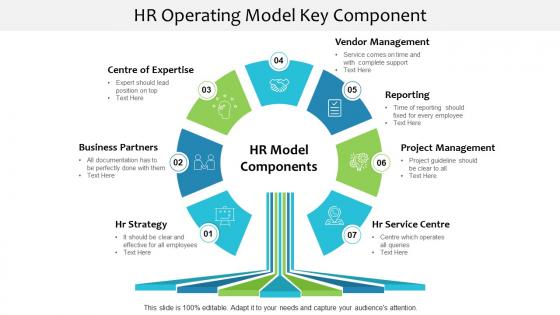
Hr operating model key component





Try Before you Buy Download Free Sample Product
 Impress Your
 Audience
 100%
100% Editable
 Save Hours
 of Time


Our HR Operating Model Key Component will follow the groove. They will go in the direction you desire.
People who downloaded this PowerPoint presentation also viewed the following :
Hr operating model key component with all 5 slides:
Get up and groove with our HR Operating Model Key Component. You will dance the blues away.
FAQs for Hr operating
Focus on three main things: how you actually deliver services, your org structure, and tech platform. Most companies totally botch the service delivery part - you need clear shared services, expertise centers, and business partners who aren't trying to juggle everything at once. Structure should match how complex your company actually is. Tech needs to connect everything instead of making more silos (easier said than done, I know). Start by mapping what you have now vs what the business needs. Then tackle the biggest gaps first. Don't try to fix everything simultaneously - that's a recipe for chaos.
Look, your HR setup has to match what your company's actually trying to do. Growing like crazy? Focus on hiring fast and getting people up to speed quickly. Cutting budgets? Time to streamline everything and automate what you can. I've seen too many companies where HR is doing their own thing while the business is going in a completely different direction - it's a mess. Map out your current HR stuff against your top 3 business goals. You'll probably find some obvious gaps pretty fast. The whole thing falls apart if they're not aligned.
Honestly, HR tech is a game-changer. HRIS systems handle all the boring transactional stuff, while AI tools help with recruiting and data analysis. Self-service platforms let employees deal with their own routine questions - which saves everyone time. I seriously don't know how we used to do this job without these tools! The whole point is automating the mundane work so you can actually be strategic instead of just processing requests all day. My advice? Look at what's eating up most of your time manually. Those processes are where you'll get the biggest bang for your buck with automation.
Honestly, you need both the numbers and the softer stuff to really know what's working. Track things like how long it takes to hire someone, retention rates, and what you're spending per employee on HR. Engagement surveys are probably your best friend here - people will tell you straight up if they feel supported or not. Also watch how fast you're solving employee problems and whether your managers actually feel ready to deal with people issues. I'd make a simple dashboard with maybe 5-7 key things you check monthly, then dig deeper every quarter. Just start measuring everything now so you have something to compare against in 6-12 months.
Honestly, the hardest part is getting people to actually want this change - nobody likes their routine messed with. Leadership buy-in is tough too, especially when different departments have their own priorities. Data migration will probably give you nightmares, and don't even get me started on trying to redefine everyone's roles without drama. Oh, and you'll definitely blow your budget - these things always cost more than expected. Communication is huge because people freak out when they don't know what's happening. Start small with a pilot group, explain why you're doing this like 50 times, and celebrate quick wins. Trust me on that last part.
Look, employee engagement totally reshapes how you build your HR setup. Map out where people currently interact with your team - those touchpoints matter. Self-service options work great for engaged employees. Decentralize support so it's actually close to where teams work daily. The old "call us when things break" model? Yeah, that's dead. Build feedback into everything you do. Make getting help ridiculously simple - same with development opportunities. Honestly, most companies overthink this part. Track your employee journey and spot where engagement tanks. That's literally where you need to focus your operating model changes first.
Honestly, map out what you're actually doing first - I bet you'll find tons of duplicate work you didn't even realize was happening. Get all your data in one place instead of having it everywhere, that alone will save you hours. Then figure out what employees can just do themselves with better tools, and what boring stuff you can automate. Oh, and actually track the metrics that matter - like how long hiring takes and whether people are happy with HR. The whole point is cutting out anything that doesn't really help your employees or move the business forward.
Honestly, you gotta flip your whole approach from caring where people sit to what they actually get done. Start with going fully digital - virtual onboarding, cloud performance stuff, async communication for HR questions. Most of your processes probably don't need face-to-face anyway (I'd bet money on that). Time zones are gonna be your biggest headache since nobody's working the same 9-5 anymore. Build flexibility into everything but keep it consistent for everyone. Oh, and train your HR people on keeping remote workers actually engaged - that's harder than it sounds.
Track both efficiency stuff (time-to-fill, cost per hire, HR-to-employee ratios) and effectiveness metrics like satisfaction scores and retention rates. Manager feedback on your service quality is huge too. Honestly, don't chase vanity metrics - they make pretty charts but won't tell you if you're actually helping the business. Response time to employee requests matters way more than you'd think. Oh, and check if you're hitting your SLAs consistently. Start with maybe 3-5 key ones instead of measuring everything under the sun. You can always add more later once you've got the basics down.
So your HR operating model is basically what makes DEI stick instead of just being some random initiative that fades away. It shapes how you build teams, spend money, and track whether things are actually working. Without a solid model, DEI just becomes this floating thing nobody really owns - which honestly happens way too often. The model tells you who's responsible for what, where the budget goes, and how you'll measure progress. Plus it helps you find the holes in what you're currently doing. Instead of treating inclusive practices like separate side projects, you can weave them into daily operations.
Dude, you absolutely have to get stakeholders involved or your HR model will just sit there collecting dust. Trust me on this one. Get managers, employees, and leadership talking early - find out what's actually broken in their day-to-day stuff. I've watched so many HR teams build these perfect systems in their bubble, then act shocked when nobody uses them. When people help design it, they'll actually want it to succeed instead of fighting every change. Plus they'll catch weird edge cases you'd never think of. Start with some focus groups and keep checking in with them throughout. It's honestly the difference between success and failure.
Okay so here's the thing - don't try to be Google with your HR setup. Focus on the basics first: staying compliant, getting payroll right, and tracking your people without losing your mind. Most small teams burn out trying to copy Fortune 500 companies (learned this the hard way). Get software to handle the boring stuff automatically. Benefits admin? Just outsource it. Map out what you're doing now and honestly ask yourself what's actually helpful vs. just paperwork for paperwork's sake. Keep it simple enough that one person can run it, but flexible so you won't have to rebuild everything when you grow.
Dude, HR is going through some major shifts right now. AI automation is huge - companies are ditching those old school hierarchical setups for more agile models. Remote work basically forced everyone to go digital-first, which honestly was probably overdue anyway. There's this whole push toward skills-based hiring instead of just looking at job titles. Real-time feedback is replacing those dreaded annual reviews (thank god). Employee experience matters way more now too. Oh, and everything's becoming data-driven - HR teams are actually using analytics to make decisions. You should probably take a look at where your current setup stands against all this stuff.
Your company's culture is honestly everything when it comes to HR models. Trust me on this one. Collaborative, open cultures? Decentralized systems work perfectly because people actually use the self-service stuff. But hierarchical places need way more hand-holding and centralized control. I've watched brilliant HR tech crash and burn because teams ignored cultural fit completely - such a waste. You can't just pick a structure and hope people adapt. Instead, figure out how your team really communicates and behaves first. Then build around that reality, not some idealized version.
Honestly, you're gonna need three big things here. People first - actual project managers and change specialists who get the business, not just HR policy nerds. Your tech stack matters too: solid HRIS, good analytics, workflow tools that don't crash every Tuesday. Budget's the boring part but super critical. Training costs, communications, ongoing support - it adds up fast. Executive buy-in is totally non-negotiable though. Quick tip? Do an audit of your current tools first. I've seen companies blow money on new software when they had perfectly good stuff collecting dust. Happens more than you'd think.
No Reviews