


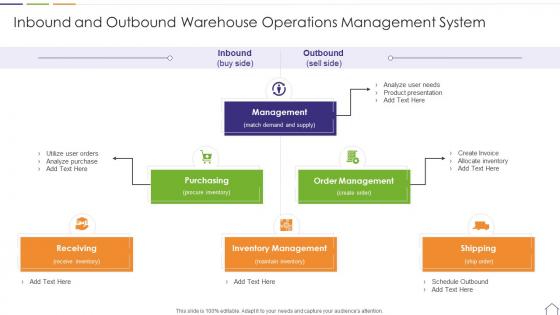
Inbound And Outbound Warehouse Operations Management System




Try Before you Buy Download Free Sample Product
 Impress Your
 Audience
 100%
100% Editable
 Save Hours
 of Time


Our Inbound And Outbound Warehouse Operations Management System are topically designed to provide an attractive backdrop to any subject. Use them to look like a presentation pro.
People who downloaded this PowerPoint presentation also viewed the following :
Inbound And Outbound Warehouse Operations Management System with all 6 slides:
Use our Inbound And Outbound Warehouse Operations Management System to effectively help you save your valuable time. They are readymade to fit into any presentation structure.





FAQs for Inbound And Outbound Warehouse
Oh man, there's honestly so many metrics you could track but don't go crazy at first. Start with order accuracy, picks per hour, and inventory turnover - those three will tell you the most. Warehouse capacity and cycle times matter too. Labor costs per shipment is huge if you're trying to stay profitable. Track damage rates because, ugh, nothing's worse than angry customers. Depending on what you're storing, you might need weird specific stuff like temperature logs. I'd pick maybe 4-5 metrics max to start. You can always add more once you're not drowning in data.
Dude, automation is incredible for warehouses - faster picking, way fewer mistakes, runs all night. Labor costs drop big time and inventory stays accurate. Here's the thing though: the initial cost will absolutely murder your budget. Implementation takes forever and honestly becomes a nightmare. When systems crash (and they will), you're screwed. New products? Good luck getting automated systems to adapt quickly. You'll need tech people on staff just to keep things running. Oh, and exceptions are basically their kryptonite. Start with one small process first, see if it actually pays off, then expand from there instead of diving headfirst into the deep end.
Look, inventory management is literally what makes or breaks your warehouse flow. Bad inventory means your team's constantly hunting for stuff while aisles get clogged with overstock. Good tracking? Faster picks, fewer stockouts, way better space usage. I swear, some places I've worked completely turned around just by nailing their ABC analysis and putting fast-moving items where they're easy to grab. Oh, and definitely check your inventory accuracy first - anything under 95% is gonna mess up everything else you try to fix.
Dude, a WMS handles all the tedious crap - inventory tracking, picking routes, scheduling. No more wandering the warehouse like you're hunting Easter eggs. Real-time stock visibility means you actually know where stuff is. It automatically optimizes picking paths and manages receiving/putaway. Honestly, the integration alone saves you from so many data entry mistakes. The analytics help catch issues before they blow up too. My advice? Map out how you currently do things first, then find a system that actually fits your workflow instead of forcing yourself to adapt to some generic setup.
Honestly, start with getting everyone properly trained on forklifts and lifting techniques - can't tell you how many people I've seen mess up their backs because they didn't lift right. Do daily equipment checks and keep those aisles clear. OSHA stuff is obviously important, but don't just think about safety when inspectors show up. Make it part of what you do every day. Weekly walkthroughs with your team work really well. Oh, and decent lighting makes a huge difference too - sounds obvious but you'd be surprised how many warehouses skimp on that.
So cross-docking cuts out storage completely - stuff goes straight from incoming trucks to outgoing ones. Pretty much just sort and load, no warehousing involved. Time savings are huge since you're not doing the whole put-away dance. Honestly works best when your shipment schedules are predictable though. Inventory costs drop big time, and you can flip orders in hours vs days. The coordination part is kinda crucial - suppliers and customers need to be on point. Oh and you'll want real-time tracking of what's moving. I'd test it with your fastest-moving products first.
Barcode scanners are honestly your best bet - they'll catch mistakes before things get messy. Don't put similar items next to each other either, I've watched people grab the wrong SKU a million times when they're sitting side by side. Batch picking cuts down on both travel time and screw-ups. Your picking lists need actual descriptions, not just random codes that mean nothing to anyone. Training your pickers regularly helps too, though that's probably obvious. Oh, and make sure you're giving feedback on performance. Start with scanners if you don't have them - biggest impact for the money.
Look, your warehouse layout is basically everything when it comes to productivity. Put your fastest-moving stuff right by the shipping dock - seems obvious but you'd be shocked how many people mess this up. Wide aisles matter too so forklifts aren't playing bumper cars all day. Bad layout means your workers are doing laps around the building for no reason. Map out where your pickers actually walk during shifts and you'll spot the problem areas fast. It's honestly like comparing a decent neighborhood to some confusing maze downtown.
Look, you really need to train your warehouse people properly. Safety stuff first - lifting techniques, equipment handling, all that. Fewer injuries means way less headaches with workers' comp later. Your team will actually work faster too when they know what they're doing. I swear, one badly trained guy can completely wreck your inventory system and then you're stuck fixing it for weeks. People feel better about their jobs when they're confident they won't screw something up. Start with the basics, then move into your specific processes. Trust me on this one.
Honestly, data analytics is a game changer for warehouse stuff. Start tracking your pick times, how fast inventory moves, labor productivity - basic metrics you're probably already collecting anyway. You'll be shocked at the patterns that pop up. Like maybe certain products always slow things down, or your night shift crushes it compared to day shift (happens more than you'd think). Predictive analytics helps too - forecast demand so you can move staff and inventory around before you need it. Don't overthink it though. Begin simple, see what works, then expand once you're sold on it.
Honestly, the hardest part is dealing with all the different fulfillment needs. B2B wants cases, e-commerce needs individual items, retail has special packaging requirements - it's like running three warehouses in one space. Your team ends up switching between processes all day, which creates mistakes and kills efficiency. Then there's the timing nightmare - retail deliveries are scheduled while online customers want everything yesterday. I'd start by writing down what each channel actually needs, then figure out where you can make things more consistent. The inventory tracking alone will drive you crazy if you don't get organized first.
Dude, seasonal spikes will absolutely wreck you if you're not prepared. Holiday rushes? Back-to-school chaos? Your volume can literally triple overnight. Start hiring extra people way early - like 2-3 months before things get crazy. You'll also need more storage space and your inventory game has to be perfect. Nothing worse than running out of stock during peak season (been there, not fun). Look at your past sales data to figure out when the madness hits. Then scale up everything - staff, equipment, processes. Trust me, plan ahead so you're making bank instead of losing your mind when it gets busy.
Honestly, good supply chain collaboration is what saves your butt in warehouse operations. Your suppliers and transport partners need to actually talk to you about demand shifts and delivery timelines - otherwise you're flying blind. Real-time data sharing is huge too. I've seen warehouses get completely blindsided by surprise shipments because nobody communicated properly. When everyone's sharing forecasts and staying connected, you can plan your labor and space so much better. Start with regular check-ins with your main partners and maybe push for some shared systems. Trust me, it's worth the effort upfront.
Start with the easy wins - LED lights and better HVAC settings make a huge difference. Solar panels are pricey upfront but worth it long-term. Recycling programs for packaging help, and honestly going paperless saves you more money than you'd think. Route optimization cuts fuel costs big time. Electric forklifts are getting way better now too. Oh, and pick suppliers who actually care about this stuff, not just the ones who greenwash everything. Don't try to do it all at once though - test a couple things first, see what works, then keep adding more.
Dude, e-commerce has totally turned warehouses upside down. Instead of shipping pallets to stores, you're picking thousands of tiny individual orders. Same-day delivery expectations are honestly insane but that's where we're at now. Your whole layout needs reworking for small items, not bulk storage. Peak seasons? You'll be hiring like crazy. Automation isn't optional anymore if you want to keep up. Oh and forget the 9-to-5 thing - these places run 24/7 now. It's more like a giant sorting machine than old-school warehousing.
-
Unique research projects to present in meeting.
-
Best Representation of topics, really appreciable.