


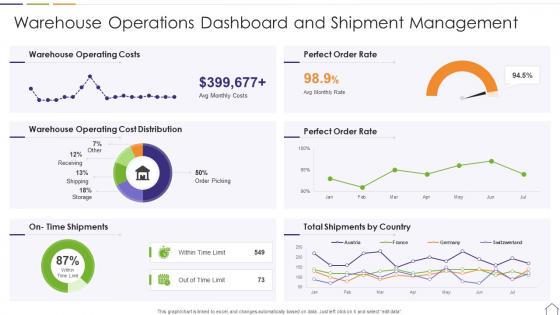
Warehouse Operations Dashboard Snapshot And Shipment Management




Try Before you Buy Download Free Sample Product
 Impress Your
 Audience
 100%
100% Editable
 Save Hours
 of Time


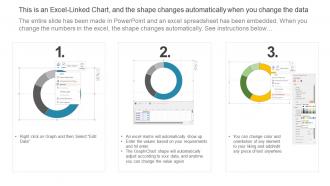
This graph or chart is linked to excel, and changes automatically based on data. Just left click on it and select edit data.
People who downloaded this PowerPoint presentation also viewed the following :
Warehouse Operations Dashboard Snapshot And Shipment Management with all 7 slides:
Use our Warehouse Operations Dashboard Snapshot And Shipment Management to effectively help you save your valuable time. They are readymade to fit into any presentation structure.





FAQs for Warehouse Operations Dashboard Snapshot
Focus on three main things: receiving/shipping areas, storage zones, and how people move between them. Put your fastest-moving stuff closest to where it ships out. Design paths so workers aren't walking all over the place - seriously, those wasted steps kill your efficiency. Make sure aisles fit your forklifts and you've got decent staging space. Oh, and here's what most people get backwards: figure out your actual workflow first, then build the layout around that. Don't try cramming your processes into whatever random setup you inherited.
Look, warehouse tech is a total game-changer for knowing what you actually have vs what the computer says you have. RFID tags and barcode scanners track everything automatically as it moves around. No more "wait, where did those 50 units go?" moments. Manual counts are honestly the worst - so many errors. You get instant notifications when you're running low, better forecasting, way more accurate counts. Oh and it catches all those little human mistakes we make. If you're not doing basic barcode scanning yet, start there. Seriously transforms your accuracy overnight.
Dude, you really need to look into warehouse automation if you haven't already. Start with a warehouse management system - that's your foundation. From there, you can add robotic pickers and those little automated vehicles that zip around moving inventory. The accuracy gains alone are worth it, plus you'll speed up everything and cut labor costs. What's cool is how it all connects to give you real-time data on what's happening. Honestly, some of these robotic systems are scary good at picking - way better than people. Don't try to do everything at once though, just start with the WMS.
Honestly, don't fall into the trap of tracking every single metric just because you can - I've watched way too many places get buried under useless dashboards. Focus on what actually matters: order accuracy, throughput rates, inventory turnover, and labor productivity. Those are your big four. Get baselines figured out first, then watch the trends instead of freaking out over daily ups and downs. Automate the reporting stuff where you can (saves so much time). Keep it simple - maybe 5-7 core KPIs max and review them weekly with your team so everyone's on the same page.
Honestly, you gotta start planning like 3-4 months out - dig into your historical data and see what patterns emerge. Temp workers are your best friend here, plus flexible schedules for your regular crew. Oh, and definitely set up overflow warehouse space ahead of time because scrambling last minute is expensive as hell. Cross-train everyone too - when your main receiving guy calls out sick during peak season, you'll thank me later. Moving fast-moving inventory closer to shipping areas makes a huge difference. My old boss taught me that flexibility isn't something you build when you need it, it's something you build way before.
Dude, proper training can bump your warehouse efficiency up 20-30% without breaking a sweat. Your crew will nail the picking routes, handle equipment right, and actually follow safety rules. I swear I've watched untrained teams wander around looking completely lost - might as well be browsing the cereal aisle. Fewer accidents mean less downtime and damage costs too. Confident workers who know their stuff? They'll come up with solid improvement ideas since they get how everything flows. Oh, and use your veteran staff as trainers - they know the real shortcuts consultants miss.
Honestly, start by just watching how your team moves around for like a week - you'll catch so many weird inefficiencies it's not even funny. Rearranging your layout to cut down walking between picks is probably the biggest money saver. Cross-train people so you're not screwed when someone calls out sick. Automate the boring repetitive stuff if your budget allows it. Also, take a hard look at your inventory because having tons of extra stock is basically throwing cash in a corner to collect dust. Oh and swap out old lighting for LED - sounds boring but those utility bills add up fast.
Safety regs control pretty much everything in warehouse work - your workflows, equipment choices, all of it. OSHA doesn't mess around with fines either. You'll need training programs, safety gear, regular equipment checks. Plus clear rules for forklifts and heavy lifting stuff. Honestly sounds like a headache at first, but once you get systems running it actually helps operations flow better. Way easier to build these protocols in from the start than trying to add them later when you're already running. That's when things get really messy.
Honestly, RFID is probably your best move here - it'll scan stuff automatically without you having to do anything. Barcode scanners work too but you're gonna be scanning everything manually, which gets old fast. Those big WMS platforms like Manhattan are nice but way too much if you're not huge. IoT sensors are cool for expensive items, though I'm still not totally sold on them yet. Figure out how accurate you need to be and what you can spend first. Then just go with whatever's simplest that actually works for your situation.
Dude, analytics is a total game changer for warehouses. You can finally see what's actually causing slowdowns instead of just guessing. Picking routes get way more efficient, and you'll spot inventory problems before they become disasters. The demand forecasting alone saves so much headache - you can actually staff properly instead of scrambling. Plus bottlenecks become super obvious once you have the data. I'd start with basic reports on whatever's driving you crazy right now. Nothing fancy at first. Once you see how helpful it is, you can get more sophisticated with it.
So cross-docking is basically skipping the whole storage thing - goods go straight from incoming trucks to outgoing ones. Your warehouse becomes more like a sorting center instead of storing stuff for weeks. Pretty smart actually. You get lower labor costs since there's less handling, inventory moves way faster, and you need way less storage space. Works best with products that move quickly or when you're combining shipments from different suppliers. Only downside? Your timing has to be perfect because there's no storage backup if trucks are late or whatever goes wrong.
So basically e-commerce flips everything upside down for warehouses. Instead of shipping pallets to big stores, you're suddenly picking individual items for thousands of customers daily. Order frequency shoots up but each pick is way smaller. Plus everyone expects crazy fast delivery now - which honestly puts so much pressure on operations. Your layout probably needs a complete redesign since you'll need more product variety but less deep stock of each thing. Space gets tight real quick. Most places end up investing in some automation and totally reworking their picking systems. It's a massive shift from the old bulk shipping days.
Start with LED lighting - super easy win and you'll see the savings right away. Route optimization software cuts fuel costs like crazy. Electric forklifts are worth looking into too, plus they're way quieter which is nice. For packaging, right-size those boxes and switch to recyclable stuff. Solar panels are great if you've got the budget, but honestly don't stress about doing everything at once. Pick one thing and nail it first. HVAC optimization helps too but that's more of a phase two thing. Most of this stuff pays for itself pretty fast anyway.
Honestly, the data quality stuff will drive you crazy - sales, inventory, and customer systems never sync up right. Seasonal patterns are brutal too. Just when you think you've got it figured out, weather hits or some random promotion tanks your forecasts. Historical data becomes pretty much useless during market shifts. Buffer strategies saved my butt more times than I can count. Oh, and definitely prioritize getting your data integration sorted first - everything else is just guesswork without clean data flowing between systems.
Ugh, supply chain issues are the worst - they turn your warehouse into total chaos. One day you're drowning in unexpected shipments with nowhere to put anything. The next day you're sitting around with nothing to pick because everything's delayed. Your staff either works crazy overtime or has basically nothing to do, which honestly kills morale. Customers won't stop calling about their late orders while you're dealing with shelves that are either completely empty or stuffed beyond capacity. My advice? Build in some buffer space and keep your processes flexible enough to pivot fast. Because something's always gonna go wrong - that's just warehouse life.
-
Innovative and attractive designs.
-
Appreciate the research and its presentable format.