


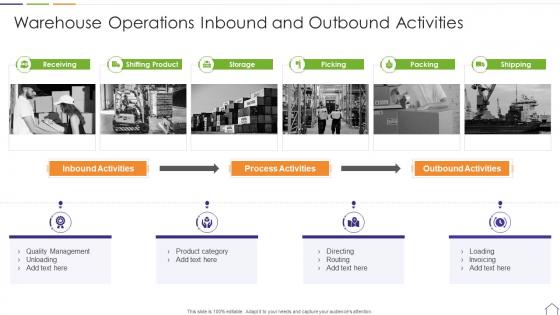
Warehouse Operations Inbound And Outbound Activities




Try Before you Buy Download Free Sample Product
 Impress Your
 Audience
 100%
100% Editable
 Save Hours
 of Time


Our Warehouse Operations Inbound And Outbound Activities are topically designed to provide an attractive backdrop to any subject. Use them to look like a presentation pro.
People who downloaded this PowerPoint presentation also viewed the following :
Warehouse Operations Inbound And Outbound Activities with all 6 slides:
Use our Warehouse Operations Inbound And Outbound Activities to effectively help you save your valuable time. They are readymade to fit into any presentation structure.





FAQs for Warehouse Operations Inbound
So basically, focus on your receiving/shipping spots, storage areas, and how people move through to pick stuff. Put your fastest-moving inventory right by shipping - trust me, it cuts down walking time like crazy. Wide aisles are a must for equipment, and you want good visibility everywhere. Staging areas get forgotten all the time but they're super important for flow. If you do cross-docking, leave room for that too. The whole point is less travel, more accessibility. I'd start by figuring out which products move fastest, then design around that.
Honestly, warehouse automation is a game changer once you get it rolling. Robots and conveyor systems speed up picking like crazy. Your inventory tracking gets way more accurate too. Labor costs drop since machines handle all the boring repetitive stuff - though the upfront investment stings a bit. I'd say start small with your busiest picking areas first, see how it goes. Workers end up doing more interesting problem-solving work instead of just hauling boxes around constantly. ROI is usually pretty decent after that initial hit. Then you can expand based on what's actually working for your setup.
Honestly, start with your layout - if people aren't tripping over each other, you'll save on labor costs right there. A decent warehouse management system is worth every penny for tracking stuff. Cross-train your team so you're not stuck when someone calls out sick (and they actually like learning new things anyway). Your electric bill is probably brutal - LED lights and better insulation help more than you'd think. But here's the thing: inventory accuracy is where you'll see the biggest difference. Fewer screwups means way less waste and returns. Pick one thing first, see what happens, then tackle the next.
Dude, start with barcode scanning - that's your biggest win right there. No more walking around counting stuff by hand like it's 1995. The software shows you exactly what's in stock and where it sits, so you'll never guess when to reorder again. Route optimization is honestly a game changer too, saves our warehouse team like 3-4 hours daily. Oh, and reports that used to take forever? Now they're instant. Your inventory gets smarter about placement based on what actually moves. Don't overthink it - get the basics running first, then add features as you go.
Training your warehouse crew makes a huge difference - seriously, it's one of the best investments you can make. People who know proper lifting and equipment handling work way faster and screw up less. Confident workers navigate your space better too. I've watched places fall apart because nobody taught basic protocols properly. Injuries pile up, bottlenecks everywhere. Don't just do orientation and call it done though - that's where most companies mess up. Keep training ongoing. Look at where your team's struggling right now and focus there first.
Dude, real-time analytics is a game changer - you'll catch issues as they're happening instead of reading about disasters in last week's reports. I can see exactly which picking routes are getting jammed up and fix bottlenecks before they turn into total chaos. Adjusting staff based on what's actually happening? So much better than guessing. Honestly, once you get those dashboards updating every few minutes, you kinda become obsessed with checking them. Labor allocation becomes way easier. Start small though - pick maybe 3 or 4 metrics that really matter and track those first. Don't go crazy with it initially.
Start your seasonal forecasting 3-4 months out - dig into last year's numbers and what's happening in your market. Temp workers are gonna be your lifesaver during peak times, trust me. I got absolutely slammed my first holiday season because I didn't plan ahead... nightmare! Set up storage areas that can flex bigger or smaller depending on what you need. Cross-training is huge too. Your regular crew should know how to jump between different tasks when things get crazy. Oh, and talk to your suppliers early about lead times and minimum orders - like way before you actually need stuff. Honestly? Start planning next season right after this one wraps up.
Dude, supply chain collaboration is like having a heads up on everything coming your way. Your suppliers and logistics people share real-time data, so you're not blindsided by sudden shipments or delays. You can actually staff properly and get equipment ready instead of running around like crazy. Honestly, the shared dashboards thing sounds boring but it's a game changer - everyone knows what's happening when. Fewer bottlenecks, faster processing, less stress for your team. I'd start with weekly calls with your main partners first, then maybe push for some automated alerts or whatever tech works.
Focus on the big four: proper lifting, equipment checks, clear walkways, and PPE compliance. Daily forklift inspections before use are non-negotiable. Honestly, I've seen so many accidents that could've been avoided with basic housekeeping - it's crazy. Keep aisles clear and mark hazardous spots. Hard hats and safety shoes aren't optional. Post emergency procedures everywhere and actually practice them. Oh, and start each shift with a quick safety chat. The whole thing works better when it's just part of your routine instead of something you only think about during those boring monthly training sessions.
Honestly, start with an energy audit - you'll find the biggest money drains fast. LED lighting is like the easiest win ever, and electric forklifts are worth it if your budget allows. HVAC optimization saves tons too. Solar's getting cheaper but only makes sense if you own the building obviously. For waste stuff, better inventory management cuts down on damaged goods big time. Set up recycling for all that packaging - it adds up. Most of this pays for itself pretty quick with energy savings plus tax breaks. I'd probably tackle lighting first since it's cheap and you see results immediately.
Look, I'd focus on four main things: productivity stuff like picks per hour, accuracy rates for orders and inventory, cost efficiency (labor and storage costs), and customer satisfaction metrics like on-time delivery. Safety's huge too - injuries mess everything up and nobody wants that headache. Really depends what kind of operation you're running though. I'd grab maybe 2-3 metrics from each category that actually matter for your goals. Then just set up some simple dashboards to check weekly. Don't overcomplicate it at first - you can always add more later once you see what's actually useful.
Look, your WMS basically controls whether everything runs smooth or you're constantly putting out fires. Good ones handle the boring stuff automatically and show you what's actually in stock right now. Plus they play nice with whatever systems you're already using. Pick a bad one though? You'll spend half your day doing manual BS that should be automated. (Trust me on this.) Oh, and make sure it can grow with you - nothing worse than outgrowing software after two years. Demo a few using YOUR actual processes, not their fancy fake scenarios.
Honestly, the money part hits first - you're dropping millions just to get started. Your current warehouse system probably won't play nice with robots either, so expect integration nightmares. Workers get spooked about losing their jobs too, which I get. Peak season breakdowns will stress you out big time, and finding techs who actually know this stuff isn't easy. Robots are still pretty dumb compared to humans - they can't adapt when weird stuff happens. My advice? Pick one small area to pilot first. Don't go crazy and automate everything at once.
So here's the deal with space optimization - it literally saves you money in multiple ways. First off, you'll fit way more inventory in the same footprint, which cuts your rent and utility costs. Your picking teams will move faster too since everything's organized better. I've actually seen companies delay those massive $2M warehouse expansions for years just by getting their layout right. Workers aren't walking endless distances anymore either, so labor costs drop. Most places only use like 60-70% of their vertical space anyway - that's probably your biggest opportunity right there. Start by checking your cube utilization first.
Dude, return policies are huge for warehouse ops. They totally control your reverse logistics and how much space you need for returned stuff. Clear policies help you predict return volumes so you can staff up properly. I learned this the hard way watching warehouses get slammed during holiday return season - it was chaos. Your policy also decides how fast items get back on shelves and whether they need special handling. Oh, and make sure your warehouse crew actually knows the return timeframes and condition requirements. Otherwise you're just asking for bottlenecks and inefficient processing.
-
Perfect template with attractive color combination.
-
Great designs, really helpful.